
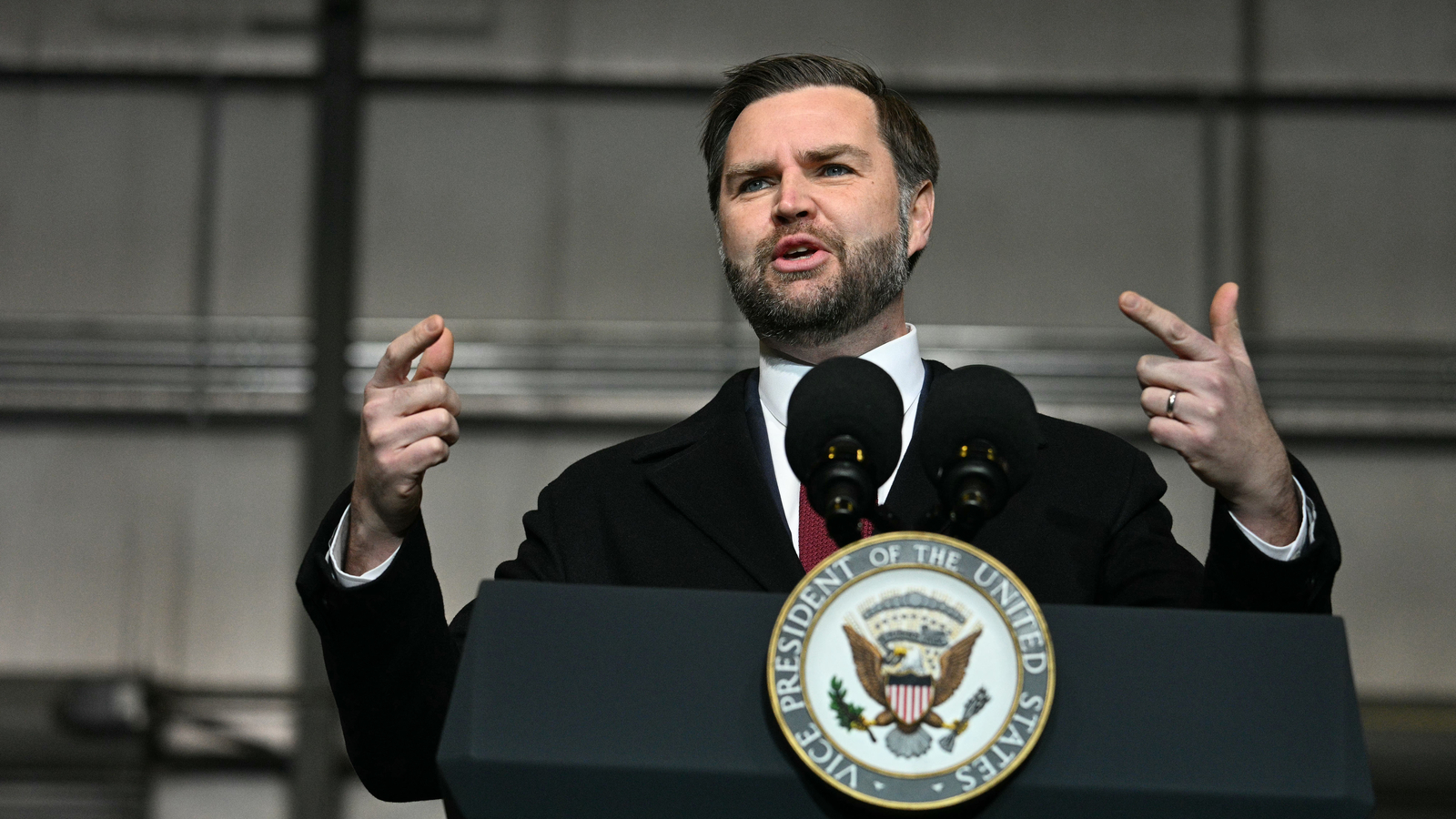
Vice President JD Vance touched down in Minneapolis this week as Minneapolis deportation protests reached a fever pitch, marking one of the most volatile chapters in the ongoing national debate over immigration enforcement. Vance’s high-profile visit comes amid mounting tensions between federal agents, local officials, faith leaders, and residents who say the Trump administration’s crackdown has gone too far. The situation escalated dramatically after an ICE agent fatally shot Renee Good, a mother of three, during a confrontation earlier this month , an incident that has since galvanized opposition and drawn national attention.
Vance Places Blame on the “Far Left”
Speaking to reporters in Toledo, Ohio, before boarding his flight to Minnesota, Vance did not mince words. He accused progressive activists of stoking chaos and pointed fingers at what he called the “far left” for inflaming tensions surrounding the White House’s deportation campaign.
“If you want to turn down the chaos in Minneapolis, stop fighting immigration enforcement and accept that we have to have a border in this country,” Vance declared. “It’s not that hard.”
The Vice President’s remarks signal a hardening of the administration’s posture as protests show no signs of abating. Rather than de-escalate, Vance appeared to double down, framing the unrest as a predictable consequence of resistance to federal authority.
A Visit with ICE Agents
Once in Minneapolis, Vance planned to meet directly with Immigration and Customs Enforcement agents on the ground. His itinerary reflects the administration’s strategy of standing firmly behind its enforcement personnel, even amid mounting public outcry. The Vice President has been one of the most vocal defenders of the agent involved in Renee Good’s death, controversially describing it as “a tragedy of her own making.”
That characterization has done little to calm the anger coursing through Minneapolis neighborhoods. For many residents, the killing represents an unacceptable use of force , and a sign that federal agents operating in the city have crossed a line.
The Church Protest Incident and Vance’s Response
Adding fuel to the fire was an incident on Sunday, when protesters stormed into a church service chanting “ICE out” and “Justice for Renee Good.” The disruption, which unfolded during a worship service attended by families and children, drew sharp condemnation from Vance.
“They’re scaring little kids who are there to worship God on a Sunday morning,” Vance said. “Those people are going to be sent to prison so long as we have the power to do so.”
He added a pointed reminder: “Just as you have the right to protest, they have a right to worship God as they choose. And when you interrupt that, that is a violation of the law.”
Vance also praised the arrest of those involved and signaled that additional prosecutions could follow. For administration critics, however, the Vice President’s forceful response highlights a troubling imbalance , swift consequences for protesters, but fewer clear answers about the use of deadly force by federal agents.
Minneapolis Businesses and Faith Leaders Push Back
The backlash against the federal immigration crackdown is no longer confined to street demonstrations. A broad coalition of Minnesota faith leaders, labor unions, and hundreds of Minneapolis-area businesses announced plans for a coordinated day of protest on Friday.
According to MoveOn spokesperson Britt Jacovich, nearly 600 local businesses have committed to shutting their doors in solidarity, with hundreds of “solidarity events” planned across the country.
Protest organizers released a blistering statement that captures the raw anger on the ground:
“Masked federal agents are teargassing babies and pastors, seizing our neighbors and shipping them off to foreign torture prisons, and killing innocent people.”
This groundswell of opposition from the business community is particularly striking. In previous immigration flashpoints, much of the corporate world has stayed on the sidelines. The willingness of hundreds of Minneapolis-area companies to take an economic hit in protest suggests that the Trump administration’s tactics have alienated even some traditionally cautious constituencies.
The Warrant Controversy: A Constitutional Flashpoint
One of the most explosive revelations to emerge from the Minneapolis deportation protests involves the scope of federal agents’ authority to enter private homes. Gregory Bovino, the official leading the White House’s border patrol operations, claimed at a news conference that federal agents had the authority to enter private residences in Minnesota without a judicial warrant.
“We don’t break in anybody’s homes,” Bovino said. “We make entry in either a hot pursuit with a criminal arrest warrant or an administrative arrest warrant.”
However, an Associated Press investigation published Wednesday painted a very different picture. According to an internal ICE memo, federal immigration officers are asserting sweeping power to forcibly enter homes without a warrant , a reversal of long-standing guidance designed to protect constitutional limits on government searches.
The discrepancy between Bovino’s public statements and the internal memo has alarmed civil liberties advocates and constitutional scholars alike. The Fourth Amendment’s protections against unreasonable searches have long been considered a bedrock American principle, and any apparent erosion of those safeguards in the name of immigration enforcement raises profound legal questions.
Bovino vs. Local Officials
Bovino didn’t stop at policy explanations. He launched scathing attacks on Minneapolis Mayor Jacob Frey and Governor Tim Walz, both Democrats, accusing them of using “violent rhetoric.” He further claimed that city police were “missing in action” and labeled protesters as “anarchists.”
The verbal sparring between federal and local officials underscores the deep institutional rift that has opened in Minneapolis. City and state leaders have repeatedly clashed with the Trump administration over enforcement tactics, creating a governance crisis that has no easy resolution.
Economic Messaging and the Stops Along the Way
While the Minneapolis visit dominated headlines, Vance’s Toledo stop served a different political purpose. The Vice President used the appearance to reinforce the Republican administration’s economic narrative, coming on the heels of President Trump’s address at the World Economic Forum in Davos.
Vance also took the opportunity to stump for key Republican candidates ahead of the fall midterm elections, including Ohio gubernatorial contender Vivek Ramaswamy and U.S. Senator Jon Husted.
A Tough Sell on the Economy
Convincing voters that the nation is thriving economically has been a stubborn challenge for the Trump administration. Public polling consistently shows that a majority of Americans are unconvinced that the economy is in good shape, and majorities also disapprove of Trump’s handling of foreign policy.
Vance acknowledged the difficulty, urging patience and blaming the previous administration for inherited problems.
“You don’t turn the Titanic around overnight,” Vance said. “It takes time to fix what is broken.”
That metaphor may resonate with some voters, but it offers cold comfort to Minneapolis residents who feel they are living through the consequences of federal overreach right now.
What Comes Next for Minneapolis?
With Friday’s coordinated business shutdown looming and more protests expected in the days ahead, Minneapolis stands at a crossroads. The city has become the symbolic battleground for the national fight over immigration policy , a place where constitutional rights, community safety, and political power all collide.
The Minneapolis deportation protests show no signs of slowing, and Vance’s visit is unlikely to bridge the widening gulf between federal authorities and local communities. If anything, the Vice President’s combative rhetoric suggests that the administration is prepared to escalate rather than recalibrate.
For residents, business owners, and faith leaders who have organized in opposition, the stakes could not be higher. The death of Renee Good, the church disruption, the warrant controversy, and the looming mass shutdown all point to a city under extraordinary strain.
A National Bellwether
What happens in Minneapolis will reverberate far beyond Minnesota. Other cities watching the confrontation are taking notes , about how federal agents operate, how local officials respond, and how communities organize in the face of aggressive enforcement. The legal questions raised by the ICE warrant memo may soon land in federal courts, potentially setting precedents that shape immigration policy for years to come.
In the meantime, the eyes of the nation remain fixed on Minneapolis. The protests, the politics, and the people caught in between all deserve close attention as this story continues to unfold.
Conclusion
The Minneapolis deportation protests represent a defining moment in American immigration policy and civil liberties. Vice President Vance’s arrival in the city , accompanied by pointed rhetoric and unwavering support for federal agents , has only deepened the divide between the administration and local communities. With hundreds of businesses preparing to close in protest, faith leaders mobilizing their congregations, and serious constitutional questions emerging about warrantless entries, Minneapolis has become the epicenter of a national reckoning. Whether the coming days bring de-escalation or further confrontation, one thing is clear: the outcome here will shape the political landscape well beyond the borders of Minnesota.