
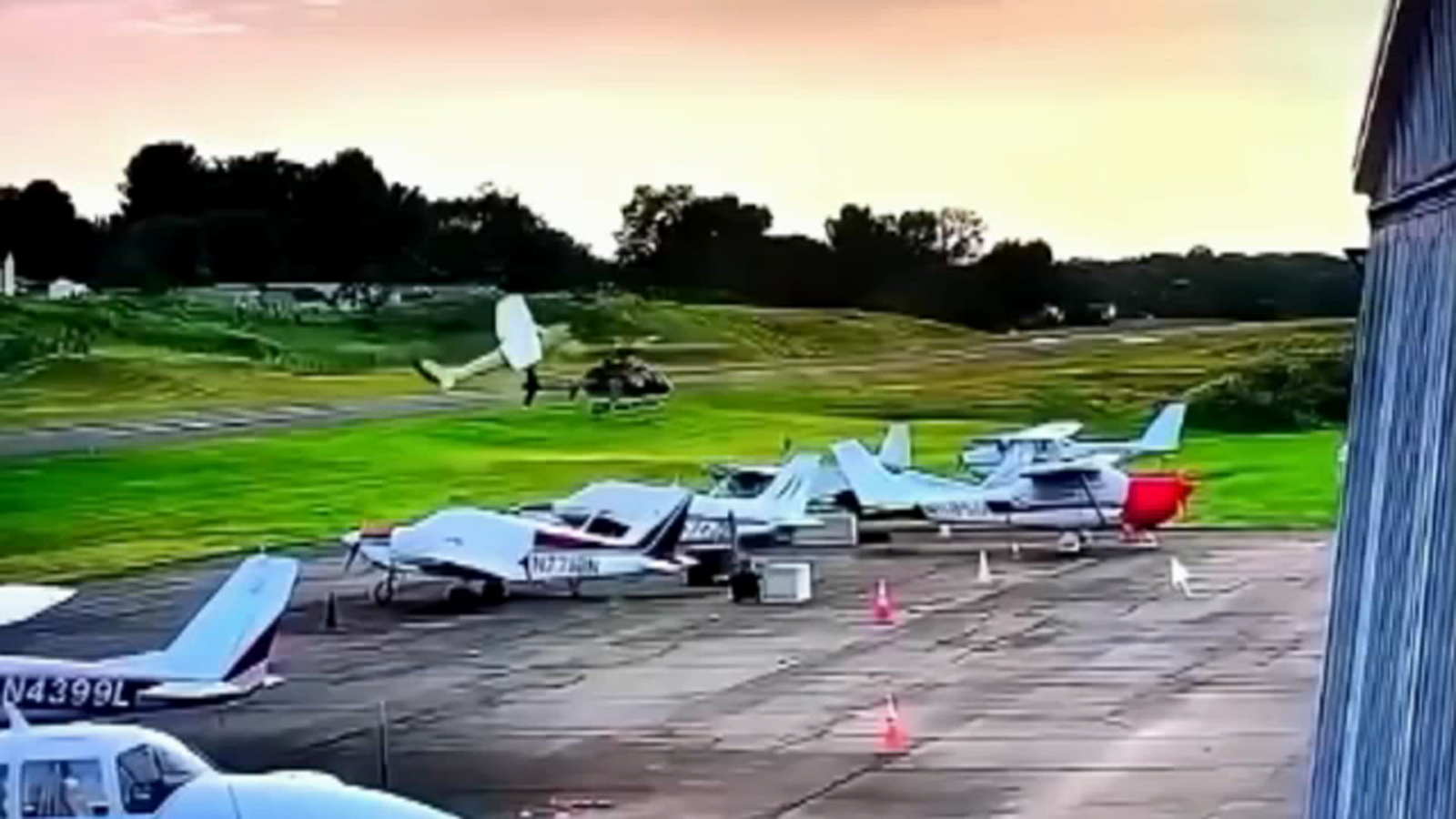
The National Transportation Safety Board has released its preliminary findings on a devastating mid-air collision that claimed one life and injured two others at a small Pennsylvania airport. The incident, which occurred on August 19 at the Carlisle Airport in Cumberland County, involved a Pennsylvania State Police helicopter and a Cessna aircraft, and the newly released report paints a chilling picture of the final moments before impact.
Federal investigators spent weeks reconstructing the events leading up to the crash, relying on airport surveillance footage, witness testimony, radio transmissions, and physical evidence from the wreckage. What emerged is a sequence of split-second decisions, misjudgments, and unfortunate timing that converged into tragedy.
Setting the Scene: A Busy Evening at Carlisle Airport
Just before 7 p.m. on that August evening, the airport was operating with normal evening traffic. According to the NTSB preliminary report, the Cessna was on final approach to land, while the Pennsylvania State Police helicopter had already touched down on the runway but had not yet cleared the area. Instead of departing, the helicopter remained hovering roughly 50 feet north of the runway in a nearby field, completing what investigators described as a training flight operation.
This created a congested airspace scenario in which both aircraft were operating within close visual range of each other, raising immediate concerns about aviation safety that the ongoing NTSB investigation is now working to address.
The Critical Communication Exchange
One of the most revealing elements of the NTSB report comes from a witness who overheard the radio transmissions between the two aircraft. According to the witness, the helicopter crew instructed the Cessna pilot to “extend his downwind,” aviation terminology meaning the Cessna should continue flying parallel to the runway rather than turning toward final approach. The instruction was intended to create additional spacing between aircraft.
The Cessna pilot acknowledged the instruction, complying with the helicopter crew’s guidance. The pilot had also communicated that he was second in line to land, suggesting an awareness of the traffic situation. Despite this exchange, the deadly sequence of events was already unfolding.
Eight Seconds That Changed Everything
Perhaps the most haunting detail in the NTSB’s preliminary report is the incredibly short window between the helicopter exiting the runway surface and the collision itself. Investigators determined that only about eight seconds elapsed from the moment the helicopter cleared the runway to the moment of impact.
Airport surveillance video reviewed by federal investigators showed the airplane crossing the runway threshold approximately 30 seconds after the helicopter had crossed it. The helicopter remained near the airfield during this time, hovering in place while awaiting clearance or completing training maneuvers.
The Cessna’s Final Approach Gone Wrong
According to the NTSB’s reconstruction, the Cessna never actually touched down on the runway. Instead, after crossing the threshold, the airplane continued along the runway surface before pitching up and beginning to climb. Investigators described what happened next in precise terms:
“After the airplane reached the apex of its climb, about 1 wingspans above the runway, the right wing dropped and the airplane immediately turned right and descended toward the northwest.”
This sudden loss of control put the Cessna on a collision course with the still-hovering helicopter.
The Moment of Impact
The final seconds of the aviation accident were captured on airport security cameras. Investigators reported that the helicopter was hovering about 50 feet north of the runway when the airplane leveled its wings, rapidly pitched up, and struck the rear section of the helicopter. The impact sheared off the tail rotor and main rotor blades of the police aircraft.
Tragically, the helicopter crew told investigators they were unable to see the approaching Cessna before impact because it was directly behind them. The crew had received a Traffic Collision Avoidance System (TCAS) alert prior to spotting the airplane, but by then, evasive action was no longer possible.
The Aftermath and Wreckage Analysis
The force of the aircraft collision was catastrophic. The Cessna broke apart into four major pieces upon impact, while the helicopter’s rotor system and tail blades separated completely from the airframe. Federal investigators confirmed that teams have since recovered all major wreckage components from the scene.
One critical finding from the preliminary examination may help rule out certain theories about the crash. Post-accident examination of both aircraft revealed no evidence of any pre-impact mechanical malfunctions or failures that would have prevented normal operation. Both the Cessna and the Pennsylvania State Police helicopter were mechanically sound at the time of the collision, pointing investigators toward human factors and procedural issues rather than equipment failure.
Victims and Survivors
The human toll of this tragedy has been significant. The pilot of the Cessna, identified as Dr. Paul Sokoloski, 57, of Hershey, Pennsylvania, was killed in the crash. Both pilots aboard the Pennsylvania State Police helicopter suffered injuries but have since been released from the hospital, with the second trooper’s release announced in the days following the incident.
What Comes Next in the Investigation
The NTSB investigation is far from over. Federal investigators have indicated they will soon begin analyzing data cards recovered from both aircraft, which may provide crucial information about engine performance, control inputs, and flight parameters in the moments before the crash. This data could help investigators understand exactly what actions each pilot took and why the collision was unavoidable.
The full preliminary report is available to the public, and the NTSB has stated that additional findings, analyses, and potentially safety recommendations will be released as the investigation progresses. Final reports from NTSB investigations typically take 12 to 24 months to complete, though interim updates may be issued sooner.
Broader Implications for Aviation Safety
This incident raises important questions about aviation safety protocols at smaller regional airports, particularly those that accommodate both civilian aircraft and law enforcement operations. The presence of a helicopter hovering near an active runway during a training flight, combined with a civilian aircraft on approach, created a high-risk scenario that ultimately resulted in tragedy.
Training flights are essential for maintaining pilot proficiency, especially for state police aviation units that perform critical public safety missions. However, the timing and location of such training operations, particularly during periods of active civilian traffic, may come under increased scrutiny as the investigation continues.
The use of common radio frequencies, standardized phraseology, and TCAS technology are all designed to prevent exactly this type of accident. That these systems were in place and still a collision occurred underscores the inherent challenges of operating multiple aircraft in confined airspace.
A Community in Mourning
Cumberland County and the broader Pennsylvania aviation community have been grappling with the loss of Dr. Sokoloski, a 57-year-old pilot from Hershey whose death has sent ripples through the local flying community. As the investigation continues, his family, friends, and fellow pilots await answers that may take many more months to fully materialize.
For the two injured Pennsylvania State Police troopers, the physical recovery may be quicker than the emotional one, as they cope with the knowledge that their training flight ended in the death of another aviator despite their best efforts to maintain safe separation.
Conclusion
The preliminary NTSB report on this fatal mid-air collision at Carlisle Airport provides a sobering look at how quickly routine aviation operations can turn catastrophic. With only eight seconds separating the helicopter’s runway exit from the deadly impact, and no mechanical failures to blame, investigators will now focus their attention on pilot decision-making, communication protocols, and the training procedures that placed both aircraft in such close proximity.
As the federal investigation continues and data cards are analyzed, the aviation community will be watching closely for any NTSB recommendations that emerge. The hope is that lessons learned from this tragedy will help prevent similar incidents at small airports across the country, ensuring that the final flight of Dr. Paul Sokoloski contributes to making the skies safer for everyone who flies.