
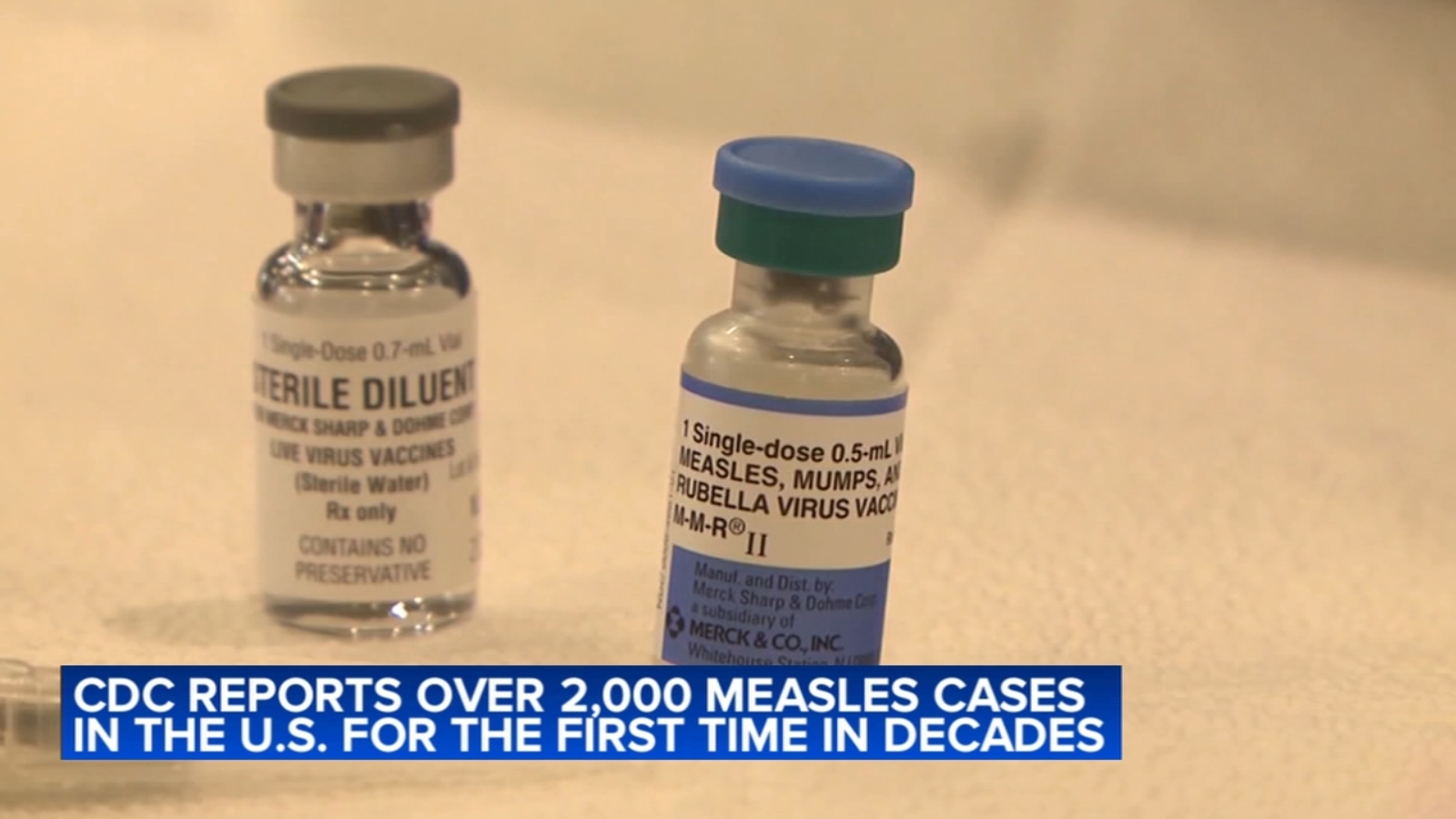
The measles outbreak 2025 has officially crossed a sobering threshold, with federal health data confirming more than 2,000 cases reported across the United States this year. As of late December, the Centers for Disease Control and Prevention (CDC) tallied 2,065 confirmed infections,the highest annual count the country has witnessed in more than three decades. This alarming resurgence has reignited debates about vaccination policies, public health preparedness, and the fragile status of disease elimination in America.
Public health officials are particularly worried because the measles outbreak 2025 isn’t slowing down. Multiple outbreaks remain active, and genetic sequencing suggests at least some may be connected. If transmission chains continue beyond a year, the United States could lose its measles elimination status,a designation it has proudly held for the past 25 years.
How the 2025 Measles Outbreak Unfolded
The current crisis traces its origins to late January 2025, when a major outbreak erupted in western Texas. What began as a cluster of infections quickly mushroomed into a multi-state emergency, spilling across the Texas-New Mexico border. By mid-August, health authorities officially declared the West Texas outbreak over, but not before it caused hundreds of cases and, tragically, three deaths,all among unvaccinated individuals, including two children and one adult.
But the story didn’t end there. Even as the Texas outbreak wound down, new hotspots emerged elsewhere, proving that measles remains a persistent threat wherever vaccination coverage falters.
The South Carolina Surge
In early October, South Carolina’s Department of Health confirmed a fresh outbreak in the upstate region. Within just four months, that outbreak ballooned to nearly 180 confirmed cases. The numbers continue climbing, with at least 20 new infections reported in a single recent week. Nearly 300 individuals are currently quarantined following exposure to known cases.
According to Dr. Linda Bell, South Carolina’s state epidemiologist, transmission is occurring through households, schools, and churches,venues where people gather closely and where respiratory viruses spread with ease. “We know that a large number of our cases are those who we’ve placed in quarantine because of known exposures,” Bell explained. “Measles continues to spread through household transmission, in schools and at churches.”
Health officials anticipate cases will continue climbing well into January 2026, raising serious concerns about the broader implications for national elimination status.
The Arizona-Utah Border Cluster
Another significant outbreak has been unfolding along the Arizona-Utah border throughout 2025. Together, these two states have reported more than 350 combined cases this year, making the region one of the most persistent hotspots in the country. The geographic spread across state lines complicates containment efforts and highlights how interconnected modern disease outbreaks truly are.
Why Vaccination Rates Matter
Understanding the measles outbreak 2025 requires understanding the science of community immunity. The MMR (measles-mumps-rubella) vaccine remains one of the most effective tools in modern medicine. According to CDC data:
- One dose of the MMR vaccine is approximately 93% effective at preventing measles infection.
- Two doses provide roughly 97% effectiveness, offering near-complete protection for most recipients.
Public health experts have long emphasized that achieving a 95% vaccination coverage rate is essential to prevent outbreaks,a concept known as herd immunity. However, that critical threshold is being missed. For the 2024-25 school year, only 92.5% of incoming kindergartners had received the MMR vaccine. While that number might seem close to the goal, the gap is enough to allow measles to find vulnerable pockets of unvaccinated individuals and ignite outbreaks.
Vaccination rates have been steadily declining for years, driven by a combination of factors including vaccine hesitancy, pandemic-related disruptions to routine pediatric care, and misinformation campaigns. The result is a growing population of susceptible children and adults,precisely the conditions under which measles thrives.
The Threat to Elimination Status
Measles was declared eliminated in the United States in the year 2000, meaning there has been no continuous transmission of the virus within the country for more than 12 months at any point since then. That status remained intact even through the COVID-19 pandemic, when many other infectious diseases surged. However, the measles outbreak 2025 is now threatening to undo that quarter-century achievement.
The danger lies in the possibility of linked outbreaks. If public health investigators confirm that the West Texas outbreak and the ongoing South Carolina outbreak share a common viral lineage, and if transmission continues beyond a 12-month window, the United States could officially lose its elimination designation. Canada recently experienced this very scenario,in November, the Pan American Health Organization (PAHO) determined that Canada had lost its measles-free status due to a large, sustained outbreak.
“It’s important to say that all the other 34 countries in the region, they keep their certification as measles-free,” explained Dr. Jarbas Barbosa, PAHO’s Director. The United States would join Canada as only the second country in the Americas to lose this status in recent memory.
A Historical Comparison: 1992 Versus Today
The last time the United States recorded more than 2,000 measles cases in a single year was 1992,just a few years after health officials updated their recommendations to require two doses of the MMR vaccine instead of one. The current measles outbreak 2025 mirrors that troubling milestone, but the comparison reveals both progress and setbacks:
- In 1992, the two-dose schedule was relatively new, and coverage hadn’t yet reached the levels needed to suppress transmission.
- In 2025, the tools and knowledge to prevent measles are widely available, yet coverage has slipped backward due to complacency and misinformation.
The fact that America is once again surpassing 2,000 annual cases,despite decades of medical advancement,underscores how fragile public health gains can be without sustained vigilance.
The Contagious Nature of Measles
Measles is often described as one of the most contagious diseases known to science. A single infected person can transmit the virus to approximately 12 to 18 unvaccinated individuals in a susceptible population, particularly in indoor environments. The virus lingers in the air for up to two hours after an infected person leaves a room, making it extraordinarily difficult to contain without high levels of immunity.
Symptoms typically begin with high fever, cough, runny nose, and red, watery eyes, followed by the characteristic rash that spreads across the body. While most people recover, complications can be severe, especially in young children, pregnant women, and immunocompromised individuals. Pneumonia, encephalitis, and even death are possible outcomes,realities starkly illustrated by the three fatalities in the Texas outbreak.
Looking Ahead: What Needs to Happen
Reversing the trajectory of the measles outbreak 2025 will require a multi-pronged response. Health experts emphasize the following priorities:
- Boosting MMR vaccination coverage above the 95% threshold, particularly in communities with low uptake.
- Rapid outbreak response, including contact tracing, quarantine measures, and post-exposure vaccination.
- Public education campaigns to counter misinformation and rebuild trust in vaccines.
- School and community-based immunization drives to reach children who missed routine vaccinations.
Dr. Bell’s warning that cases will likely continue “well into January” suggests that the United States is not yet past the worst of this outbreak. Each new case represents not just a statistic, but a potential link in a chain that could cost the nation its hard-won elimination status.
Conclusion
The measles outbreak 2025 serves as a sobering reminder that infectious diseases never truly disappear,they wait for opportunities to resurge. With more than 2,000 confirmed cases, multiple active outbreaks, and elimination status hanging in the balance, the United States faces a critical public health moment. The MMR vaccine remains a remarkably safe and effective shield, capable of preventing up to 97% of infections when administered properly. Restoring high vaccination coverage, investing in community outreach, and resisting the spread of misinformation are essential steps to protect both individual health and the nation’s collective progress against one of the world’s most contagious viruses. The story of this outbreak is still being written, and the choices made in the coming months will determine whether America retains its measles-free designation,or joins the growing list of countries that have lost it.