
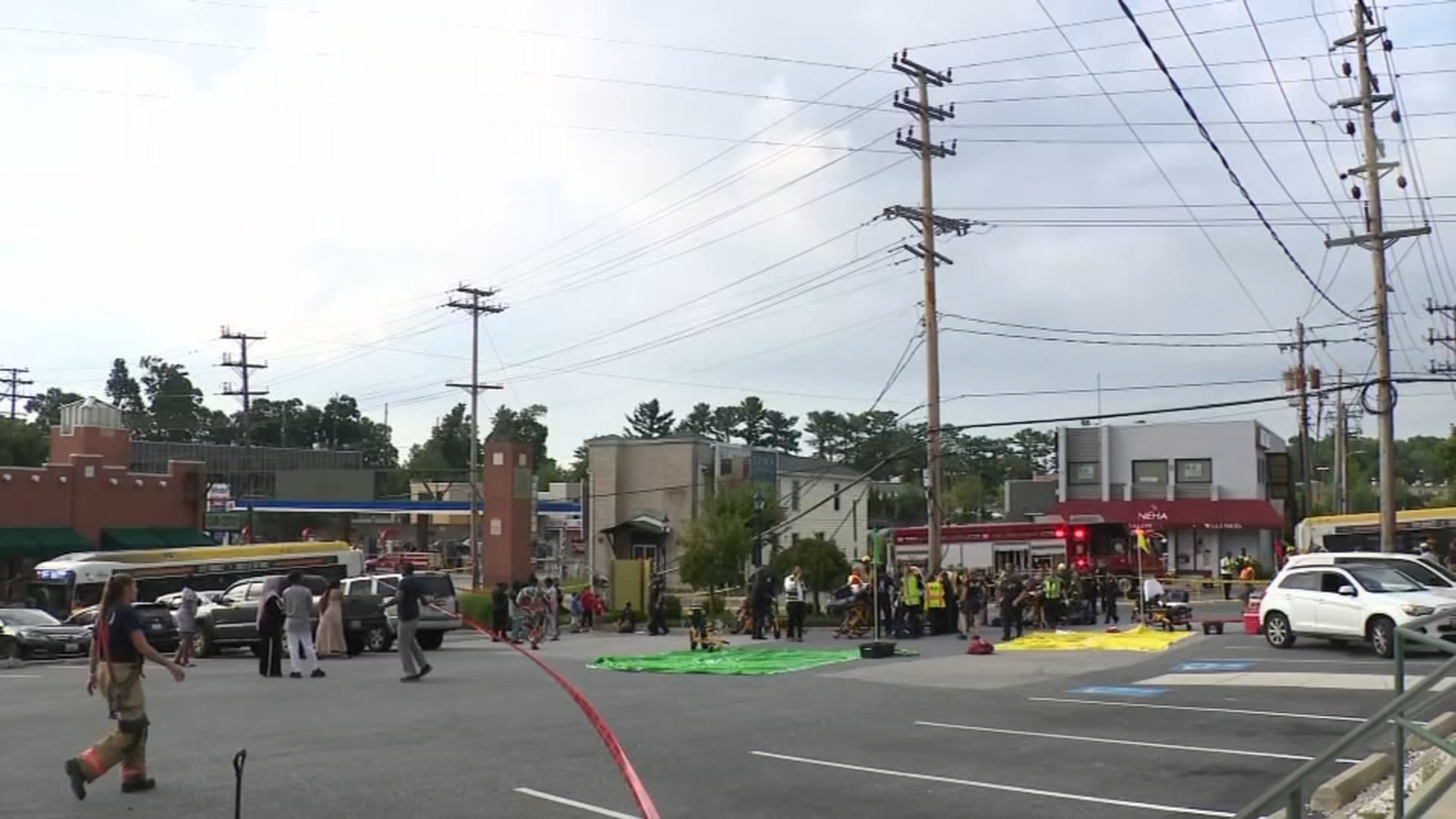
A devastating maryland bus crash unfolded in Pikesville on Wednesday evening when a Maryland Transit Administration bus struck multiple vehicles before slamming into a building, leaving more than 30 people injured and prompting a major emergency response across Baltimore County.
The incident, which occurred shortly before 6 p.m. ET in the suburban community just northwest of Baltimore, has drawn attention to transit safety and emergency preparedness in the region. With the bus driver suffering life-threatening injuries and dozens of passengers requiring hospitalization, the event has become one of the most serious public transit accidents in recent Maryland history.
What Happened During the Pikesville Bus Collision
The catastrophic sequence of events began when an MTA public transit bus traveling through Pikesville collided with several vehicles along its route. According to the Baltimore County Police Department, the bus initially struck multiple cars before the driver lost control of the vehicle. The out-of-control bus then veered into a nearby building, causing extensive structural damage and a complex multi-vehicle emergency.
Eyewitnesses reported hearing a series of loud impacts as the bus plowed through the area. In total, twelve vehicles were involved in the incident, including at least one that rolled over during the chain-reaction collision. The scope of the wreckage required a coordinated response from multiple agencies.
Timeline and Location Details
The maryland bus crash occurred in the late afternoon, just as commuters were likely heading home from work and students were finishing after-school activities. Pikesville, a densely populated suburb bordering northwest Baltimore, sees significant vehicular traffic during this time of day, which may have contributed to the number of vehicles caught up in the collision.
First responders arrived on the scene within minutes of the crash being reported. The area was quickly cordoned off as emergency crews worked to triage victims, extract anyone trapped in vehicles, and secure the damaged building for structural assessment.
Injuries and Emergency Response
The human toll of the crash has been significant. Officials confirmed that 36 people were transported to area hospitals for treatment of various injuries, ranging from minor to critical. The bus driver, whose identity has not been publicly released, was rushed to a hospital with what police described as life-threatening injuries.
Hospital Coordination and Medical Care
Local hospitals activated mass casualty protocols to handle the sudden influx of patients. Multiple medical facilities across Baltimore County and the surrounding region received victims, with medical teams working through the evening to assess injuries, perform emergency surgeries, and stabilize those in critical condition.
The variety of injuries reported included:
- Trauma from blunt-force impacts
- Lacerations and contusions
- Suspected broken bones and fractures
- Potential head and neck injuries
- Whiplash and soft tissue damage
Several victims remained hospitalized in the days following the crash as medical teams continued to monitor their conditions.
Official Statements and Government Response
Maryland Governor Wes Moore addressed the public through social media, confirming that he was actively monitoring the situation and coordinating with local authorities. His statement emphasized gratitude for the first responders who rushed to the scene.
“We are deeply grateful for our first responders who acted with speed and skill to ensure the safety of our neighbors,” Governor Moore wrote. “We’ve been in close coordination with local officials to provide any support needed on the ground.”
Investigation Underway
As of Thursday, the Baltimore County Police Department confirmed that the circumstances leading up to this crash remain under investigation. Detectives and traffic reconstruction specialists were working at the scene to piece together exactly what caused the bus to lose control and trigger the devastating chain of events.
Investigators are likely examining several potential factors, including:
- Mechanical failure: Whether the bus experienced brake problems, steering issues, or another mechanical malfunction
- Driver condition: Whether the driver suffered a medical emergency behind the wheel
- Human error: Whether distraction, impairment, or operational mistakes contributed
- Environmental factors: Road conditions, visibility, and traffic patterns at the time
- Vehicle history: Maintenance records and prior incidents involving the bus
The Maryland Transit Administration has pledged full cooperation with the investigation and is conducting an internal review of the incident.
Community Impact and Transit Safety Concerns
The Pikesville collision has raised renewed questions about public transit safety in Maryland and across the country. Public buses serve millions of Americans daily, and while transit remains one of the safer forms of transportation, incidents like this one highlight the potential consequences when something goes wrong.
Building Damage and Infrastructure Concerns
The building struck by the bus sustained significant structural damage, and officials have not yet confirmed when the property will be safe to re-enter. Structural engineers were called in to assess whether the building is salvageable or will require demolition. Businesses operating in or near the damaged structure faced extended closures as a result of the crash.
Traffic and Commuter Disruptions
The crash site remained closed for an extended period as investigators documented the scene and cleanup crews worked to remove wreckage. Local commuters were advised to seek alternate routes, and MTA bus routes through the area experienced significant delays or detours for several days following the incident.
Broader Context of Bus Crashes in the Region
This maryland bus crash comes amid broader national conversations about commercial vehicle safety, driver training standards, and vehicle maintenance protocols. While buses have an excellent overall safety record compared to passenger vehicles, the size and mass of transit buses mean that when accidents do occur, the consequences can be severe.
The MTA operates one of the largest transit systems in the Baltimore metropolitan area, with hundreds of buses serving thousands of riders every day. Safety advocates have long called for enhanced training programs, stricter maintenance schedules, and improved onboard technology to monitor driver behavior and vehicle performance.
What Riders Should Know
For regular transit users in the Baltimore area, this incident may prompt concerns about their own safety on public buses. Transit authorities emphasize that incidents of this severity are extremely rare and that the vast majority of bus rides conclude without incident. However, passengers are always encouraged to:
- Remain seated whenever possible while the bus is in motion
- Use handrails when boarding, exiting, or moving through the bus
- Report any unsafe driving behavior to transit authorities
- Stay aware of emergency exits and safety equipment
Looking Ahead: Recovery and Prevention
As the investigation continues, the focus in Pikesville has shifted to recovery and healing. Victims and their families are grappling with the physical and emotional aftermath of the crash, while the broader community is coming together to support those affected.
Local organizations and the Red Cross have been coordinating support services for victims, including assistance with medical expenses, transportation to follow-up appointments, and counseling resources for those experiencing trauma-related stress.
Policy Implications and Future Safety Measures
Depending on what the investigation reveals, this maryland bus crash could prompt policy changes at both the state and local levels. Potential measures that have been discussed in similar contexts include enhanced driver monitoring systems, mandatory medical evaluations for commercial drivers, improved vehicle inspection protocols, and updated training requirements for handling emergency situations.
State transportation officials have indicated that they will review the findings of the investigation carefully and implement any necessary changes to prevent similar tragedies in the future.
Conclusion
The maryland bus crash in Pikesville stands as a sobering reminder of how quickly routine transit operations can turn into life-altering emergencies. With over 30 people injured, multiple vehicles damaged, and a building severely impacted, the incident has left an indelible mark on the community. As investigators work to determine exactly what caused the MTA bus to lose control, the thoughts of many remain with the victims currently recovering in hospitals and their families awaiting news about their loved ones.
This maryland bus crash will likely serve as a case study for transit safety professionals in the months ahead, and the lessons learned may help prevent similar incidents in the future. For now, the Pikesville community is focused on healing, supporting one another, and awaiting answers that will bring closure to this difficult chapter.