
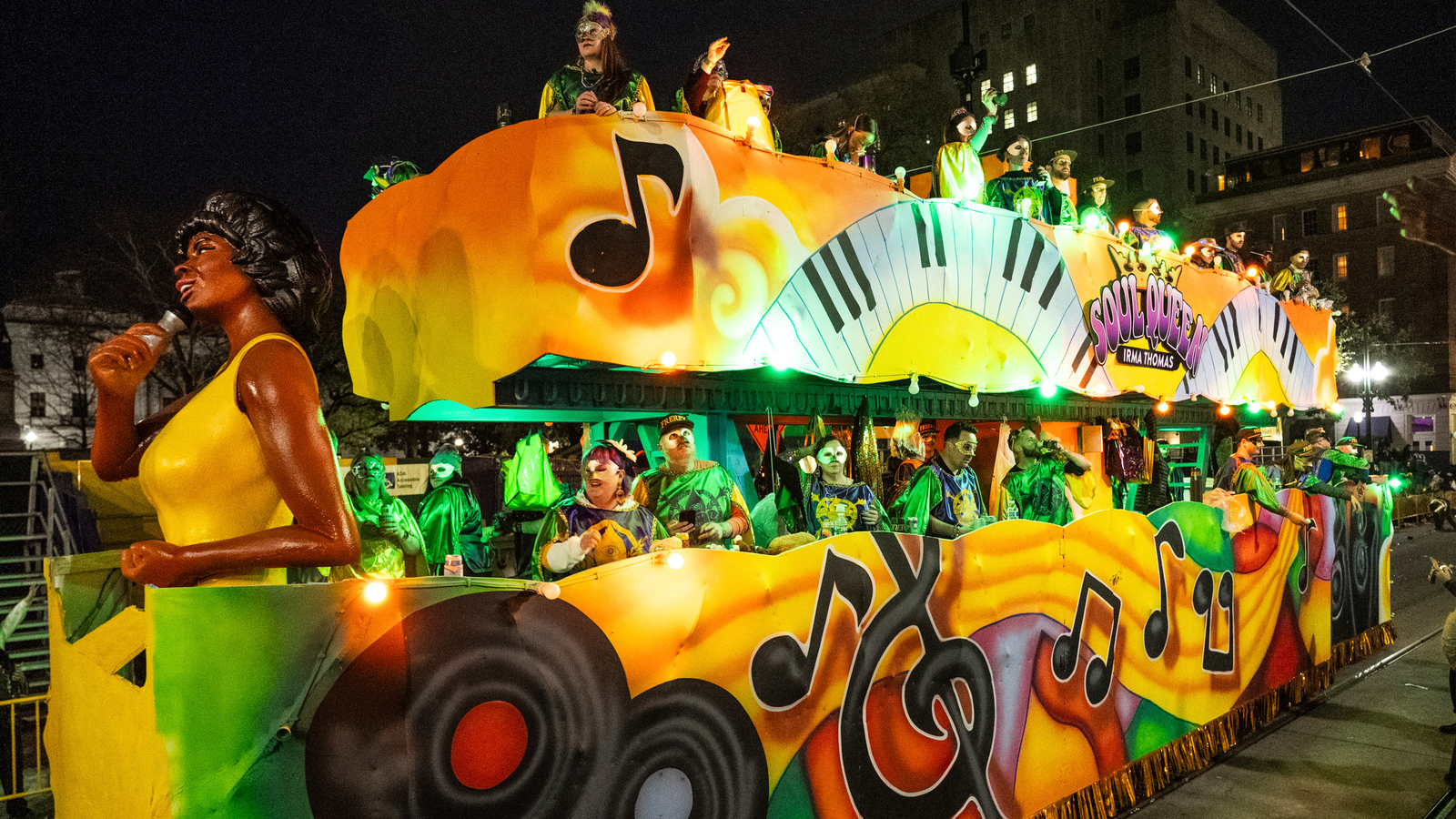
If you thought the streets of New Orleans would be drowned in confetti this carnival season, think again. When it comes to Mardi Gras security, the city has shifted its priorities in a dramatic fashion,more cops than confetti are expected to line the parade routes as the annual Big Easy celebration enters its busiest stretch. Following the devastating New Year’s Day terror attack on Bourbon Street that claimed 14 lives and injured dozens, local, state, and federal authorities have united to implement the most robust security apparatus in the history of this iconic festival.
Mardi Gras Receives Historic SEAR 1 Designation
In an unprecedented move, the U.S. Department of Homeland Security has classified Mardi Gras as a Special Event Assessment Rating 1 (SEAR 1) event, placing it in the same category as the Super Bowl and other high-profile gatherings requiring extensive federal interagency support. According to New Orleans Mayor LaToya Cantrell, this marks one of the first moments in the city’s storied history where Mardi Gras has earned such a designation.
“This is one of the first moments in our history where Mardi Gras is a SEAR 1-rated event,” Cantrell announced at a recent press conference. The elevated rating reflects both the symbolic importance of the celebration and the genuine security concerns that have emerged in the wake of recent violence.
From Tragedy to Resilience
The enhanced Mardi Gras security posture is the direct result of the January 1 truck-ramming and shooting attack on Bourbon Street, which investigators say was carried out by a 42-year-old U.S. Army veteran allegedly inspired by ISIS. The horrific incident prompted a comprehensive review of public safety protocols in the French Quarter and beyond.
Since the attack, New Orleans has already passed two major security tests with flying colors. Just one day after the tragedy, the city hosted the Sugar Bowl college football playoff game, and on February 11, it welcomed the Super Bowl at the Caesars Superdome. Both events proceeded under tight security involving hundreds of federal, state, and local law enforcement officers,a dress rehearsal of sorts for the carnival season ahead.
“We’ve come off the heels of a successful Sugar Bowl, a successful Super Bowl, and we’re now ready and prepared for the greatest freak show on Earth,” Cantrell declared, showcasing confidence in the city’s preparedness.
What’s Been Banned from Parade Routes
Collin Arnold, New Orleans’ Director of Homeland Security, confirmed that this year’s Mardi Gras will look noticeably different from previous celebrations. The New Orleans City Council recently approved an extensive list of prohibited items, signaling a fundamental shift in how revelers can participate in the festivities.
The Banned Items List Includes:
- All confetti and confetti launchers of any kind
- Charcoal and gas barbecue grills
- Mylar balloons
- Portable generators
- Upholstered furniture
- Ladders over six feet high
- Private drones
Despite the sweeping changes, officials were quick to reassure locals and tourists alike that one beloved custom remains untouched: the traditional throwing of beads. So while you may not be dodging confetti, you can still fight for those coveted strands of purple, green, and gold.
The Cooler Rule: A Direct Response to the Attack
One of the most significant security measures targets a seemingly innocent parade accessory: the ice chest. Revelers have been warned never to leave coolers unattended on parade routes,a restriction directly tied to the Bourbon Street attack. Investigators revealed that the suspect allegedly packed improvised explosive devices in coolers he planted along the famous thoroughfare before unleashing his rampage.
“Bring them if you have them. Keep them near you, but if you do see an unattended cooler and you’re getting that sense that there’s nobody there, please report that immediately to the NOPD’s non-emergency line,” Arnold urged. Additionally, no coolers will be permitted in the French Quarter at all.
Law Enforcement: 100% All Hands on Deck
When it comes to New Orleans police deployment during Mardi Gras, the numbers speak for themselves. Police Superintendent Anne Kirkpatrick revealed that 600 of the department’s 900 officers working 12-hour shifts have been assigned specifically to patrol the Mardi Gras parades. The remaining 300 officers will maintain coverage throughout the rest of the city.
“We’re 100% all hands on deck,” Kirkpatrick stated emphatically.
Beyond the Uniform: Plainclothes, K-9s, and SWAT
The security strategy goes far beyond the visible uniformed presence. Officers in plain clothes will be embedded throughout the crowds to detect suspicious behavior,100 plainclothes officers will blend in with revelers, providing an additional layer of surveillance. K-9 units and bomb-sniffing dogs will patrol parade routes alongside their handlers, while SWAT teams and armored Bearcat vehicles will be stationed at strategic locations throughout the city.
The Louisiana National Guard has also deployed to New Orleans to bolster security efforts, creating a comprehensive multi-agency response that has become the new standard for major events in the city.
Reinforcements from Across the State
The Orleans Parish Sheriff’s Office has committed 200 deputies to assist with Mardi Gras patrols, while the Louisiana State Police announced it would deploy an additional 150 troopers to enhance security in the Central Business District, on local highways, and throughout the French Quarter.
The French Quarter: Designated Enhanced Security Zone
Col. Robert Hodges, the Louisiana State Police Superintendent, officially designated the French Quarter as an “Enhanced Security Zone”,the highest tier requiring the most intensive security presence. Under this designation, ice chests and coolers are completely prohibited in the area, and any container larger than 4.5 inches by 6.5 inches will be subject to search.
Anti-Vehicle Measures on St. Charles Avenue
One of the most visible security upgrades involves hundreds of barricades erected along a nearly three-mile stretch of St. Charles Avenue, one of the major parade routes. This countermeasure directly addresses the method used in the January 1 attack, where investigators say the perpetrator maneuvered a rented pickup truck onto a sidewalk to bypass a police car blocking Bourbon Street.
According to Kirkpatrick, the barricades on the non-parade side of St. Charles Avenue will force vehicle traffic to navigate what she described as a “serpentine course” through the area. “That will slow anybody down who thinks they’re going to use a vehicle as a weapon,” she explained. This serpentine design is engineered to prevent high-speed vehicle attacks while still allowing legitimate traffic flow.
Honoring the Victims While Celebrating Life
In a poignant acknowledgment of the tragedy, Mayor Cantrell announced that a makeshift memorial to the victims of the New Year’s Day attack has been relocated for Mardi Gras. The memorial, originally situated on a Bourbon Street sidewalk, has been moved to the Presbytere State Museum near Jackson Square in the French Quarter.
“But I need you to know it is in coordination and with real reverence with the families and victims of Jan. 1,” Cantrell emphasized, underscoring the city’s commitment to honoring those lost while still allowing the celebration to proceed.
Tourism and Economic Impact Remain Strong
Despite the security concerns, New Orleans’ hospitality industry is thriving, suggesting that visitors have not been deterred by the heightened precautions. Kelly Shultz, Senior Vice President of New Orleans & Company, reported that Saturday night hotel occupancy for the second weekend of Mardi Gras reached 95%, a significant jump from 83% during the same night the previous year.
A Tulane University survey found that Mardi Gras alone generates approximately $900 million in economic revenue annually,an economic powerhouse that city officials are determined to preserve through responsible security measures. With about 40 parades planned between now and Fat Tuesday on March 4, the festival continues to be one of the largest economic drivers in the region.
Conclusion: A New Era for Mardi Gras
The 2025 Mardi Gras season represents a watershed moment for New Orleans. While the revelry, music, and cultural traditions remain as vibrant as ever, the underlying security infrastructure has been transformed. From the SEAR 1 designation to the hundreds of barricades, from plainclothes officers to bomb-sniffing dogs, every measure reflects lessons learned from tragedy and a community’s determination to protect its most cherished traditions.
For visitors and locals alike, this year’s carnival offers something uniquely powerful: proof that the spirit of New Orleans cannot be broken. The floats will still roll, the beads will still fly, and the music will still play,but now, an unprecedented layer of protection ensures that the celebration can continue safely for generations to come.