
The Lindsay Clancy trial has reached a critical impasse. After four full days of deliberations, the jury in Plymouth, Massachusetts remains deadlocked on whether the former obstetric nurse should be held criminally responsible for the deaths of her three young children. On Tuesday morning, jurors sent a note to Superior Court Judge William Sullivan indicating they could not reach a unanimous decision, prompting the judge to instruct them to continue their discussions. The deadlock marks the first public sign that the panel is struggling to find common ground in a case that has captivated national audiences while raising profound questions about maternal mental health, criminal responsibility, and the boundaries of postpartum illness.
Background of the Massachusetts Triple Homicide
Lindsay Clancy, 36, is charged with killing her three children , 5-year-old Cora, 3-year-old Dawson, and 8-month-old Callan , in the basement of the family’s home south of Boston in January 2023. Prosecutors say she sent her husband, Patrick Clancy, on an errand before strangling the children with exercise bands. She then jumped from a second-story window in an apparent suicide attempt and remains paralyzed from the waist down.
The Lindsay Clancy trial has stretched over more than four weeks of testimony, featuring more than 80 witnesses and roughly 300 pieces of documentary evidence. The proceedings have placed the deeply personal tragedy of one family under an intense public microscope, exposing raw disagreements about how the legal system should treat mothers who commit unspeakable acts while allegedly suffering from severe mental illness.
The Defense’s Case: Postpartum Psychosis and Loss of Reality
Clancy’s defense team has never disputed that she caused the deaths of her children. Instead, they have built their entire case around the argument that a devastating psychiatric condition stripped her of the ability to understand right from wrong. Her attorneys contend that she loved her children deeply but lost contact with reality due to a combination of bipolar disorder and postpartum psychosis.
Defense witnesses, including Clancy’s mother and sister, testified that the former labor and delivery nurse became increasingly anxious, paranoid, and suicidal following the birth of her youngest son, Callan. She sought treatment for her deteriorating mental health in the months leading up to the tragedy, including a stay at a psychiatric hospital. Less than three weeks after being discharged, the killings occurred.
Her lawyers have argued that Clancy heard a voice instructing her to end her children’s lives so that she could then end her own, framing the act as the tragic outcome of an untreated psychiatric breakdown rather than a calculated decision.
The Prosecution’s Case: A Conscious Decision
Prosecutors have countered with a starkly different narrative. While they acknowledge Clancy suffered from depression and exhaustion, they maintain that she made a deliberate, conscious choice to kill her children. A forensic psychologist who testified for the prosecution concluded that Clancy wanted to end her own life but did not want to leave her children behind , implying a level of premeditation and awareness that the defense disputes.
This clash between medical experts has been central to the Lindsay Clancy trial. Defense experts described her state as a profound psychotic break, while prosecution experts painted a portrait of someone who was depressed, exhausted, and desperate, yet fully aware of the moral and legal weight of what she was doing.
A Complicated Trial and Emotional Testimony
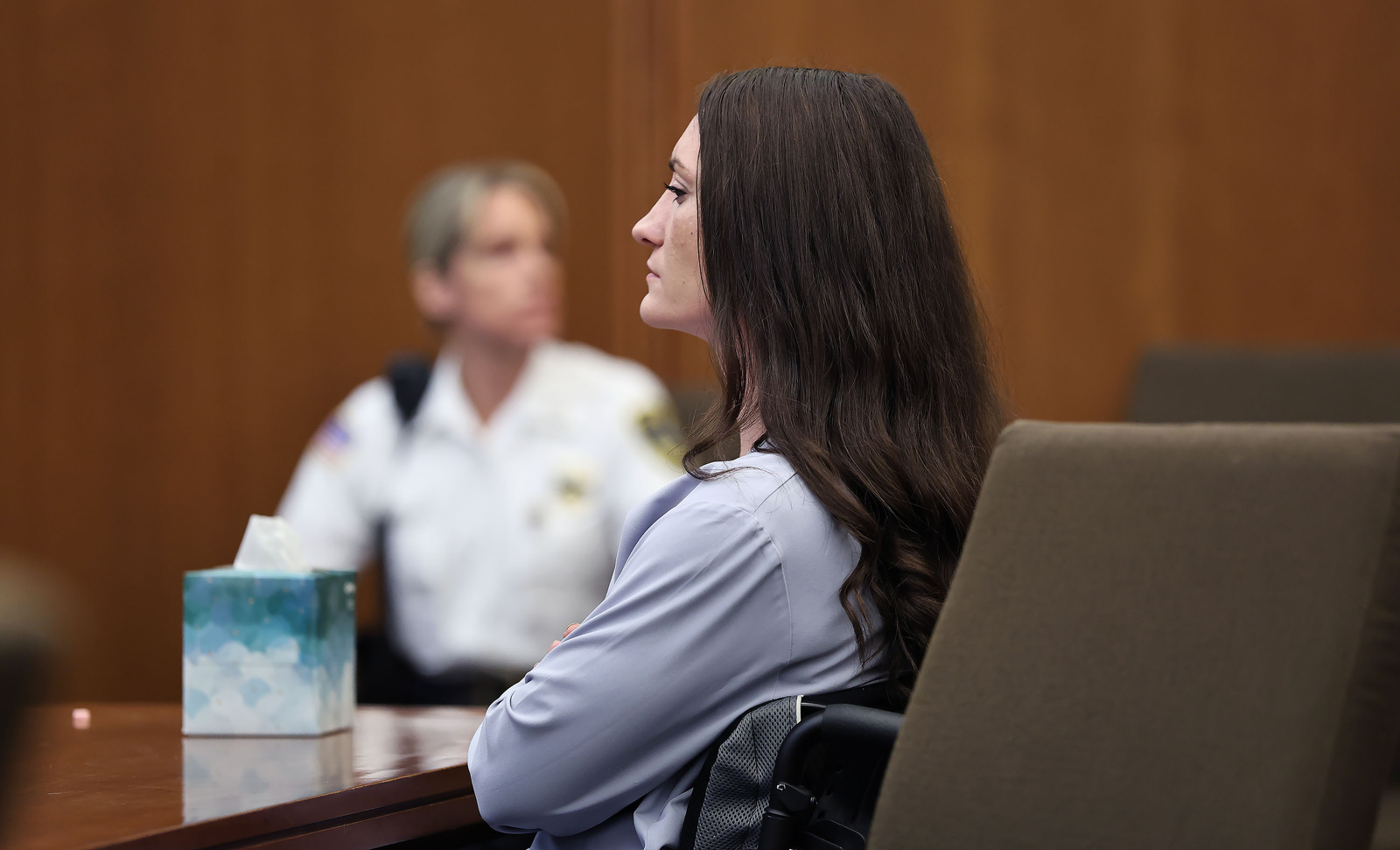
The trial has been emotionally grueling for everyone involved. Clancy chose not to testify, opting instead to observe the proceedings from the defense table. She occasionally wept during the trial , visibly shaken when prosecutors displayed autopsy photographs of her children to the jury.
One of the most difficult stretches of testimony came from her ex-husband, Patrick Clancy, who spent two days on the witness stand. He played the harrowing 911 call he made after returning home to discover the bodies. Patrick has publicly stated that he forgives his former spouse, whom he views as ill rather than evil. The trial marked the first time he had seen Lindsay face-to-face since the killings.
The jury also requested to view the knife Clancy used to cut herself shortly after the murders, as well as bags containing empty prescription bottles found in the home , physical evidence that underscores how heavily medication and mental state have factored into deliberations.
The Jury Reaches a Standstill
Jurors began their deliberations last Thursday and have spent several full days wrestling with the evidence. On Friday, they asked to review key physical exhibits, signaling careful engagement with the case. But by Tuesday morning, they informed Judge Sullivan that despite many hours of back-and-forth discussion, they could not reach a unanimous verdict.
Sullivan acknowledged the difficulty of the task, noting the trial’s length and complexity, but urged the panel to keep trying. Deliberations are scheduled to resume Wednesday. Whether the jury ultimately breaks free of its impasse or remains split remains uncertain.
What Happens if the Jury Cannot Reach a Verdict?
If jurors cannot deliver a unanimous decision, the judge could declare a mistrial. In that scenario, the charges against Clancy would remain on the books, and prosecutors would need to decide whether to retry the case before an entirely new jury. Legal observers note that retrials can be difficult for the prosecution, particularly in cases that have already received extensive media coverage.
Alternatively, prosecutors could offer a plea deal, though Boston defense attorney Brad Bailey , who is not involved in the case , suggested it is more likely that Clancy’s defense team would push for charges to be dropped.
If convicted of murder or manslaughter, Clancy could face life in prison. If acquitted, however, the outcome would not necessarily mean her release. A judge could still order her committed to a mental health facility if an evaluation determined she posed a danger to the public.
Understanding Postpartum Psychosis
Central to the defense’s argument is postpartum psychosis, a condition far more severe and far less common than the “baby blues” or postpartum depression many new mothers experience. Researchers estimate the disorder affects only 1 to 2 out of every 1,000 women after childbirth. Symptoms can include hallucinations, delusions, paranoia, and disorganized thinking , and the condition is considered a psychiatric emergency because it dramatically raises the risk of harm to both mother and infant.
The Lindsay Clancy trial has thrust this rare but devastating illness into the national conversation, with advocates noting that greater awareness and earlier intervention could potentially prevent future tragedies. The case has underscored how postpartum psychosis can progress rapidly and how difficult it can be for families and clinicians to recognize its warning signs in time.
A Case That Divides the Public
Beyond the courtroom, the case has sparked intense public debate. Some view Clancy as a victim of her own mind, deserving of treatment rather than punishment. Others see her actions as so horrific that no diagnosis can excuse them. The deadlock in the jury room reflects this broader national uncertainty about how the legal system should respond when a mother’s mental illness and her crimes collide in the most tragic way imaginable.
Conclusion
The deadlocked jury in the Lindsay Clancy trial signals that this profoundly painful case may be far from over. Whether the panel ultimately reaches a verdict or a mistrial is declared, the outcome will reverberate through Massachusetts courts, the field of maternal mental health, and the broader public conversation about postpartum illness and criminal responsibility. For the families whose lives were shattered, for the jurors tasked with an almost impossible decision, and for mothers across the country who quietly struggle with their own mental health, the trial has already left an indelible impression , a tragic reminder of the urgent work still needed in recognizing and treating maternal psychiatric illness before another family is forever changed.