
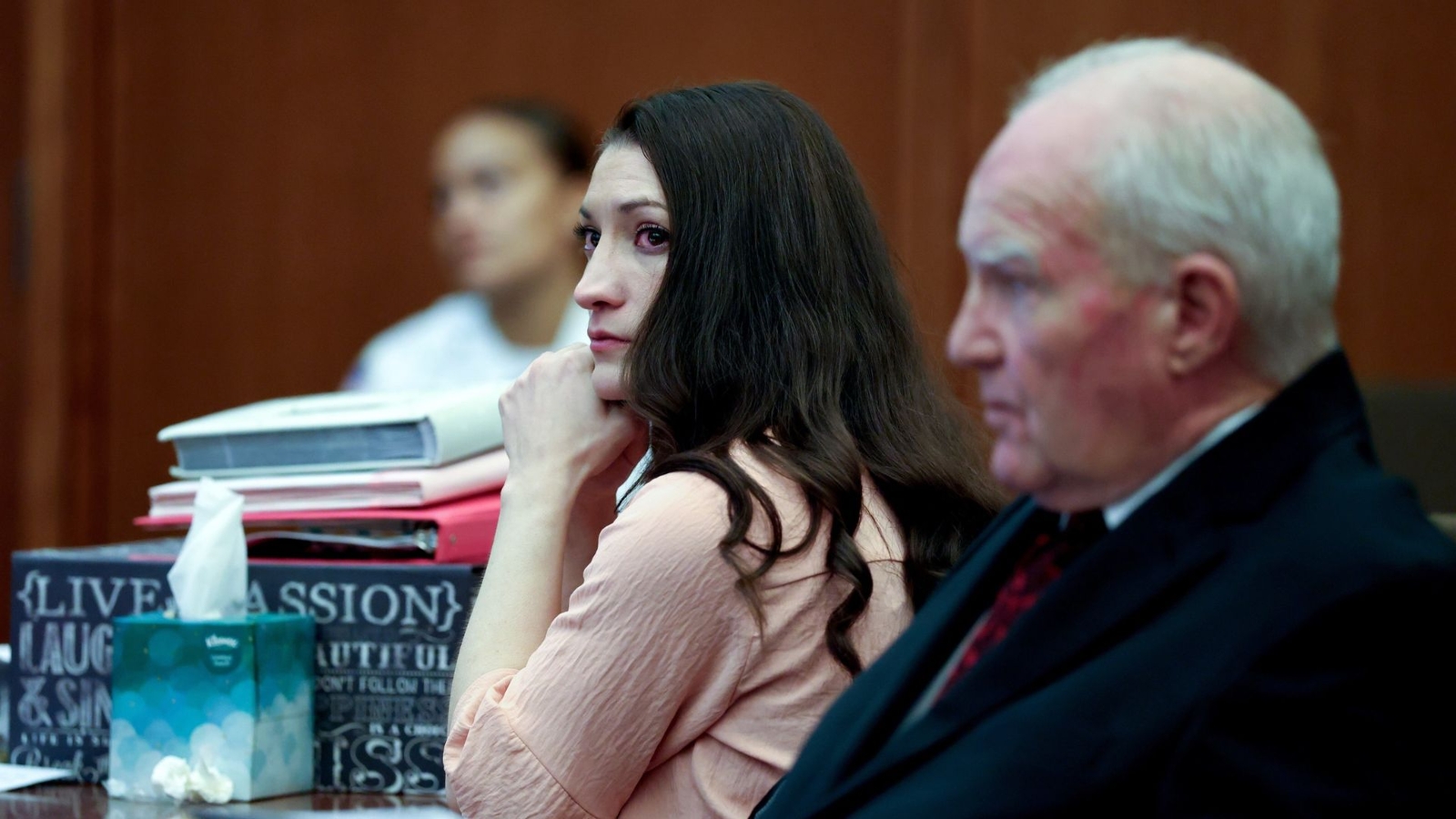
The lindsay clancy murder trial took another emotional turn this week as a hospital chaplain took the stand to recount her first conversations with the Massachusetts mother in the days following the deaths of her three young children. Sheila Cavanaugh, a board-certified chaplain at Brigham and Women’s Hospital, provided jurors with a deeply personal account of her interactions with Clancy, including a haunting remark about her children being “safe” after she allegedly killed them.
Chaplain’s First Encounter With Clancy
Cavanaugh testified that she met with Clancy at least 14 times while the defendant was hospitalized at Brigham and Women’s Hospital. Their first conversation occurred on January 31, just days after the tragic events at the family’s Duxbury home on January 24, 2023. Clancy had been extubated by that point, having been hospitalized after her own attempted suicide following the killings of her children.
Describing Clancy’s demeanor during that initial meeting, Cavanaugh painted a disturbing picture for the jury. “Her emotional state was very neutral, a flat affect,” the chaplain explained, noting that Clancy was still “covered” with medical tubes and wearing a neck brace. Despite her physical condition, Cavanaugh recalled that Clancy’s first words during their conversation have stayed with her ever since.
The “Safe” Remark and Its Aftermath
During their prayer session, Clancy reportedly told Cavanaugh, “I am so glad my children are safe.” The chaplain, choosing to respond with theological comfort rather than questioning the statement, replied, “Lindsay, your children are safe. They’re safe in heaven with God.”
Cavanaugh described holding Clancy’s hand throughout the conversation as they prayed together for the three children: 5-year-old Cora, 3-year-old Dawson, and infant son Callan. The chaplain’s account adds another layer of complexity to an already deeply troubling case that has gripped Massachusetts and the nation since 2023.
Voice Hallucinations Detailed in Testimony
Perhaps the most significant revelation from Cavanaugh’s testimony concerned Clancy’s repeated claims of hearing a male voice commanding her actions in the days leading up to and following the killings. The chaplain told jurors that Clancy described the voice as persistent and authoritative.
“The voice, according to Lindsay, told her that if she did not follow the command, neither she nor her children would be safe,” Cavanaugh explained to the jury. The chaplain noted that Clancy consistently described the voice as male throughout their multiple meetings immediately following the killings.
Cross-Examination Reveals Scope of Chaplain’s Role
During a brief cross-examination, defense attorneys probed why Cavanaugh’s notes didn’t specifically mention Clancy hearing a voice prior to the killings. The chaplain clarified her professional boundaries, explaining that as a chaplain, she was “not there to evaluate the patient” but rather to “bear witness to their suffering.”
Cavanaugh also revealed the extent of her continued involvement with Clancy, stating she has visited the defendant approximately 200 times during Clancy’s three-year stay at Tewksbury Hospital, where she has been held in state custody awaiting trial.
Forensic Psychologist’s Earlier Testimony
Cavanaugh’s account came shortly after jurors heard similar testimony from defense witness Paul Zeizel, a forensic psychologist who met with Clancy approximately 60 times over the past three years. Zeizel testified that Clancy had described hearing “a male voice ordering her, telling her that she didn’t have any choice, but she had to kill her children and then kill herself.”
According to Zeizel, the last time Clancy claims she heard a voice in her head was on January 24, 2023, the very day she killed her three children. He told the court on Wednesday that “currently, she has not heard voices since the event took place in 2023.”
Zeizel also recounted facilitating a significant moment during his early visits with Clancy: a speaker phone call between Clancy and her then-husband Patrick Clancy. During that emotional exchange, “She was unable to express a lot of emotion, but she expressed love for him,” Zeizel testified.
Defense Strategy and Postpartum Psychosis Claims
The defense’s approach throughout the lindsay clancy murder trial has centered on the argument that the 32-year-old mother was experiencing severe postpartum psychosis at the time of the killings. Defense attorney Kevin Reddington has been transparent about the strategy, acknowledging that his client was responsible for the deaths but arguing she should not be held criminally responsible due to her mental state.
Reddington indicated in court on Thursday that he expects to rest the defense case on Friday after calling one more witness, an expert on postpartum psychosis. This upcoming testimony appears designed to provide clinical context for Clancy’s reported hallucinations and behavior leading up to the tragedy.
The Science of Postpartum Psychosis
Postpartum psychosis is a rare but severe mental health condition that can affect new mothers, typically within the first few weeks after childbirth. Unlike postpartum depression, which is more common and generally less severe, postpartum psychosis can include hallucinations, delusions, and disorganized thinking. The condition is considered a psychiatric emergency and requires immediate treatment.
Clancy’s case has drawn attention to this lesser-understood condition, with mental health advocates emphasizing that postpartum psychosis can affect any new mother regardless of her prior mental health history or social circumstances.
Background on the Duxbury Tragedy
The case stems from the January 24, 2023, deaths of Clancy’s three children at the family’s home in Duxbury, an affluent suburb of Boston. Clancy has pleaded not guilty to three counts of first-degree murder. Patrick Clancy, the children’s father, was at the gym when his wife called him to come home, later making harrowing 911 calls that brought prosecutors and jurors to tears when played in court.
The investigation revealed that Clancy had searched various troubling queries online in the days before the killings, including questions about treating sociopathy, according to investigators. A toxicology expert also testified that drug levels found in Clancy’s system were low, undermining any potential argument about substance-induced impairment.
Court Proceedings and Delays
Thursday’s court session ended earlier than expected, with jurors hearing only about an hour of testimony. This marked the second consecutive day of shortened proceedings, with the judge citing an “unforeseen circumstance” for Wednesday’s delay without providing details. Judge William Sullivan instructed jurors not to speculate about the reason for the delays.
“It’s going to be a short day, but also gear up for a longer day tomorrow,” Sullivan told jurors on Thursday. “If you’re going to hold it against anybody, hold it against me.”
Witnesses Who Have Testified
Throughout the trial, jurors have heard from a range of witnesses offering different perspectives on Clancy’s mental state and behavior. Lindsay Clancy’s former mother-in-law testified that Clancy “was begging for help” in the period before the killings. Clancy’s own mother and sister described a declining mental state leading up to the tragedy. Patrick Clancy himself took the stand, describing his experience of receiving the devastating call from his wife.
A nanny who worked with the family testified that Clancy appeared to be a loving mother in the time leading up to the killings, adding another layer of complexity to the jury’s deliberations. Defense lawyers have also taken aim at the care provided by a psychiatrist who treated Clancy before the tragedy, suggesting inadequate treatment contributed to the mental health crisis.
Conclusion
As the lindsay clancy murder trial moves toward its conclusion, the chaplain’s testimony about Clancy’s “safe” remark stands as one of the most chilling moments in a case filled with heartbreaking details. The juxtaposition of Clancy’s flat affect and theological discussions with the horrific reality of what she had done creates a profound complexity that jurors must navigate in their deliberations. With the defense expected to rest on Friday after calling its postpartum psychosis expert, the case is rapidly approaching its final phase. Regardless of the verdict, this trial has already served as a powerful reminder of the devastating impact of untreated maternal mental health crises and the importance of recognizing the warning signs of postpartum psychosis before tragedy strikes.