
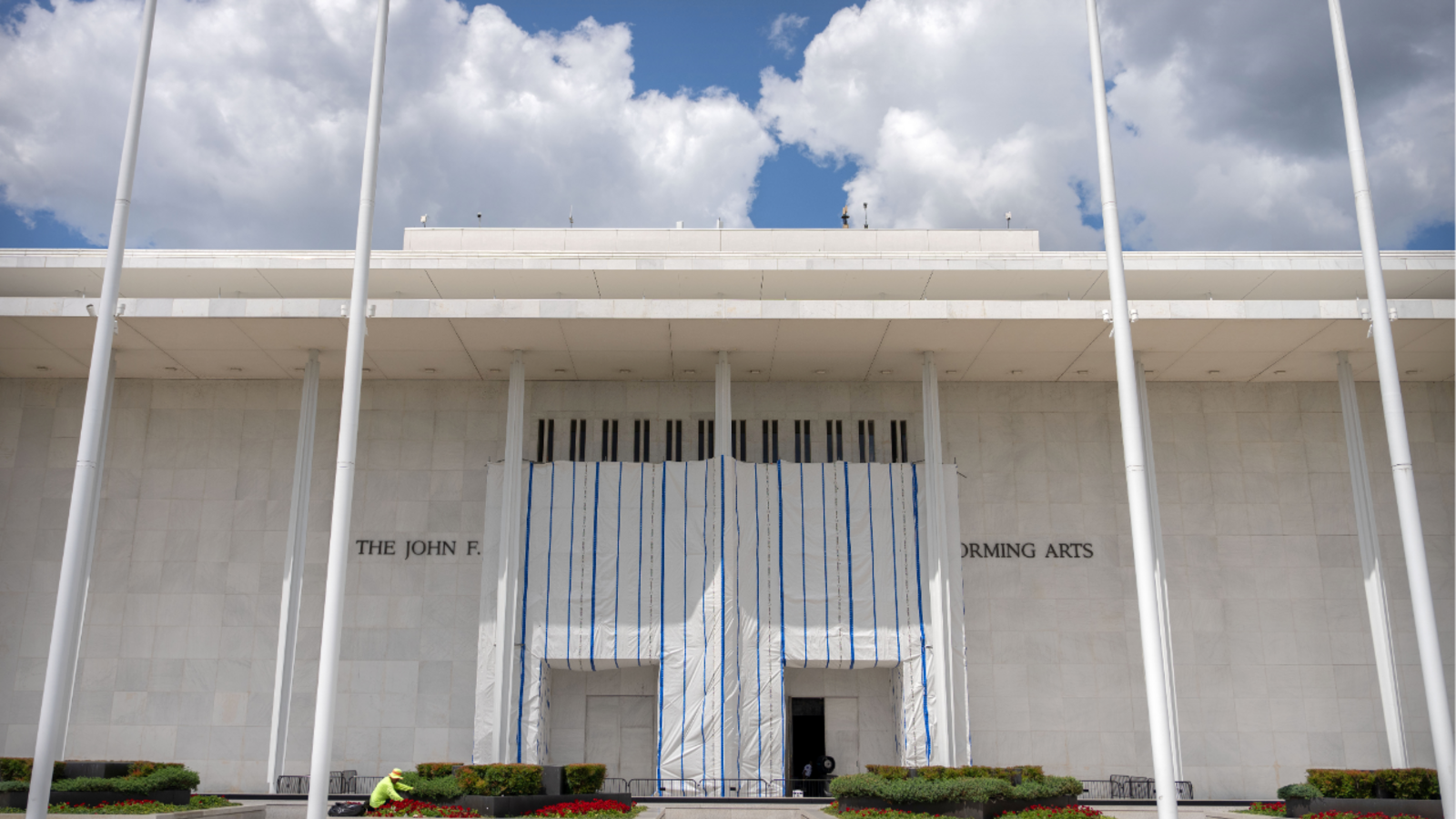
The battle over the Kennedy Center closure reached a dramatic new chapter as the presidentially appointed board of trustees voted to add Donald Trump’s name to the building’s facade and proceed with a sweeping two-year shutdown of the iconic performing arts venue , moves widely seen as a direct challenge to a federal judge’s earlier ruling.
During a lengthy virtual meeting, the board decided that the building would bear an inscription reading “The John F. Kennedy Center for the Performing Arts Restored and Renovated By President Donald J. Trump.” The plaza in front of the venue would also be renamed in Trump’s honor, while most interior spaces would shutter for renovations expected to last 24 months. The decisions have intensified the legal and political clash over the institution’s future and raised fresh questions about how far the board is willing to push against judicial oversight.
Defying the Court’s Ruling
At the heart of the standoff is U.S. District Judge Christopher Cooper, who ruled in May that the letters spelling out Trump’s name had been affixed to the building illegally and ordered them removed. He also blocked an earlier two-year closure that had been scheduled to take effect on July 5, calling the original board vote “ill-informed and seemingly preordained.” The administration failed to persuade appellate courts to overturn that decision.
Thursday’s vote is widely viewed as an attempt to circumvent that ruling. Representative Joyce Beatty, an Ohio Democrat and ex-officio board member, did not mince words in her response.
“This latest development is a transparent effort to circumvent the Court’s ruling, and flies in the face of the statutes that Congress passed,” Beatty said in a statement. “I will continue to fight for this treasured national monument.”
A Kennedy Center representative did not respond to requests for comment following the meeting.
Three Options, One Outcome
In response to Judge Cooper’s criticism that the board had not seriously weighed alternatives, Kennedy Center leadership presented three possible paths forward for the planned renovations:
- A complete closure of the building for the duration of construction work.
- A partial closure allowing limited public access and programming in spaces unaffected by the work.
- Phased closures that would address only the most urgent infrastructure needs while maintaining a full programming calendar.
Ultimately, the board chose the full two-year closure, leaving open the possibility of some outdoor programming at the Reach, an expansive plaza and garden space adjacent to the main building. Critics quickly argued that the vote effectively rubber-stamped a decision Trump had already made months earlier.
Senator Sheldon Whitehouse, a Rhode Island Democrat who also serves as an ex-officio board member, called the meeting a “sham” and accused the board of failing to conduct proper due diligence.
The Kennedy Center as a Symbol of Presidential Power
Few cultural institutions in America have become as politically charged in recent months as the Kennedy Center. During his first term, Trump largely ignored the venue. But upon returning to the White House in January 2025, he moved swiftly to replace its leadership and install a board of trustees loyal to him, ultimately naming himself chairman.
His name was quickly added to the building’s exterior , only to come down in June after Judge Cooper’s order. The space where the letters once stood is now concealed behind a massive tarp, a visual reminder of the ongoing legal limbo.
The Kennedy Center saga is part of a much broader campaign by Trump to reshape the physical landscape of the nation’s capital in ways that have few modern parallels.
Reshaping the Capital
Beyond the performing arts center, Trump has pursued an aggressive agenda of altering Washington’s most recognizable landmarks and spaces:
- The White House East Wing was demolished to make way for a controversial new ballroom, though an appeals court ruled last week that construction should halt because Congress never approved the project. Trump has vowed to take the case to the Supreme Court.
- The Lincoln Memorial Reflecting Pool has faced setbacks after algae returned following a remodel, and U.S. Attorney Jeanine Pirro publicly refuted Trump’s claims that a vandal was responsible for the damage.
- East Potomac Park golf course is slated for extensive renovations that could significantly reduce public access to running and biking paths.
- A triumphal arch is planned near Arlington National Cemetery, a project that has drawn its own share of criticism.
Each of these efforts reflects a presidency determined to leave an indelible mark on the capital , literally, in some cases, in stone and steel.
The Case for Renovations
Kennedy Center leadership has insisted that the building genuinely needs major repairs. Executive Director and Chief Operating Officer Matt Floca guided journalists through the facility in April, highlighting alarming conditions behind the scenes. He pointed to severe water damage that, in some places, had corroded structural steel to the thickness of tissue paper. Several 800-ton chillers, critical to cooling the massive building, are decades old and in desperate need of replacement.
Floca acknowledged that he had considered addressing repairs incrementally but ultimately recommended a full closure to Trump.
“When the president asked, ‘How do you make these projects the best? How do you make them really excellent and deliver them efficiently?’ My recommendation was you close the building and you do everything over a definite period of time, two years,” Floca said at the time.
Whether the board gave that recommendation the kind of independent deliberation it deserved remains a matter of intense dispute. The decision to proceed with the sweeping closure , and to memorialize Trump on the building itself , suggests the outcome may have been predetermined long before Thursday’s meeting began.
Politics, Culture, and the Courtroom
The legal fight over the Kennedy Center closure has seeped into the cultural programming itself. When comedian Bill Maher accepted the Mark Twain Prize for American Humor in late June, the dispute became fodder for pointed remarks. Trustee Pamella Roland DeVos, appointed by Trump, opened the evening by describing the Kennedy Center as “a national cultural center open not just for some but for every American patron who wants to experience the greatest art and expression the world has to offer.”
“The responsibility that comes with it is one our board takes very seriously,” she added , a statement that landed differently given the questions swirling around the board’s commitment to transparency and legal compliance.
Trump himself has derided the institution as “rusted, rotted, and rat and bug infested” and at one point threatened to hand the building over to Congress after Judge Cooper rejected both the closure and the addition of the president’s name to the facade.
What Comes Next
With the board’s latest votes, the legal confrontation is almost certain to escalate. Democrats and cultural advocates argue that the moves amount to open defiance of a federal court, while the board’s supporters contend that Judge Cooper overstepped his authority by interfering with the institution’s internal governance. Either way, the case appears headed back to the courts , and potentially to a higher bench.
For performers, patrons, and the broader arts community, the practical implications are significant. A two-year closure means the loss of thousands of events, disruptions for touring companies, and a prolonged absence of one of the nation’s premier cultural hubs from the national conversation. The outdoor Reach space may offer some limited programming, but it is a fraction of what the main building provides.
Conclusion
The Kennedy Center closure fight is no longer just about construction schedules or renovation budgets. It has become a flashpoint in a larger struggle over presidential power, institutional independence, and the rule of law. By pushing forward with a two-year shutdown and a controversial renaming, the Trump-appointed board has made clear that it intends to test the boundaries of judicial authority. Whether the courts will tolerate that test , or push back decisively , will shape not only the future of this storied cultural institution but the broader balance of power in the nation’s capital for years to come.