
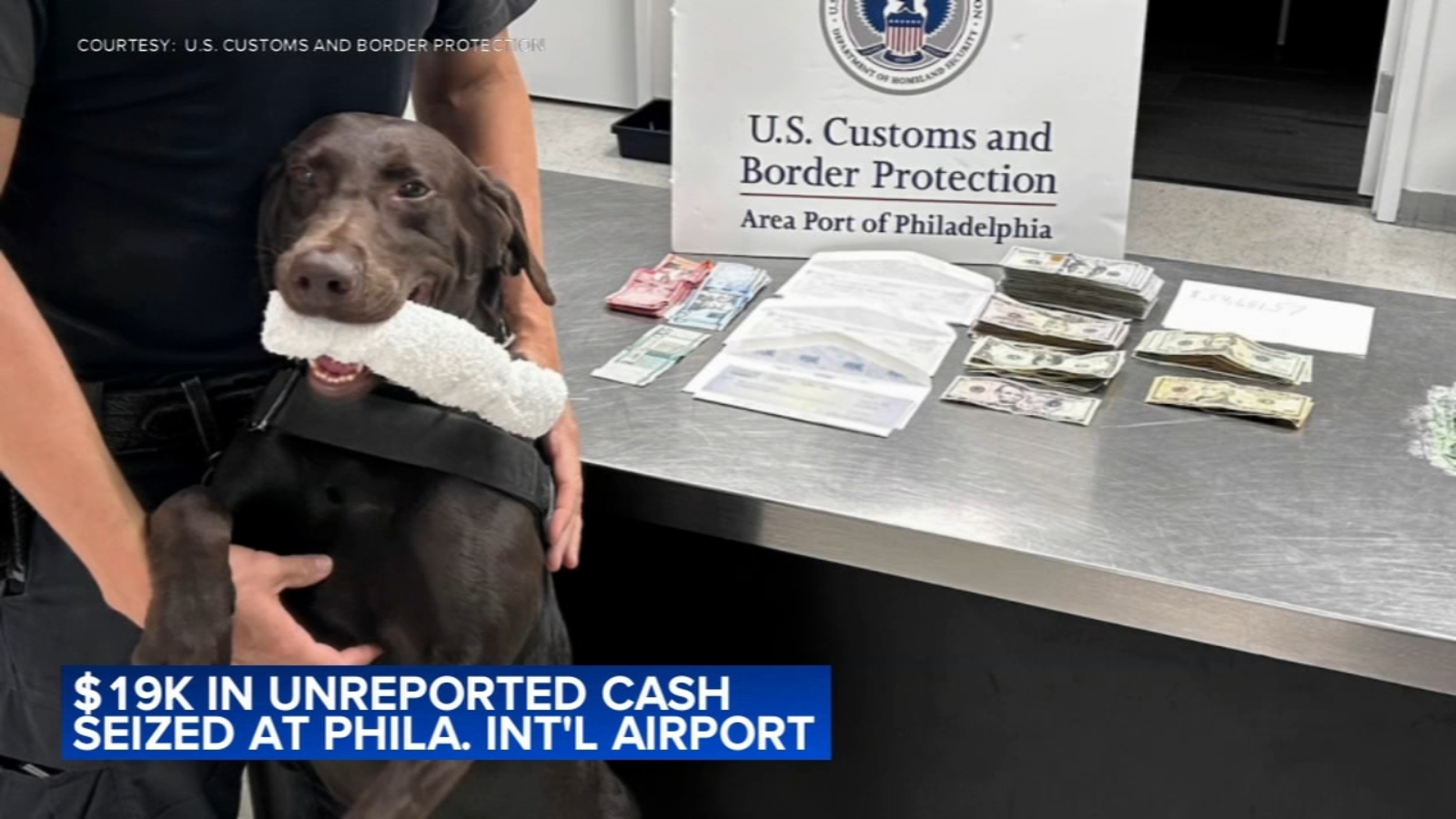
A routine Monday at Philadelphia International Airport turned into a significant k-9 cash seizure when a specially trained detection dog named Nitro uncovered more than $19,000 in unreported currency hidden among two travelers bound for the Dominican Republic. The incident, credited to the sharp senses of a U.S. Customs and Border Protection canine officer, highlights the often-unseen work that goes into safeguarding U.S. borders , and the critical role four-legged officers play in modern airport security operations.
This blog post dives into what happened, why it matters, and how federal regulations around carrying cash across international borders work. We’ll also explore the broader picture of currency seizure efforts by CBP and what travelers should know before their next international trip.
What Happened at Philadelphia International Airport
On a busy Monday at Philadelphia International Airport, Nitro, a CBP K-9 officer, was doing what he does best , detecting. As two travelers prepared to board a flight to the Dominican Republic, Nitro alerted his human handlers to something suspicious in their possession.
Officers with U.S. Customs and Border Protection conducted a follow-up inspection, and what they found was significant: the male and female travelers were carrying more than $19,000 in unreported cash. Federal law requires that any traveler transporting more than $10,000 across U.S. borders must file a report , also known as a Currency Transaction Report or FinCEN Form 105 , declaring the funds.
The travelers in this case failed to do so, triggering the seizure and a federal investigation into the source and intended destination of the money.
The Role of Detection Dogs in Customs Enforcement
Most people think of drug-sniffing dogs when they imagine a K-9 at an airport, but the reality is broader. Dogs like Nitro are trained to detect a wide range of contraband, including:
- Unreported currency , Cash carries trace amounts of certain chemicals and scents that trained dogs can identify.
- Illegal narcotics , Cocaine, heroin, methamphetamine, and fentanyl.
- Explosives and firearms , Especially in cargo and baggage screening.
- Agricultural products , Prohibited fruits, meats, and plant materials.
- Concealed humans , In some specialized units.
What makes K-9 detection dogs so effective is their extraordinary sense of smell. A trained canine can detect target odors in parts per trillion , an ability no technology currently matches. In situations involving cash smuggling, this means a dog can alert officers to hidden currency even when it’s wrapped, sealed, or concealed within luggage.
Understanding Federal Currency Reporting Laws
One of the most common misconceptions among international travelers is that carrying large amounts of cash is illegal. It isn’t. U.S. federal law allows travelers to carry any amount of money into or out of the country. However, transparency is required.
The $10,000 Threshold
Under U.S. law, anyone transporting $10,000 or more in currency or monetary instruments must report it to Customs and Border Protection. This applies to:
- U.S. dollars and foreign currency
- Traveler’s checks
- Cashier’s checks
- Money orders
- Promissory notes
- Securities or stocks
Failure to report can result in the seizure of the funds and potential criminal charges. Civil penalties can reach thousands of dollars, and willful violations can lead to felony prosecution under bulk cash smuggling statutes.
Why the Reporting Requirement Exists
The reporting threshold isn’t designed to restrict how much money you carry , it’s about transparency in financial transactions. Large sums of unreported cash are often associated with:
- Money laundering , Moving illicit funds through legitimate-seeming channels.
- Drug trafficking , Cash proceeds from illegal narcotics sales.
- Human trafficking , Profits generated from exploitation.
- Tax evasion , Hiding income from tax authorities.
- Terror financing , Funding criminal or extremist organizations.
By requiring disclosure, federal agencies can track and investigate suspicious financial flows , a key tool in the broader fight against transnational crime.
A Bigger Picture: CBP’s Daily Seizure Numbers
While the Philadelphia incident involved roughly $19,000, it’s just a tiny fraction of what CBP officers and agents encounter every single day. According to data released by Customs and Border Protection, during fiscal year 2025, the agency seized an average of approximately $180,000 in unreported or illicit currency per day.
That staggering daily figure , which totals roughly $65 million across an entire fiscal year , underscores how prevalent cash smuggling attempts are at U.S. ports of entry. Airports, land border crossings, and seaports all serve as potential chokepoints where money in motion can be intercepted.
Common Smuggling Methods
Travelers and criminal organizations use a variety of techniques to move cash across borders undetected. Some of the most common methods include:
- Hiding currency inside luggage linings or false compartments.
- Wearing specially designed clothing with hidden pockets.
- Splitting funds among multiple travelers , known as “structuring” , to keep each person’s amount below the $10,000 threshold. This practice is itself illegal.
- Concealing cash in vehicles crossing land borders.
- Using currency smuggling dogs’ adversaries , substances designed to mask the scent of money , though trained K-9s often still detect them.
In the Philadelphia case, Nitro’s alert allowed officers to bypass many of these methods, leading to a swift seizure.
The Science Behind K-9 Cash Detection
How exactly does a dog detect cash? It might surprise you to learn that money , especially U.S. currency , carries a distinct chemical signature. The materials used in printing U.S. bills, combined with traces of human handling, create a scent profile that detection dogs can be trained to recognize.
Dogs used for currency detection typically undergo weeks or months of specialized training. They’re taught to:
- Recognize the specific odor of currency, including different denominations.
- Distinguish target scents from environmental background odors.
- Signal an alert through a trained behavior , usually sitting or pawing at the source.
- Ignore distractions and remain focused in busy, high-traffic environments like airports.
This training is reinforced constantly throughout a working dog’s career, ensuring their skills remain sharp. Dogs like Nitro are valuable assets precisely because they can process sensory information faster and more accurately than any mechanical system currently available.
What Travelers Should Know Before Flying Internationally
If you’re planning international travel , whether for vacation, business, or family visits , understanding currency reporting laws can save you a lot of trouble. Here are a few practical tips:
Declare All Cash Over $10,000
If you’re carrying $10,000 or more in cash or monetary instruments, you must report it when entering or leaving the United States. This can be done quickly at the CBP inspection area or online in advance for some travelers.
Don’t Try to Structure or Conceal
Splitting money between travel companions or hiding cash is not a workaround , it’s a separate federal offense. Bulk cash smuggling carries severe penalties, including potential prison time.
Keep Records
If you have legitimate reasons to carry large sums , such as purchasing property abroad, paying for medical treatment, or conducting business , keep documentation. Bank statements, contracts, or letters can help prove the source of the funds if questioned.
Use Digital Alternatives When Possible
Wire transfers, prepaid debit cards, and international banking services often provide safer and more convenient alternatives to carrying large amounts of physical cash. These methods also create an automatic paper trail that satisfies reporting requirements.
The Human Side of K-9 Work
Behind every successful detection is a partnership between a dog and a handler. K-9 teams spend countless hours training together, building trust, and developing the kind of intuitive communication that allows them to work seamlessly in high-pressure environments.
Dogs like Nitro aren’t just tools , they’re partners. Their handlers often describe them as family members, and the bond between a K-9 team is one of the most unique relationships in law enforcement. Each successful k-9 cash seizure represents not just the dog’s skill, but the cumulative effort of trainers, veterinarians, handlers, and support staff.
For the traveling public, these teams are often invisible. Most passengers pass through airports never realizing that a dog just a few feet away is actively working to keep borders secure. When an alert happens, it can seem sudden , but it’s actually the result of years of training and preparation.
Conclusion: A Reminder of Why Reporting Matters
The recent k-9 cash seizure at Philadelphia International Airport serves as a useful reminder of the rules surrounding international travel with currency. Nitro’s alert may have uncovered $19,000 in unreported cash in this particular incident, but it represents a much larger ongoing effort by Customs and Border Protection to intercept the hundreds of thousands of dollars in illicit or unreported funds that move through U.S. ports of entry every day.
For travelers, the lesson is straightforward: transparency is your best protection. Declaring large sums of cash isn’t an admission of guilt , it’s a legal requirement that, when followed, keeps you moving smoothly through customs. Attempting to evade that requirement, on the other hand, can lead to seizure, fines, and criminal charges.
As for Nitro, his successful detection is yet another example of the vital role K-9 teams play in keeping American borders , and the financial systems connected to them , secure. In an era of increasingly sophisticated smuggling methods, a well-trained nose remains one of the most powerful tools enforcement has at its disposal.