
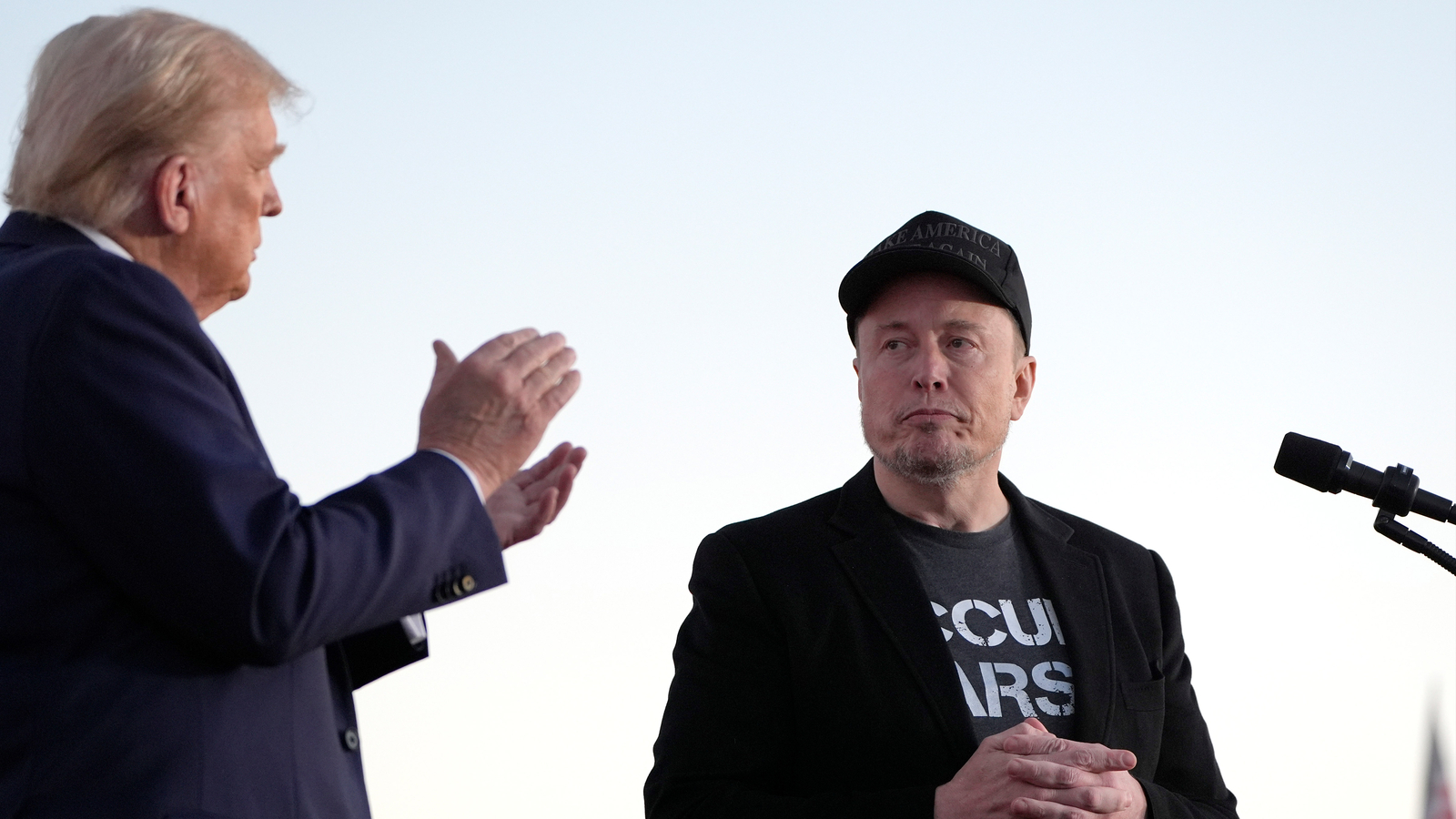
In a closely watched federal case, U.S. District Judge Tanya Chutkan declined this week to immediately block Elon Musk DOGE from accessing sensitive government data systems or participating in federal worker terminations. The ruling came in response to a lawsuit filed by a coalition of 14 state attorneys general who argued that Musk’s role with the Department of Government Efficiency raises serious constitutional questions about who wields power within the executive branch.
While the judge acknowledged that there are “legitimate questions” about the legal authority behind DOGE’s sweeping operations, she concluded that the plaintiffs had not yet demonstrated the kind of grave, irreparable harm required to justify an emergency temporary restraining order. The decision leaves Musk and his team free to continue their work across federal agencies, at least for now, as the underlying litigation moves forward.
What Judge Chutkan’s Decision Means
The ruling represents a significant tactical win for the Trump administration in the short term, even as it acknowledges the broader concerns swirling around Musk’s unprecedented influence. Judge Chutkan made clear that her refusal to impose immediate relief was not an endorsement of DOGE’s structure or methods.
During a Monday hearing, the judge did not mince words about her concerns. She described DOGE’s approach as “unpredictable and scattershot,” warning that the entity appears to be moving without a clear chain of command or accountability. In remarks that captured the unease many legal observers feel, Chutkan said:
“This is essentially a private citizen directing an organization that’s not a federal agency to have access to the entire workings of the federal government, fire, hire, slash, contract, terminate programs, all without apparently any congressional oversight.”
The 14-state lawsuit, led by Democratic attorneys general, argues that Musk’s actions can only be lawfully carried out by an official who has been nominated by the president and confirmed by the Senate under the Constitution’s Appointments Clause. Until that constitutional box is checked, the states contend, every personnel decision and data access granted to DOGE is potentially unlawful.
The DOGE Leadership Mystery
One of the most striking elements of the case is the administration’s apparent inability, or unwillingness, to clearly explain who actually runs the Department of Government Efficiency. Lawyers defending the Trump administration in court have struggled to provide a straight answer, and that confusion played a major role in Tuesday’s hearing.
The White House’s Official Position
In an affidavit filed on Tuesday, Office of Administration Director Joshua Fischer attempted to clarify the structure, but his filing raised as many questions as it answered. According to Fischer, Musk is not the administrator of DOGE, despite President Trump’s habit of publicly calling him the leader of the effort since it was announced in December 2024.
Instead, Musk has been designated as a “non-career special government employee” serving as a senior adviser to the president. The filing compared his role to that of Anita Dunn, a longtime political advisor who served as a senior adviser to President Joe Biden. Notably, the document did not name any individual who officially oversees DOGE on a day-to-day basis , only ruling out Musk from that top operational role.
This contradiction between Trump’s public statements and the administration’s legal filings has fueled criticism that the White House is crafting a convenient narrative depending on the audience. In court, Musk is a mere adviser with limited authority. On television and at rallies, Musk operates as the public face and effective leader of a sweeping government reform initiative.
Constitutional Concerns and the Appointments Clause
At the heart of the lawsuit is a question that goes to the foundations of American constitutional law: who is allowed to exercise significant authority over the federal government?
The Appointments Clause of the Constitution requires that “Officers of the United States” be appointed through a specific process , nomination by the president and confirmation by the Senate. Inferior officers can be appointed through different mechanisms, but someone wielding the kind of authority Musk has been given, including access to classified systems and the ability to recommend terminations, likely qualifies as a principal officer under longstanding Supreme Court precedent.
Attorneys general from the 14 plaintiff states argue that no matter what title Musk holds, the functions he performs demand Senate confirmation. By sidestepping that process, they contend, the administration has effectively rewritten the constitutional order and opened the door to private individuals exercising governmental power without democratic accountability.
The Trump administration has pushed back, maintaining that Musk does not have independent authority to make decisions. According to the administration’s position, all significant actions , including layoffs , flow from Senate-confirmed agency heads, not from Musk or DOGE itself.
The Broader Pattern of Lawsuits Targeting DOGE
The 14-state lawsuit is just one front in a growing legal war over DOGE’s expanding footprint. Across multiple federal agencies, Musk’s team has tapped into computer systems to comb through budgets, contracts, and personnel files, all in search of what the president has called waste, fraud, and abuse.
A rising number of lawsuits allege that this access violates federal privacy laws, the Administrative Procedures Act, and other statutory protections designed to safeguard sensitive information belonging to American citizens. Critics have raised alarms about DOGE gaining visibility into Social Security records, Treasury payment systems, and other databases that contain deeply personal financial and personal details.
Despite these legal headwinds, the White House has shown no signs of slowing down. President Trump has publicly endorsed Musk’s work and reiterated his confidence in the DOGE effort, even as the legal definitions of what DOGE actually is continue to be debated in courtrooms around the country.
Judge Bates’ Separate Ruling: DOGE as an “Agency”
Adding to the legal complexity, U.S. District Judge John Bates issued a separate ruling late Friday in which he concluded that DOGE should be treated as an “agency” under federal law, even though the Trump administration has gone to considerable lengths to avoid using that label.
Judge Bates was blunt in his assessment, writing that the administration’s avoidance of the term “agency” appears to come from a desire to escape the obligations that accompany formal agencyhood , including compliance with the Freedom of Information Act, the Privacy Act, and the Administrative Procedures Act , while still reaping the practical benefits of operating with federal authority.
This ruling creates a fascinating tension with the arguments made in the Chutkan case. If DOGE is an agency in the legal sense, then it must follow the rules that govern agencies. But if it is not an agency, then the Appointments Clause questions about who is running it become even more troubling, since the administration is essentially arguing that a private citizen is directing an undefined entity across the federal government.
What’s Next for the Legal Battle
Judge Chutkan’s refusal to grant immediate relief is not the final word in the 14-state lawsuit. The case will continue through the normal litigation process, with both sides likely to press their constitutional arguments as the discovery phase unfolds. Plaintiffs are expected to seek more detailed information about the scope of Musk’s actual authority and the chain of decision-making behind controversial DOGE-driven layoffs and data access.
Meanwhile, the parallel rulings in Washington , including Judge Bates’ classification of DOGE as an agency , will almost certainly be appealed and could eventually land before the Supreme Court. The justices may ultimately have to decide whether the structure of DOGE complies with the Constitution or whether the separation of powers has been breached.
For now, Musk remains free to continue his work alongside his DOGE colleagues, digging through federal budgets and personnel rosters. But the legal cloud hanging over the operation will only grow darker if the courts eventually conclude that the entire enterprise was built on a constitutional foundation that was never properly laid.
The Elon Musk DOGE saga is far from over. As more lawsuits work their way through the federal judiciary, Americans should expect continued debate over how much power an unelected adviser can exercise, what congressional oversight really means in practice, and whether the safeguards built into the Constitution over two centuries ago are still up to the task of restraining the modern executive branch.