
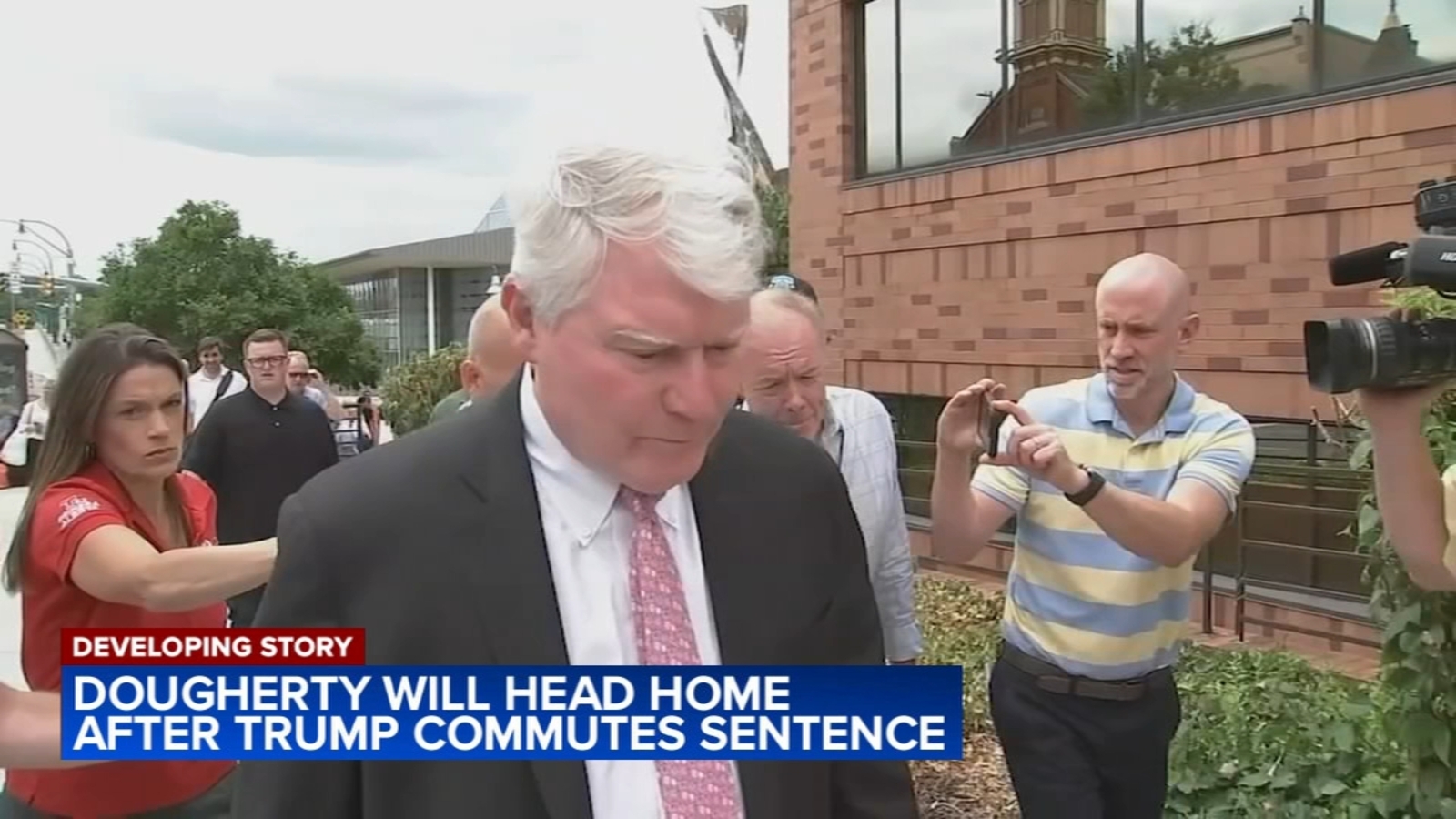
In a stunning turn of events that has captured national attention, johnny doc dougherty, the once-powerful Philadelphia labor leader, has been released from federal prison after President Donald Trump signed a full commutation of his sentence. After years behind bars for orchestrating one of the most high-profile corruption schemes in Philadelphia’s political history, Dougherty is heading home to care for his seriously ill wife. The decision marks an extraordinary act of presidential clemency for a deeply entrenched Democratic Party figure whose conviction sent shockwaves through Pennsylvania’s labor and political establishments.
The Rise and Fall of Philadelphia’s Most Powerful Union Boss
For nearly three decades, John “Johnny Doc” Dougherty stood as one of the most influential labor leaders in the City of Brotherly Love. As the longtime president of Local 98 of the International Brotherhood of Electrical Workers, he commanded enormous power,not just within the union ranks, but across Philadelphia’s broader political landscape. Dougherty was a fixture at Democratic fundraisers, a kingmaker in city council races, and a figure whose endorsement could make or break political careers in the region.
His union, Local 98 of the IBEW, represented thousands of electrical workers across the Philadelphia area, making Dougherty a central player in shaping labor policy and political alliances throughout southeastern Pennsylvania. Observers often described him as a classic big-city labor boss, wielding influence that stretched far beyond the union hall. Yet beneath that powerful exterior, federal prosecutors were building a case that would ultimately dismantle his empire.
The downfall of johnny doc dougherty serves as a cautionary tale about the abuse of power within organized labor. What began as whispers of misconduct eventually erupted into federal investigations, culminating in landmark convictions that exposed corruption at the highest levels of Philadelphia’s political and labor establishment.
The Criminal Convictions That Led to Prison
Bribery and Political Corruption
In 2021, Dougherty faced his first major federal trial, where he was convicted on bribery charges alongside former Philadelphia City Council member Bobby Henon. Prosecutors presented evidence that Dougherty had essentially installed Henon as a puppet on city council, using union resources to bankroll his political campaigns in exchange for favorable treatment on legislation affecting Local 98. The corruption trial painted a picture of backroom deals, secret payments, and a toxic relationship between powerful union interests and municipal government.
Henon was ultimately sentenced to prison for his role in the scheme, but it was the broader implications of the case that truly rattled Philadelphia’s political establishment. The verdict demonstrated that federal authorities were willing to pursue even the most entrenched labor bosses when evidence of criminal conduct emerged.
Embezzlement and Union Theft
If the bribery conviction wasn’t damaging enough, johnny doc dougherty faced a second devastating legal blow when he was convicted of embezzlement charges related to his own union. Federal prosecutors proved that he had stolen nearly $600,000 from Local 98, using union funds for personal expenses that ranged from luxury items to home renovations and family vacations. The betrayal of his own membership, the very workers he was supposed to represent, became a central theme of the prosecution’s case.
The embezzlement conviction struck particularly hard because it represented a fundamental violation of the trust placed in union leadership. Workers who paid dues expecting their money to support fair wages, safe working conditions, and strong contracts instead learned that their boss had been treating the treasury as a personal slush fund.
The 2024 Sentencing
In 2024, a federal judge handed down a sentence of six years in prison, along with three years of supervised release. The sentence reflected the seriousness of the offenses and sent a clear message that abuse of union power would not be tolerated. Dougherty began serving his time at a federal correctional institution in Lewisburg, Pennsylvania, roughly ninety minutes north of Harrisburg, where he would await his fate behind bars.
The Trump Commutation: A Presidential Intervention
How the Clemency Process Unfolded
The effort to secure early release for Dougherty was neither quick nor simple. According to his attorney, George Bochetto, the campaign to convince the Trump administration to grant clemency spanned approximately a year and a half of meticulous work. The legal team had to navigate a demanding process that involved multiple interviews, extensive documentation submitted to the Department of Justice, and a thorough presentation to White House officials explaining why early release was warranted.
Bochetto revealed that the Trump administration was unusually rigorous in evaluating the request, demanding detailed information and concrete facts before agreeing to consider any form of clemency. The lengthy vetting process underscores how seriously presidential pardons and commutations are handled, even for high-profile individuals like Dougherty whose case had been plastered across Philadelphia news outlets for years.
The Reason Behind the Decision
While many speculated about the political motivations behind the commutation, Bochetto emphasized that the primary driver was compassion. Dougherty’s wife faces devastating health challenges, including metastatic brain damage that has left her essentially paralyzed from the neck down. She requires around-the-clock nursing care, a level of medical attention that comes with staggering costs,expenses that, according to Bochetto, have left the family financially drained.
The humanitarian argument proved compelling enough to overcome the serious nature of Dougherty’s convictions. In a political environment where partisan tensions run high, the decision to release a prominent Democratic labor leader from prison demonstrates how personal circumstances can sometimes transcend political rivalries. Bochetto praised the president’s decision as “a magnificent gesture of compassion,” suggesting that Trump had risen above politics to do what he characterized as the right thing.
Reactions and Political Implications
The commutation of johnny doc dougherty‘s sentence has predictably generated strong reactions from various corners. Supporters view the decision as a just recognition of extraordinary family circumstances, while critics see it as yet another example of the president using clemency powers to reward political allies or figures who generate favorable headlines. Given Dougherty’s deep ties to the Democratic Party, the optics are particularly complex.
Philadelphia’s political establishment is processing the news carefully. The case that brought down Johnny Doc was one of the most significant federal corruption prosecutions in the city’s modern history, and the early release of its central figure reopened wounds that many hoped had begun to heal. Local 98 itself must now reckon with a future that no longer includes the man who led it for nearly thirty years,a transition that will likely reshape the union’s internal dynamics for years to come.
Meanwhile, legal observers are noting how the commutation fits into a broader pattern of presidential clemency actions during the Trump administration. The decision adds to a growing list of high-profile cases where executive intervention has altered the trajectory of prison sentences originally handed down by federal courts.
What Comes Next for Dougherty
With his release from Lewisburg, Dougherty returns to a Philadelphia that has changed significantly since his conviction. The labor landscape, his political relationships, and his personal circumstances have all been transformed by the legal battles and health crises of recent years. His immediate priority, according to his attorney, will be caring for his wife and managing the enormous medical and financial challenges his family faces.
The supervised release portion of his original sentence adds a layer of complexity to his freedom. Dougherty will likely need to comply with various court-mandated conditions while adjusting to life outside prison walls. The transition from federal incarceration to caregiving responsibilities, all while under court supervision, presents practical and emotional challenges that few people could fully prepare for.
The Broader Legacy of a Labor Boss’s Downfall
The story of johnny doc dougherty remains one of the most striking examples of how concentrated union power can go wrong when oversight fails and personal greed takes hold. From his peak as one of Philadelphia’s most feared and respected political operatives to his conviction on bribery and embezzlement charges, Dougherty’s trajectory offers critical lessons about accountability within organized labor.
Federal labor reform advocates point to cases like his as evidence of why stronger financial transparency measures are needed within unions. The nearly $600,000 he stole from Local 98 represented dues money paid by working electricians who trusted their union to advocate on their behalf. The criminal justice system ultimately delivered a measure of accountability, even if the full sentence will not be served.
As Philadelphia continues to digest this latest twist in one of its most dramatic political sagas, the full implications of the Trump commutation will unfold over the coming weeks and months. For now, johnny doc dougherty is a free man, walking out of federal prison and into a home where his presence is desperately needed. Whether the commutation represents true compassion or political calculation, the outcome is undeniably profound for the Dougherty family,and for Philadelphia’s ongoing reckoning with corruption in its labor ranks.