
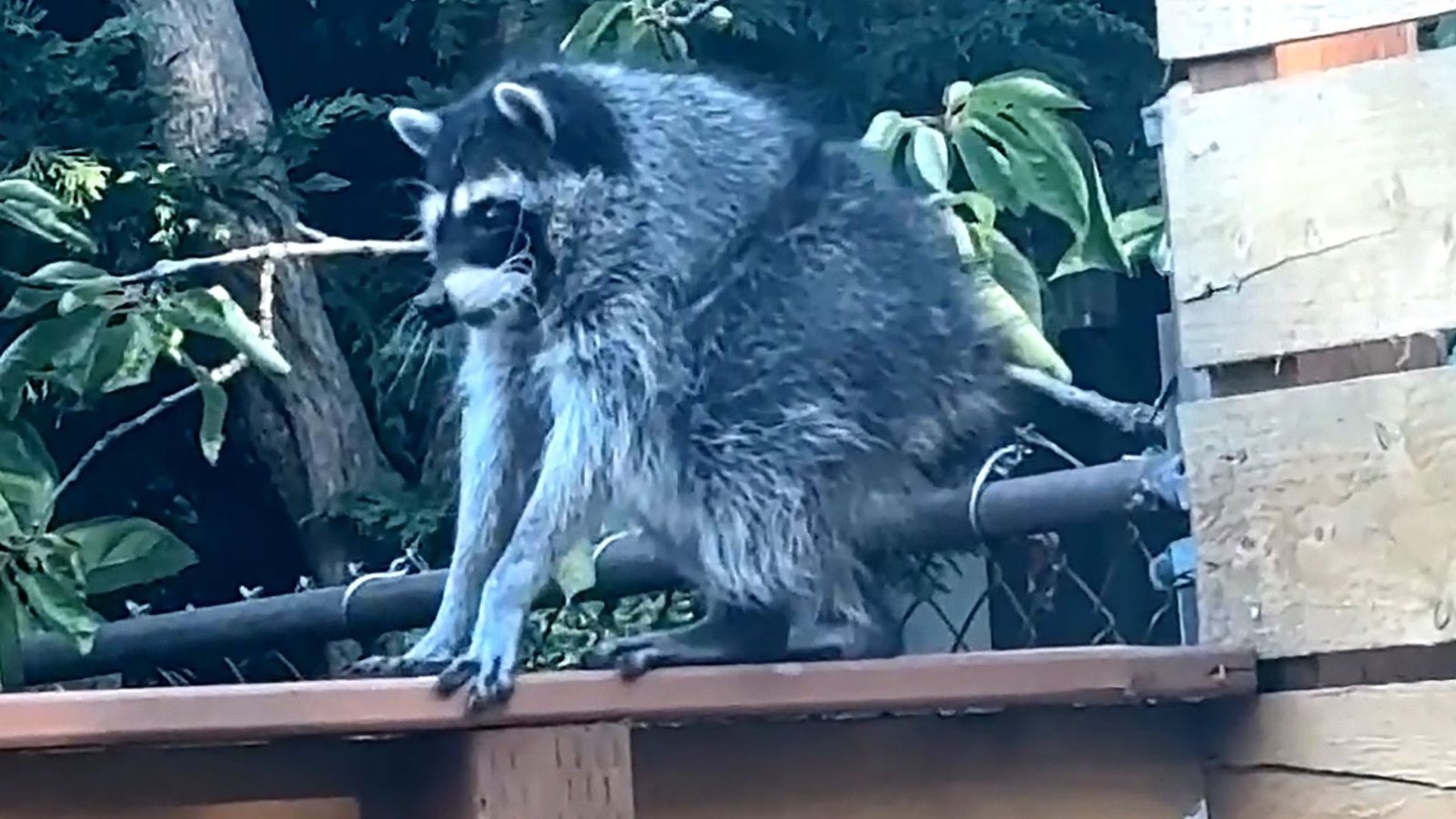
If you’ve spent any time on social media lately, chances are you’ve encountered the unmistakable charm of Jimothy the raccoon. This uniquely shaped critter from Seattle has captured hearts across the internet with his unusual body proportions, endearing personality, and remarkable story of survival in the urban wild. But who exactly is this viral sensation, and why has the world fallen so completely in love with him? Let’s dive into everything you need to know about the little raccoon who became a global phenomenon.
Meet Jimothy: Seattle’s Most Famous Resident
Jimothy the raccoon first caught widespread public attention after being spotted roaming around Seattle’s Ballard neighborhood. While city officials confirmed his recent appearances, some longtime residents report sightings dating back much further. One local, Dmitriy Ishimsky, shared that he first encountered Jimothy and his family over a year ago when the raccoon was still a baby. After a six-month absence, Ishimsky was thrilled to discover that Jimothy had not only survived but was thriving, becoming something of a neighborhood celebrity.
What makes Jimothy so visually striking is his unusual body shape. Unlike typical raccoons, Jimothy appears to have an extraordinarily short torso paired with longer-than-usual legs, giving him a distinctive, almost cartoonish appearance. A viral Instagram video captured by Seattle resident Kiana Hall shows Jimothy stretching his body across grass and a sidewalk before confidently climbing a flight of stairs, with Hall audibly wondering aloud, “What am I looking at?” That video alone racked up approximately 8 million views, launching Jimothy from local oddity to internet darling virtually overnight.
Since then, Jimothy the raccoon has appeared in numerous videos across Seattle, with residents sharing clips of him navigating fences, climbing structures, and going about his business with impressive determination. His unique physique, far from being a hindrance, seems to have become part of his charm, making every video a delightful surprise.
Understanding Short-Spine Syndrome
The condition responsible for Jimothy’s one-of-a-kind appearance is called short-spine syndrome, a rare congenital disorder that affects how the spine develops. According to Marcie Logsdon, a clinical associate professor at Washington State University’s Veterinary Teaching Hospital, this condition prevents the spine from forming normally during development.
“What happens is that the spine does not develop normally, and so it develops very shortened,” Logsdon explained. “Oftentimes, the vertebrae are just very misshapen and very shortened, and so what we end up with is this very truncated appearance, where everything from head to tail is just much shorter than it should be.”
In some cases, animals affected by this syndrome may even be missing vertebrae entirely. While short-spine syndrome in raccoons is extraordinarily uncommon, similar cases have been documented in dogs and other animals. The condition doesn’t typically affect an animal’s quality of life dramatically, though it can present some mobility challenges depending on severity. For Jimothy, however, the syndrome appears to be just one small part of who he is, a raccoon who has clearly figured out how to navigate his world on his own terms.
From Local Curiosity to National Celebrity
The Jimothy phenomenon has grown far beyond casual social media posts. What started as a few viral videos has exploded into a full-blown cultural moment, with major institutions, brands, and government bodies all hopping on the bandwagon.
The city of Seattle itself has embraced Jimothy wholeheartedly. Seattle Councilmember Alexis Mercedes Rinck announced an official city proclamation honoring the raccoon, set to take place at a dedicated event. The celebration will feature a Jimothy-themed art competition, allowing fans to express their adoration through creative expression. It doesn’t get much more official than receiving recognition from your local government.
Major organizations have also joined the Jimothy fan club:
- Seattle Mariners: The baseball team created a Jimothy mascot that competed in their beloved Salmon Run, a mid-fourth-inning race featuring salmon-costumed mascots. Spoiler alert: Jimothy won.
- NASA: Even the space agency couldn’t resist acknowledging the raccoon, referencing Jimothy in social media posts that delighted fans.
- Google: The search giant added a special animation of Jimothy running across the results page whenever users search his name.
- National Bobblehead Hall of Fame and Museum: They rolled out an official Jimothy bobblehead available for pre-sale at $30, immortalizing the raccoon in collectible form.
This level of mainstream recognition is virtually unprecedented for a wild raccoon. Jimothy has transcended the typical viral moment and become something of a folk hero, a symbol of resilience, uniqueness, and the unexpected joy that can be found in our own backyards.
The Internet’s Collective Obsession
What is it about Jimothy the raccoon that has resonated so deeply with millions of people around the world? Part of the appeal undoubtedly lies in his physical uniqueness. We’re conditioned to expect animals to look a certain way, and Jimothy defies those expectations in the most charming manner possible. His unusual proportions have sparked countless memes, fan art pieces, and social media tributes.
Beyond the novelty factor, though, there’s something genuinely heartwarming about Jimothy’s story. He’s a wild animal navigating a bustling urban environment with what many would consider a significant physical difference, and he’s not just surviving, he’s thriving. That kind of underdog narrative, whether applied to a raccoon or a person, tends to strike a universal chord.
Comment sections across platforms have been flooded with messages of support, admiration, and pure delight. People who have never set foot in Seattle feel a personal connection to this scrappy little creature. He’s become a reminder that nature is full of surprises, and that differences should be celebrated rather than feared.
Important Safety Considerations Around Wildlife
As much as the world adores Jimothy the raccoon, public health officials have been quick to remind everyone that he is, first and foremost, a wild animal. The Seattle and King County public health department issued guidance encouraging residents to maintain a respectful distance, despite the understandable temptation to get closer to such a famous critter.
“We fell hard for Jimothy and all of his memes. But our public health veterinarian reminded us that all wildlife need some distance from humans,” the health agency shared in a Facebook post. “Jimothy is adorable, but please don’t feed or interact with raccoons. They can carry bacteria and roundworms, and when cornered or stressed, any wildlife can bite.”
The department also noted that while raccoons in the Pacific Northwest region aren’t typically known carriers of rabies, there’s always a small possibility that the disease could eventually spread to local raccoon populations. This makes responsible wildlife viewing practices especially important.
Logsdon echoed these safety recommendations, offering straightforward advice for anyone lucky enough to spot Jimothy in person: “If people see Jimothy, respect him from a distance. Take your picture, share it with your friends, but don’t try to approach him. Don’t try to catch him.”
These warnings aren’t meant to dampen anyone’s enthusiasm. They’re simply a reminder that Jimothy’s wellbeing depends on humans giving him the space he needs to live his life as a wild animal. The best way to support Jimothy is to appreciate him from afar and let him continue doing his thing.
What Jimothy Teaches Us About Urban Wildlife
The Jimothy phenomenon has inadvertently sparked important conversations about how we coexist with wildlife in urban environments. Cities like Seattle are home to countless wild animals who have adapted to human presence, often in remarkable ways. Jimothy’s story highlights the beauty and resilience of these creatures while also underscoring our responsibility to respect their natural behaviors.
For conservation advocates, Jimothy represents an opportunity to raise awareness about congenital conditions in wildlife, the challenges faced by animals with physical differences, and the importance of habitat preservation. Every share, every meme, every conversation about Jimothy brings more attention to these topics than any formal campaign likely could.
The Future of Seattle’s Favorite Raccoon
With his official city proclamation, growing collection of merchandise, and ever-expanding fan base, Jimothy the raccoon shows no signs of fading from public consciousness anytime soon. As long as he continues navigating Seattle’s neighborhoods with his characteristic determination, people will keep their cameras ready.
Whether he’s climbing fences, strolling across sidewalks, or simply existing in his wonderfully unique way, Jimothy has given the internet something it desperately needed in recent times: a reason to smile. He represents the magic that can happen when we pay attention to the world around us, even in our own backyards.
Final Thoughts
Jimothy the raccoon is more than just a viral meme or a passing internet trend. He’s a living reminder that nature is full of wonder, that differences make the world more interesting, and that even a small raccoon with short-spine syndrome can capture the hearts of millions. His story encourages us to slow down, observe the wildlife around us, and appreciate the unique creatures who share our urban spaces.
So the next time you’re walking through Seattle’s Ballard neighborhood, keep your eyes peeled. You might just spot Jimothy himself, doing what he does best: living life on his own terms and reminding everyone that being different is something worth celebrating. Just remember to keep your distance, take plenty of pictures, and let this little legend continue his journey the way nature intended.