
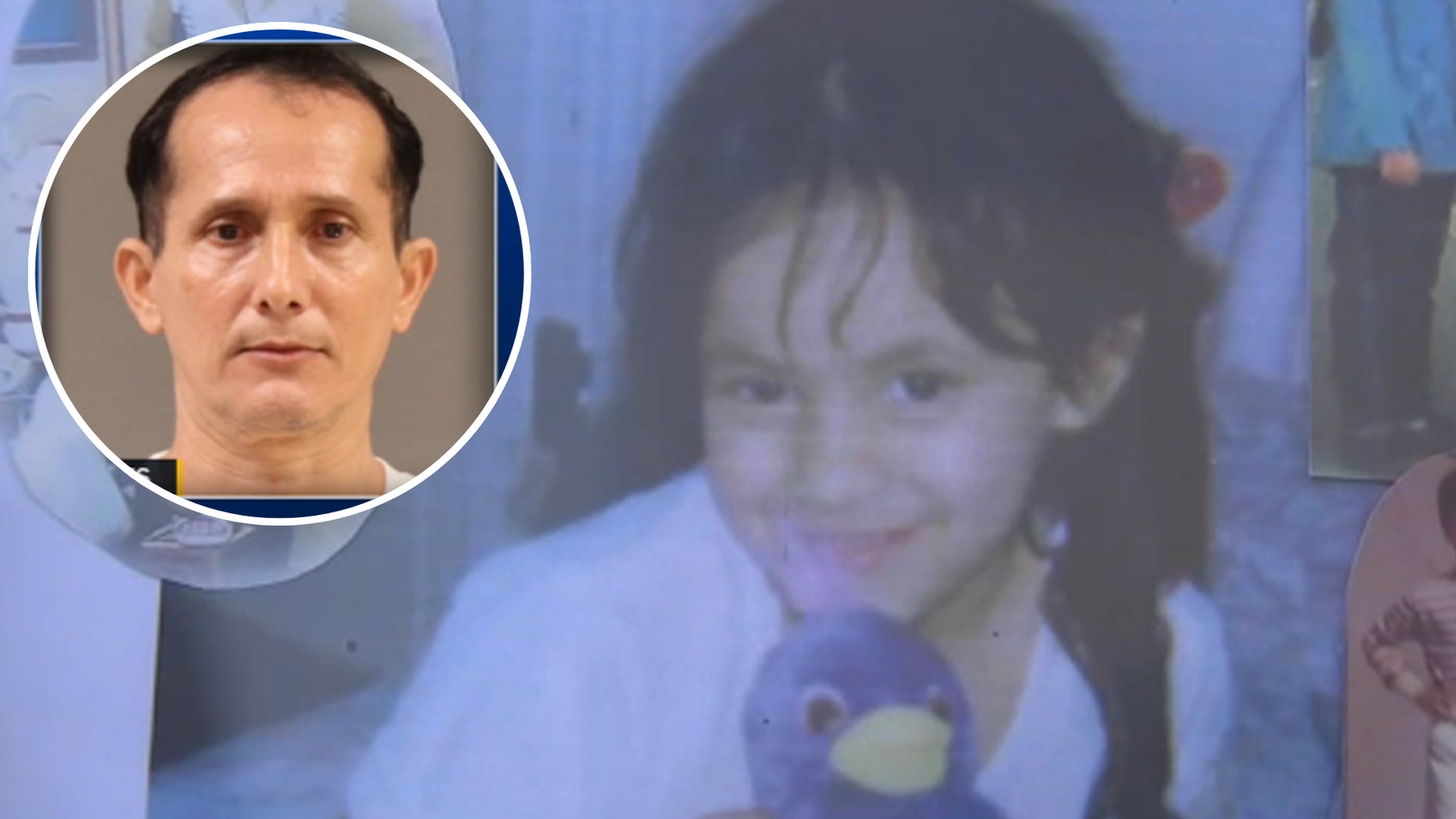
A case that has haunted Philadelphia for more than two decades has taken a significant step forward. Alexis Flores, the man accused of the iriana dejesus murder in 2000, has been extradited from Honduras to Philadelphia to face charges in the kidnapping, rape, and killing of a 5-year-old girl whose disappearance shattered a North Philadelphia neighborhood. After 25 years of waiting, her family now watches as the wheels of the justice system finally begin to turn in the direction they have long prayed for.
The arrest and extradition of Flores marks one of the most consequential developments in a cold case that has spanned a quarter of a century. Once listed among the FBI’s Ten Most Wanted Fugitives, Flores is now in Philadelphia custody, held without bail, with a preliminary hearing scheduled for September 14.
The Tragic Crime That Shook North Philadelphia
In the summer of 2000, the quiet streets of North Philadelphia were home to a heartbreaking tragedy that would forever change a family and a community. Iriana DeJesus, just 5 years old, disappeared in July of that year while playing outside her home. Her absence triggered frantic searches, desperate prayers, and sleepless nights for a family desperate to bring her home safely.
Tragically, the worst fears of those who loved her were realized in August 2000, when Iriana’s body was discovered wrapped inside wallpaper in a vacant property located only a block away from where she had last been seen. The nature of the crime, a young child kidnapped, sexually assaulted, and murdered, sent shockwaves through the city and remains one of the most heartbreaking cases in Philadelphia’s recent history.
The uncle of Iriana, Jose Garcia, has carried the weight of that loss for decades. Speaking through tears in the years following the crime, he reflected on the little girl he once took to church, for whom he made breakfast, and whose path he tried to guide toward goodness. His memories now stand in stark contrast to the violence that took her far too soon.
The Long Road to Identifying a Suspect
The investigation into the iriana dejesus murder proved extraordinarily challenging. Despite aggressive efforts by Philadelphia detectives in the immediate aftermath, the case went cold for several years. The breakthrough came in 2007, when DNA evidence definitively linked Flores to the crime. Once identified as a suspect, he was placed on the FBI’s Ten Most Wanted Fugitives list, a designation that dramatically increases public awareness and often generates critical tips.
What makes the case particularly frustrating for law enforcement and the family is that Flores had already been in custody once. In 2004, he was arrested in Arizona on separate charges, but he did not remain in custody and was eventually deported to Honduras. That sequence of events allowed the suspect to slip back to Central America, where he would remain out of reach of American authorities for nearly two more decades.
FBI officials credit the agency’s Ten Most Wanted Fugitives program, along with persistent public awareness campaigns, as central to tracking him down. The program, designed to generate leads through widespread media exposure, often relies on the understanding that fugitives cannot hide forever, especially when their faces are broadcast to millions.
Capture and the Fight Against Extradition
How Alexis Flores Was Finally Apprehended
Flores was captured in February in Honduras, bringing to a close years of cross-border investigative work. However, his capture did not immediately deliver him into the hands of American authorities. According to FBI Special Agent in Charge Wayne Jacobs, who leads the agency’s Philadelphia Field Office, every person wanted for extradition outside the territory where they are wanted has the right to contest that extradition in a foreign court.
Flores exercised that right. For months, he fought the legal process in Honduras, attempting to prevent his return to Philadelphia. Ultimately, he exhausted every legal avenue available to him, and on Sunday night, authorities successfully transported him back to the United States. The District Attorney’s Office formally announced charges on Tuesday.
Legal Status and Upcoming Court Dates
Flores is currently being held without bail at a Philadelphia facility. A preliminary hearing has been set for September 14, marking the first major procedural milestone in what promises to be a lengthy prosecution. At this stage, authorities have not yet released information on when a full trial may take place, but officials are committed to pushing the case through the courts as efficiently as possible.
Philadelphia Police Commissioner Kevin Bethel acknowledged that while the extradition represents a significant victory, the legal battle is far from over. Speaking at FBI headquarters, he emphasized that the priority now is bringing the case to a successful conclusion. The process, he reminded the public, has only just begun.
The Family’s Pain and Persistent Hope
For the family of Iriana DeJesus, news of Flores’s extradition is both a deeply meaningful milestone and a painful reminder of the years they have spent waiting. Garcia, the uncle who has spoken on behalf of the family, has described the emotional complexity of the moment. While he expressed anger, stating plainly that he wants the suspect to “suffer,” he also communicated an enduring hope that has carried him through more than two decades of uncertainty.
The family’s reaction captures the dual nature of cold-case resolutions. There is relief in finally having a suspect in custody, but there is no undoing the harm that was done. The little girl who once loved going to church, eating pancakes made by her uncle, and playing outside with neighborhood friends will never return, and no verdict can fully address that loss.
The Broader Significance of the Extradition
Cooperation Across Borders
This case demonstrates the critical importance of international cooperation in pursuit of justice. The extradition process required coordination between American law enforcement agencies, Honduran authorities, and diplomatic channels. Such cooperative efforts are increasingly vital in cases involving suspects who flee across borders to avoid prosecution.
Lessons for Cold Case Investigations
The resolution of the iriana dejesus murder case after 25 years offers hope to families of other victims whose cases have grown cold. Wayne Jacobs, addressing reporters at FBI headquarters, made clear that the agency’s commitment does not have an expiration date. “No matter how much time has passed, no matter how much effort it takes, our commitment is always to the victims and families to provide justice,” he said.
DNA forensic technology, which has advanced dramatically since the early 2000s, continues to play a transformative role in cold case investigations. Evidence preserved from crime scenes decades ago can now be analyzed with techniques that weren’t available at the time the crimes were committed. The DeJesus case is a powerful example of how scientific progress can reopen doors that had seemingly been closed permanently.
What Comes Next in the Case
With Flores now in custody, several important steps remain before the case can be adjudicated:
- Preliminary hearing: Scheduled for September 14, during which a judge will determine whether there is sufficient evidence to proceed to trial.
- Trial proceedings: Philadelphia prosecutors will need to present their case, which will likely rely heavily on the 2007 DNA evidence and additional investigative findings.
- Victim impact: The family will have the opportunity, at the appropriate stage, to speak about the lasting impact of the crime on their lives.
- Sentencing considerations: If convicted, Flores faces significant penalties, though the precise charges and potential sentencing range have not been disclosed publicly.
Authorities continue to emphasize that the investigation is ongoing, and additional details may emerge as the case progresses through the courts.
A Community Still Healing
Twenty-five years may seem like a long time, but for the residents of North Philadelphia who remember the summer of 2000, the pain has never fully faded. The block where Iriana played, the vacant property where she was found, and the faces of her grieving family are memories etched into the community’s identity. The arrival of Flores in Philadelphia does not erase that history, but it does offer a measure of accountability that had long seemed out of reach.
For cold case advocates and victim families across the country, the resolution of the iriana dejesus murder case is a reminder that justice, though sometimes delayed, can still arrive. Advances in forensic science, persistent investigative work, and international partnerships all combine to create a modern reality in which the passage of time is no longer a guaranteed shield for perpetrators of the worst crimes.
Conclusion
The extradition of Alexis Flores to Philadelphia represents a hard-won victory for a family that never stopped hoping for justice in the iriana dejesus murder. After a quarter-century of grief, unanswered questions, and unwavering determination, the family now stands at the threshold of the courtroom where they have long wished to face the man accused of taking their little girl. While no legal outcome can bring Iriana back, the commitment of law enforcement to pursue justice, regardless of how many years have passed, offers a powerful affirmation that victims are never forgotten. As the case moves toward its next chapter, the eyes of a community, and of countless advocates for cold case victims, will remain fixed on Philadelphia, watching as the pursuit of justice finally reaches the finish line that officials have promised to cross.