
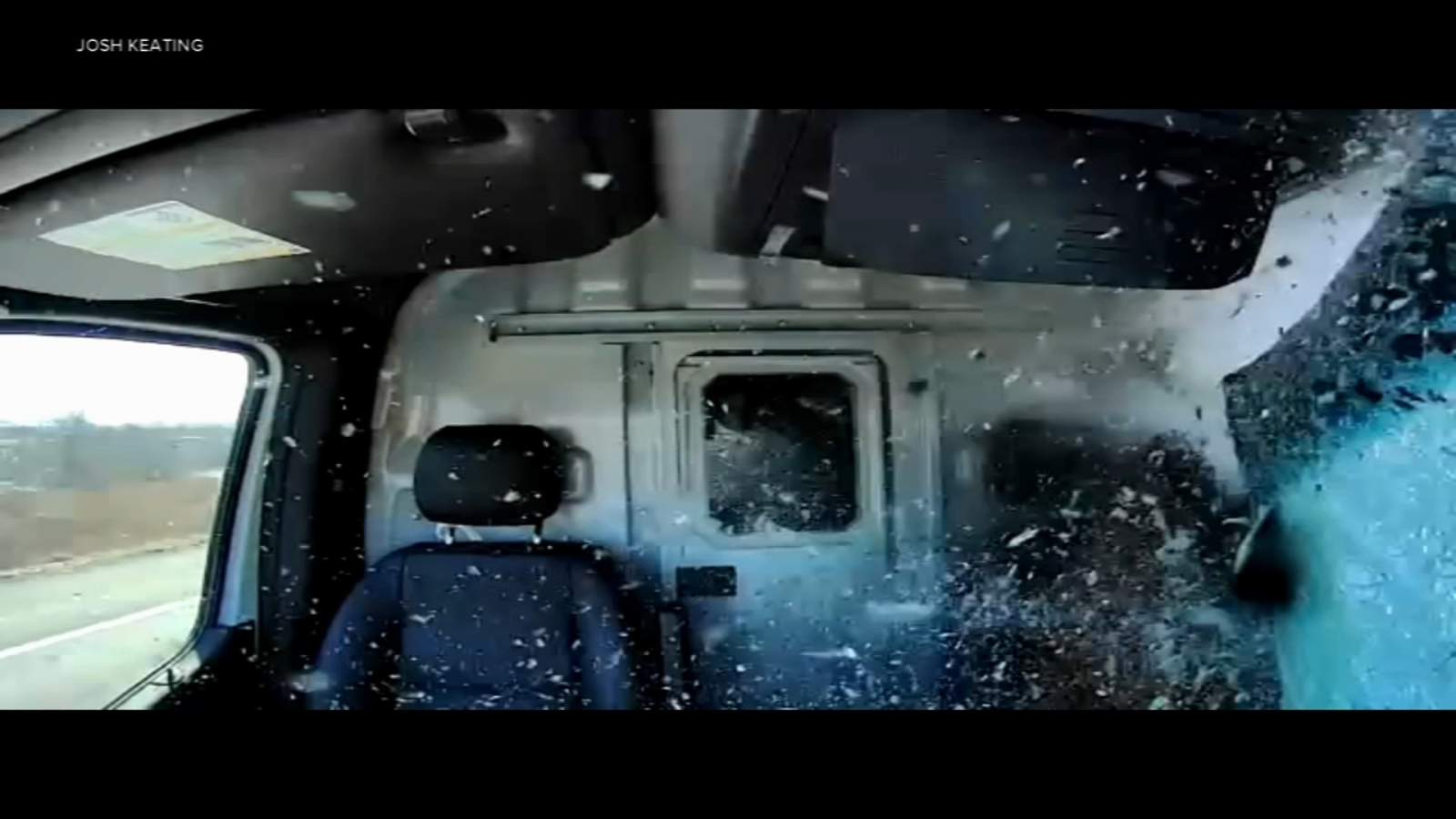
A truck driver in Northeast Pennsylvania is counting his blessings after a terrifying moment in which a massive chunk of ice crashes through windshield glass, sending shattered debris flying into the cab of his vehicle. The shocking incident, captured on dashcam, occurred along Route 78 as the driver headed toward Allentown, Pennsylvania, transforming what should have been a routine haul into a scene straight out of an action movie.
The driver, Josh Keating, escaped the harrowing encounter with little more than cuts and bruises on his hands,a fact he attributes to divine intervention. The dramatic footage has since circulated widely, serving as a stark reminder of how quickly a winter drive can turn dangerous when ice dislodges from a passing vehicle.
The Moment Everything Changed
According to the report, Keating was traveling along Route 78 when, without warning, a large chunk of ice smashed through the windshield of his truck. The impact happened in a literal split second,one moment he was driving normally, and the next he was surrounded by a spray of shattered safety glass.
Remarkably, Keating maintained enough composure to safely maneuver his truck to the shoulder of the roadway. Once stopped, he called emergency responders and assessed his injuries. Despite the violence of the impact, his wounds were limited to minor cuts and bruises, primarily on his hands.
“I Had an Angel with Me”
Speaking with local ABC affiliate WNEP, Keating described the surreal experience in humble terms. He noted that when the ice crashed through his windshield, he instinctively raised his hand to shield his face from the incoming glass. That reflexive action likely saved him from far more serious injuries, including potential blindness or facial trauma.
His reflection on the near-miss was deeply personal: “I had an angel with me.” For Keating, the fact that he walked away from such a violent collision is nothing short of miraculous, and his story has resonated with countless drivers who understand how vulnerable motorists are when sharing the road with improperly maintained vehicles.
The Hidden Danger Lurking Above
The incident shines a spotlight on a hazard that often goes overlooked during the winter months: large sheets or chunks of ice flying off commercial trucks, SUVs, and other tall vehicles. When temperatures fluctuate around freezing, snow and ice accumulate on rooftops, hoods, and trailers. If a driver fails to clear that buildup before hitting the road, the resulting dislodged ice can become a deadly projectile.
Ice falling from vehicles has long been recognized as one of the most dangerous winter driving hazards. Unlike smaller road debris, a heavy slab of ice falling from a moving truck can:
- Shatter windshields on contact, leaving drivers exposed to cold air and blinding shards
- Cause immediate loss of visibility, leading to multi-vehicle collisions
- Stun or distract drivers, even when no glass is broken
- Strike pedestrians or other vulnerable road users with crushing force
The forces at play when a large chunk of ice strikes a windshield at highway speeds are staggering. Even a modest slab weighing just a few pounds can deliver an impact equivalent to dropping a cinder block from several stories high. When you multiply that by closing speeds between two vehicles, the destructive potential becomes clear.
Pennsylvania’s Snow and Ice Removal Law
The incident occurred in Pennsylvania, a state that has taken legislative steps to address the recurring problem of flying ice. Under state law, drivers have a 24-hour window after snowfall ends to remove accumulated snow or ice from their vehicles before getting back on the road. The law specifically targets commercial vehicles and passenger cars that may have ice built up on roofs, hoods, and other flat surfaces.
Failure to comply with the law can result in significant consequences, particularly when the failure leads to harm. If a driver causes injury or death because ice dislodges from their vehicle, fines can range from $200 to $1,500. While that may sound modest given the potential consequences, the penalties can escalate when combined with civil liability for damages or injuries.
Similar Laws Across the Country
Pennsylvania is not alone in addressing this hazard. Many states have implemented their own versions of snow and ice removal laws, including:
- New Jersey – Fines can reach $1,500 for vehicles that drop ice or snow causing injury or property damage
- Connecticut – Drivers can be fined between $200 and $1,000 for failing to clear their vehicles
- New York – Fines start at $150 but can climb to $750 for repeat violations
- Ohio – Penalties range from $25 to $100 for first-time offenders
Despite these laws, enforcement remains a significant challenge. Police officers rarely witness the exact moment ice dislodges from a vehicle, and proving that a particular truck was the source of a flying chunk often requires witness testimony or video evidence,exactly what saved Josh Keating’s case from being just another statistic.
Why Dashcam Footage Matters
One of the most valuable aspects of the Keating incident is the dashcam footage that documented the moment ice crashed through his windshield. This kind of evidence can be crucial in:
- Identifying the responsible vehicle and holding its driver accountable
- Supporting insurance claims for vehicle damage, medical bills, and lost wages
- Building legal cases when criminal charges or civil suits are pursued
- Educating the public about the real dangers of unmaintained vehicles
For commercial truck drivers in particular, dashcams have become nearly indispensable tools, providing an objective record of events that can protect them from false claims and document genuine hazards. The relatively modest investment in a quality dashcam system has proven its worth many times over for drivers like Keating.
Essential Safety Tips for Winter Driving
Whether you’re behind the wheel of a commercial rig or a family sedan, there are practical steps every driver can take to reduce the risk of ice-related incidents:
For Drivers of Larger Vehicles
- Clear every surface thoroughly before departing, including roofs, hoods, and trailer tops
- Use proper equipment like snow brushes with extendable handles to reach high surfaces safely
- Check mirrors and cameras to ensure visibility isn’t compromised by leftover ice
- Stop periodically during long trips to remove ice that may have built up during travel
- Invest in heated mirrors and wipers for better visibility during winter conditions
For All Motorists
- Maintain safe following distances, especially when driving near commercial vehicles
- Avoid driving directly behind trucks, vans, and SUVs that show visible snow or ice buildup
- Be prepared for sudden impacts by keeping both hands on the wheel at all times
- Install a quality dashcam to document incidents for insurance and legal purposes
- Know your state’s laws regarding snow and ice removal to understand your rights and responsibilities
A Wake-Up Call for Winter Road Safety
The story of Josh Keating’s lucky escape serves as a powerful reminder of how quickly routine winter travel can become catastrophic. While Keating emerged from the experience with relatively minor injuries, the outcome could have been tragically different. A slightly different angle of impact, a few inches of difference in his seating position, or a moment’s delay in his protective reflex could have resulted in severe injury or death.
Drivers of all vehicles share responsibility for keeping our roads safe during the winter months. The few minutes spent clearing ice and snow before driving isn’t just a legal obligation in many states,it’s a moral imperative that could save another person’s life. As Keating himself acknowledged, his survival was nothing short of miraculous, but miracles shouldn’t be the only thing standing between drivers and disaster.
If you’re planning winter travel, take a moment to clear your vehicle completely before hitting the road. And if you encounter a vehicle shedding ice or snow, give it plenty of space and report it to local authorities when possible. Together, we can make winter roads safer for everyone who uses them.