
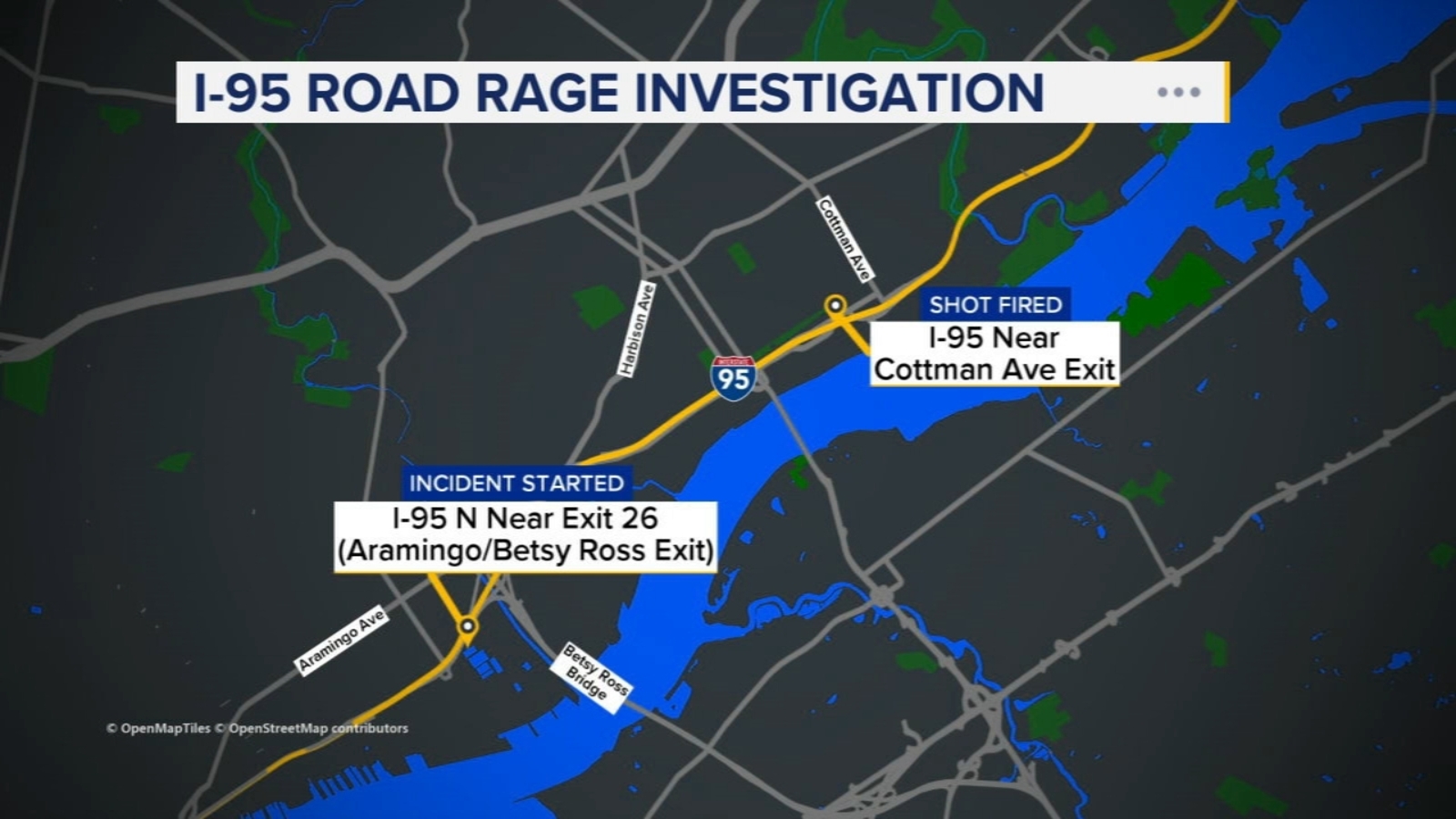
A road rage shooting on Interstate 95 in Philadelphia left one driver shaken but physically unharmed after a terrifying encounter escalated from a lane change to gunfire. The incident, which occurred on a Sunday afternoon, highlights the growing concern over aggressive driving behavior and the dangerous intersection of traffic disputes and firearm use on America’s highways.
According to Philadelphia police, the victim was traveling northbound on I-95 near the Aramingo/Betsy Ross Bridge exit when the situation unfolded in a matter of seconds. What began as a routine lane change quickly transformed into a life-threatening confrontation involving a thrown object and a bullet fired at close range. The victim escaped injury, but the emotional toll of such a harrowing experience cannot be overstated.
What Happened on I-95?
The chain of events began shortly after 5:15 p.m. when the victim changed lanes and inadvertently cut off a newer model red SUV. The driver of the SUV responded with immediate hostility, first throwing a can at the victim’s vehicle and then escalating the situation by firing a single shot at the car near the Cottman exit.
Fortunately, the bullet did not strike the driver, and no injuries were reported. However, the psychological impact of being fired upon while driving at highway speeds can be devastating. Victims of such incidents often experience lasting anxiety, fear of driving, and post-traumatic stress that can affect their daily lives long after the physical danger has passed.
Authorities have described the suspect’s vehicle as a newer model red SUV with dark tinted windows, a description that has been shared widely in an effort to identify the shooter. The Philadelphia Police Department continues to investigate the case and is urging anyone with information to come forward.
The Growing Epidemic of Road Rage Shootings
This Philadelphia incident is far from isolated. Across the United States, road rage shootings have become an alarming trend that traffic safety experts and law enforcement agencies are struggling to address. The combination of congested roadways, heightened stress levels, and easy access to firearms has created a dangerous environment where minor traffic disputes can turn deadly in an instant.
National Statistics on Road Rage
Studies from organizations like the AAA Foundation for Traffic Safety paint a troubling picture of aggressive driving behavior across the country:
- Over 200 people are killed annually in road rage-related incidents in the United States, according to various traffic safety analyses.
- Approximately 80% of drivers report experiencing significant anger, aggression, or road rage behind the wheel at least once in the past year.
- Firearm-related road rage incidents have increased substantially over the past decade, with shooting deaths from road rage more than doubling in recent years.
- Young male drivers are statistically the most likely to engage in aggressive driving behaviors, including tailgating, yelling, and confrontational gestures.
These numbers underscore the urgent need for greater awareness, education, and enforcement to address what has become a genuine public safety crisis on American roadways.
Why Highways Like I-95 Are Hotspots for Aggressive Driving
Interstate 95, which runs along the East Coast from Maine to Florida, is one of the busiest and most congested highways in the United States. The section that passes through Philadelphia is particularly prone to heavy traffic, merging challenges, and frequent lane changes,all factors that can contribute to driver frustration and aggression.
Common Triggers for Road Rage
Understanding what triggers aggressive driving can help motorists recognize potential flashpoints and avoid confrontations:
- Crowded conditions: Heavy traffic, construction zones, and bottlenecks create stress and impatience among drivers.
- Perceived disrespect: Being cut off, tailgated, or passed aggressively can feel personal, even when it’s accidental.
- Running late: Time pressure amplifies frustration and reduces tolerance for delays or slow drivers.
- Anonymity behind the wheel: The enclosed space of a vehicle can make people feel less accountable for their actions.
- External stressors: Financial worries, work pressure, or personal problems can spill over into driving behavior.
When these factors combine with the presence of a firearm, the consequences can be catastrophic,as the Philadelphia road rage shooting incident demonstrates.
How to Protect Yourself on the Road
While no one can completely eliminate the risk of encountering an aggressive driver, there are practical steps every motorist can take to reduce their chances of becoming a victim of road rage violence.
Defensive Driving Strategies
The best defense against road rage is to avoid triggering it in the first place. Experienced driving safety instructors recommend the following strategies:
- Avoid cutting off other vehicles: Always check your mirrors and blind spots before changing lanes, and use your signals well in advance.
- Don’t tailgate: Maintain a safe following distance of at least three seconds under normal conditions.
- Stay out of the left lane unless you are actively passing another vehicle.
- Don’t engage: If another driver is behaving aggressively, avoid making eye contact, gesturing, or otherwise responding to their provocation.
- Create distance: If someone is following you aggressively, change lanes, take an exit, or pull into a safe public location like a gas station or police station.
If You Feel Threatened
There may come a moment when you sense that a confrontation is escalating beyond what you can safely ignore. In these situations, your priority should be personal safety above all else.
- Do not stop on the highway or pull over in an isolated area.
- Call 911 immediately if you feel your life is in danger, and provide your location and direction of travel.
- Drive to a populated, well-lit area such as a busy intersection, shopping center, or police precinct.
- Avoid eye contact with an aggressive driver, as this can be perceived as a challenge.
- Stay inside your vehicle with doors locked and windows up.
Legal Consequences of Road Rage Shootings
The individual responsible for the Philadelphia road rage shooting faces serious criminal charges if apprehended. Depending on the circumstances and jurisdiction, discharging a firearm at another vehicle can result in charges ranging from aggravated assault and reckless endangerment to attempted murder.
Pennsylvania has some of the stricter gun laws in the region, and using a firearm during a traffic altercation,even if no one is physically injured,can lead to significant prison time. Additionally, civil lawsuits are common in such cases, as victims often seek compensation for emotional distress, psychological counseling, and other damages.
The Broader Policy Debate
Incidents like the I-95 shooting have reignited discussions about gun policy, traffic enforcement, and public safety. Some advocates argue that stricter firearm regulations could reduce the likelihood of road rage turning deadly, while others emphasize the importance of driver education and de-escalation training.
What remains clear is that the intersection of firearms and traffic disputes is a uniquely American problem that demands a multifaceted approach involving law enforcement, legislative action, community engagement, and individual responsibility.
Community Response and Ongoing Investigation
The Philadelphia Police Department has appealed to the public for assistance in identifying the suspect. The description,a newer model red SUV with dark tinted windows,has been circulated through local media and community channels. Witnesses who may have seen the incident or have dashcam footage are encouraged to contact authorities.
Community leaders and traffic safety advocates have also used this incident as an opportunity to remind drivers of the importance of patience and restraint behind the wheel. Local organizations have called for increased patrols on high-traffic corridors like I-95 and for greater public awareness of the dangers of road rage.
Moving Forward: A Call for Safer Roads
The road rage shooting on I-95 in Philadelphia serves as a stark reminder that a single moment of anger behind the wheel can alter lives forever. While the victim in this case was fortunate to escape physical harm, the trauma of being fired upon while driving will likely stay with them for years to come.
As motorists, we all share responsibility for making our roads safer. By practicing patience, exercising empathy, and committing to defensive driving techniques, we can collectively reduce the frequency and severity of road rage incidents. Law enforcement agencies, policymakers, and community organizations must also continue working together to address the root causes of aggressive driving and ensure that those who resort to violence face appropriate consequences.
If you have any information about the I-95 road rage shooting in Philadelphia, please contact the Philadelphia Police Department or submit a tip anonymously through Crime Stoppers. Your assistance could help prevent the next tragedy and bring accountability to a dangerous act of violence that has no place on our highways.