
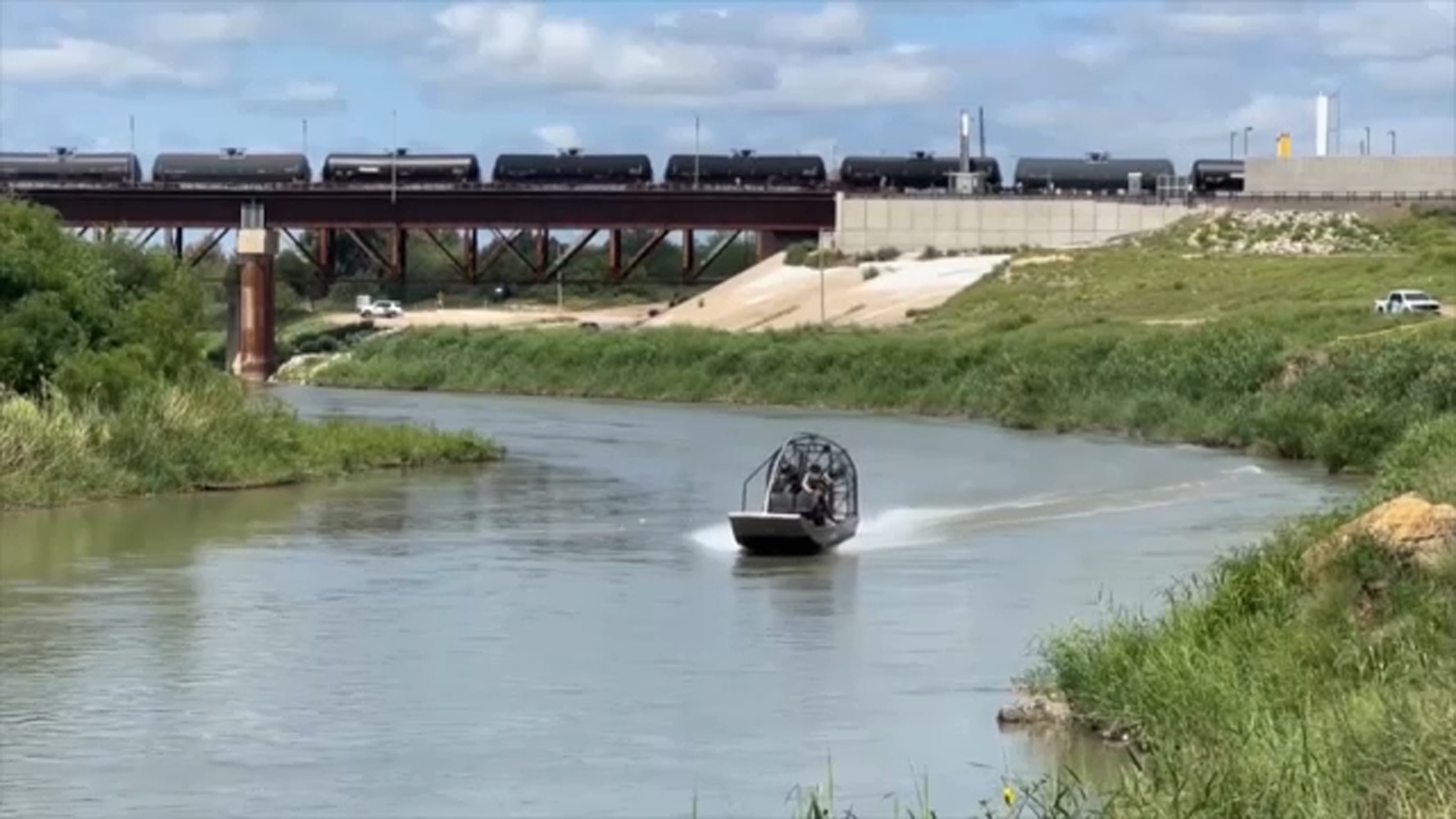
The devastating human smuggling train deaths along the Texas-Mexico border have once again highlighted the deadly risks associated with illicit cross-border transportation. Six migrants , including a 14-year-old boy from Honduras , were found dead inside a sealed freight train boxcar that had traveled more than 1,500 miles from Long Beach, California. The tragic discovery, made on a Sunday in Laredo, Texas, has prompted a multi-agency investigation into the smuggling network responsible for one of the deadliest freight train smuggling incidents in recent U.S. memory.
This heartbreaking event underscores the growing dangers of human smuggling operations that exploit freight rail systems, and it has reignited conversations about border security, migrant safety, and the criminal organizations profiting from vulnerable populations.
The Discovery in Laredo
According to Laredo Police Chief Miguel Rodriguez Jr., the six victims were discovered inside a shipping container attached to a freight train that had arrived in Laredo after traveling from the San Antonio area. The container had originally departed Long Beach, California, two days before reaching Del Rio, Texas, where officials believe the six individuals were loaded into the boxcar on Saturday.
The victims included:
- Five individuals who succumbed to heatstroke
- One individual who died from hyperthermia
- A 14-year-old boy from Honduras among the deceased
- Additional victims identified as Mexican nationals
The sealed nature of the freight train boxcar, combined with extreme temperatures inside the metal container, created a deadly environment. Without ventilation, water, or any means of escape, the migrants had virtually no chance of survival once the boxcar was closed and the train continued its journey.
The Train’s Route and Timeline
Understanding the journey of this freight train provides critical insight into how these border smuggling deaths occur. The route traced by investigators tells a chilling story:
- Long Beach, California , The train’s initial departure point on the Pacific coast
- Del Rio, Texas , Approximately 1,300 miles east, where the six individuals were loaded into the boxcar on Saturday
- San Antonio, Texas , The next major stop along the rail line
- Laredo, Texas , The final destination where the bodies were discovered on Sunday
Laredo serves as one of the busiest land ports for international trade in the United States, making it both an economic hub and unfortunately, a common nexus for the illegal movement of people and contraband across the U.S.-Mexico border.
A Seventh Victim: Bexar County Discovery
Adding to the tragedy, a seventh body was discovered along railroad tracks in Bexar County, located approximately 150 miles north of Laredo. The remains were found on Monday, one day after the initial discovery of the six boxcar victims.
Police Chief Rodriguez noted that authorities could not immediately confirm whether the seventh individual was connected to the Laredo smuggling operation. Federal agencies have since taken the lead on the investigation, working to determine whether the death is linked to the same smuggling network or represents a separate incident along the heavily traveled rail corridor.
Why Trains Are a Common Smuggling Method
Train smuggling has been a persistent concern for U.S. border enforcement agencies for decades. Several factors make freight trains an attractive , and deadly , option for criminal smuggling organizations:
Frequent Stops Create Opportunity
Freight trains headed into the United States often slow down or come to complete stops while crossing into Mexico before re-entering the U.S. These stationary moments provide smugglers and migrants with windows of opportunity to climb aboard or hide inside container cars.
Large, Concealable Spaces
Boxcars and shipping containers offer ample room to hide multiple people, drugs, or other contraband. Once sealed, these containers become virtually undetectable from the outside, and the individuals inside have no way to communicate their presence or distress.
Lengthy Cross-Country Journeys
Unlike cars or pedestrians who can be intercepted at border checkpoints, a sealed container can travel hundreds or thousands of miles into U.S. interior before anyone realizes what is inside. The very feature that makes trains efficient for commerce , their ability to move massive loads over long distances without stopping , makes them equally efficient for concealment.
Reduced Detection Risk
Customs and Border Protection agents cannot feasibly inspect every container on every train. Criminal organizations exploit this reality, calculating that the odds of discovery decrease dramatically once a train is in motion across U.S. territory.
The Human Cost of Smuggling Operations
The human smuggling train deaths in Laredo represent more than statistics; they reflect the human cost of an industry that preys on desperation. The victims in this case were seeking to enter the United States, reportedly as part of an organized smuggling effort. Whether they were migrating voluntarily or under coercion, the outcome was the same , death in a sealed metal box with no escape.
The 14-year-old victim’s inclusion in this tragedy is particularly heartbreaking. Children are increasingly vulnerable in smuggling operations, often placed at greater risk due to their inability to advocate for themselves or escape dangerous situations.
Medical Causes of Death
Investigators determined that five of the six victims died from heatstroke, while the sixth succumbed to hyperthermia. Both conditions occur when the body’s temperature regulation system fails, typically in environments exceeding 104°F (40°C). Inside a sealed metal container exposed to direct sunlight, internal temperatures can easily exceed 150°F, making survival impossible beyond a matter of hours.
The Investigation and Federal Response
Following the discovery, federal authorities assumed control of the investigation, signaling the case’s likely connections to larger transnational smuggling networks. The investigation involves:
- Identifying the smuggling organization responsible
- Tracing the individuals who loaded the container in Del Rio
- Determining the intended drop-off point
- Establishing whether the seventh Bexar County death is connected
- Working with international partners in Honduras and Mexico to identify victims and notify families
Immigration and Customs Enforcement (ICE) and Homeland Security Investigations (HSI) typically lead these complex cases, which often span multiple states and involve coordination with foreign governments.
Broader Implications for Border Policy
These border smuggling deaths highlight ongoing challenges in U.S. immigration enforcement. Despite increased border security measures, criminal organizations continue to exploit vulnerabilities , particularly the vast rail networks that crisscross the American Southwest.
Critics argue that enforcement alone cannot solve the crisis, pointing to the desperate conditions in migrants’ home countries as the root cause. Others maintain that stricter penalties for smugglers and enhanced rail inspections are necessary to prevent future tragedies. Regardless of policy perspective, the deaths of six people in a Texas boxcar represent a humanitarian failure that demands meaningful response.
Conclusion: A Preventable Tragedy
The human smuggling train deaths in Laredo serve as a sobering reminder of the lethal consequences when criminal networks exploit vulnerable migrants. Six individuals, including a teenage boy, lost their lives in a sealed freight car that traveled from California to Texas , a journey that could have ended differently had proper safeguards existed.
As federal investigators work to bring those responsible to justice, this incident underscores the urgent need for comprehensive approaches that combine enforcement, prevention, and humanitarian protection. Every person who dies attempting to cross into the United States represents not just a tragedy for their family, but a failure of the systems designed to protect human life.
The memory of these six victims , and the unknown seventh found along the Bexar County tracks , should serve as a call to action for policymakers, law enforcement, and communities on both sides of the border to address the root causes of migration and the criminal enterprises that profit from human suffering.