
Police in Wilmington, Delaware have released new information following a disturbing discovery earlier this week. What began as a single reported finding has expanded into an active investigation after human remains found along a local creek showed signs of prolonged environmental exposure, suggesting the remains had been in the area for a considerable period of time before being discovered.
The case has captured the attention of local residents and media outlets, raising questions about who the individual might be, how long the remains went unnoticed, and what steps investigators are taking to bring answers to the community. Below is a comprehensive look at the ongoing investigation, the details released by authorities, and what this discovery means for the Highland Woods neighborhood.
The Initial Discovery on Ravine Road
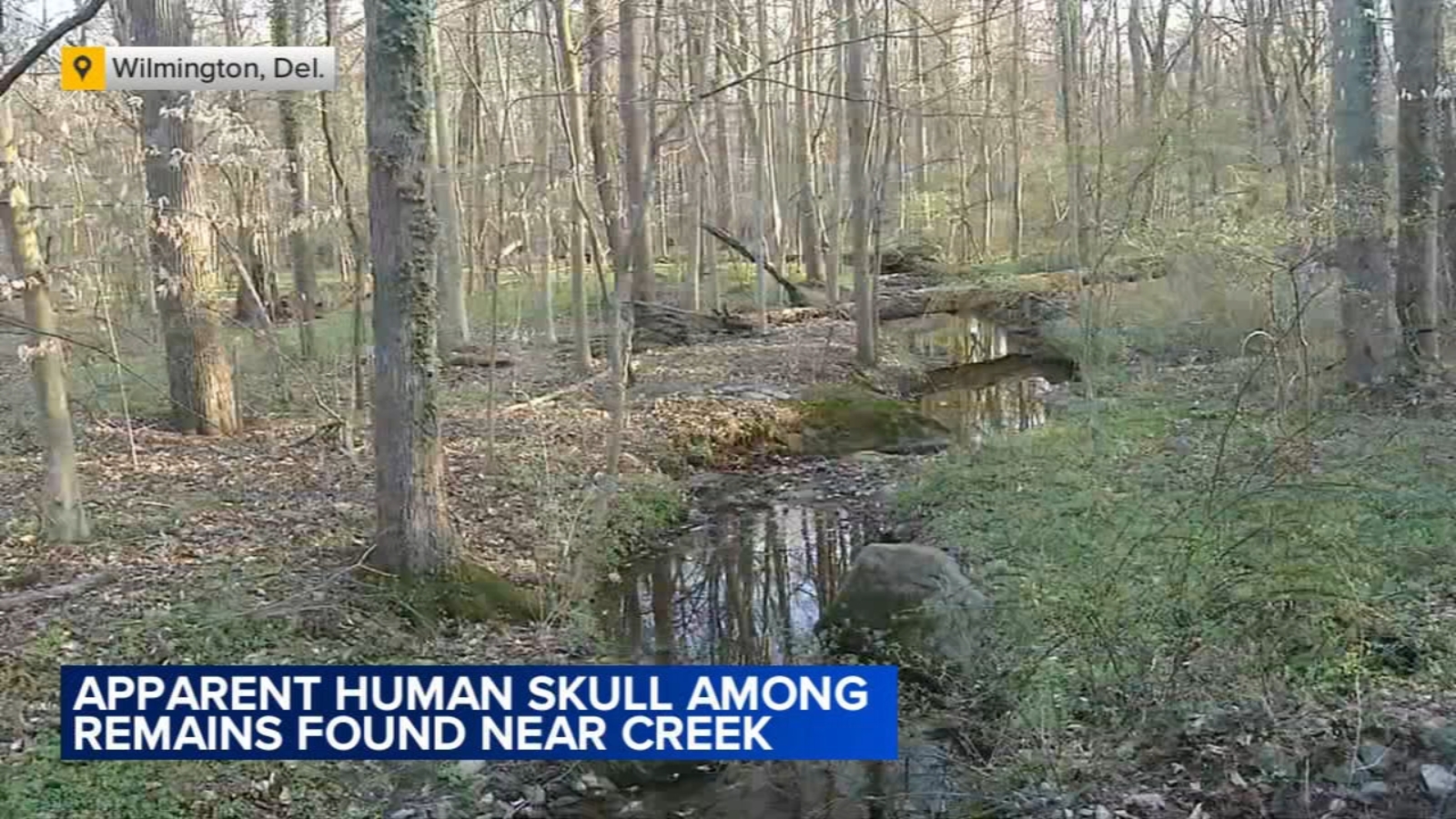
The investigation began on a Sunday evening, around 5:22 p.m., when police officers were dispatched to Ravine Road in the Highland Woods neighborhood of Wilmington. A passerby or local resident reported what appeared to be a human skull discovered near a creek that runs through the residential area.
First responders quickly secured the scene, and the initial find was significant enough to warrant immediate investigation. The possibility that the remains could be human , rather than animal , triggered a full-scale forensic response, as police understood the gravity of what such a discovery could mean for the community.
Officers cordoned off the surrounding area and called in specialized personnel to carefully document and collect evidence. The discovery of a skull is almost always treated as a potential crime scene until investigators can confirm or rule out other explanations.
Signs of Prolonged Environmental Exposure
Several days after the initial discovery, investigators returned with an update that confirmed what many in the community had begun to suspect: the remains appeared to have been exposed to the elements for an extended period. According to a Thursday update from police, the skull displayed clear signs of prolonged environmental exposure, a forensic indicator that the remains had likely been in the location for months , or even years , before being found.
Environmental exposure leaves specific patterns on skeletal remains. Sunlight bleaches bone, moisture causes weathering, and organic materials gradually break down. When forensic investigators observe these patterns, they can often estimate a rough timeframe, though precise dating typically requires laboratory analysis.
This revelation added a new dimension to the case. Rather than a recent disappearance or foul play in the immediate area, the discovery suggests investigators may need to look further back in time , possibly into cold cases or missing persons reports , to identify the individual.
Additional Remains Uncovered During Expanded Search
Following the discovery of the skull, police expanded their search of the surrounding creek area. During this more thorough investigation, officers uncovered another bone of unknown origin. While the bone’s significance is still being evaluated, its presence indicates that the find may be more substantial than a single isolated skull.
The creek environment itself presents challenges for investigators. Waterways tend to redistribute remains over time, especially during storms or periods of heavy rainfall. Bones can be carried downstream, buried in sediment, or trapped by debris. This means the remains may or may not have originated at the exact location where they were discovered.
Police have not yet indicated whether additional searches of the creek or surrounding areas are planned, but forensic teams typically conduct exhaustive sweeps when partial remains are initially identified.
Forensic Science Takes Over the Analysis
All of the remains recovered from the scene have been turned over to the Delaware Division of Forensic Science for further testing and analysis. This state-level forensic laboratory is equipped to handle the complex processes required to identify human remains, determine approximate age, assess ancestry, and potentially extract DNA for comparison against missing persons databases.
The forensic process typically includes several stages:
- Osteological analysis , Examining bone structure to estimate age, sex, stature, and ancestry.
- DNA extraction , Attempting to obtain a genetic profile that can be cross-referenced with databases.
- Pathological examination , Looking for signs of trauma, disease, or congenital conditions that might help narrow identification.
- Toxicology screening , Testing for substances that could provide additional context about the individual.
- Timeline estimation , Determining how long the remains have been in the environment based on weathering patterns.
This process can take weeks or even months to complete, depending on the condition of the remains and the complexity of the case. Families of missing loved ones often face an agonizing waiting period as they hope for answers.
No Identification Yet , Community Questions Remain
As of the latest available updates, the identity of the individual whose remains were found has not yet been confirmed. Police have not released any description of the person, nor have they publicly suggested a connection to any specific missing persons case.
This lack of information has left many in the Highland Woods neighborhood and the broader Wilmington community searching for answers. Residents living near Ravine Road have expressed concern about the discovery, both in terms of personal safety and in terms of the welfare of those who may have been searching for a missing loved one without success.
Investigators are working methodically and, according to their statements, withholding information to preserve the integrity of the case. Releasing premature details could complicate forensic analysis or potentially alert individuals connected to the case before all evidence has been processed.
How the Public Can Help
Police have explicitly asked anyone with information regarding this investigation to come forward. Specifically, the department has directed tips to Detective Bruhn, who can be reached by email at Thomas.Bruhn@newcastlede.gov or by phone at 302-395-8120.
There are several categories of information that could prove valuable to investigators:
- Knowledge of any individuals who went missing in the area months or years ago
- Unusual activity along Ravine Road or the surrounding creek in past years
- Historical information about the area, including any past incidents or reported disappearances
- Anyone who may have visited the creek for fishing, hiking, or other recreational purposes and noticed anything unusual
Even seemingly insignificant details , a conversation overheard, a vehicle parked in an unusual location, a piece of clothing or personal item discovered near the area , could help investigators piece together a timeline or identify the remains.
The Broader Context of Unidentified Remains Cases
This discovery in Wilmington is, unfortunately, not unique. Across the United States, thousands of unidentified human remains cases remain open each year. Organizations like the National Missing and Unidentified Persons System (NamUs) work to connect missing individuals with unidentified remains through shared databases and forensic resources.
In Delaware specifically, the state has worked to improve its capacity for handling such cases, but the process remains challenging. Small jurisdictions often lack the resources to pursue decades-old leads, and the passage of time can erode witness memory, destroy physical evidence, and reduce the likelihood of successful identification.
Cases like the one unfolding in Wilmington underscore the importance of community participation in investigations. Many unidentified remains are eventually identified not through dramatic breakthroughs, but through quiet, persistent efforts by detectives who follow up on even the smallest tips.
What Happens Next in the Investigation
Looking ahead, the investigation is likely to follow several parallel tracks. Forensic scientists will continue their laboratory analysis of the remains, while detectives will:
- Review missing persons reports dating back several years in the Wilmington area
- Search historical records for any connection to the Highland Woods neighborhood
- Interview residents and frequent visitors to the creek area
- Coordinate with neighboring jurisdictions in case the remains originated elsewhere
Depending on the results of forensic analysis, authorities may eventually issue a more detailed description of the individual and seek public assistance in identifying them. In some cases, facial reconstruction or anthropological profiling is used to generate images that can be shared with the public.
Conclusion
The discovery of human remains found along a Wilmington creek represents both a somber moment for the community and the beginning of what may be a long road toward answers. The fact that the remains show signs of prolonged environmental exposure suggests this is not a recent incident, and investigators are now tasked with reaching across time to identify the individual and provide closure , both to the community and to any family that may have been searching for a missing loved one.
As the Delaware Division of Forensic Science conducts its careful analysis, the Wilmington Police Department continues to encourage anyone with information to step forward. In cases like this, the cooperation of an informed public often makes the difference between an unsolved mystery and a name finally returned to an individual who had been waiting to be found.
For now, the Highland Woods neighborhood waits , hoping that the quiet discovery along their creek will lead to answers, justice, and ultimately, peace for those who have been carrying an absence they could not explain.