
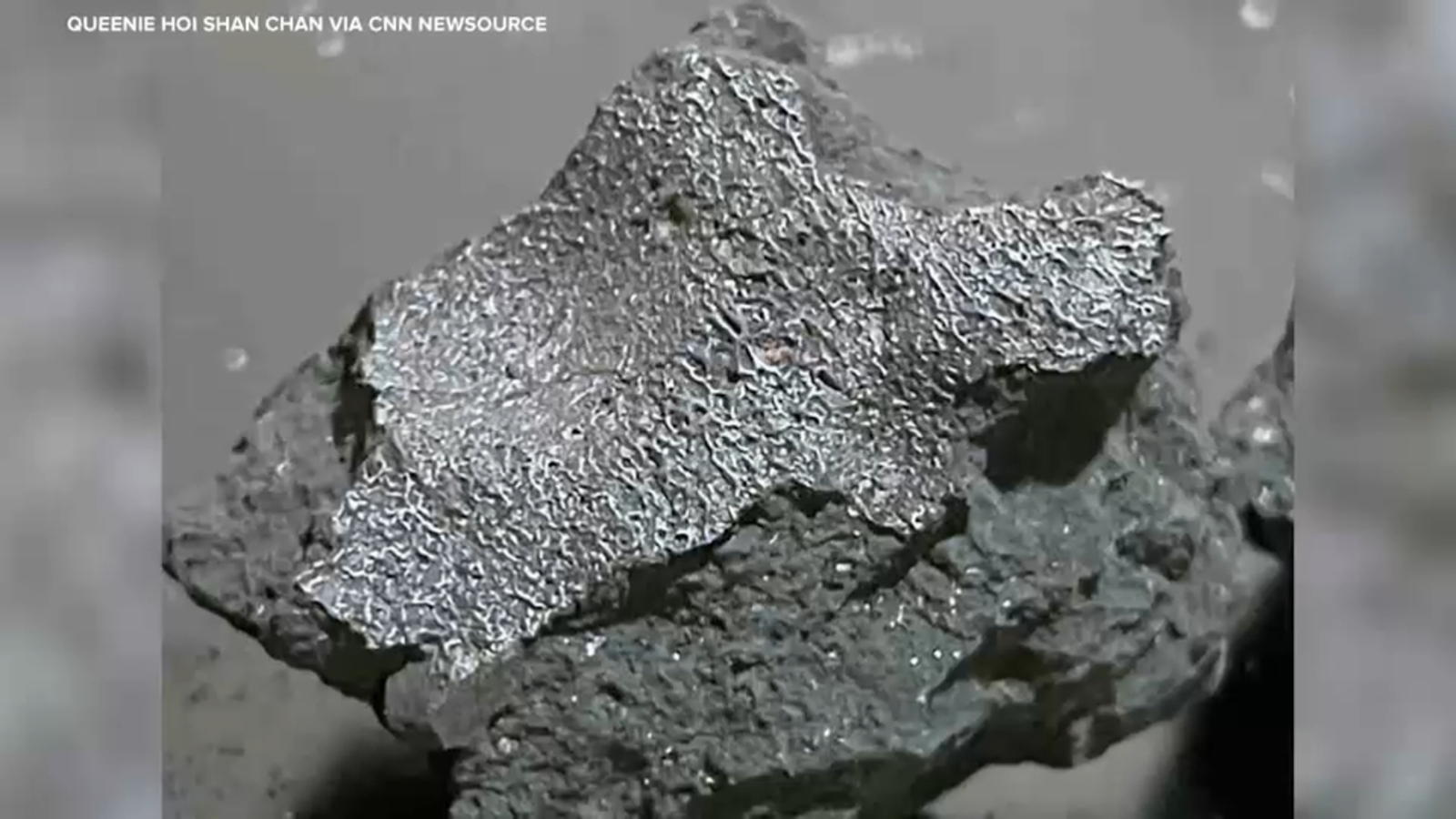
When a golf-bag-sized chunk of ancient space rock crashed through the roof of a New Jersey home in the summer of 2024, no one could have predicted the scientific windfall that would follow. The Hillsborough meteorite, named for the township where it made its dramatic landing, has since revealed itself to be an extraordinary cosmic artifact,one brimming with extraterrestrial amino acids and offering scientists an unprecedented glimpse into the chemistry of the early solar system. Researchers now believe this small fragment could reshape our understanding of how the building blocks of life may have arrived on Earth.
The Dramatic Day a Fireball Lit Up the Northeast
On a bright afternoon in mid-July 2024, residents across five states looked up in astonishment as a brilliant fireball carved across the daytime sky. Witnesses in New York, New Jersey, Connecticut, Rhode Island, and Pennsylvania reported the blazing spectacle, which produced a sonic boom that rattled homes from Manhattan to the Garden State. The fireball streaked just south of the Statue of Liberty at a staggering velocity of 32,000 miles per hour before dramatically fracturing roughly 22 miles above the Earth’s surface.
What made this particular space rock extraordinary was its fragility. Unlike many meteorites that survive their plunge through the atmosphere largely intact, this object shattered high above the ground, scattering a cloud of fragments tracked by Newark Liberty International Airport’s Doppler radar. The debris field stretched from Staten Island deep into New Jersey, but only a single piece would ultimately be recovered,and only because it punched clean through the roof of a family’s master bedroom.
A Fragile Space Rock Finds Its Way to Earth
The homeowners had an extraordinary stroke of luck,and an even more impressive measure of composure. Within moments of the impact, they donned disposable gloves and began carefully gathering the black fragments and powdery dust from their bed and carpet, using aluminum foil and glass jars to store the material before anything could contaminate it.
This quick action proved scientifically invaluable. According to researchers, carbonaceous chondrites like this one are notoriously porous, and they readily absorb moisture from the surrounding environment. The family even patched the roof before evening rainstorms arrived,a critical decision that preserved the meteorite’s pristine chemistry. Without that fast thinking, much of what makes this specimen scientifically priceless could have been lost forever.
The homeowners later connected with Mike Hankey of the American Meteor Society, who walked them through proper preservation protocols. “We knew almost immediately that what happened to us was incredibly rare,” the family shared, “and we felt a responsibility to preserve the meteorite for the scientific community.”
A Rare Classification: The CM Carbonaceous Chondrite
Once in the laboratory, the Hillsborough meteorite was identified as a CM-type carbonaceous chondrite, a classification named after the Mighei meteorite that fell in Ukraine in 1889. These rare space rocks are essentially cosmic fossils,remnants of ancient rocky bodies that drifted through the early solar system more than 4 billion years ago. Unlike most meteorites, carbonaceous chondrites contain abundant hydrated minerals and organic compounds, making them invaluable for astrobiology research.
Scientists recognize two main subtypes of CM meteorites,CM1 and CM2,distinguished primarily by the degree to which water altered their composition while still attached to their parent asteroid. The Hillsborough meteorite appears to exist somewhere between these two categories, which made it especially intriguing to researchers hoping to understand the full spectrum of aqueous alteration in these primitive objects.
Peter Jenniskens, lead author of the study and a senior research scientist at the SETI Institute and NASA’s Ames Research Center, noted that the Hillsborough specimen is only the second CM meteorite ever observed falling to Earth. Unlike the previous example, which landed in Indonesian mud in 2020, this fragment was recovered in remarkably clean condition,offering researchers their first opportunity to study a pristine CM sample.
A Glimpse Beneath an Asteroid’s Surface
Perhaps the most exciting discovery is that the Hillsborough meteorite contains fragments of rock that preserved the subsurface characteristics of its parent asteroid. This unique preservation offers researchers a window into the physical properties of an ancient celestial body that would otherwise be impossible to study directly. The parent asteroid likely orbited within the inner asteroid belt between Mars and Jupiter before being shattered in a series of collisions, with a fragment ultimately being nudged toward Earth on a cosmic journey that lasted hundreds of thousands of years.
Unlocking Extraterrestrial Amino Acids
The chemical analysis of the Hillsborough meteorite has yielded some of the most compelling astrobiological findings in recent memory. Dr. Danny Glavin, a senior scientist at NASA’s Goddard Space Flight Center, announced that the research team identified a complex suite of amino acids,the fundamental building blocks of proteins,in water extracts of the meteorite.
“Most of the amino acids detected in Hillsborough are rare or nonexistent in life on Earth,” Glavin explained, “so they are truly extraterrestrial in origin.” This distinction matters enormously: it rules out terrestrial contamination and confirms that the organic compounds were present on the meteorite before it ever entered Earth’s atmosphere.
Even more striking, the diversity of amino acids in this meteorite exceeded what scientists had previously identified in pristine samples returned from carbon-rich asteroids Bennu and Ryugu,target bodies of NASA’s OSIRIS-REx mission and Japan’s Hayabusa2 mission. Researchers are now working to identify and catalog the specific salt minerals embedded within the specimen, comparing them with those found in the asteroid samples to better understand the chemistry of our solar system’s building blocks.
A Salty Time Capsule of the Early Solar System
Among the Hillsborough meteorite’s most fascinating features is the abundance of sodium detected within its structure,evidence of ancient brines that once flowed through the parent asteroid. As water evaporated over millions of years, it left behind concentrated salt deposits that may have helped forge the organic molecules essential to life as we know it.
Peter Brown, a physics professor at Western University who was not involved in the study, emphasized the significance of this finding. The brine, he explained, is a strong indicator of how water has moved, evolved, and reacted with organics throughout the asteroid’s history. “Everything we can learn about how water changes this kind of primitive meteorite is super important to astrobiology and early biology on Earth,” Brown noted.
Holding the meteorite offers a tactile clue to its composition: it crumbles like clay rather than feeling like solid stone, a testament to the lack of heating that might otherwise have destroyed its precious chemical inventory. This soft, soil-like texture reflects its pristine preservation of water-altered minerals and organic compounds.
What the Hillsborough Meteorite Tells Us About Life’s Origins
Primitive carbonaceous chondrites are widely believed to be among the types of space rocks that bombarded the young Earth billions of years ago, possibly delivering the organic matter that seeded life on our planet. The Hillsborough meteorite provides fresh evidence supporting this hypothesis.
“It provides more evidence that meteorite delivery of organic matter to the early Earth could have been an important source of organic molecules necessary for the origin of life,” Glavin affirmed. The discovery of ancient brines within the specimen is particularly significant because liquid water is a prerequisite for life as we understand it,finding such evidence within an asteroid from the solar system’s infancy adds another piece to the puzzle of how habitable worlds form.
Citizen Science and the Future of Meteorite Research
The Hillsborough meteorite story also highlights the crucial role everyday people play in advancing planetary science. From the homeowners who instinctively preserved their unexpected visitor, to the network of amateur skywatchers who reported sightings, this discovery would not have been possible without active public participation. Researchers encourage anyone who witnesses a potential fireball to submit doorbell or dashcam footage to organizations like the American Meteor Society. Such reports can help scientists track meteorite trajectories, recover fresh samples, and ultimately refine our understanding of how the solar system has evolved over billions of years.
Fragments of the Hillsborough meteorite are now carefully curated at the American Museum of Natural History in New York City, where they will continue to fuel research for years to come.
Conclusion
The Hillsborough meteorite is far more than a curious news story about a rock falling from the sky,it is a tangible messenger from the dawn of our solar system, carrying within its fragile structure the chemical ingredients that may have helped make life on Earth possible. With its confirmed extraterrestrial amino acids, ancient brine deposits, and uniquely preserved subsurface samples, this remarkable specimen offers scientists a rare and valuable window into processes that unfolded billions of years before humans ever looked up at the stars. As researchers continue to analyze its secrets, the Hillsborough meteorite reminds us that the answers to some of life’s biggest questions may sometimes fall unexpectedly from above,landing, quite literally, in our own backyards.