
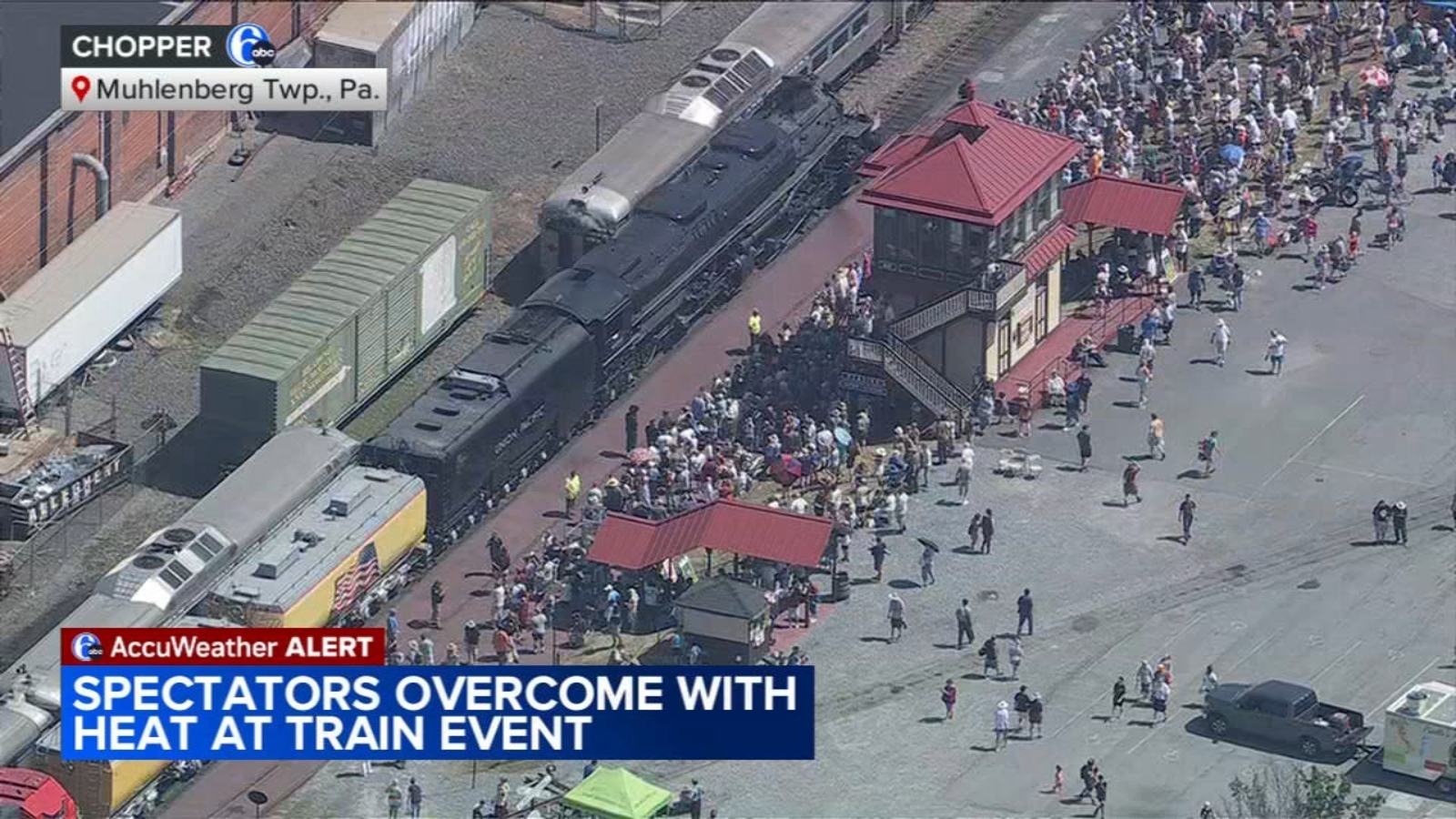
When Union Pacific’s Big Boy No. 4014 rolled through Berks County, Pennsylvania, on July 2, 2026, thousands of train enthusiasts turned out for what should have been a once-in-a-lifetime experience. Instead, the event became a medical emergency as extreme temperatures overwhelmed both attendees and first responders. Authorities confirmed that more than 100 people were treated for heat-related injuries at the Reading Outer Station along Pottsville Pike in Muhlenberg Township, with 35 requiring transport to area hospitals for further evaluation.
The incident serves as a sobering reminder of how quickly outdoor gatherings can turn dangerous when temperatures spike. With the heat index climbing above 110 degrees in some locations, even brief exposure proved hazardous for spectators ranging from infants just months old to elderly visitors. One person reportedly went into cardiac arrest and was revived at the scene, underscoring the life-threatening nature of the conditions.
What Happened at the Big Boy Event?
Big Boy No. 4014 is recognized as the largest operating steam locomotive in the world, and its cross-country tour commemorating America’s 250th anniversary has drawn massive crowds at every stop. The Muhlenberg Township gathering was no exception, with families, photographers, and rail history buffs converging hours in advance to secure prime viewing spots.
According to Muhlenberg Township Police Chief Randall Hoover, the situation escalated rapidly. “Multiple people began collapsing from what appeared to be mostly heat-related medical episodes,” Hoover stated. “Infants several months old to the elderly began to experience heat-related symptoms. On-scene medical personnel immediately became overwhelmed with the number of patients.”
The Medical Response
First responders faced an extraordinary challenge as patient counts climbed into the dozens, then past 100. Emergency medical teams set up triage areas to assess and stabilize individuals, prioritizing those showing the most severe symptoms. The single cardiac arrest case highlighted how quickly heat exposure can escalate from discomfort to critical medical emergency.
Helicopter footage from Chopper 6 captured the scale of the scene, showing clusters of people seeking shade, sitting on pavement, and being attended to by medical personnel. The visual was a stark contrast to the celebratory atmosphere typically associated with seeing a piece of American engineering history in motion.
Why Heat-Related Injuries Happen So Quickly
The human body is remarkably efficient at regulating temperature under normal conditions. However, when external heat, humidity, and direct sunlight combine with physical exertion and inadequate hydration, that regulatory system can fail. Understanding how heat-related injuries develop helps explain why events like the Big Boy gathering can become dangerous so suddenly.
Heat Exhaustion vs. Heat Stroke
Medical experts typically categorize heat-related illness into two main categories:
- Heat exhaustion , The body’s response to excessive water and salt loss, usually through sweating. Symptoms include heavy sweating, weakness, cold/pale/clammy skin, fast but weak pulse, nausea, and fainting. While serious, heat exhaustion is typically treatable with rest, hydration, and cooling.
- Heat stroke , A medical emergency that occurs when the body’s temperature regulation fails. Body temperature can rise to 103 degrees Fahrenheit or higher. Symptoms include hot/red/dry skin, rapid strong pulse, confusion, altered mental state, and loss of consciousness. Heat stroke requires immediate emergency medical attention.
The victims at the Big Boy event experienced a range of symptoms, with first responders treating everyone from mild cases to those in life-threatening condition. The wide age range of those affected,from babies to seniors,demonstrates that no demographic is immune to extreme heat dangers.
Vulnerable Populations
Certain groups face elevated risk during heat waves and outdoor events:
- Infants and young children whose bodies don’t regulate temperature as efficiently
- Older adults whose ability to sense temperature changes diminishes with age
- People with chronic medical conditions including heart disease, diabetes, and respiratory illnesses
- Individuals taking certain medications that affect hydration or thermoregulation
- Those who are pregnant or have compromised immune systems
Lessons in Crowd Safety and Event Planning
The Muhlenberg Township incident raises important questions about crowd safety at outdoor events during extreme weather. While the draw of seeing Big Boy No. 4014 was undeniable, the conditions created a perfect storm of risk factors: prolonged sun exposure, standing for hours, limited shade, and inadequate hydration opportunities.
The Importance of Preparedness
Event organizers increasingly face the challenge of balancing public enthusiasm with public safety. The Big Boy tour has attracted enormous crowds nationwide, and the Pennsylvania stop demonstrates how quickly warm-weather conditions can transform a joyful gathering into a crisis.
Local emergency services responded admirably, but the sheer volume of patients strained resources. This incident highlights the need for:
- Enhanced pre-event communication about weather risks and safety recommendations
- Adequate cooling stations and water distribution points
- Shaded rest areas strategically placed throughout event grounds
- Clear emergency exits and medical triage facilities
- Coordination with weather services to anticipate dangerous conditions
Staying Safe at Outdoor Events in Extreme Heat
Whether you’re planning to attend the next Big Boy tour stop in Philadelphia or any outdoor gathering during summer months, taking precautions against heat-related injuries can be life-saving. Here are essential strategies to protect yourself and your family:
Before You Go
- Check the heat index forecast for your area, not just the temperature
- Bring portable shade such as umbrellas, pop-up tents, or wide-brimmed hats
- Pack cooling supplies including ice packs, cooling towels, and battery-powered fans
- Identify medical tents and water stations upon arrival
During the Event
- Hydrate aggressively before you feel thirsty,by then, you’re already dehydrated
- Avoid alcohol and caffeine, which can worsen dehydration
- Take frequent breaks in shaded or air-conditioned areas
- Wear light-colored, loose-fitting clothing made from breathable fabrics
- Apply sunscreen regularly, as sunburn impairs the body’s ability to cool itself
Recognizing Warning Signs
If you or someone nearby exhibits symptoms of heat illness, immediate action is critical:
- Move to a cooler location immediately
- Apply cool water to the skin, particularly at pulse points like wrists, neck, and temples
- Seek medical attention for any concerning symptoms, especially confusion, rapid heartbeat, or loss of consciousness
Looking Ahead: Big Boy’s Philadelphia Stops
Despite the frightening events in Muhlenberg Township, Big Boy No. 4014’s tour continues. The legendary locomotive is scheduled to be on display at the Philadelphia Navy Yard on July 4 and 5, 2026, where it will undoubtedly draw another massive crowd. Forecasters and event organizers will hopefully apply lessons from the Pennsylvania incident to ensure adequate safety measures are in place.
America’s 250th anniversary provides a unique backdrop for celebrating the country’s railroad heritage, and Union Pacific’s decision to send the world’s largest operating steam locomotive on a nationwide tour is a genuine gift to railroad enthusiasts. However, the joy of witnessing this engineering marvel should never come at the cost of public health and safety.
Final Thoughts
The Big Boy crowd chaos serves as a powerful case study in the intersection of public enthusiasm, extreme weather, and emergency preparedness. More than 100 people received treatment for heat-related injuries at what should have been a celebratory event, demonstrating that even the most exciting occasions can become dangerous when temperature conditions turn severe.
As climate patterns continue to produce more frequent and intense heat waves, both event organizers and attendees must adapt. By prioritizing hydration, shade, rest, and awareness of heat-related warning signs, spectators can enjoy historic moments like Big Boy’s tour while protecting their health. The locomotive’s journey through America is a remarkable tribute to 250 years of innovation,but it’s up to each of us to make sure we experience it safely.