
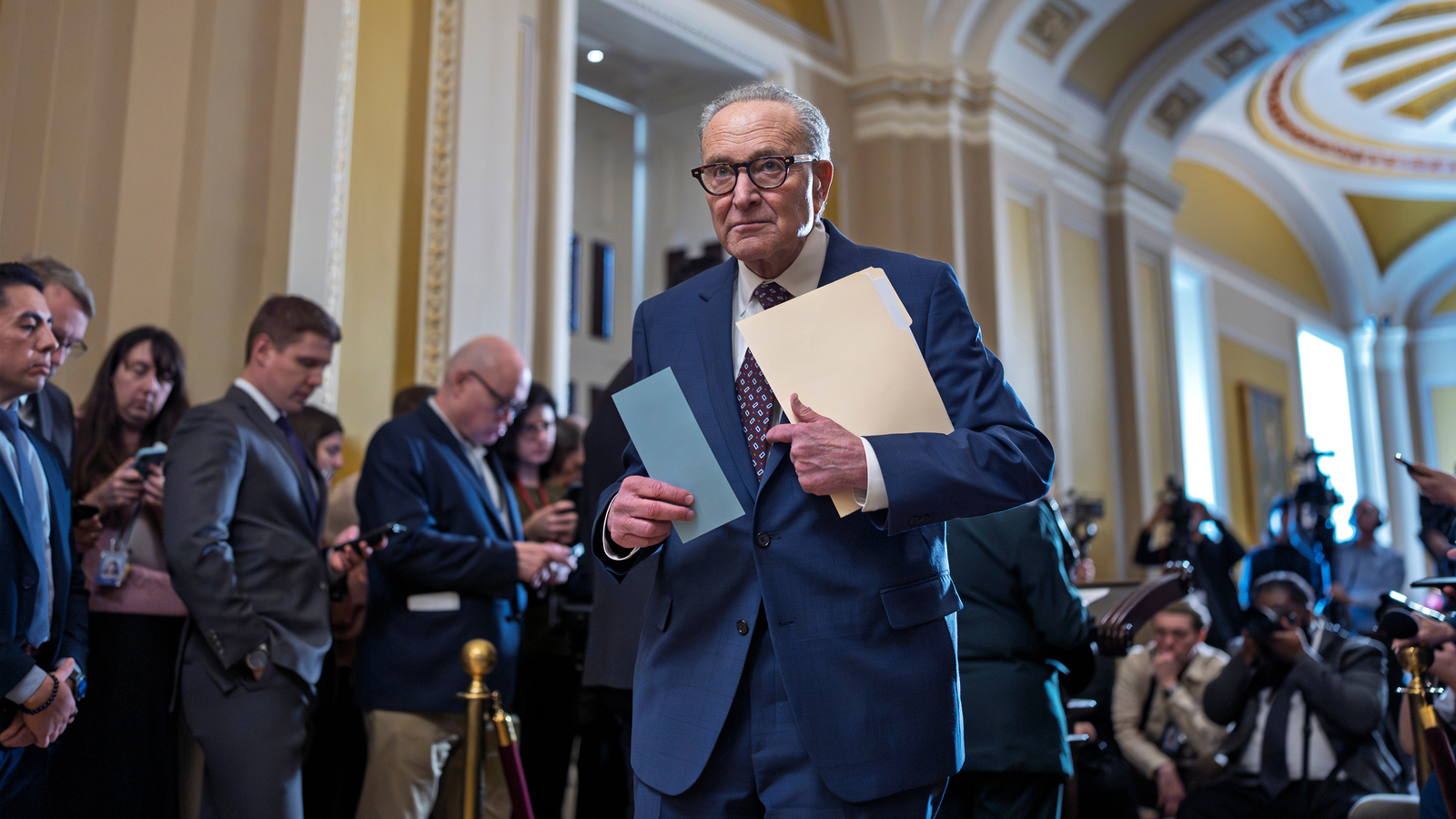
In a dramatic late-week turn of events on Capitol Hill, Democrats and the White House reached a government spending deal designed to keep federal operations running while creating space for contentious negotiations over reforms to U.S. Immigration and Customs Enforcement (ICE). The agreement narrowly averts a partial government shutdown, funding most federal agencies through September while carving out a short-term extension for the Department of Homeland Security as both parties wrestle with the political fallout from recent deadly encounters involving federal immigration agents.
How the Spending Deal Came Together
The breakthrough followed intense bipartisan talks between Senate Democratic leader Chuck Schumer and President Donald Trump, two figures who have clashed repeatedly throughout the new administration. The rare cooperation came against a backdrop of national grief over the fatal shootings of two protesters,37-year-old Alex Pretti and Renee Good,by federal agents in Minneapolis, incidents that have intensified scrutiny of the administration’s sweeping immigration enforcement surge.
Under the terms of the new government spending deal, the larger omnibus funding bill that covers the bulk of federal operations will be separated from the more politically combustible question of DHS funding. Lawmakers agreed to extend Homeland Security appropriations for just two weeks, creating a narrow window for negotiations over Democratic demands for sweeping changes to ICE practices.
“Republicans and Democrats have come together to get the vast majority of the government funded until September,” Trump announced Thursday evening in a social media post, encouraging members of both parties to cast a “much needed Bipartisan ‘YES’ vote.”
The Two-Week Clock on DHS Funding
The decision to fund the Department of Homeland Security on a temporary basis is a significant departure from the original legislative strategy. Republican leaders had initially pushed for a longer funding extension and were reluctant to split the package, but Senate Democrats stood firm in their insistence on using the appropriations process as leverage for meaningful ICE reform.
With the two-week window now in place, lawmakers face a tight deadline to hammer out a more permanent DHS funding arrangement. Should those negotiations fail, the threat of a shutdown would return,potentially with even greater political stakes than before.
What Democrats Are Demanding
Senate Democrats have laid out a series of specific policy changes they want to see enacted in exchange for their support of a full-year DHS appropriation. Their core demands include:
- Ending “roving patrols” in cities and requiring federal agents to coordinate with local law enforcement before conducting immigration arrests.
- Tighter warrant requirements for enforcement operations, ensuring proper judicial authorization before agents act.
- An enforceable code of conduct holding agents accountable when they violate departmental rules.
- Mandatory identification and body cameras for agents conducting operations, alongside a prohibition on masked enforcement.
Senator Schumer framed these proposals as fundamentally about restoring basic standards of policing. “The American people support law enforcement. They support border security. They do not support ICE terrorizing our streets and killing American citizens,” he declared, calling the moment “a moment of truth” for the country.
Minnesota Senator Tina Smith echoed that sentiment, arguing that accountability should not be controversial. “Boil it all down, what we are talking about is that these laweless ICE agents should be following the same rules that your local police department does,” she said. “There has to be accountability.”
The Republican Counter-Position
Despite the bipartisan cooperation needed to pass the broader spending package, Republicans remain deeply skeptical of many of the proposed ICE reform measures. Senator Thom Tillis of North Carolina voiced strong opposition to requiring officers to remove their masks, citing personal safety concerns for agents and their families.
“You know, there’s a lot of vicious people out there, and they’ll take a picture of your face, and the next thing you know, your children or your wife or your husband are being threatened at home,” Tillis explained. He simultaneously blamed Homeland Security Secretary Kristi Noem for operational decisions he said are “tarnishing” the agency’s reputation.
Senator Lindsey Graham struck a more conciliatory tone, acknowledging that some Democratic proposals,such as enhanced training and body camera requirements,”make sense.” However, he warned that any concessions on enforcement policy would be matched by demands to crack down on so-called sanctuary cities that resist cooperation with federal immigration authorities.
“I think the best legislative solution for our country would be to adopt some of these reforms to ICE and Border Patrol,” Graham posted on X, “but also end so-called ‘sanctuary city’ policies.”
The Minnesota Factor and Public Pressure
Central to the political momentum behind the spending negotiations is the escalating crisis in Minnesota, where the fatal shootings of protesters by federal agents have generated bipartisan calls for investigations. The deaths of Alex Pretti and Renee Good have transformed what might have been a routine appropriations fight into a referendum on the very nature of federal immigration enforcement.
Tom Homan, the president’s border czar, announced during a Thursday press conference in Minneapolis that federal immigration officials are developing a plan to reduce the number of agents currently deployed in Minnesota,though he emphasized that any drawdown would depend on cooperation from state and local authorities. The statement suggested the administration may be sensitive to the political optics of a heavy federal presence, even as it defends the underlying enforcement mission.
Uncertainty in the House of Representatives
While the Senate appeared poised to act quickly on the government spending deal, the House of Representatives presented a more complicated picture. House Republicans had already passed their own version of the funding package the previous week, and the conservative House Freedom Caucus made clear in a letter to President Trump that they expect the legislation to return to the lower chamber with full DHS funding intact.
“The package will not come back through the House without funding for the Department of Homeland Security,” the Freedom Caucus warned.
Speaker Mike Johnson acknowledged his own reluctance to split the package, telling the Associated Press he had been “vehemently opposed” to separating DHS funding from the broader bill. Still, he indicated pragmatism would prevail if the Senate moved forward with the bifurcated approach.
“If it is broken up, we will have to move it as quickly as possible. We can’t have the government shut down,” Johnson said. Speaking at the Kennedy Center during a movie premiere for first lady Melania Trump, the Speaker conceded he faces “tough decisions” about when to bring the House back to Washington for votes.
The Shadow of the Last Shutdown
Lawmakers are acutely aware that the political terrain they now navigate is shaped by the memory of the recent 43-day shutdown that ended only two months ago. That previous impasse began when Democrats blocked a spending bill over expiring federal health care subsidies, and it concluded only when a small group of moderate Democrats broke ranks to strike a deal with Republicans.
This time, however, Democratic unity appears stronger. The fatal shootings in Minnesota have hardened the caucus behind demands for meaningful reforms, and Senator Blumenthal captured the mood of the more aggressive wing of the party with a stark warning.
“If the Trump administration resists reforms, we shut down the agency,” Blumenthal declared. “We need to take a stand.”
Conclusion
The newly announced government spending deal represents a temporary truce in what promises to be a fierce political battle over the future of American immigration enforcement. By funding most federal agencies through September while giving themselves just two weeks to resolve the DHS funding question, lawmakers have bought themselves time,but not resolution. The coming days will test whether bipartisan congressional negotiations can produce meaningful ICE reform that satisfies Democratic demands without alienating Republican hardliners. With the memory of the Minneapolis tragedies fresh and the political costs of another shutdown fresh in everyone’s mind, the stakes for both parties could hardly be higher.