
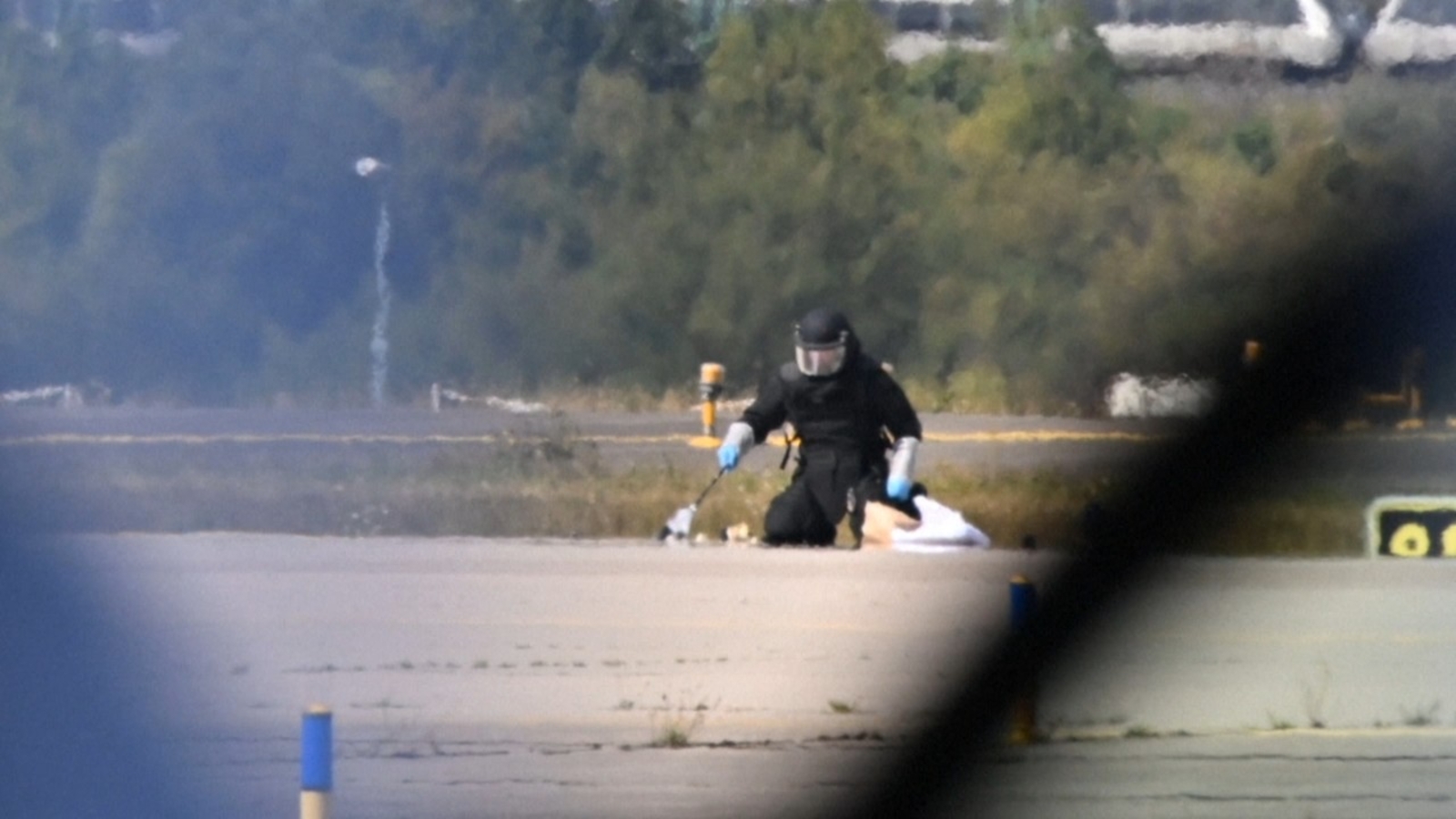
In a major escalation of diplomatic tensions, the German government has formally accused Russia of orchestrating a Germany Russia drone attack at Leipzig/Halle Airport last month. The incident, which involved an explosive-laden drone discovered near a Ukrainian transport aircraft on August 4, prompted Berlin to announce sweeping countermeasures, including the closure of a Russian consulate and plans to push for expanded European Union sanctions against Moscow.
German officials described the attempted strike as part of a broader pattern of Russian hybrid warfare targeting European infrastructure and undermining support for Ukraine. The drone was successfully defused before it could detonate, but authorities have warned that the episode represents a dangerous new chapter in the sabotage campaign allegedly being waged across the continent.
Evidence Linking Moscow to the Attack
German Interior Minister Alexander Dobrindt outlined the government’s findings during a press briefing, explaining that forensic analysis of the drone revealed characteristics consistent with previous Russian operations. According to Dobrindt, investigators discovered elements including the drone’s configuration, components, explosives, and detonator that align with materials “known to us from other Russian hybrid operations and its war against Ukraine.”
The Interior Minister emphasized that while the technical sophistication of the device suggested involvement of highly trained operatives during the planning phase, the actual execution appears to have been delegated to “low-level” agents. Intelligence findings, combined with police investigations, point to individuals who “acted on behalf of Russian state entities,” though Dobrindt declined to specify which organizations were involved.
“Taken together, the police investigations, the pattern and intelligence findings prove a Russian responsibility for the attempted attack at Leipzig airport,” Dobrindt stated.
Diplomatic Retaliation: Consulate Closure and Sanctions Push
Germany’s response to the Leipzig airport drone attack extends well beyond public condemnation. Foreign Minister Johann Wadephul announced several concrete measures aimed at punishing Moscow and signaling Berlin’s determination to push back against what officials describe as deliberate provocation.
Key Diplomatic Actions
- Russian Consulate in Bonn will be closed effective September 18
- Russian House cultural center in Berlin will have its operating contract rescinded
- The Russian ambassador was summoned to the Foreign Ministry in Berlin to receive the formal protest
- Germany will propose adding more Russian individuals to EU sanctions lists specifically targeting those involved in hybrid attacks
- Entry controls for Russian nationals traveling to Germany will be tightened
- Increased pressure on the so-called “shadow fleet” of tankers suspected of shipping Russian oil in violation of international sanctions
Wadephul characterized the attempted attack as a deliberate decision by the Russian leadership to inflict further damage on already strained bilateral relations. Moscow, predictably, rejected the accusations. Russian Foreign Ministry spokesperson Maria Zakharova dismissed the allegations as a “far-fetched and contrived pretext” designed to justify escalation, claiming that “no convincing or serious evidence has been presented whatsoever.” She promised a “fitting response” to the planned closures.
Why Leipzig/Halle Airport Matters
The choice of target was no accident. Leipzig/Halle Airport serves as one of Europe’s most critical logistics hubs, particularly for international freight and operations supporting Ukraine. The facility regularly handles Ukrainian Antonov transport aircraft delivering humanitarian aid and military equipment.
Perhaps even more significantly, the airport hosts NATO’s Strategic Airlift International Solution (SALIS), a multinational program that operates almost daily to deliver equipment to NATO battle groups along the alliance’s eastern flank, stretching from Finland to Romania. Disrupting this infrastructure would have direct implications for Western military readiness and the continued flow of support to Kyiv.
This is not the first incident at the facility. In 2024, an incendiary device ignited at a logistics center, setting fire to a freight container before it could be loaded onto a cargo plane. Western security officials have long suspected that plot was organized by Russian intelligence services.
A Continent-Wide Pattern of Sabotage
The Leipzig incident fits into what The Associated Press has described as approximately 200 incidents of sabotage and malign activity across Europe blamed on Russia by Western officials since the full-scale invasion of Ukraine in February 2022. These operations have included:
- Arson attacks against warehouses and logistics facilities
- Drone deployments near sensitive infrastructure
- Assassination attempts against exiled dissidents and intelligence defectors
- Theft of defense technology and industrial secrets
- Cyberattacks targeting critical European infrastructure
Polish Prime Minister Donald Tusk, who has repeatedly warned about Russian sabotage campaigns against NATO members, revealed just hours before Germany’s announcement that Poland had been targeted by new acts of arson within the previous day. A significant fire broke out at WB Electronics, described by the Polish government as Europe’s largest drone manufacturer, causing an estimated 15 million zlotys (roughly $4 million) in damage to warehouse facilities in Skarysko-Kamienna. Polish prosecutors have launched an investigation based on suspicions of “foreign intelligence activities,” though they stopped short of explicitly naming Russia.
European Union Response and Broader Sanctions Architecture
The European Union has imposed nearly two dozen packages of sanctions on Russia since the war began, targeting approximately 3,000 individuals and entities. EU foreign ministers gathered in Ireland to discuss the latest developments, with European Commission President Ursula von der Leyen stating on social media that “hybrid attacks will not go without a clear response.”
Germany’s planned proposal to expand the sanctions list specifically to address hybrid warfare operations represents an evolution in how Brussels is approaching Russian aggression. Rather than focusing solely on individuals tied to the war effort in Ukraine, the new framework would target those involved in sabotage, disinformation, and other covert activities aimed at destabilizing European nations.
Domestic Countermeasures and Intelligence Reform
In mid-August, the German Cabinet approved plans to grant the country’s intelligence services expanded authorities to combat sabotage and hacking attempts. The reforms, which had been under development for months, still require parliamentary approval before taking effect. The measures would empower agencies to take more aggressive action against foreign threats, including potentially disabling ongoing operations before they cause damage.
This domestic legislative push reflects growing concern within Germany about its vulnerability to Russian covert operations. As one of Europe’s largest supporters of Ukraine and a key NATO member, Germany has found itself increasingly in Moscow’s crosshairs.
Russia’s Denial and the Information War
Russian President Vladimir Putin has consistently denied orchestrating sabotage campaigns against European nations. In May, responding to AP’s investigative reporting on the roughly 200 incidents, Putin demanded that journalists “name one proven fact” of Russian involvement. The Russian government’s standard response has been to characterize such accusations as Western propaganda designed to justify continued support for Kyiv.
This information warfare dimension adds another layer of complexity to the ongoing confrontation. Even as intelligence agencies across Europe point to consistent patterns and forensic evidence, Moscow maintains a steady drumbeat of denial, making it politically difficult for some governments to take public action.
Implications for European Security
The Germany Russia drone attack and Berlin’s forceful response signal a potential turning point in how European nations are willing to confront Russian hybrid warfare. For years, Western governments have accumulated evidence of Moscow’s sabotage activities while often responding with diplomatic protests that produced minimal results. Germany’s decision to close a consulate, rescind cultural agreements, and push for expanded sanctions represents a more aggressive posture.
Whether these measures will meaningfully deter future operations remains uncertain. Russian intelligence services have demonstrated remarkable persistence and adaptability, often operating through proxies, criminal networks, and recruited operatives who may not even be aware of their ultimate handlers. The combination of tightened entry controls, expanded intelligence powers, and economic pressure may complicate Moscow’s operations, but it is unlikely to eliminate the threat entirely.
Conclusion
The attempted drone strike at Leipzig/Halle Airport has become a flashpoint in the broader confrontation between Russia and the West. Germany’s decision to publicly attribute the attack to Moscow, close a Russian consulate, and pursue expanded sanctions reflects both the seriousness with which Berlin views the threat and the growing European consensus that hybrid warfare cannot be tolerated. As NATO’s eastern flank faces continued pressure and as support for Ukraine remains a pillar of Western policy, infrastructure targets like Leipzig will remain attractive to those seeking to undermine the alliance. The coming weeks will reveal whether Germany’s robust response marks a genuine shift in European deterrence strategy or simply another round in an escalating cycle of action and counter-action that has come to define the new Cold War between Moscow and the West.