
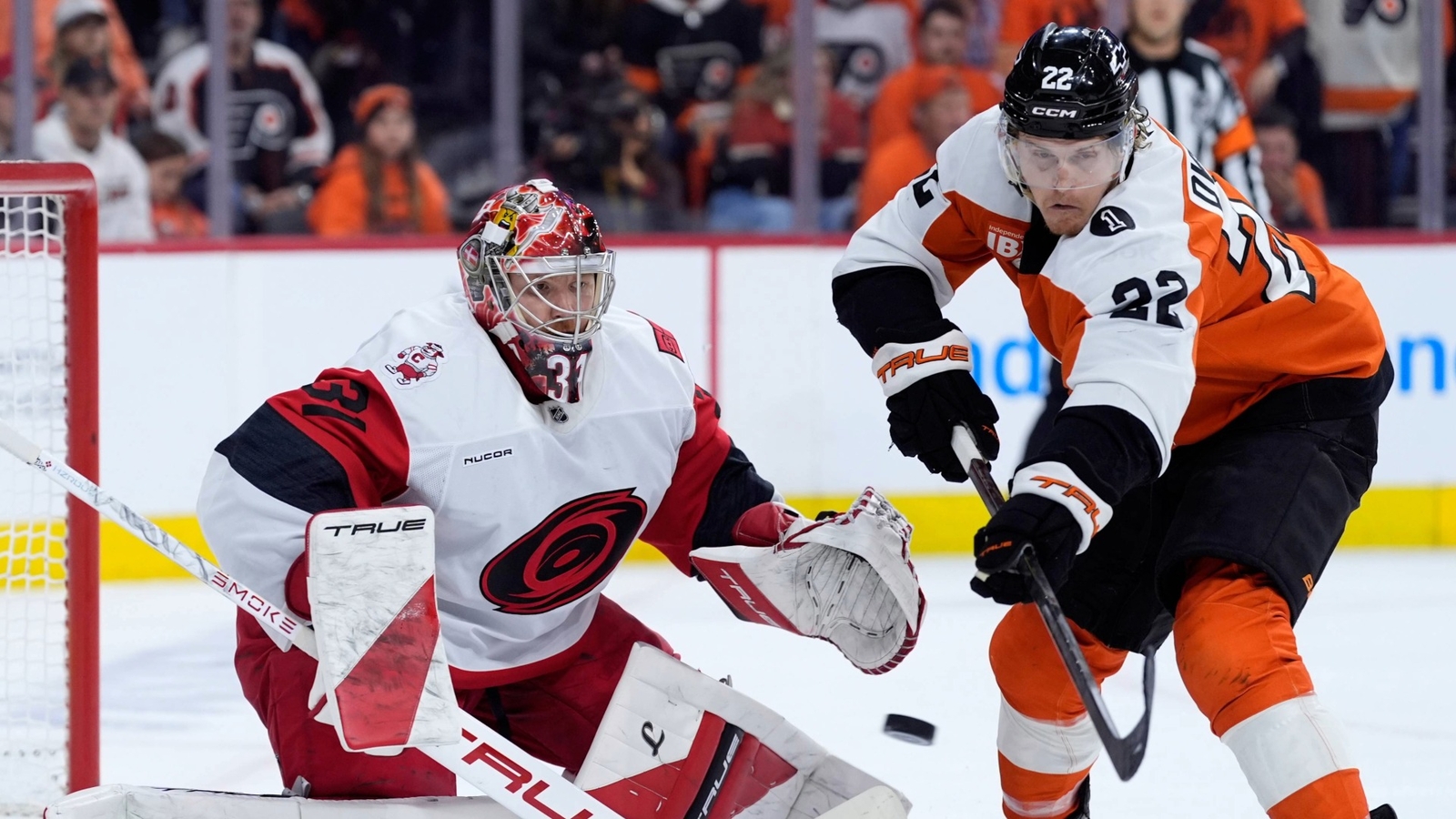
The Philadelphia Flyers find themselves in a precarious position after falling to the Carolina Hurricanes 4-1 in Game 3 of their Flyers Hurricanes playoff series on Thursday night. With the loss, Philadelphia now trails 3-0 in the best-of-seven matchup and faces elimination heading into Saturday’s Game 4 at home. The Hurricanes have won seven consecutive playoff games overall and are now one win away from completing their second consecutive postseason series sweep, leaving the Flyers with little margin for error and an enormous mountain to climb.
Special Teams Tell the Story in Game 3
If there was one defining theme of this Game 3 matchup, it was the glaring disparity in special teams play. The Hurricanes came into the game with a clear plan and executed it to perfection, scoring twice on the power play while adding a short-handed goal for good measure. Jordan Staal and Andrei Svechnikov both found the back of the net with the man advantage, while Jalen Chatfield struck short-handed at the most inopportune moment for Philadelphia,just 11 seconds into a Flyers power play after Taylor Hall went off for boarding.
That sequence perfectly encapsulated the Flyers’ playoff frustration. Philadelphia had five power-play opportunities in Game 3 and squandered every single one of them, falling to an abysmal 1-for-12 in the series and a paltry 3-for-29 across their entire nine-game postseason run. Meanwhile, Carolina went 2-for-7 with the extra attacker, demonstrating why their depth and discipline have made them such a formidable playoff opponent.
The Short-Handed Stunner
Chatfield’s goal may have been the backbreaker. Just moments after Trevor Zegras had tied the game at 1-1 for the Flyers, Philadelphia’s power play unit took the ice looking to capitalize on momentum. Instead, Chatfield’s quick strike silenced the home crowd and reminded everyone watching why playoff hockey often comes down to which team executes better in key moments. Special teams can flip a game in seconds, and on Thursday night, that lesson was delivered brutally to the Flyers.
Andersen Continues to Frustrate Philadelphia
Goaltender Frederik Andersen has been nothing short of sensational throughout this Flyers Hurricanes playoff series entry, and his performance in Game 3 only added to Philadelphia’s misery. After posting a shutout in Game 1 and standing tall during a grueling overtime victory in Game 2, Andersen once again proved to be an impenetrable wall in Game 3.
The Flyers fired 19 shots at the Carolina netminder, but Andersen turned aside nearly everything thrown his way. His biggest stop came early in the game when Travis Konecny broke free on a partial breakaway. After missing a similar chance in Game 2 that haunted the Flyers all night, Konecny tried to redeem himself with a clean look just minutes into Game 3, only to be denied by Andersen’s sprawling pad save. It was the kind of save that deflates a team and energizes the opposing bench.
Martone’s Near-Miss Adds to the Agony
Teen sensation Porter Martone, who has been one of the bright spots for the Flyers all season, nearly gave Philadelphia an early boost when he rang a shot off the right post just moments after Konecny’s breakaway miss. Two golden opportunities. Two empty results. The post and the goaltender combined to keep the Flyers off the scoreboard during what should have been an inspired opening push.
Missed Opportunities Haunt the Flyers
The Flyers’ path to this series was nothing short of remarkable. They were the final team in the Eastern Conference to clinch a playoff berth, and they followed that up by knocking off the Pittsburgh Penguins in the first round. But against Carolina, Philadelphia has consistently failed to convert their chances at the most critical junctures.
Philadelphia generated 15 shots on goal during the 19 minutes of overtime played in Game 2, peppering Andersen relentlessly without ever finding the breakthrough. Had they won that game, the entire complexion of this series would look different. Instead, they head into Game 3 struggling to generate quality offense and now staring at the wrong end of a 3-0 deficit.
Zegras Finds the Back of the Net,But It’s Not Enough
Trevor Zegras, who had been held without a point over his previous four games, finally broke through with a one-knee shot that tied the game at 1-1 in the second period. The 26-goal scorer during the regular season showed glimpses of why the Flyers acquired him, but his tally would be the only goal Philadelphia would manage. After Zegras knotted things up, the Hurricanes responded with three unanswered goals to put the game,and likely the series,out of reach.
Carolina’s Playoff Pedigree on Full Display
There is a reason the Hurricanes have become one of the most dangerous teams in the NHL when the calendar turns to spring. Their roster is loaded with veterans who understand the intensity of playoff hockey, and their depth allows them to weather stretches where the opposition might be dictating the pace.
Staal’s opening goal on a rebound in the first period set the tone, and Svechnikov’s power-play goal in the third period provided the dagger. By the time Nikolaj Ehlers scored later in the final frame, Flyers fans were already heading for the exits, sensing what had become inevitable. Carolina outshot Philadelphia 30-19, a testament to their ability to sustain pressure throughout the game.
Hurricanes Eyeing Another Sweep
Carolina came into this series fresh off a Game 1 shutout and a Game 2 overtime thriller, both victories in Philadelphia. With their third win in enemy territory on Thursday night, the Hurricanes now have a chance to complete a sweep on Saturday. They’ve swept a postseason series in each of the last two years, and this roster appears more than capable of making it three consecutive years with at least one sweep.
The Long Road Back: Historical Comebacks From 3-0 Deficits
The math is not in Philadelphia’s favor. In the entire history of the NHL playoffs, only four teams have ever overcome a 3-0 series deficit to win a best-of-seven matchup. The 1942 Toronto Maple Leafs started this improbable list, followed by the 1980 New York Islanders, the 2010 Flyers, and most recently, the 2014 Los Angeles Kings. Interestingly, Philadelphia is the only franchise to appear on that list twice if they manage the feat,but the odds remain overwhelmingly stacked against them.
What would it take for the Flyers to pull off the impossible? They would need to win four consecutive games against one of the hottest goaltenders in the playoffs, solve a power play that has been historically ineffective all season, and find a way to generate offense against a Carolina defense that has been suffocating for three straight games. The Philadelphia power play finished the regular season with the worst efficiency in the NHL at just 15.7%, and those struggles have carried directly into the postseason.
What the Flyers Must Do to Survive
For Philadelphia to extend this series beyond four games, several things need to change immediately:
- Catalyze the power play , Going 1-for-12 in the series is unacceptable. The Flyers need to generate movement, create screens, and find ways to get pucks through to Andersen.
- Win the special teams battle , They’ve been outscored significantly on special teams through three games. That trend must reverse for any miracle to happen.
- Generate early offense , Philadelphia had several sensational looks in the opening minutes of Game 3 but failed to capitalize. They need to convert those chances into goals before Carolina settles into their defensive shell.
- Get production beyond the top line , Secondary scoring has been virtually nonexistent for the Flyers, and Carolina’s depth has been the difference-maker.
Conclusion: A Season Hanging by a Thread
The Flyers Hurricanes playoff series now stands at a decisive crossroads. Philadelphia’s magical postseason run,which included a stunning upset of the Pittsburgh Penguins,appears to be reaching its conclusion unless something extraordinary happens on Saturday. The Hurricanes have been the better team in virtually every facet of the game, from goaltending to special teams to five-on-five play. Carolina’s veterans have looked every bit the part of a team poised for another deep playoff run, while the Flyers have been left searching for answers they haven’t been able to find in three straight games. Saturday’s Game 4 will be Philadelphia’s final stand, and the pressure on the home crowd to will their team to victory has never been greater. Hockey history suggests the odds are nearly impossible, but as the 2010 Flyers proved, miracles do occasionally happen when a team refuses to quit.