
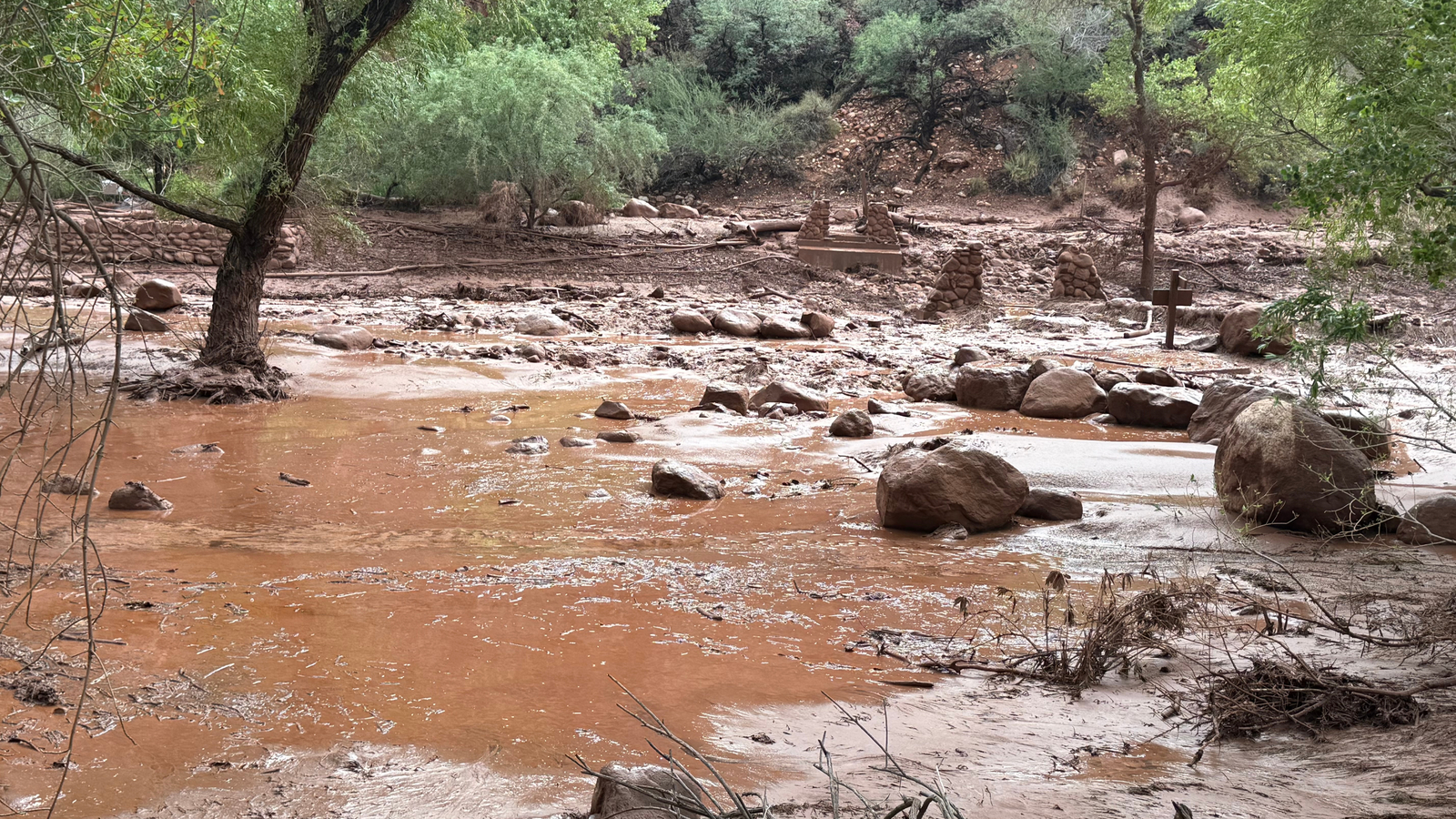
A powerful flash flood at Grand Canyon over the weekend forced the evacuation of dozens of hikers, campers, and river runners after torrential rainfall transformed a normally tranquil tributary into a destructive torrent. The sudden deluge swept massive boulders, metal structures, and other debris into the Colorado River, reshaping part of one of the world’s most iconic landscapes within minutes. As park officials scrambled to account for everyone in the area, several popular destinations remained closed while search efforts continued into the following day.
The unprecedented event, which struck on Saturday afternoon, serves as a stark reminder of how rapidly conditions can change in this remote and rugged terrain. According to the National Park Service (NPS), 15 people may remain unaccounted for, prompting authorities to issue a public call for information from anyone with knowledge of hikers or campers who were in the affected region.
The Bright Angel Creek Deluge: What Happened
The flooding originated in Bright Angel Creek, a tributary that drains from the North Rim down to the Colorado River. Within roughly 30 minutes, between half an inch and one inch of rain fell across the rocky, steeply sloped terrain, and almost all of it ran off immediately, generating a fast-moving surge of water and debris. The torrent was powerful enough to demolish pedestrian bridges spanning the creek, widen the streambed considerably, and carve what appears to be a new rapid into the Colorado River itself.
Justin Johndrow, a meteorologist with the National Weather Service office in Flagstaff, explained that the geography of the canyon amplified even a modest rainfall event. With elevations dropping approximately 6,000 feet from the North Rim down to the river, water accumulates tremendous velocity as it descends, transforming a brief storm into a destructive force.
Mass Evacuations at Phantom Ranch and Beyond
More than 60 people were evacuated from Phantom Ranch, the only lodging facility located at the bottom of the Grand Canyon. This historic outpost, which features a cantina dating back decades and dormitory-style accommodations, serves as a traditional launching and landing point for Colorado River rafting expeditions. Evacuees were lifted to safety by helicopter, cutting their adventures short by as much as two days.
One evacuee, Erica Viola, recounted her experience at the Bright Angel Campground when the rain began falling on Saturday afternoon. She described watching alongside roughly 50 other hikers as the creek level rose dramatically within minutes, soon carrying debris that included what appeared to be an entire barracks structure. The group was eventually airlifted to safety, bringing their wilderness journey to an abrupt end.
The National Park Service confirmed that no injuries have been reported, though additional evacuations were still being coordinated for Sunday as teams worked to ensure every visitor had safely left the impacted zone.
Park Closures and Travel Disruptions
Several beloved destinations within the canyon remained shuttered on Sunday as damage assessments got underway:
- Bright Angel Campground – Closed pending evaluation of trail and structural damage.
- Phantom Ranch – Evacuated and closed to new arrivals.
- North Kaibab Trail (partial) – Sections of this famous corridor were off-limits due to washed-out bridges and unstable terrain.
- Colorado River rafting – All commercial and private rafting operations through the affected corridor were suspended.
The collapse of pedestrian bridges along the creek system has created serious logistical challenges. These bridges serve as critical links between trails, campgrounds, and river access points, meaning their loss effectively isolates portions of the inner canyon until repairs can be made.
The Search for Missing Visitors
Perhaps the most concerning development is the status of 15 individuals whom park officials believe may be unaccounted for. The NPS has asked anyone with information about hikers, backpackers, or campers who were in the canyon during the storm to come forward. The agency is coordinating with the Arizona Department of Public Safety to continue evacuations and search efforts, employing helicopters, ground crews, and communication outreach to track down those whose whereabouts remain unknown.
While no casualties have been confirmed, the dynamic and rapidly changing situation has kept rescue personnel on high alert throughout the weekend.
Why the Grand Canyon Is So Vulnerable to Flash Flooding
Speaking to the geological significance of the event, Jack Schmidt, director of the Center for Colorado River Studies at Utah State University, noted that “this is a reminder of how dynamic and active the Grand Canyon landscape truly is.” His comment underscores an essential truth about the canyon: it is not a static monument but a living, evolving environment shaped continuously by water, wind, and time.
Several factors make the Grand Canyon especially susceptible to flash flood events:
- Steep topography: With elevations plummeting thousands of feet over short horizontal distances, water accelerates rapidly downhill.
- Rocky, exposed terrain: Vegetation and soil cover are sparse in many areas, meaning rainfall runs off rather than absorbing into the ground.
- Slot canyons and narrows: Tributaries like Bright Angel Creek funnel water through tight channels that amplify its destructive power.
- Remote location: Limited road access and challenging terrain complicate emergency response times.
- Seasonal monsoon patterns: Late summer thunderstorms in the Southwest can dump significant rainfall in very short periods.
Meteorologists warned that the threat had not fully passed, with continued chances of rain and thunderstorms persisting in the area through Monday, raising concerns about additional flooding, mudslides, or further damage to already-compromised infrastructure.
Essential Flash Flood Safety Tips for Canyon Visitors
For anyone planning future travel to the Grand Canyon or similar terrain, this weekend’s events offer valuable lessons in wilderness preparedness. Consider the following flash flood safety guidelines:
- Check the weather forecast before and during your trip, and monitor updates from the National Weather Service.
- Register your itinerary with the NPS or a trusted contact so authorities know where to look if you become unreachable.
- Camp on high ground well away from any dry streambeds, which can transform into raging rivers within minutes.
- Never attempt to cross a flooded waterway on foot or by vehicle – turn around and find an alternate route.
- Carry a satellite communicator or personal locator beacon, as cell service is unreliable in many parts of the canyon.
- Pay attention to distant thunder and darkening skies; if storms are developing, seek higher ground immediately.
Looking Ahead: Recovery and Restoration
As search and evacuation operations wind down, attention will shift toward assessing the full extent of the damage and planning repairs. Replacing the destroyed pedestrian bridges alone could take considerable time, given the difficulty of transporting materials to the bottom of the canyon. River rafting outfitters face uncertainty about when commercial trips through this stretch of the Colorado will resume, while backpackers who had permits for the North Kaibab Trail will need to adjust their plans.
Yet for all the disruption, the Grand Canyon has endured and recovered from similar events throughout its millions of years of geological history. The newly formed rapid in the Colorado River and the widened streambed of Bright Angel Creek are simply the latest chapters in an ongoing story of erosion and renewal , one that continues to draw adventurers from around the world.
Officials continue to urge anyone with information about individuals who may have been in the canyon during the storm to contact the National Park Service. Visitors with upcoming reservations are strongly encouraged to check for closures and alerts before departing for the park. As the canyon demonstrates once again, preparation, respect for natural forces, and humility in the face of nature’s power remain the most reliable companions for anyone venturing into this magnificent but unpredictable landscape.