
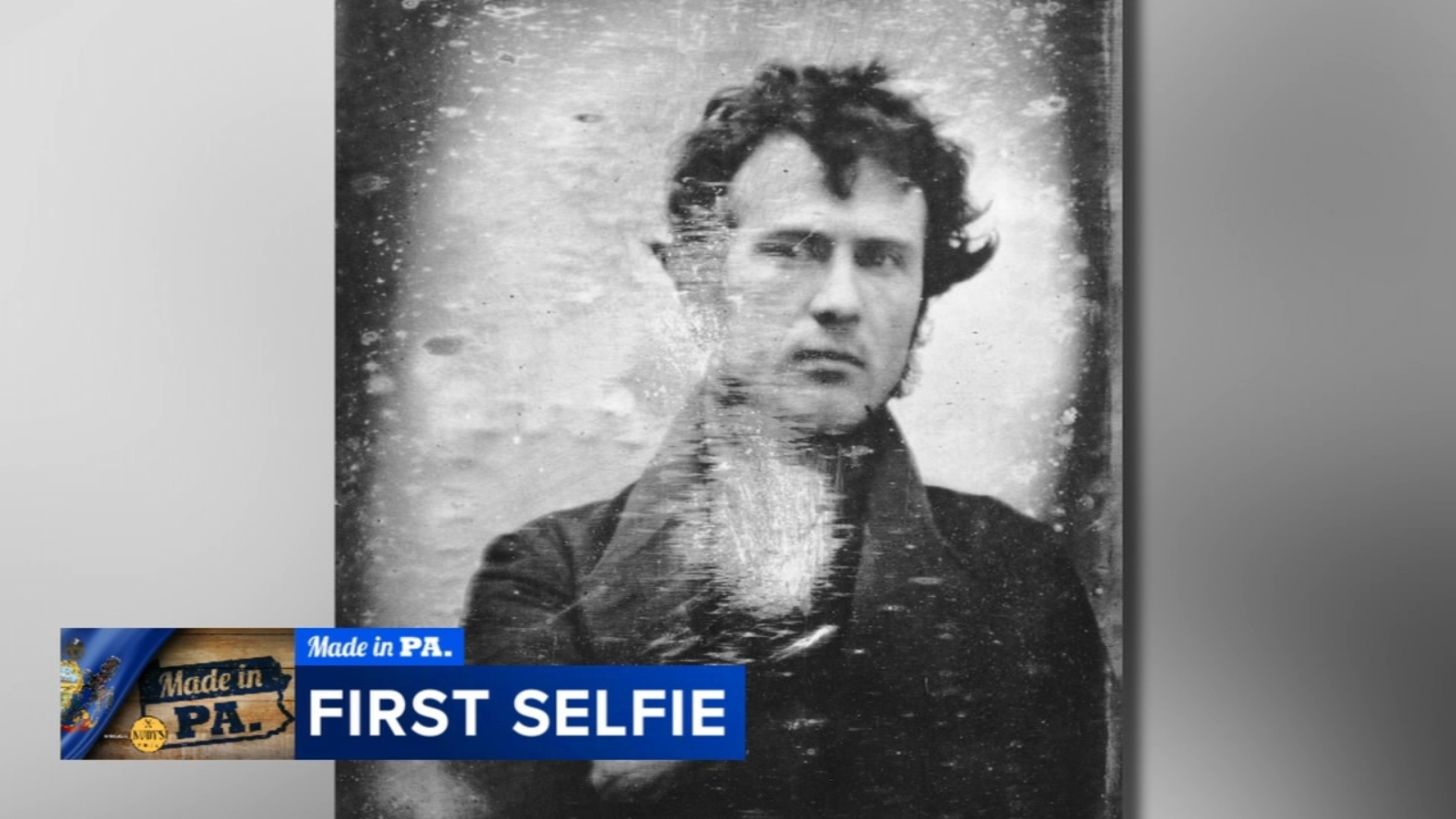
In an era when millions of people snap a first selfie every single day without a second thought, few realize the remarkable origins of this now-common practice. Long before Instagram filters, front-facing cameras, or even the concept of instant photography, a Philadelphia man created what historians widely recognize as the world’s first selfie back in 1839. This pioneering photograph wasn’t taken with a smartphone , it required a homemade camera, a complex chemical process, and several minutes of unwavering patience. The story behind this groundbreaking image is one of curiosity, innovation, and a moment that quietly changed the course of visual history.
The Man Behind the Lens: Robert Cornelius
Robert Cornelius was not a professional photographer, nor was he seeking fame or fortune when he stepped in front of his own camera. Born into a Philadelphia family, Cornelius was the son of a lamp maker, and his early career was rooted in the family business. However, his interests extended far beyond lighting the streets of his hometown. When the daguerreotype process , the world’s first practical photographic method , made its way across the Atlantic from France in 1839, Cornelius was instantly captivated.
Joanna Dunphy, artistic director of Historic Philadelphia, has noted that Cornelius embraced the emerging technology with remarkable enthusiasm. He didn’t have a camera of his own, but that didn’t deter him. Instead, Cornelius built one himself, cobbling together the equipment required to capture an image using the revolutionary daguerreotype process. His resourcefulness and determination set the stage for what would become one of the most iconic moments in the history of photography.
What Is a Daguerreotype?
To fully appreciate what Cornelius accomplished, it’s worth understanding the technology he worked with. The daguerreotype, invented by French artist Louis Daguerre, was the first publicly available photographic process. It used a silver-plated copper sheet treated with iodine vapor to create a light-sensitive surface. After exposure, the image was developed using mercury fumes and fixed with a salt solution.
The process was:
- Time-consuming: Setting up the equipment required careful preparation and specific chemical handling.
- Physically demanding: Subjects had to remain perfectly still for anywhere between five and fifteen minutes, depending on the available light.
- Technically challenging: Without the automated systems we take for granted today, every step demanded precision.
Despite these challenges, Cornelius saw an exciting opportunity. He wanted to test the limits of this new technology , and he decided to make himself the subject.
The Moment That Created the First Selfie
On a day in 1839, Cornelius carried his homemade camera outside his family’s shop on 8th Street in Philadelphia. He carefully set up his contraption, adjusted the settings, and then stepped into the frame. For several minutes, he stood motionless, allowing the light-sensitive plate to capture his likeness.
The resulting photograph is a slightly blurry but unmistakably human portrait , a young man with tousled hair and a thoughtful expression, gazing directly into the camera. It is, by virtually every historical account, the first photographic self-portrait ever created. Today, we call it the first selfie.
What makes this moment extraordinary is its sheer ambition. Taking a daguerreotype of a landscape or a building was already an impressive feat. Taking one of oneself , requiring the subject to sit motionless for minutes while also operating the camera , was virtually unheard of. Cornelius pulled off both roles simultaneously, making him a true pioneer of photography.
Why Robert Cornelius Didn’t Call It a Selfie
It’s easy to project modern sensibilities onto historical events, but Cornelius almost certainly did not think of his photograph as a “selfie” in any contemporary sense. The word itself didn’t exist. It wouldn’t enter popular vocabulary for nearly 180 more years, gaining widespread use with the rise of smartphones and social media platforms in the 2010s.
According to Dunphy, Cornelius likely viewed his accomplishment through a scientific lens rather than a personal one. He wasn’t trying to show off or capture his image for vanity’s sake. Instead, he saw the photograph as evidence that this new technology could work , that the human form could be preserved through light and chemistry. On the back of his famous photograph, Cornelius wrote the words “the first light photograph,” suggesting he understood its importance, even if the world wouldn’t fully appreciate it for generations.
The Legacy of Philadelphia’s Photography Pioneer
Cornelius didn’t stop with his famous self-portrait. He went on to become one of America’s most important early photographers, opening one of the first professional photography studios in Philadelphia. His work helped popularize the daguerreotype process throughout the United States, and he became a respected figure in the growing early photography community.
Some key contributions Cornelius made to the field include:
- Commercial photography: He established one of the earliest commercial photography studios, making portraiture accessible to a broader audience.
- Technical refinement: Cornelius experimented with faster exposure times and improved chemical processes, helping make photography more practical.
- Mentorship: He trained other photographers and helped spread daguerreotype techniques across the country.
His legacy extends far beyond that single self-portrait. Yet that image remains the most famous , the photograph that most directly connects the 19th-century world of daguerreotypes to the 21st-century phenomenon of the modern selfie.
From Daguerreotype to Smartphone: The Evolution of the Self-Portrait
The journey from Cornelius’s 1839 self-portrait to today’s smartphone selfies is a fascinating study in technological progress. In the 19th century, taking a photograph required specialized knowledge, expensive equipment, and considerable patience. Only those with scientific curiosity or professional ambition typically attempted it.
Fast forward to today, and the barriers have essentially disappeared. A modern smartphone can capture a high-resolution self-portrait in a fraction of a second, apply filters, and share the image with millions of people across the globe , all from the palm of one’s hand. The transformation is staggering when you think about it.
Interesting Comparisons Between Then and Now
Consider the contrast between Cornelius’s experience and the modern selfie-taker:
- Equipment: Cornelius built his camera from scratch; today, we carry cameras in our pockets.
- Time required: Cornelius stood still for up to 15 minutes; a modern selfie takes less than a second.
- Sharing capability: Cornelius’s image remained a single physical artifact for decades; today’s selfies are instantly uploaded to social media.
- Purpose: Cornelius saw his photo as scientific proof; today’s selfies are often about personal expression, social connection, and even marketing.
Despite these differences, the underlying impulse remains remarkably similar. People have always wanted to see themselves , to capture a moment, to preserve a likeness, to share who they are with the world. Cornelius simply did it first, and he did it with nothing but curiosity and ingenuity.
Why the First Selfie Still Matters
Understanding the origins of the first selfie offers more than just a fun historical anecdote. It reminds us that innovation often begins with ordinary people doing something extraordinary for the first time. Cornelius wasn’t trying to launch a new cultural phenomenon. He was simply curious about a fascinating new technology and willing to push its boundaries.
His Philadelphia-based experiment places an important moment of innovation squarely in the American story. While the daguerreotype process originated in France, Cornelius helped demonstrate its potential in the United States and contributed significantly to making photography accessible to everyday Americans. The historic Philadelphia location of his self-portrait adds another layer to the city’s rich heritage as a birthplace of American innovation.
The inscription on the back of Cornelius’s photograph , “the first light photograph” , reveals something profound about the mindset of early innovators. They weren’t thinking about selfies or followers or viral content. They were thinking about light, about chemistry, about what was technically possible. And in doing so, they created something timeless.
Conclusion
The story of the first selfie is ultimately a story about human curiosity and the relentless drive to capture moments in time. Robert Cornelius, a lamp maker’s son from Philadelphia with no formal training in photography, looked at an emerging technology and asked a simple question: Can this capture a human face? He answered that question affirmatively in 1839, standing motionless outside his family’s shop while light slowly etched his likeness onto a silver-plated copper sheet.
Nearly 200 years later, selfies have become one of the defining visual expressions of our age. They shape how we communicate, how we remember, and even how we understand ourselves. But every one of those billions of images traces its lineage back to that single, pioneering self-portrait taken in Philadelphia. Cornelius may not have called it a selfie, and he certainly didn’t anticipate the cultural phenomenon it would spawn, but his contribution to photography history is undeniable. The next time you raise your phone to snap a quick self-portrait, take a moment to appreciate the incredible journey that brought us from a five-minute exposure on a Philadelphia street corner to an instant snapshot shared around the world in seconds.