
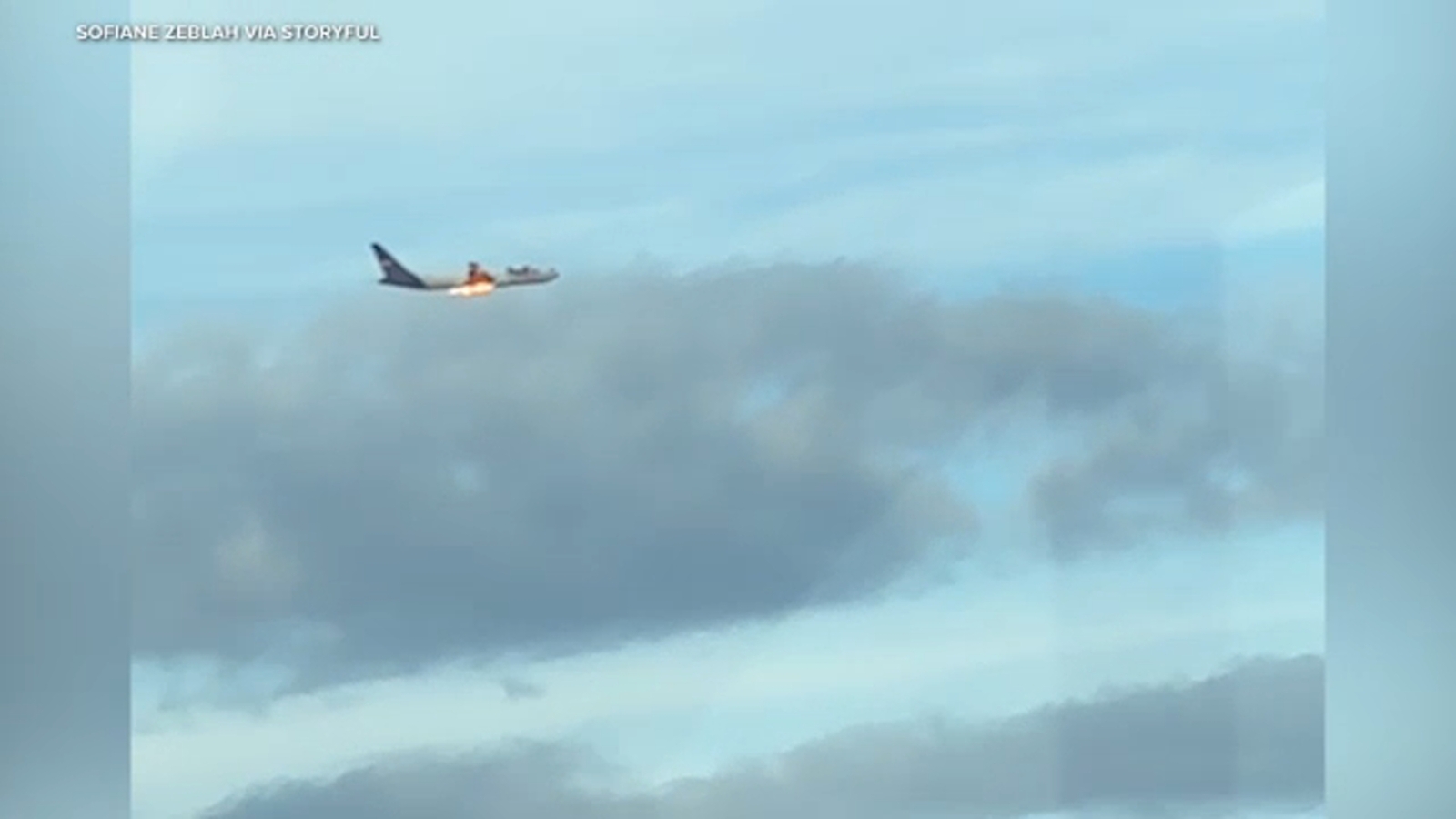
A FedEx plane bird strike forced a dramatic emergency landing at Newark Liberty International Airport on Saturday morning, after a Boeing 767 cargo aircraft collided with a bird shortly after takeoff, igniting a fire in one of its engines. The crew of FedEx Flight 3609, bound for Indianapolis, executed a textbook emergency return to the airport, landing safely with all personnel unharmed. The incident, captured on video by a passing motorist, has since drawn the attention of the Federal Aviation Administration, which has announced it will investigate the event.
This latest aviation incident highlights the ongoing risks that wildlife encounters pose to commercial and cargo aircraft, and underscores the rigorous training that flight crews undergo to handle such emergencies. Below, we break down everything known so far about the event, the response from authorities, and what it means for aviation safety going forward.
The Incident: What Happened on Saturday Morning
Just before 8:00 a.m. local time on Saturday, FedEx Flight 3609 departed from Newark Liberty International Airport in New Jersey, headed for Indianapolis, Indiana. Within moments of takeoff, the Boeing 767 freighter experienced a catastrophic bird strike that resulted in an engine fire on the right wing.
Footage obtained by New York television station WABC-TV shows bright flames and trailing smoke visible beneath the aircraft as it climbed, painting a stark image of the danger unfolding in the skies above one of the nation’s busiest aviation corridors. The crew immediately declared an emergency, reversed course, and coordinated with air traffic control to return to Newark for an emergency landing.
According to the Federal Aviation Administration, the aircraft successfully touched down back at Newark without further incident. No injuries were reported among the flight crew, and the quick decision-making by the pilots prevented what could have been a far more serious outcome.
Flight Details and Aircraft Information
- Flight Number: FedEx Express Flight 3609
- Aircraft Type: Boeing 767 freighter
- Origin: Newark Liberty International Airport (EWR), New Jersey
- Destination: Indianapolis, Indiana
- Time of Incident: Shortly before 8:00 a.m. local time
- Day: Saturday
- Outcome: Safe emergency landing, no injuries reported
Eyewitness Account: A Terrifying View from the Ground
One of the most striking elements of this story is the eyewitness testimony from Sofiane Zeblah, who happened to be driving near the airport when the bird strike occurred. Zeblah told ABC News that she saw debris falling from the sky and immediately pulled over on the highway to record the scene on her phone.
“I was driving and I saw something falling and a fire starting on the right wing engine. I think a bird went through the engine , a big bird,” Zeblah recalled. “I was in shock. I stopped immediately on the highway. Fortunately, nothing bad happened.”
Her video, which quickly circulated through local and national media outlets, shows the gravity of the situation from a civilian perspective. Witnesses like Zeblah provide crucial firsthand accounts that often help investigators piece together the timeline of an aviation event. Her calm reaction , stopping safely and recording rather than panicking , likely provided valuable documentation for news organizations and aviation authorities alike.
FedEx’s Official Response
Following the safe landing, FedEx issued a brief but reassuring statement acknowledging the emergency and praising the professionalism of its crew. The cargo carrier emphasized that all personnel returned safely and credited the swift response of both the flight crew and first responders on the ground.
“Our crew declared an emergency and returned safely to Newark. We are grateful for the quick actions of our crew and first responders,” the company stated.
FedEx, one of the world’s largest cargo airlines, operates a massive fleet that includes numerous Boeing 767 freighters on routes across the globe. The company’s prompt communication in the wake of the incident reflects the standard protocol for commercial aviation events: address the situation, confirm the safety of personnel, and cooperate fully with regulatory investigations.
The Aircraft: Why the Boeing 767?
The Boeing 767 is a wide-body twin-engine jet that has become a workhorse of the global cargo industry. FedEx, along with other major cargo carriers like UPS, relies heavily on this aircraft for medium- and long-haul freight operations. Its twin-engine configuration, fuel efficiency, and substantial payload capacity make it ideal for routes like the Newark-to-Indianapolis corridor.
However, the Boeing 767, like all commercial aircraft, is subject to strict maintenance and inspection protocols following any significant event, including bird strikes. Even when an aircraft lands safely, it typically undergoes thorough examination to ensure that no structural damage, engine compromise, or system fault could pose a risk to future flights.
FAA Investigation: What Comes Next
The Federal Aviation Administration confirmed that it will investigate the circumstances surrounding the FedEx plane bird strike and the subsequent emergency landing. Such investigations typically focus on several key areas:
- Engine Analysis: Examination of the damaged engine to determine the extent of impact and whether the bird strike exceeded design tolerance levels.
- Bird Species Identification: Remnants of the bird are often recovered and identified to help airports assess wildlife management strategies.
- Airport Wildlife Hazard Assessment: Review of the airport’s wildlife management program and any recent sightings or mitigation efforts near the runway.
- Crew Performance Review: Evaluation of the crew’s response, decision-making, and communication with air traffic control.
- Aircraft Maintenance Records: Inspection of the aircraft’s historical maintenance logs to ensure it was airworthy before takeoff.
The findings of the FAA investigation could influence future bird-strike prevention measures at Newark Liberty International Airport and across the national airspace system.
Bird Strikes in Aviation: A Broader Perspective
Bird strikes are not uncommon in aviation. According to data from the FAA and the Smithsonian Institution’s Feather Identification Lab, the United States records thousands of wildlife strikes each year, with the vast majority occurring near airports during takeoff and landing phases of flight. Large birds , such as geese, gulls, and raptors , pose the greatest threat because of the damage their mass can inflict on aircraft engines, windshields, and structural components.
Some of the most catastrophic aviation incidents in history have involved bird strikes, including the infamous 2009 “Miracle on the Hudson,” when US Airways Flight 1549 lost both engines after striking a flock of Canada geese and was successfully ditched in the Hudson River by Captain Chesley Sullenberger. That event dramatically raised public awareness about bird strike risks and led to enhanced wildlife management protocols at airports nationwide.
Modern jet engines are designed to withstand significant bird strikes, and certification standards require aircraft to be able to safely continue flight after encountering a bird of a certain size. However, multiple large bird strikes or strikes involving very large species can exceed these design thresholds, making prevention the first line of defense.
Common Bird Strike Prevention Measures
- Habitat modification around airports to discourage bird populations
- Use of acoustic deterrents and pyrotechnics to scare birds away from runways
- Trained wildlife control teams patrolling airfield perimeters
- Coordination with local agriculture and wildlife agencies
- Improved radar and surveillance systems to detect bird activity
What Happens After a Bird Strike Emergency Landing?
Following a bird strike incident like the one experienced by the FedEx crew, a multi-step recovery and investigation process begins. The aircraft is typically taken out of service pending inspection. Engineers examine the engine, fuselage, and any other affected components for damage. In many cases, the engine must be fully removed and inspected, even if external damage appears minimal.
Cargo that was aboard the aircraft may need to be transferred to another plane, causing delays for shippers and customers. The flight crew will also undergo standard post-incident procedures, including mandatory rest periods and, in some cases, debriefings with airline safety officials and the FAA.
For passengers , though none were aboard this particular cargo flight , airlines are required to provide accommodations, rebooking, or refunds in the event of significant delays or cancellations.
Conclusion: A Successful Outcome Thanks to Crew Training
The FedEx plane bird strike at Newark Liberty International Airport is a powerful reminder of the unpredictability of aviation and the importance of rigorous crew training. Thanks to the swift, professional response of the Flight 3609 crew, what could have been a disaster ended as a successful emergency landing with no injuries and no apparent damage beyond the affected engine. As the FAA continues its investigation, this incident will likely contribute to the ongoing body of knowledge about wildlife hazards in aviation and reinforce best practices for prevention and response.
For now, Newark and FedEx can count themselves fortunate. In a situation where seconds matter and stakes are high, the outcome was the best possible , and that’s a testament to the safety culture embedded in modern commercial aviation.