
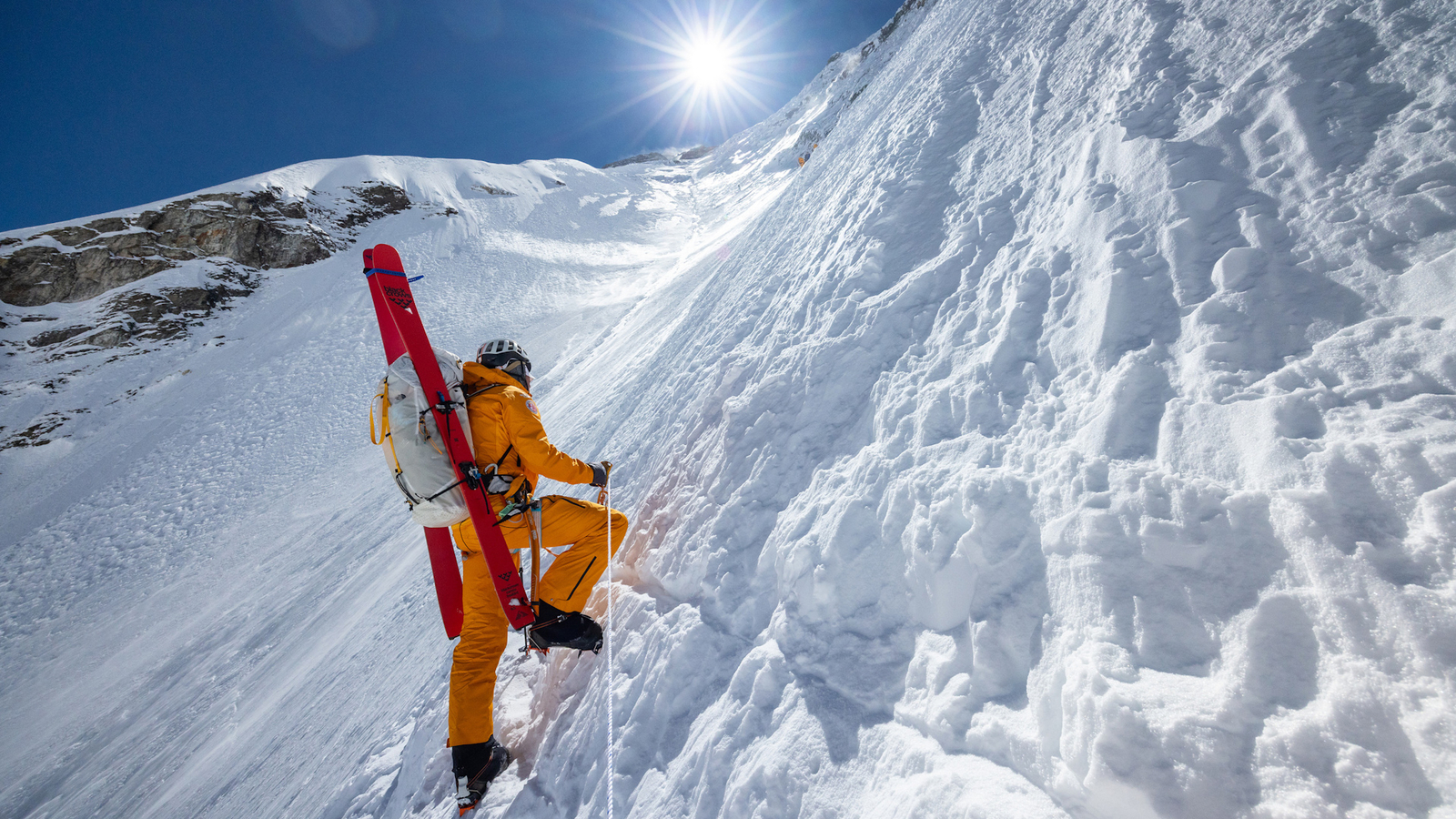
The Everest North Face ski climb represents one of the last great unsolved puzzles in mountaineering history. While the world’s highest peak has been summited over 13,000 times, only five climbers have ever conquered its direct North Face , and until recently, no one had ever attempted to ski down it. A groundbreaking new documentary from National Geographic, directed by the Academy Award-winning team behind Free Solo, captures this unprecedented feat in stunning detail.
A Dream Two Decades in the Making
For elite ski mountaineers Jim Morrison and Hilaree Nelson, the idea of combining a climb and ski descent of Everest’s North Face was not a passing fantasy. It was a vision that consumed them for nearly two decades. The North Face of Everest , known to climbers as the Kangshung Face’s mirror on the Tibetan side , is widely considered the most technically demanding and dangerous route on the mountain. Reaching its summit requires navigating unstable seracs, exposure to brutal high-altitude winds, and terrain that has repelled some of the world’s most accomplished alpinists.
What made this dream audacious was not just the climb itself, but the descent on skis. Skiing the Everest North Face would require the team to ascend one of the most hostile walls on Earth and then ride the same line back down , a marriage of two disciplines that demands unparalleled skill, courage, and endurance.
The Numbers Behind the Challenge
- 13,000+ successful summits of Everest via standard routes
- 5 climbers who had previously tackled the direct North Face
- 0 prior ski descents of the face before this attempt
- 2,000+ meters of near-vertical ice and rock to navigate
Behind the Camera: A Team of Adventurous Storytellers
To document this historic ski mountaineering expedition, the filmmakers turned to Elizabeth Chai Vasarhelyi and Jimmy Chin , a husband-and-wife duo whose work has redefined adventure documentary filmmaking. Their 2018 film Free Solo captured the world’s imagination and earned them the Academy Award for Best Documentary Feature. That film chronicled Alex Honnold’s death-defying free solo climb of El Capitan, and the duo has continued to chase stories at the intersection of human ambition and natural extremes.
Their filmography reads like a survey of the planet’s most inhospitable environments and the people who challenge themselves within them. Love+War explored the life of war photographer Lynsey Addario. Lost in the Jungle recounted the survival story of four young explorers stranded in the Amazon. Endurance revisited the legendary Shackleton expedition. With each project, Vasarhelyi and Chin have proven uniquely capable of translating the emotional and physical reality of extreme pursuits into cinematic storytelling.
Their production company, Little Monster Films, partnered with National Geographic and Walt Disney Studios to produce “Everest: The Other Side,” a documentary film that elevates adventure cinema to new heights , literally and figuratively.
The North Face: Everest’s Most Coveted Line
So what makes the North Face so special, and why has it remained so inaccessible to ski mountaineers?
Technical Difficulty
The terrain demands advanced alpine climbing skills, including the ability to navigate mixed ice and rock routes at extreme altitudes. The face is composed of steep, brittle ice walls and tumbling seracs , massive blocks of ice that can collapse without warning. Climbers must constantly assess avalanche risk while making thousands of vertical feet of progress on incredibly fragile terrain.
Objective Dangers
Beyond technical climbing difficulty, the North Face exposes mountaineers to objective hazards that are impossible to control. Harsh weather systems can pin down a team for days. Crevasses threaten to swallow anyone who strays from a safe line. Above 8,000 meters , known as the “death zone” , the body begins to deteriorate rapidly, and rescue becomes all but impossible.
The Skiing Equation
Adding skiing to the equation multiplies the risk exponentially. Where mountaineers can carefully choose their ascent lines, a ski descent requires committing to a continuous run that cannot easily be reversed. A single mistake in route selection or execution could prove fatal on terrain this steep and unforgiving.
From Festival Circuit to Worldwide Release
The documentary made its glittering debut at the Venice Film Festival, signaling its importance on the global stage before it had even reached general audiences. Following the prestigious premiere, Everest: The Other Side continued its run on the international festival circuit, with screenings at:
- Telluride Film Festival
- Toronto International Film Festival (TIFF)
- Camden International Film Festival
- BFI Film Festival (London)
For documentary lovers, mountaineering enthusiasts, and adventure film fans alike, the festival tour provided a chance to witness the historic achievement on the big screen before its wider release.
Global Theatrical Release
Everest: The Other Side opens in theaters and IMAX worldwide on October 30. The IMAX format is particularly significant for this film, as the enormous canvas allows viewers to experience the scale of the North Face and the thin air of the world’s highest peak in ways that traditional screens cannot replicate. Audiences will feel the exposure of the seracs, the bite of the wind, and the awe of standing beneath Everest’s most imposing face.
Why This Story Matters
At first glance, the question of “why risk everything for a ski line?” might seem straightforward. Adventure has long been humanity’s method of pushing against perceived limits. But the story told in Everest: The Other Side goes deeper than the pursuit of a first descent.
It is a story about two people sharing a dream that very few others on Earth truly understand. Jim Morrison and Hilaree Nelson were not just partners in climbing , they were partners in life, and their bond shaped how they approached this monumental undertaking. The film captures not only the technical execution of their plan but also the emotional landscape of attempting something that no one had done before.
The documentary also raises broader questions about exploration in the modern age. With satellites mapping every corner of the planet and helicopters capable of reaching nearly any summit, what does it mean to “explore” today? The Everest North Face ski climb answers that question eloquently: exploration in the 21st century is as much about pushing the boundaries of human capability as it is about revealing unknown geography.
Looking Ahead
The release of Everest: The Other Side arrives at a time when audiences are hungry for stories of authentic human achievement. As content has proliferated across streaming platforms and social media, the appetite for genuinely meaningful adventure narratives has only grown. Vasarhelyi and Chin have proven themselves uniquely positioned to tell these stories, and their newest project appears poised to join the canon of great adventure documentaries.
For aspiring ski mountaineers, mountaineers, filmmakers, and anyone who has ever chased a seemingly impossible dream, this documentary offers something rare: a window into what it takes to attempt the kind of first ascent descent that will likely never be replicated.
Conclusion
The Everest North Face ski climb documented in this remarkable film represents more than a sporting achievement. It is a testament to what becomes possible when vision, preparation, skill, and courage converge in a single moment. With only five prior climbers having tackled the direct North Face and no prior ski descents attempted, Jim Morrison and Hilaree Nelson wrote a new chapter in the history of Himalayan mountaineering , one that audiences worldwide will now be able to witness when Everest: The Other Side opens in theaters and IMAX on October 30. Whether you are drawn to the mountain for its physical challenge, its cinematic grandeur, or its spiritual resonance, this documentary invites you to experience one of the most ambitious attempts in modern alpinism. The North Face has finally been skied, and thanks to the storytellers at Little Monster Films and National Geographic, the world can now share in that extraordinary journey.