
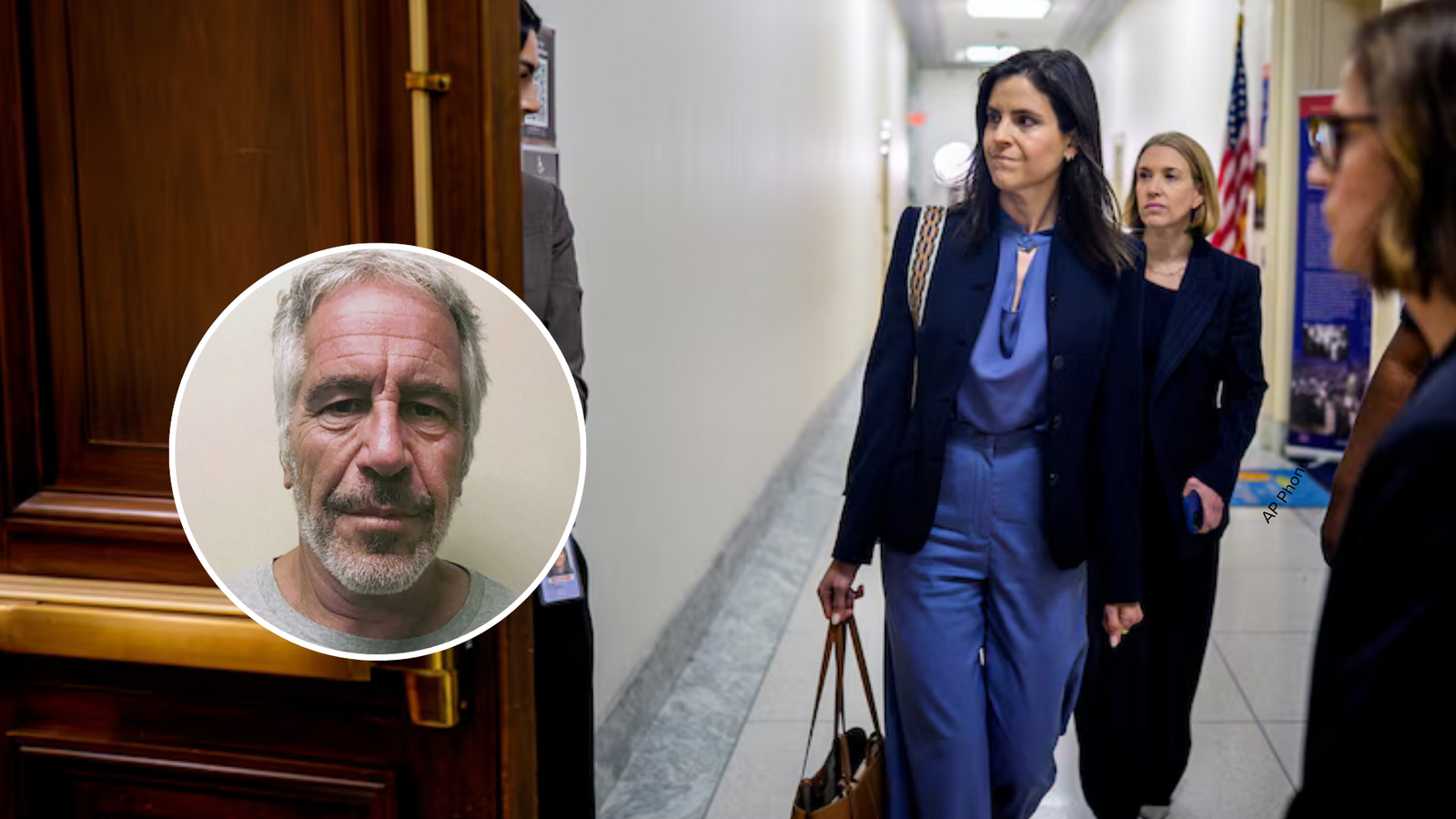
The ongoing epstein investigation took another dramatic turn this week as four Republican lawmakers, led by House Oversight Committee Chairman James Comer of Kentucky, formally requested that the Department of Justice open a fresh probe into newly surfaced allegations of sexual abuse tied to Jeffrey Epstein’s circle. At the center of the request is Sarah Kellen, a former longtime personal assistant to the disgraced financier, who delivered a striking and disturbing account of abuse to congressional investigators last month.
Kellen’s testimony, made public through a transcript released on Thursday, paints a grim portrait of a woman caught in a web of coercion, exploitation, and institutional failure. Her appearance before the committee , held behind closed doors on May 21 , has reignited scrutiny of the federal government’s handling of one of the most disturbing criminal cases of the modern era.
New Allegations Against High-Profile Figures
During her interview, Kellen disclosed for the first time that she had been sexually abused not only by Epstein but also by Ghislaine Maxwell, his convicted accomplice currently serving a 20-year federal sentence. More significantly, she named two prominent men in Epstein’s orbit: Frédéric Fekkai, the celebrity hairstylist, and Philip Levine, the wealthy businessman who later became mayor of Miami Beach.
According to the transcript, Kellen alleged that Fekkai abused her in the early 2000s, before she began working for Epstein. She told lawmakers that she had traveled to Hawaii for what she believed was a modeling opportunity tied to a fashion show. When she arrived, no show existed. With no money for a hotel or a flight home, Kellen claimed, Fekkai took advantage of her that night. She was in her early twenties at the time.
Fekkai later introduced her to Epstein, describing the financier as a model scout for Victoria’s Secret , a claim that now appears to have been a predatory gateway. A representative for Fekkai, Mark Herr, rejected Kellen’s allegations outright, stating: “Mr. Fekkai never abused anyone. He never participated in any illegal behavior. He knew nothing about Epstein’s repugnant depravity or trafficking.”
The allegations against Levine are equally serious. Kellen described an incident during a 2003 summer trip to Saint-Tropez, where Levine was a houseguest at a property rented by Epstein and Maxwell. After the couple had retired for the night, Kellen claimed Levine “basically forced himself” on her. She alleged a second encounter occurred on a beach walk when Levine pulled her into a wooden shack.
A spokesperson for Levine called the allegations untrue, describing a single “brief intimate encounter” between consenting adults nearly a quarter century ago. Levine has previously stated he had no friendship or business relationship with Epstein.
Lawmakers Demand DOJ Action
In a letter addressed to the Justice Department, Comer and three other Republican committee members urged federal prosecutors to “use all available tools, including immunity for certain witnesses,” to investigate the abuse claims against Levine and Fekkai. The letter also asked why Kellen had never been interviewed by law enforcement until Epstein’s arrest in July 2019.
This renewed push comes as the epstein investigation enters a critical phase. The Oversight Committee, which officially launched its inquiry in February of last year, is rapidly expanding its witness list. Upcoming testimonies include those of Lesley Groff, another longtime Epstein assistant; Kathryn Ruemmler, former Goldman Sachs chief counsel; Jes Staley, Epstein’s former personal banker; and billionaires Bill Gates and Leon Black.
Comer has signaled that a comprehensive report on the committee’s findings could be released before the end of the year, raising the stakes for everyone involved.
Kellen’s Account of a Decade-Long Ordeal
Kellen, now 47, provided lawmakers with a vivid and painful timeline of her time working for Epstein and Maxwell. She began the job around 2001, approached by a co-worker at a hotel in Hawaii. She said she had no idea she was joining Epstein’s household until she arrived at his private island.
Her description of life inside Epstein’s orbit is chilling. She alleged that Epstein controlled every facet of her existence , from her clothing and hairstyle to where she lived. He used the phrase “cold sheets” as a code signal summoning her for sexual encounters, and reportedly referred to her as his “human hot water bottle.”
“I was being paid, in part, to be raped,” Kellen told the committee.
The assaults, she claimed, occurred roughly once a week over a span of more than a decade. Even during Epstein’s 2008 jail sentence in Florida, she alleged he contacted her via video call from inside the Palm Beach County Stockade and ordered her to undress on camera.
Kellen also described one incident in which Maxwell allegedly participated in her abuse on the island, recalling Maxwell showing her how Epstein liked to be touched. She characterized Maxwell as a pervasive psychological force, calling her “slave” and “minion” , and said Maxwell fed and catered to Epstein’s every whim. “I always felt like she turned him into the monster that he became,” Kellen testified.
The Non-Prosecution Agreement and Institutional Failures
One of the most damning revelations in Kellen’s testimony concerned the controversial 2007 non-prosecution agreement. She was one of four women named as potential co-conspirators in that deal , a secret arrangement that allowed Epstein to avoid federal charges in exchange for a lenient plea deal.
Kellen told lawmakers she had no idea her name was included in the document until it was made public years later. “The Federal Government of the United States branded me a criminal in a secret deal with my own abuser, without ever once speaking to me,” she said. “I have spent every year since trying to live underneath that piece of paper.”
Federal prosecutors ultimately decided not to charge Kellen. Internal DOJ records released earlier this year show that the government did not dispute she “was herself a victim of abuse by Epstein.” Attorneys for Kellen argued she was “a very vulnerable victim” and “a cog in Epstein’s wheel,” acting entirely at his direction. Despite that assessment, the deliberations that led to the no-charges decision remain heavily redacted in the public versions of the documents.
Questions About Trump’s Connection
The committee’s top Democrat, Rep. Robert Garcia of California, used his time to question Kellen about her knowledge of Epstein’s prior friendship with President Donald Trump. The two men reportedly had a falling out around 2004, and Trump has consistently denied any awareness of Epstein’s crimes.
Kellen said she recalled Epstein using the gym at Trump’s Mar-a-Lago estate in the early 2000s and that photographs of Trump were displayed in Epstein’s homes. She said she met Trump only once, briefly, around 2001 or 2002, when Epstein introduced them.
A ‘Terrible Scenario’ for Investigators
Before Kellen’s appearance, Comer acknowledged the committee was divided on how to view her. Some members believed she was entirely a victim; others felt she was both a victim and someone complicit in facilitating Epstein’s crimes , particularly in scheduling the infamous massages at the center of the case.
“There are some that believe she was 100% a victim or survivor, and then there are some that think she was a victim and victimizer. So, it’s just a terrible scenario,” Comer told reporters.
After the interview, however, Comer said he believed Kellen “was a victim” and called her testimony “the most substantive, productive interview that we’ve had.”
Obstruction and Suspicious Payments
Kellen also offered testimony suggesting possible obstruction during the original mid-2000s investigation. She recounted overhearing Epstein in 2005 instructing another assistant to remove computers from his Palm Beach residence. Months later, she said, Epstein summoned her to his New York townhouse to collect printed contact directories and framed photographs for delivery to his attorneys. She never learned what became of those items.
Additionally, Kellen described a 2007 incident in which FBI agents at an airport wished to interview her and another woman leaving Epstein’s island. Epstein reportedly walked over to speak with the agents himself and returned within ten minutes, telling them they could leave.
The financial dimensions of Epstein’s relationship with Kellen also raised red flags. She acknowledged receiving $250,000 from Epstein in late 2018, shortly after the Miami Herald published its groundbreaking investigation. Federal prosecutors later cited that payment as evidence Epstein was attempting to buy her silence. Kellen, however, claimed the money was to help her and her then-husband through health difficulties, not tied to the Herald articles.
What Comes Next
As the epstein investigation continues to unfold, the committee’s aggressive timeline suggests a steady drumbeat of revelations in the months ahead. Kellen’s testimony has already delivered significant new leads, particularly regarding Fekkai and Levine, whose names had not previously surfaced as alleged abusers in the Epstein saga.
Meanwhile, Maxwell remains the only other person charged in connection with Epstein’s crimes, and she is actively seeking to have her conviction vacated or her sentence reduced. Her legal team has long argued she was prosecuted as a substitute for Epstein following his death in custody in 2019.
Whether the Justice Department ultimately pursues the new allegations remains to be seen. But with Congress now formally requesting action, and a high-stakes committee report on the horizon, the pressure on federal prosecutors is intensifying. The voices of survivors like Kellen , long ignored, silenced, or dismissed , are finally finding a hearing, and the full scope of Epstein’s network of abuse may yet come to light.