
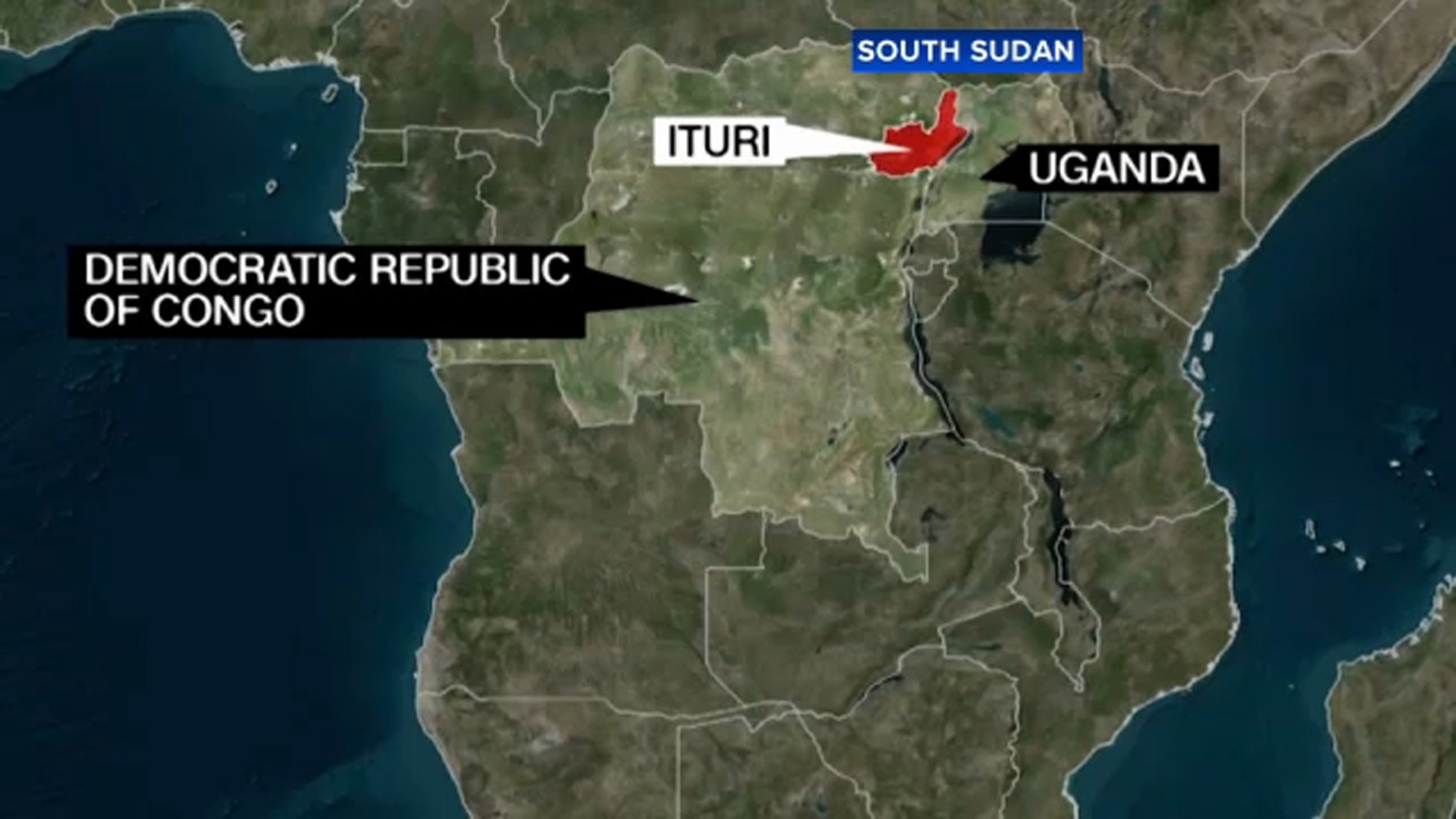
In response to a rapidly evolving health situation in central Africa, the Department of Homeland Security has implemented new ebola outbreak restrictions affecting travelers arriving in the United States from the Democratic Republic of Congo, Uganda, and South Sudan. These measures, announced earlier this week, direct affected flights to land at Washington Dulles International Airport, where enhanced public health screening protocols are now in place. The restrictions aim to prevent the spread of a deadly Ebola outbreak that has already claimed more than 130 lives and triggered a public health emergency declaration from the World Health Organization.
For US travelers, health-conscious readers, and anyone monitoring global disease outbreaks, understanding these new travel protocols is essential. Below is a comprehensive breakdown of what the ebola outbreak restrictions mean, the current state of the crisis, and what experts are saying about the path forward.
Understanding the New Ebola Outbreak Restrictions
The Department of Homeland Security issued formal notice that all commercial flights carrying passengers who have recently traveled to the Democratic Republic of Congo (DRC), Uganda, or South Sudan must be routed to Washington Dulles Airport in Virginia. This designated airport has been equipped with enhanced public health measures designed to screen, identify, and respond to potential Ebola cases before travelers disperse throughout the country.
While South Sudan has not yet reported any confirmed cases of the current Ebola outbreak, it was included in the restrictions due to its geographic proximity to affected areas, its limited healthcare infrastructure, and the significant cross-border movement of populations between nations in the region. Public health officials consider it a high-risk area warranting precautionary measures.
Why Washington Dulles?
Washington Dulles Airport was selected as the centralized entry point because it already houses infrastructure capable of handling international health screenings. The decision to funnel all affected flights through a single airport streamlines the contact tracing process and allows Customs and Border Protection officers to apply consistent health protocols to every traveler arriving from the impacted region.
The Air France Incident: How a Boarding Error Almost Breached the Restrictions
One of the most striking illustrations of how the ebola outbreak restrictions are being enforced occurred when a passenger from the Democratic Republic of Congo was inadvertently allowed to board an Air France flight bound for the United States. According to a Customs and Border Protection spokesperson, the passenger should not have been permitted to board given the active entry restrictions.
The flight, originally scheduled to land in Detroit, was diverted to Montreal after the error was discovered. Air France and US authorities worked together to ensure the passenger did not enter the country in violation of the established protocols. The incident underscores the logistical challenges of enforcing travel restrictions in real time and highlights the critical role that screening procedures play in protecting public health.
“Due to entry restrictions put in place to reduce the risk of the Ebola virus, the passenger should not have boarded the plane,” the CBP spokesperson confirmed to news outlets.
Current State of the Ebola Outbreak in Central Africa
As of the most recent updates, the Ebola outbreak in eastern Democratic Republic of Congo has resulted in approximately 139 suspected deaths and nearly 600 suspected cases, according to World Health Organization Director-General Dr. Tedros Adhanom Ghebreyesus. Among these cases, at least 51 have been officially confirmed through laboratory testing.
The outbreak, which was first detected in the DRC’s northeastern Ituri province and officially confirmed by the country’s health ministry on May 15, marks the 17th outbreak of Ebola virus disease in the DRC. This central African nation is both the second-largest country on the continent and its fourth-most populous, making containment efforts particularly challenging.
Geographic Spread and Cross-Border Concerns
Perhaps the most alarming development is the geographic expansion of the outbreak. Cases of Ebola have now been reported in several urban areas of the eastern DRC, including the major cities of Goma and Bunia. Beyond the DRC’s territory, at least two cases and one death have been recorded in neighboring Uganda’s capital, Kampala.
The urban spread is significant because dense city populations can accelerate transmission rates and complicate the contact tracing efforts that are critical to containing an Ebola outbreak. Health workers have also been affected, with confirmed cases among medical staff further straining already limited healthcare resources in the region.
The Bundibugyo Virus: A Rare and Dangerous Variant
The current outbreak is caused by the Bundibugyo virus, a relatively rare variant of Ebola that presents unique challenges for medical responders. Unlike more commonly studied Ebola strains, there are currently no approved vaccines or therapeutics specifically designed to combat the Bundibugyo variant. Additionally, diagnosing infections requires different laboratory tools than those used for other Ebola strains.
Historical case fatality rates for previous Bundibugyo outbreaks have ranged from 30% to 50%, according to the World Health Organization. This sobering statistic underscores the gravity of the current situation and the importance of aggressive containment measures.
Genetic Similarities to Past Outbreaks
There is a small measure of good news. Genetic testing conducted by the Centers for Disease Control and Prevention indicates that the current Bundibugyo strain shares similarities with the “genetic fingerprints” of outbreaks that occurred in 2007 and 2012. This means that existing diagnostic tools are capable of detecting the virus, even if treatment options remain limited.
International Response: WHO Declares Global Health Emergency
On Sunday, WHO Director-General Dr. Tedros declared the outbreak a public health emergency of international concern, the highest alert level in the United Nations agency’s classification system. The declaration came before the formal convening of an emergency committee, marking the first time a WHO chief had taken such action in advance of committee review.
After meeting on Tuesday night, the emergency committee determined that the outbreak did not meet the criteria for declaring a pandemic emergency, a designation that was applied to the global COVID-19 outbreak. However, the committee’s decision does not diminish the severity of the situation in central Africa.
WHO’s Containment Strategy
Anais Legand, the WHO’s technical officer for viral hemorrhagic fevers, explained that the outbreak may have actually started several months ago, with investigations still ongoing to determine the index case. She emphasized that the organization’s primary focus is on breaking the transmission chain through aggressive contact tracing, isolation of suspected cases, and comprehensive care for confirmed patients.
“Our priority is really to cut the transmission chain by implementing contact tracing, isolating and caring for all suspects and confirmed cases,” Legand stated.
CDC Response and Risk Assessment for Americans
The Centers for Disease Control and Prevention has activated its Emergency Operations Center through its country offices in both the Democratic Republic of Congo and Uganda. Technical experts have been deployed from CDC headquarters in Atlanta to support field operations and provide specialized knowledge to local healthcare teams.
Dr. Satish K. Pillai, who serves as the incident manager for the CDC’s Ebola response, addressed the American public directly at a press conference on Tuesday. He confirmed that the CDC had also introduced entry restrictions on non-US passport holders who had been in Uganda, the DRC, or South Sudan within the previous 21 days before attempting to enter the United States.
Importantly, Dr. Pillai emphasized that the risk to the US general public remains low, providing reassurance that the ebola outbreak restrictions are precautionary rather than reflective of imminent domestic danger.
The American Patient: Dr. Peter Stafford
Among the confirmed cases of the current outbreak is an American citizen, Dr. Peter Stafford, who contracted the disease while working in the Democratic Republic of Congo. Stafford was medically evacuated out of the DRC and is currently hospitalized at Berlin’s Charité University Hospital in Germany.
Matt Allison, executive director of Serge, the Christian missionary organization that Stafford works for, reported that the doctor has been receiving monoclonal antibodies as part of his treatment regimen and is “responding quickly” to therapy. His case demonstrates both the dangers faced by healthcare and aid workers in outbreak zones and the critical importance of rapid access to experimental treatments.
What US Travelers Should Know Going Forward
For American travelers and those with loved ones traveling internationally, the current ebola outbreak restrictions warrant attention but not panic. Here are the key takeaways:
- All flights carrying passengers recently in the DRC, Uganda, or South Sudan must land at Washington Dulles Airport.
- Non-US passport holders who have been in those countries within 21 days of travel are subject to entry restrictions.
- The CDC has activated emergency response operations and deployed technical experts to the region.
- The risk to the general US public remains low, according to CDC officials.
- Travelers planning trips to central Africa should consult current CDC travel advisories before departure.
Conclusion: Vigilance Without Panic
The new ebola outbreak restrictions represent a coordinated, multi-agency effort to protect American public health while supporting international containment efforts in central Africa. While the situation in the Democratic Republic of Congo and Uganda remains serious, with hundreds of suspected cases and a concerning geographic spread, the response from global health authorities has been swift and comprehensive. The WHO’s declaration of a public health emergency of international concern, combined with the CDC’s activation of emergency operations and DHS’s travel restrictions, demonstrates the layered approach needed to address outbreaks of this magnitude.
For US travelers, staying informed through official CDC and WHO channels remains the best course of action. The low risk to the American public, paired with robust screening and containment measures, provides a framework for cautious confidence as the international community works to bring the current Bundibugyo virus outbreak under control.