
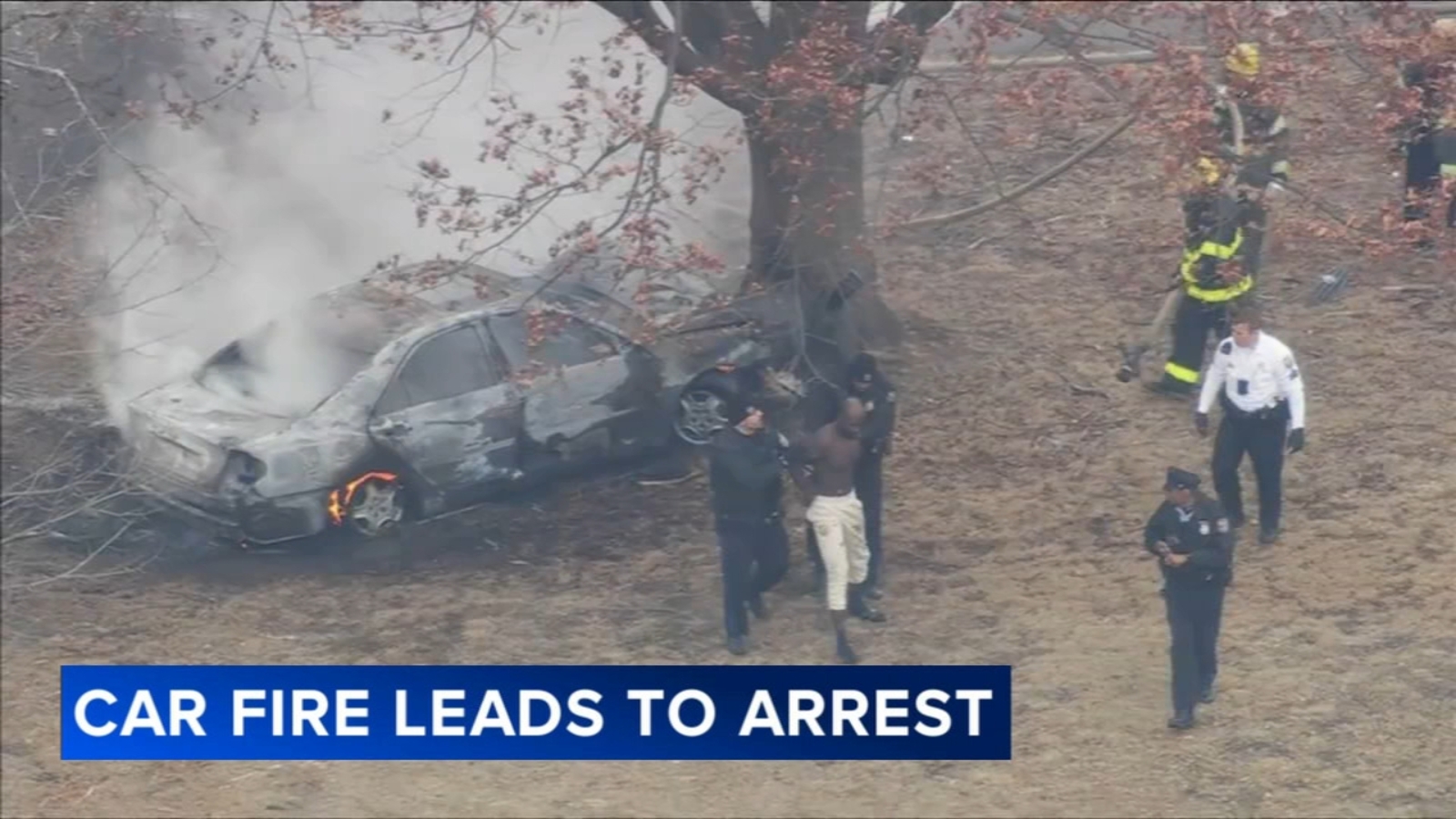
A bizarre and alarming encounter unfolded this week in Philadelphia’s Fairmount Park when a man who stepped forward to help after a car crash found himself on the receiving end of a terrifying chase. The driver chases witness incident occurred near the intersection of Sweetbriar Lane and Lansdowne Avenue, leaving a Good Samaritan shaken and raising serious questions about road safety and substance-related emergencies on public roadways.
What Happened at Sweetbriar Lane and Lansdowne Avenue?
The unusual chain of events began with what appeared to be a routine traffic accident. A vehicle had careened off the road and collided with a tree, causing the car to catch fire. In the immediate aftermath of the crash, a bystander saw a shirtless man standing near the burning wreckage and made what most people would consider the natural, human decision to offer assistance.
According to the witness, who spoke with local Philadelphia news sources under the condition of anonymity, he approached the man with a simple gesture of goodwill: offering a bottle of water. What happened next defied every expectation of how such an interaction should unfold.
“I tried to give him a bottle of water and he just went nuts and started chasing me back to my car,” the witness recounted, clearly still processing the strange and threatening encounter.
The Unprovoked Attack and Foot Chase
Without warning, the situation escalated dramatically. The shirtless man reportedly reacted with intense aggression, pursuing the witness at a full sprint back to where the bystander had parked his silver BMW. The chase covered a significant distance along the roadway, with the witness sprinting for safety while trying to make sense of why his attempt at kindness had triggered such a violent response.
The witness described the man as appearing disconnected from reality, noting unsettling physical signs that suggested something more serious than simple anger was at play. “His face was blank, his eyes were red. I don’t know what was wrong with him,” he told reporters. These observations align with later police findings suggesting the man was operating under the influence of an unknown substance.
The BMW Confrontation
Once the witness reached his vehicle, the situation grew even more dangerous. The aggressive man reportedly forced his way into the silver BMW and attempted to drive the car directly at the witness, attempting to run him over. This brazen act of vehicular aggression transformed what had begun as a minor traffic accident into a life-threatening emergency.
Miraculously, no one was struck by the stolen vehicle during this attempted assault. However, the chaotic scene continued when the man eventually lost control and crashed the BMW, bringing the high-speed threat to an abrupt end.
Police Response and Use of Force
When Philadelphia police arrived on the scene, they encountered a suspect who was clearly in an altered state and resistant to cooperation. Officers determined that standard intervention methods would not be sufficient to safely detain the man, leading them to deploy Tasers to subdue him.
The decision to use conducted electrical weapons reflects standard protocol when dealing with individuals who appear to be under the influence of substances that may cause extreme agitation, superhuman strength, or unpredictable behavior. Such incidents have become increasingly common as communities grapple with the ongoing challenges of substance abuse and its intersection with public safety.
Medical Evaluation and Outstanding Charges
Following his apprehension, the shirtless man was transported to a local hospital for medical evaluation and observation. Police indicated that their preliminary assessment suggested the individual was under the influence of an unknown substance, though specific details about what he may have consumed were not immediately released to the public.
As of the most recent reporting, authorities had not announced whether any formal charges would be filed against the suspect. This leaves open significant questions about accountability, particularly given the multiple serious offenses that occurred: aggressive pursuit of a bystander, attempted vehicular assault, and unauthorized use of another person’s vehicle.
Why This Incident Raises Broader Safety Concerns
This driver chases witness encounter highlights several troubling issues facing urban communities and the people who live in or travel through them.
The Vulnerability of Good Samaritans
The witness in this case did exactly what emergency response experts encourage: he stopped to help someone in apparent distress. Yet his experience demonstrates the very real dangers that well-meaning bystanders can face when they encounter individuals in altered mental states.
- Unpredictable behavior: People under the influence of unknown substances may react violently to gestures of kindness
- Misinterpretation: Someone experiencing a bad reaction may perceive offers of help as threats
- Physical danger: Approaching an agitated stranger always carries inherent risks
- Legal complications: Good Samaritans who intervene can find themselves in complex legal situations
The Intersection of Car Crashes and Substance Abuse
The original crash that triggered this entire incident is itself worth examining. Vehicle collisions involving impaired drivers remain a persistent problem throughout Pennsylvania and across the nation. When crashes involve individuals under the influence, the aftermath becomes exponentially more dangerous and unpredictable, as evidenced by the Fairmount Park encounter.
What Witnesses and Bystanders Should Know
While the instinct to help crash victims is admirable, this incident offers important lessons about how to safely offer assistance in similar situations.
Assessing Before Approaching
Before stepping forward to help at any accident scene, witnesses should take a moment to evaluate the situation. Signs that someone may be under the influence or experiencing a mental health crisis include:
- Dilated or pinpoint pupils
- Red or bloodshot eyes
- Confused or unintelligible speech
- Unusual agitation or aggression
- Blank facial expressions or detachment from surroundings
- Physical symptoms such as sweating, tremors, or disorientation
When any of these warning signs are present, the safest course of action is usually to contact emergency services and provide information from a safe distance rather than making direct contact.
Calling for Help First
In most cases involving car accidents, the appropriate first response is to dial 911 rather than approach vehicles or their occupants directly. Professional first responders have training, equipment, and protocols for dealing with individuals who may be under the influence or experiencing crises. Providing dispatchers with detailed information about the location, number of vehicles, and condition of occupants allows them to send appropriate resources.
Community Impact in Fairmount Park
The location of this incident is particularly notable. Fairmount Park is one of Philadelphia’s most treasured public spaces, spanning more than 2,000 acres and serving as a recreational haven for residents and visitors throughout the region. The park’s winding roads and scenic drives attract countless motorists daily, making safety along its roadways a community priority.
Incidents like the one near Sweetbriar Lane and Lansdowne Avenue remind park visitors that even seemingly peaceful recreational areas can become sites of dangerous encounters. The combination of curving roads, variable traffic conditions, and the potential for impaired driving creates ongoing safety challenges that require continued attention from local authorities and community members alike.
Moving Forward After a Terrifying Experience
For the witness who lived through this ordeal, the aftermath likely includes processing trauma, cooperating with any ongoing investigations, and reconsidering how he might respond to similar situations in the future. His willingness to speak with media, even anonymously, serves the valuable purpose of alerting others to the potential dangers of approaching strangers at accident scenes.
Law enforcement officials continue to investigate the circumstances surrounding both the initial crash and the subsequent confrontation. As more details emerge about the substances involved and the suspect’s background, the community will gain a clearer understanding of how and why this alarming incident unfolded.
Conclusion
The driver chases witness incident in Fairmount Park stands as a striking reminder of how quickly ordinary situations can turn dangerous, particularly when substance abuse is involved. A man who simply tried to help a stranger after a car crash found himself fleeing for his life, threatened with his own vehicle, and witnessing a scene that no bystander should ever have to endure.
While the Good Samaritan’s intentions remain admirable, his experience underscores the importance of prioritizing personal safety when responding to emergencies. Calling 911, maintaining a safe distance, and allowing trained professionals to handle potentially volatile situations can prevent well-meaning individuals from becoming additional victims.
As Philadelphia continues to address the broader challenges of substance abuse and public safety, incidents like this one will hopefully prompt continued conversations about how communities can better protect both vulnerable individuals in crisis and the citizens who encounter them. Until then, residents and visitors to areas like Fairmount Park would do well to remember that kindness and caution, while sometimes seemingly at odds, are both essential components of community safety.