
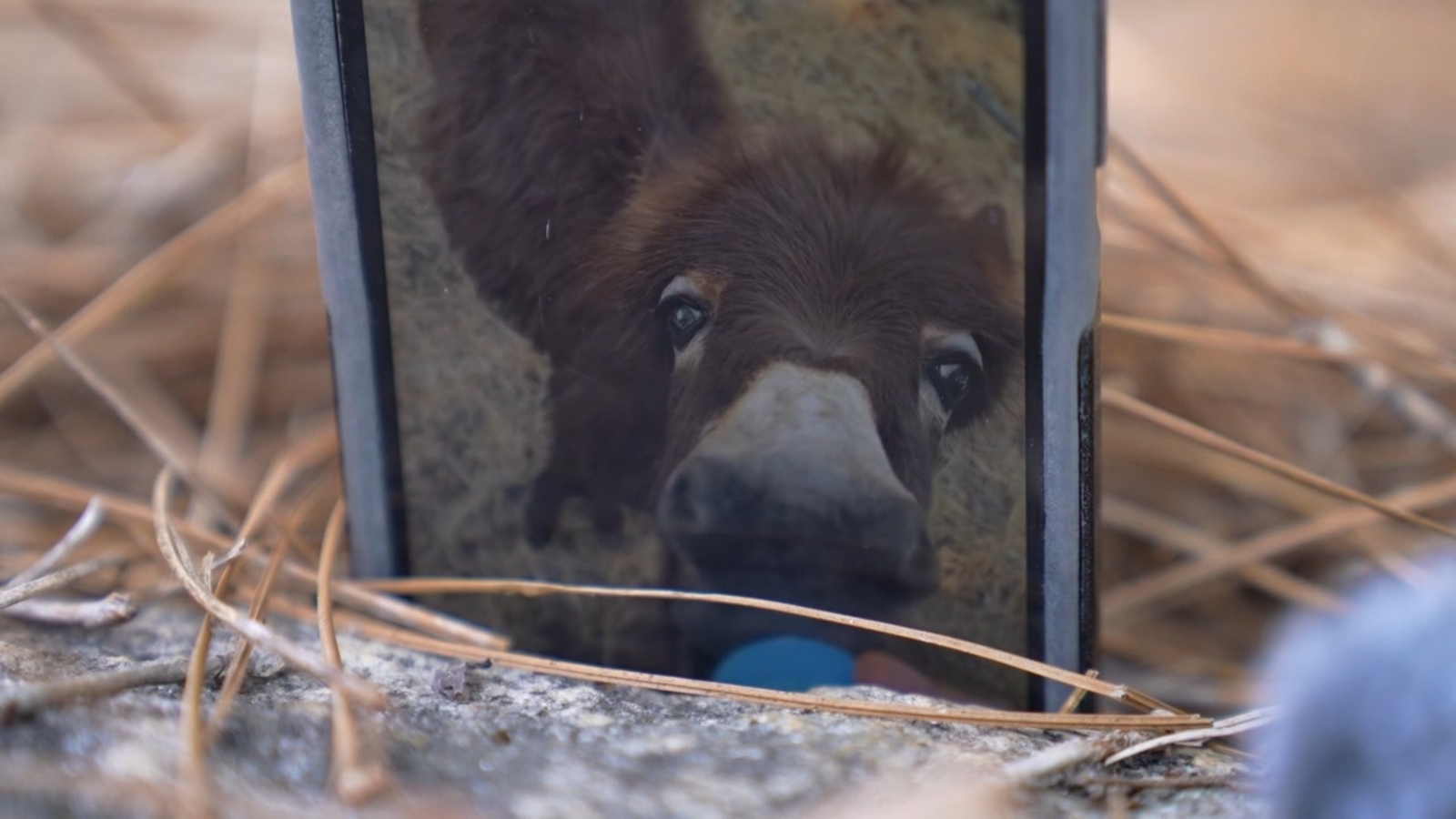
In a heartbreaking incident that has sparked nationwide outrage, a beloved family pet donkey was shot by police in Cedartown, Georgia, during an intense search for a missing child. The animal, affectionately known as “HeeHaw,” had been bottle-raised from just one hour old by his owner, Hannah Israel, who considered the donkey to be family. The fatal shooting occurred early Sunday morning at the Elsberry Riding and Farm, where the multi-agency search operation had been underway.
The story has since drawn significant attention on social media and beyond, igniting passionate debates about police use of force against animals, the protocols followed during emergency searches, and the deep emotional bonds people form with their livestock and pets. As investigators from the Georgia Department of Agriculture Law Enforcement division dig into the circumstances surrounding the incident, the community is left mourning an animal whose friendly, almost human-like personality made him a local treasure.
The Night Everything Changed in Cedartown
Cedartown, a quiet city in Polk County, Georgia, became the center of an unfolding drama when law enforcement officers were dispatched to the area in response to a report of a missing child. As part of the search effort, officers made their way to Elsberry Riding and Farm, a property that includes pastures where livestock , including HeeHaw , reside.
According to Cedartown Police Chief Jamie Newsom, at some point during the search operation, an officer discharged a firearm and fatally wounded the donkey. Tragically, the missing child was eventually located safe at a church located near the pasture where HeeHaw was shot, suggesting the search radius had extended across a wide area of the community.
Chief Newsom confirmed to reporters that body camera footage from the incident exists and that he personally reviewed it. However, citing respect for the ongoing investigation being conducted by an outside state agency, he declined to share specific details about what the video depicts.
A Donkey Raised Like Family
For Hannah Israel, the loss of HeeHaw is immeasurable. In emotional interviews following the incident, she shared that the donkey was no ordinary farm animal , he was raised as a member of her family from the very first hours of his life.
“He was my kid,” Israel told reporters, her voice breaking as she described the bond they shared. “I bottle-raised him from one hour old.”
Israel painted a vivid picture of HeeHaw’s extraordinary personality, explaining that the donkey had no idea he wasn’t human. For the first three months of his life, HeeHaw slept in her bed. As he grew, he developed an unshakable love for people, eagerly running up to every visitor who came near the farm to greet them with his distinctive, goofy bray.
“Every time he saw somebody, he would run up and bray, and they do a really goofy sound,” Israel recalled. “He loved people, and he thought he was a person.”
It is precisely this loving, people-oriented nature that Israel believes may have contributed to HeeHaw’s tragic fate. In the chaos of a nighttime search operation, a friendly donkey approaching officers could have been perceived as a threat , a possibility that has fueled much of the public anger surrounding the incident.
The Investigation and the Officer Involved
Following the shooting, the involved officer was placed on paid administrative leave, which is standard protocol when an officer-involved incident , particularly one resulting in the death of an animal , occurs. The Georgia Department of Agriculture Law Enforcement division has taken the lead on the investigation, rather than the Cedartown Police Department conducting its own internal review.
This choice to bring in an outside agency was likely intended to ensure transparency and impartiality, given the sensitivity of the situation. Nonetheless, many in the community have called for full accountability and the public release of the body camera footage.
Chief Newsom’s decision to withhold details of the video has been both praised and criticized. Supporters argue that premature release of evidence could compromise the integrity of the investigation. Critics, however, contend that the public deserves to understand how and why a beloved family pet was killed during what was ultimately a successful search for a missing child.
Questions That Remain Unanswered
- What exactly did the officer perceive as a threat?
- Were non-lethal alternatives considered before discharging a firearm?
- What were the lighting conditions and visibility factors at the time?
- Was HeeHaw exhibiting any specific behavior that prompted the use of deadly force?
- Are there established protocols for handling livestock during search operations?
These are the questions that animal welfare advocates, community members, and concerned citizens across the country are asking. Each remains unanswered as the investigation continues.
Turning Grief Into Action
In the days following HeeHaw’s death, Hannah Israel channeled her grief into action by launching an online fundraiser to honor her beloved donkey’s memory. The response was overwhelming , far exceeding any expectations she may have had.
The GoFundMe campaign raised more than $119,000 from donors who were moved by HeeHaw’s story and wanted to ensure that his legacy would live on. Israel has announced that the funds will be used to establish a foundation under HeeHaw’s name, with the mission of supporting animal welfare, advocacy, and education.
This foundation could potentially fund veterinary care for animals in need, support rescue operations, or provide resources for families who raise livestock as companions rather than solely for agricultural purposes. The outpouring of financial support demonstrates how deeply HeeHaw’s story resonated with people who never had the chance to meet him.
The Broader Conversation About Police and Animals
The tragedy of HeeHaw’s death is not an isolated incident. Across the United States, there have been numerous cases of police officers shooting domestic animals , most commonly dogs , during the course of their duties. According to various animal advocacy organizations, police shoot thousands of family pets each year, often during routine calls like welfare checks or search operations.
Cases involving livestock, particularly in rural areas like Cedartown, raise additional considerations. Donkeys, horses, cattle, and other large animals can pose physical risks, but they are also deeply ingrained in the fabric of rural communities and family farms. Officers responding to incidents in agricultural areas should, advocates argue, be trained to recognize and de-escalate encounters with these animals without resorting to lethal force.
The Push for Better Training
Animal welfare groups have long advocated for enhanced training programs that teach law enforcement officers how to read animal body language, recognize signs of fear or aggression, and employ non-lethal deterrents when necessary. Tools such as tasers, pepper spray, and even simple barriers can often prevent dangerous encounters from escalating to the point where lethal force becomes necessary.
In the case of HeeHaw, some have questioned whether the officer had any training specific to handling encounters with farm animals. Others have asked whether a donkey approaching officers in a pasture during a nighttime search would realistically pose a life-threatening danger requiring the use of a firearm.
Community Response and Lasting Impact
The Cedartown community has rallied around Hannah Israel in the wake of this tragedy. Neighbors, friends, and strangers from across the nation have offered condolences, shared memories of their own beloved animals, and contributed to the foundation established in HeeHaw’s name.
Local residents have also engaged in broader discussions about how police interact with the rural communities they serve. In agricultural areas, the line between “property” and “family member” is often blurred when it comes to livestock, and many farm families consider their animals as integral parts of their households. This cultural reality does not always align with how law enforcement is trained to approach encounters with non-human animals.
What Comes Next
As the investigation by the Georgia Department of Agriculture Law Enforcement division progresses, the public awaits answers that may bring closure , or may raise even more difficult questions. The body camera footage, once the investigation concludes, will likely be a focal point of public attention.
Meanwhile, HeeHaw’s foundation will take shape under the guidance of Hannah Israel, who has vowed to ensure that her beloved donkey’s death was not in vain. Through advocacy, education, and support for animal welfare, the foundation aims to prevent similar tragedies from happening to other families.
Conclusion
The story of HeeHaw the donkey , shot by police during a search for a missing child in Georgia , is at once heartbreaking, infuriating, and inspiring. It exposes serious questions about police training, the use of force against animals, and how rural communities navigate relationships between law enforcement and the livestock that many residents consider family. Yet it also reveals the incredible capacity for compassion that exists within communities, as evidenced by the more than $119,000 raised to honor a donkey who genuinely believed he was a person. As the investigation unfolds, HeeHaw’s legacy will continue to grow, reminding us all of the bonds we share with the animals who touch our lives in ways words can barely describe.