
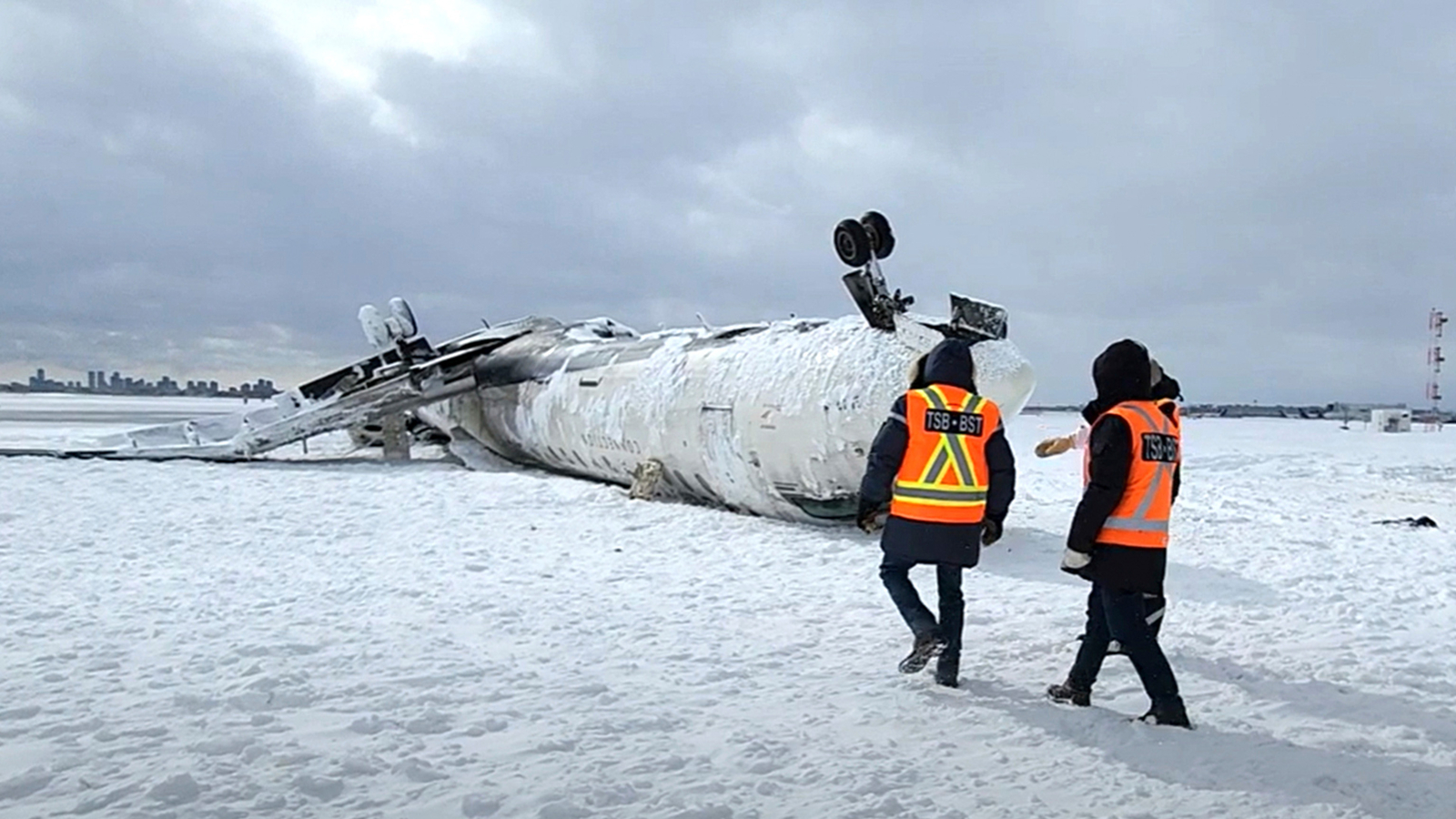
The Delta Flight 4819 crash at Toronto Pearson International Airport has captured international attention after a regional jet arriving from Minneapolis touched down, ignited, and flipped upside-down on the runway Monday afternoon. In the days since the dramatic incident, investigators have been working tirelessly to determine what caused the accident, while Delta Air Lines announced a $30,000 compensation offer to each of the 76 passengers onboard , a gesture the airline says comes with “no strings attached.”
As details continue to emerge, this blog post covers everything you need to know about the crash, the ongoing investigation, the weather conditions leading up to the incident, and the airline’s response to those affected.
The Crash: A Timeline of Events
The Delta regional jet, a CRJ 900 aircraft operated by Endeavor Air, departed Minneapolis-St. Paul International Airport and was arriving at Toronto Pearson International Airport when the disaster unfolded. The aircraft touched down amid blowing snow and powerful wind gusts. On the ground, winds reached approximately 40 mph, and at several hundred feet in the air, conditions were even more severe.
Upon landing, the plane caught fire, flipped over, and came to rest inverted on the runway. Remarkably, all 76 passengers and four crew members successfully evacuated the aircraft. Toronto Pearson President and CEO Deborah Flint praised the flight crew at a Tuesday news conference, stating they “heroically led passengers to safety.”
Extreme Weather Conditions Preceding the Crash
One of the most pressing questions surrounding the Delta Flight 4819 crash involves the weather conditions in the days and hours leading up to the incident. According to Deborah Flint, Toronto Pearson experienced “extreme conditions” from Thursday through Sunday, brought on by two separate storm systems.
- Thursday and Sunday storms: The airport received more than 20 inches (50 centimeters) of accumulated snow in just a few days , a staggering figure that Flint noted exceeded the total snowfall Toronto Pearson received during the entirety of the previous winter.
- Operational backlog: The severe weather caused widespread delays and cancellations across both Canada and the U.S. Northeast, creating significant flight backlogs.
- Monday conditions: The day of the crash was described as “clear” and served as an operational recovery day for the airport, though the Delta plane encountered blowing snow and strong winds upon arrival.
When asked whether weather may have contributed to the crash, Flint declined to speculate, saying, “This would not be a time for us to have theory or to speculate.” Toronto Airport Fire Chief Todd Aitken stated Monday that the runway was dry and there were no crosswind conditions at the time of the accident. However, when questioned Tuesday about whether the runway had light snow or slush, he deferred to the investigators.
The Investigation: Multiple Agencies Involved
The Delta Flight 4819 crash investigation is being led by the Transportation Safety Board of Canada (TSB), with critical assistance from both the Federal Aviation Administration (FAA) and the National Transportation Safety Board (NTSB) of the United States. This multi-agency collaboration underscores the international scope of aviation accident investigations.
Investigators have already taken several key steps in their inquiry:
- Black box recovery: The cockpit voice recorder and flight data recorder , commonly referred to as black boxes , have been removed from the aircraft and transported to a laboratory for detailed analysis.
- On-site examination: Officials plan to examine the aircraft in its current upside-down position on the runway for the next two days before moving it to a hangar for further inspection.
- Runway inspection: Investigators will also scrutinize the runway conditions to determine whether surface factors played any role.
TSB investigator Ken Webster emphasized in a video update on Tuesday that it is “far too early to say what the cause of this accident might be,” though the agency pledged to share findings as soon as they become available. By Wednesday, parts of the aircraft were already being removed from the runway as the investigation progressed.
Injuries and Medical Response
While the survival of all 80 occupants is being hailed as nothing short of miraculous given the violence of the crash, the injuries sustained were significant. According to Flint, 21 passengers were transported to hospitals following the incident. By Wednesday, 20 of those patients had been released.
Cory Tkatch, commander of operations at Peel Regional Paramedic Services, provided a breakdown of the injuries treated:
- Back sprains
- Head injuries
- Anxiety-related symptoms
- Headaches
- Nausea and vomiting due to fuel exposure
Three passengers sustained critical injuries: one child, a man in his 60s, and a woman in her 40s. Medical transport organization Ornge confirmed these cases. Flint confirmed that none of the injuries are considered life-threatening. The passengers included 22 Canadian citizens.
Delta’s $30,000 Offer: What Passengers Need to Know
In the wake of the Delta Flight 4819 crash, the airline confirmed to ABC News on Wednesday that it is offering $30,000 to each passenger who was onboard the aircraft. Delta Care Team representatives have been communicating with affected customers, emphasizing that this compensation comes with no strings attached and does not affect passengers’ legal rights.
This distinction is significant , a no-strings-attached payment does not typically require passengers to waive their right to pursue further legal action if they choose to do so. Aviation attorneys often note that initial compensation offers from airlines can serve as goodwill gestures while still leaving the door open for litigation should new information emerge.
Delta CEO Ed Bastian issued a statement reinforcing the company’s commitment to those affected: “Our most pressing priority remains taking care of all customers and Endeavor crew members who were involved. We’ll do everything we can to support them and their families in the days ahead.”
Airport Operations and Flight Disruptions
Following the Delta Flight 4819 crash, Toronto Pearson International Airport temporarily suspended all flights. Departures and arrivals resumed at 5 p.m. ET on Monday, though two runways remained closed , a measure Flint warned could continue to impact operations in the days ahead.
For passengers whose flights were affected by the broader delays and cancellations caused by the preceding storms, the timing of Monday’s crash added another layer of disruption to an already strained travel period.
Reuniting Passengers with Their Belongings
One practical concern for crash survivors is the recovery of their personal belongings. Delta announced Wednesday that it “will begin the process of reuniting customers with baggage and personal belongings as soon as possible after authorities have safely removed the items from the aircraft.” However, the airline cautioned that the process of securing, identifying, sorting, and cleaning all items left onboard “could take a matter of weeks before all items can be safely returned.”
This timeline reflects both the complexity of the investigation and the care required to handle passengers’ personal effects properly.
Looking Ahead: What Comes Next
As the investigation into the Delta Flight 4819 crash continues, several important milestones are expected in the coming days and weeks. The aircraft will be moved to a hangar for thorough examination, the black box data will be analyzed, and investigators will piece together the sequence of events that led to one of the most dramatic aviation incidents at Toronto Pearson in recent memory.
For now, the focus remains on supporting the passengers and crew who endured this harrowing experience. With all 80 individuals surviving , and no life-threatening injuries reported , the outcome, while traumatic, stands as a testament to the effectiveness of modern aircraft safety systems and the professionalism of the flight crew and emergency responders.
Conclusion
The Delta Flight 4819 crash at Toronto Pearson International Airport is a sobering reminder of the forces of nature and the importance of rigorous aviation safety protocols. As the Transportation Safety Board of Canada, the FAA, and the NTSB work together to uncover the cause, Delta Air Lines has taken swift action to support its passengers , both through immediate financial assistance and a commitment to long-term care. The coming weeks will likely bring more clarity about what happened on that runway, but for now, the aviation community and the traveling public can take some solace in the fact that everyone walked away from one of the most frightening scenarios imaginable.