
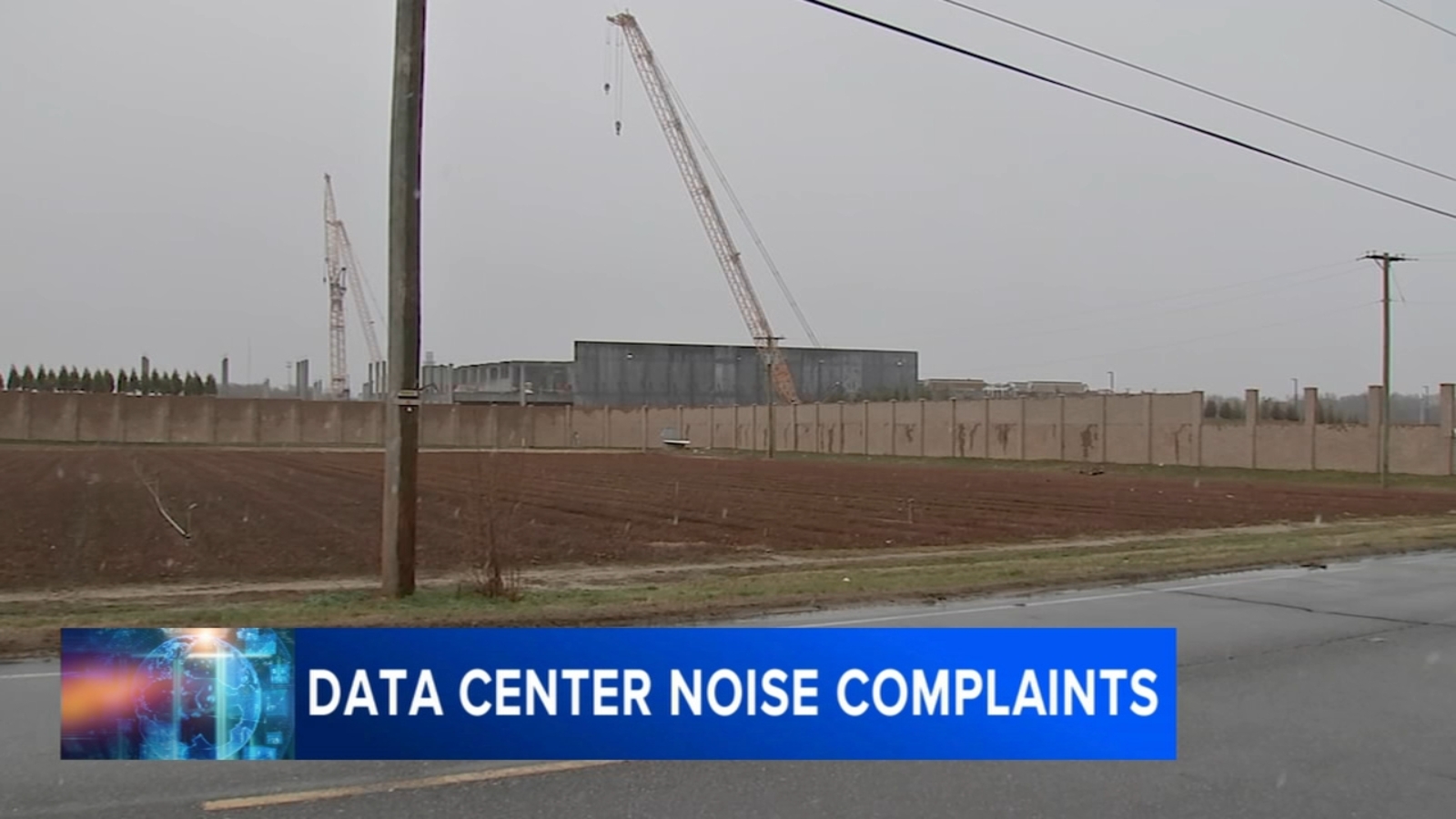
Across growing communities in South Jersey, data center noise complaints are quickly becoming a flashpoint between technological expansion and residential quality of life. In Vineland, New Jersey, residents living near a massive new facility have begun speaking out about a persistent humming sound that many believe is tied to the construction and early operation of the site. Their concerns have moved beyond simple irritation, sparking formal complaints, public appeals, and questions about what responsibilities large-scale operators owe to the neighborhoods that surround them.
The story unfolding along South Lincoln Avenue illustrates a tension that is increasingly common in towns positioned to host the digital infrastructure powering artificial intelligence, cloud computing, and modern business operations. While these facilities bring investment and jobs, they also bring industrial noise that was rarely part of the community soundscape before.
The Source of the Disruption
The facility at the center of the controversy is a 2.4 million-square-foot Vineland data center owned by the company Data One. Once fully operational, the project represents one of the larger hyperscale developments in the region. For nearby homeowners, however, the most pressing concern is not the scale of the build but the constant humming noise data center operations seem to generate.
Scott Montgomery, who lives roughly half a mile from the site, described the sound as relentless and out of character for the area.
“It’s just been very annoying. It’s unsettling because you can hear it right now, and if you want to sit out here and relax, you have this constant buzzing. It’s not construction,” Montgomery said.
Montgomery shared a recording of the noise on social media, where the low-frequency hum is clearly audible. He explained that the problem intensifies after dark, when surrounding activity quiets and the sound becomes harder to ignore.
“We’re afraid it’s even going to get worse, so it’s just maddening to listen to this all the time. It’s hard to fall asleep at night,” he added.
Residents Speak Out and Seek Help
Montgomery is not alone. Theresa Lewis is among several neighbors who have reached out to local authorities, including the Cumberland County Health Department, to formally document the disturbance. Lewis described the psychological toll the constant sound has taken on her daily life.
“You know you got this anxiety, or I do, about the noise and just the frustration,” Lewis said.
The pattern of responses echoes what is happening in other towns where data center construction noise has drawn scrutiny. Once a facility moves from groundwork into active commissioning, residents often notice mechanical equipment, cooling systems, and backup generators producing a steady drone that does not fade with the workday.
Several common themes have emerged from neighbors’ descriptions of the situation:
- Constant low-frequency hum rather than intermittent construction sounds
- Worse at night, when ambient noise typically drops
- Sleep disruption and reported increases in anxiety
- Uncertainty about whether the noise will grow as more systems come online
- Frustration with the lack of clear answers from operators or city officials
The Health Department’s Response
The Cumberland County Health Department has acknowledged the volume of complaints and confirmed it has taken action. In an official statement, the department said it has responded to numerous concerns and dispatched staff to the area to measure sound levels.
The statement also noted an important distinction: while residents have identified a likely source, the department is still working to verify exactly where the noise originates.
“We have responded to many concerns and have made several visits to the area in question to measure sound levels. While complainants have shared where they believe the noise is coming from, our staff are working to confirm the exact source of the noise,” the department said.
That verification step is critical. Confirming whether the noise falls within or above the facility noise ordinance limits in Vineland will determine whether further enforcement actions are warranted. Until those measurements are conclusive, residents are left in a holding pattern.
Data One’s Position
Data One, the company behind the project, has maintained that its facility is operating within legal limits. In a statement, the company emphasized compliance with local regulations and a commitment to continuing noise reduction efforts.
“Our site is operating in full compliance with Vineland City noise ordinance limits. We will continue deploying sound reduction measures to minimize any impact on our neighbors,” the company said.
The statement reflects a strategy many operators adopt when residential noise pollution becomes a public issue: assert compliance, promise ongoing improvements, and signal willingness to engage. Critics, however, often point out that “within legal limits” does not always mean “undetectable” or “inoffensive,” particularly when the surrounding area has historically been quiet.
The Broader Question: What Does a Data Center Owe Its Neighbors?
The Vineland situation is part of a much larger conversation happening in communities across the United States. As demand for AI training capacity, cloud storage, and streaming services accelerates, developers are racing to build massive facilities in places where land and power are available. Many of those places are suburban or semi-rural, where industrial noise was never part of the original community character.
The push and pull between growth and quality of life raises several difficult questions:
- Should noise ordinances be updated to specifically address the unique sound profile of data centers, including low-frequency hums that travel further than typical industrial noise?
- What mitigation measures should be required of operators, such as sound walls, equipment enclosures, directional baffles, or setbacks from residential property lines?
- How transparent should operators be about expected noise levels during permitting and construction phases?
- What remedies are available to residents when noise remains bothersome even if technically compliant?
Montgomery hinted at one potential remedy residents might pursue if the noise continues. He suggested that if the situation cannot be resolved, some form of financial restitution should be considered for affected households.
“If we have to live with this, which is not good, we’d like a monetary restitution somehow,” he said.
This kind of proposal is not unprecedented. In other parts of the country, communities have negotiated community benefit agreements, negotiated payments, or other forms of compensation when large infrastructure projects impose ongoing burdens on nearby residents.
Why Low-Frequency Noise Feels Different
One reason data center community impact stories gain traction is that the noise associated with these facilities is not what most people picture when they imagine industrial sound. It is not the clatter of construction equipment or the roar of a factory. Instead, it tends to be a steady, low-frequency hum produced by cooling systems, HVAC equipment, transformers, and uninterruptible power supplies.
Low-frequency noise travels farther than higher-pitched sounds and penetrates walls more easily. It is also more likely to interfere with sleep, even at volumes that might not register as “loud” on a standard decibel meter. That is why residents in Vineland and elsewhere frequently describe the sound as something they feel as much as hear, and why it can feel unrelenting even when neighbors do not register an official violation.
What Happens Next in Vineland
City officials have declined to comment on the situation for now, leaving residents waiting for further word from the Cumberland County Health Department and from Data One. The next steps will likely include:
- Completion of independent sound measurements by health department staff
- Confirmation of the noise source and whether it complies with the Vineland City noise ordinance
- Implementation of additional mitigation by Data One if compliance is found but complaints persist
- Possible dialogue between residents, city officials, and the company about long-term operating expectations
For Montgomery and his neighbors, the central hope is simple: that their concerns are taken seriously before the facility scales up further and the noise becomes an even larger part of daily life.
Final Thoughts
The Vineland dispute is a snapshot of a much bigger shift taking place across the country. Data centers are no longer rare curiosities hidden in industrial parks. They are sprawling, energy-hungry campuses, and they are arriving in towns that did not ask for them and may not have anticipated what they would sound like. As data center noise complaints continue to surface in community after community, the lessons from Vineland will likely resonate far beyond South Jersey.
Operators that invest early in transparency, mitigation, and genuine community engagement tend to face fewer long-term conflicts. Local governments that proactively update noise rules and require detailed acoustic studies before breaking ground can prevent many of the disputes that are now surfacing. And residents who organize, document their concerns, and engage official channels, as those in Vineland have begun to do, give themselves the best chance of being heard.
The bottom line is straightforward. Digital infrastructure may be invisible to most users, but the physical plants that power it are very real to the people who live nearby. Building a future of cloud computing and artificial intelligence should not require anyone to lose sleep over a hum they cannot escape.