
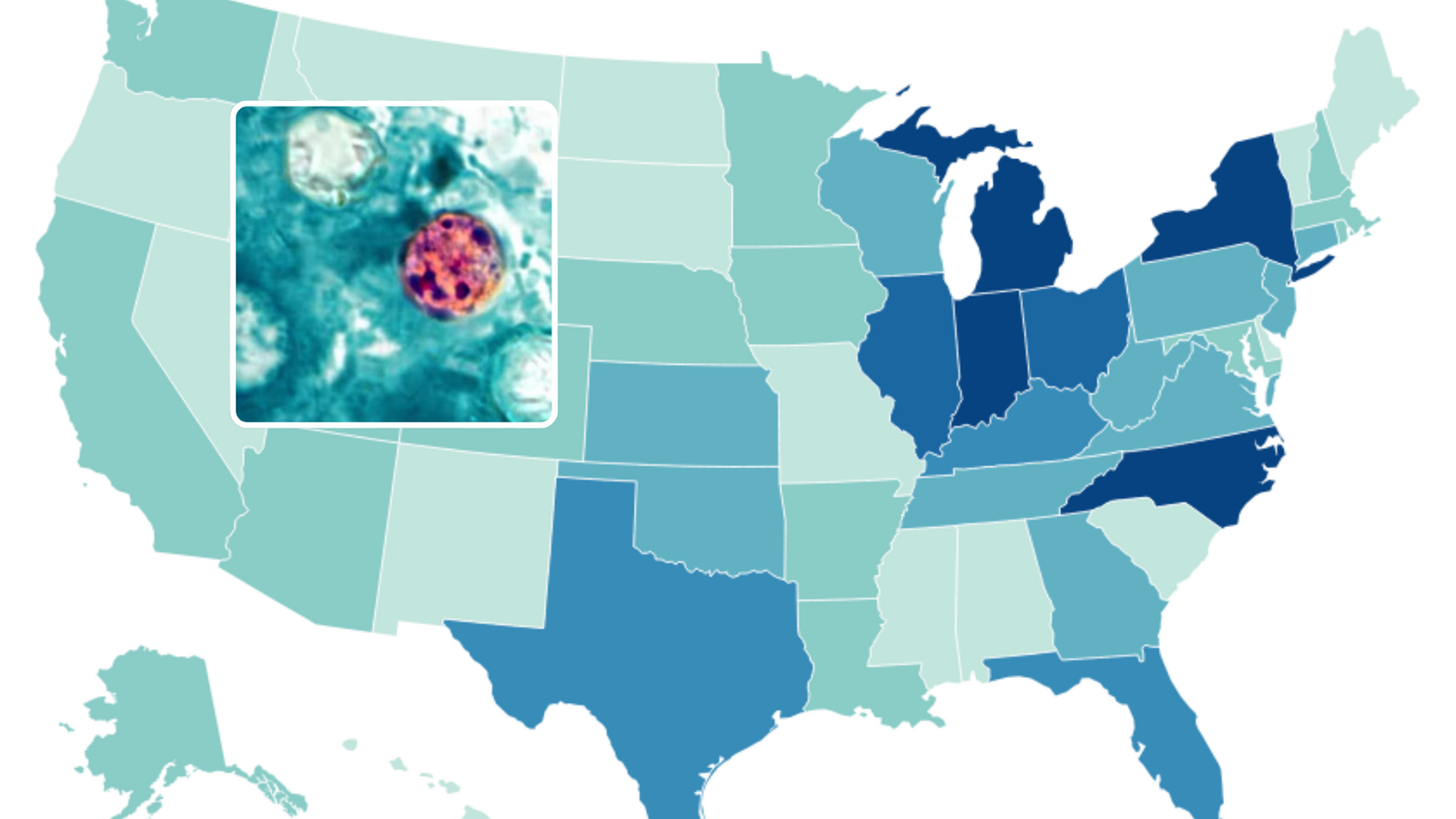
The cyclospora outbreak gripping the United States in 2026 has reached unprecedented levels, with federal health officials warning that the nation is in the middle of its worst reported year for the parasitic infection. According to the Centers for Disease Control and Prevention, nearly 7,000 cases have already been documented across 34 states , and the season isn’t over yet. With cases anticipated to climb through the end of August, public health experts are racing to identify the source and contain the spread of this highly unpleasant foodborne illness.
If you’ve been following the news lately, you’ve likely seen maps highlighting new hotspots. Here’s what you need to know about the 2026 cyclospora outbreak, where it’s hitting hardest, and how to protect yourself and your family.
The 2026 Cyclospora Outbreak by the Numbers
The current cyclospora outbreak is shaping up to be a landmark public health event. CDC estimates place the total case count at approximately 7,000 infections, spread across 34 states. The typical cyclospora season runs from May 1 through August 31, and federal officials have made it clear during recent press briefings that they expect numbers to keep climbing for at least another month.
To put this in perspective, the surge represents a significant escalation over previous years. While cyclosporiasis , the illness caused by the Cyclospora cayetanensis parasite , has trended upward for about a decade, with notable spikes in 2018 and 2019, the 2026 figures dwarf anything seen before in modern record-keeping.
The CDC also issued an alert to physicians nationwide this week, urging them to remain vigilant for cyclospora symptoms in patients presenting with prolonged gastrointestinal distress. Early detection and reporting are critical for tracking the outbreak’s trajectory.
Where Cases Are Concentrated
Michigan Leads the Nation
No state has been hit harder than Michigan. State health officials have reported a staggering 4,312 confirmed cases, along with 102 hospitalizations linked to the cyclospora outbreak. That single state accounts for the majority of all documented infections in the country, making it the clear epicenter of this year’s surge.
Preliminary findings from Michigan health investigators point to lettuce or salad greens as a potential source of the illnesses. However, no specific type of produce, grower, or supplier has yet been officially identified. Federal health agencies have not publicly named a definitive source of the outbreak, which complicates efforts to issue targeted consumer warnings.
Nationwide Spread Across 34 States
While Michigan dominates the case count, the cyclospora outbreak is far from a regional concern. Thirty-four states have reported infections, suggesting that whatever contaminated product is driving the surge has had wide distribution across grocery store shelves and restaurant supply chains. This broad geographic footprint is what has prompted federal officials to take the situation so seriously.
Outbreaks of this scale typically point to a widely distributed food item , often produce that is consumed raw and travels through complex national distribution networks. Leafy greens, fresh herbs, berries, and imported vegetables have all been implicated in past cyclospora outbreaks.
Understanding the Cyclospora Parasite
How Cyclospora Spreads
Cyclospora is a microscopic, spherical parasite that primarily targets the intestinal tract. Unlike many other foodborne pathogens, cyclospora cannot be transmitted directly from person to person. Instead, the parasite spreads through feces , specifically, when human waste contaminates water or soil that then comes into contact with food crops.
The most common transmission route involves consuming fruits or vegetables that have been exposed to feces-contaminated irrigation water. Because cyclospora requires time outside a host to mature into an infectious form, immediate fecal-oral transmission is rare. This is why cyclospora outbreaks tend to cluster around produce rather than person-to-person contact in restaurants or households.
Cyclospora is also a heat-loving organism, which helps account for why cyclospora outbreaks peak during the warm months from late spring through summer.
Recognizing Cyclosporiasis Symptoms
The illness caused by the parasite, called cyclosporiasis, can be profoundly unpleasant. The CDC describes the hallmark symptom as watery diarrhea accompanied by what the agency characterizes as “frequent and sometimes explosive bowel movements.” That phrase has become something of a grim identifier for those familiar with the infection.
Other common cyclospora symptoms include:
- Loss of appetite and significant weight loss
- Cramping and abdominal pain
- Bloating and increased gas
- Nausea and vomiting
- Fatigue and general malaise
- Low-grade fever (in some cases)
Without treatment, symptoms can persist for weeks or even months, often following a waxing-and-waning pattern. Relapses are common, and many sufferers find that the infection disrupts their daily lives for an extended period.
The Search for the Source
One of the most frustrating aspects of the current cyclospora outbreak is the lack of a confirmed source. Michigan investigators have zeroed in on leafy greens as a likely culprit, but the trail grows cold from there. No specific grower, distributor, brand, or product has been publicly named by federal authorities.
This kind of investigative challenge is par for the course with cyclospora. Unlike bacterial outbreaks tied to a single contaminated batch of meat or dairy, parasitic outbreaks linked to fresh produce are notoriously difficult to trace. By the time illnesses are reported, the implicated produce has often already been consumed or discarded, and the contamination point could be anywhere along a complex supply chain , from the field where it was grown to the packing facility to the retail outlet.
The CDC and state health departments continue to interview patients about their food consumption in the days before becoming sick, hoping to identify commonalities that could narrow the investigation.
Why Cyclospora Cases Are Rising
Experts point to two main factors driving the increasing trend in cyclospora outbreaks in recent years:
- Climate change: Warmer temperatures and shifting precipitation patterns create more favorable conditions for cyclospora to thrive in agricultural environments. Heavy rainfall events can wash contaminated water into crop fields, while extended warm seasons extend the window during which the parasite can mature and infect.
- Better detection: For years, cyclospora cases were likely underreported because many routine stool tests used to diagnose food poisoning were not designed to detect this particular parasite. Improved diagnostic testing and increased awareness among healthcare providers have led to more accurate case identification.
Some researchers also point to the globalization of the food supply as a contributing factor. Imported produce from regions where cyclospora is endemic can introduce the parasite to new populations, especially when contamination occurs before products enter the U.S.
What You Can Do to Protect Yourself
While the source of the 2026 cyclospora outbreak remains unidentified, there are practical steps you can take to reduce your risk of parasite infection from contaminated produce:
- Wash all produce thoroughly under running water before eating, even items you plan to peel.
- Avoid raw produce from unknown sources when possible, particularly leafy salads served at restaurants during outbreak periods.
- Seek medical care if you experience prolonged watery diarrhea, especially if it lasts more than a few days or is accompanied by significant weight loss or fatigue. Mention any recent travel and food consumption to your healthcare provider.
- Stay hydrated , cyclosporiasis can cause severe dehydration due to fluid loss.
- Follow CDC updates for any newly identified source or specific product recalls.
If diagnosed with cyclosporiasis, antibiotics (typically trimethoprim-sulfamethoxazole) are usually effective at clearing the infection and shortening the duration of symptoms. Most people recover fully with appropriate treatment, though the road back to feeling normal can take time.
The Road Ahead
With the cyclospora outbreak season still underway and cases continuing to climb, public health officials remain on high alert. The investigation into the source of contamination is ongoing, and consumers should stay informed as new information emerges. While the surge in cases is alarming, awareness is one of the strongest tools we have against foodborne illness.
Whether you’re in Michigan , where the impact has been most acute , or one of the 33 other affected states, taking sensible precautions with fresh foods can help reduce your risk. If you develop symptoms consistent with cyclosporiasis, don’t hesitate to reach out to a healthcare provider. Prompt diagnosis not only helps you recover faster but also contributes to the broader public health effort to track and contain this record-breaking cyclospora outbreak.