
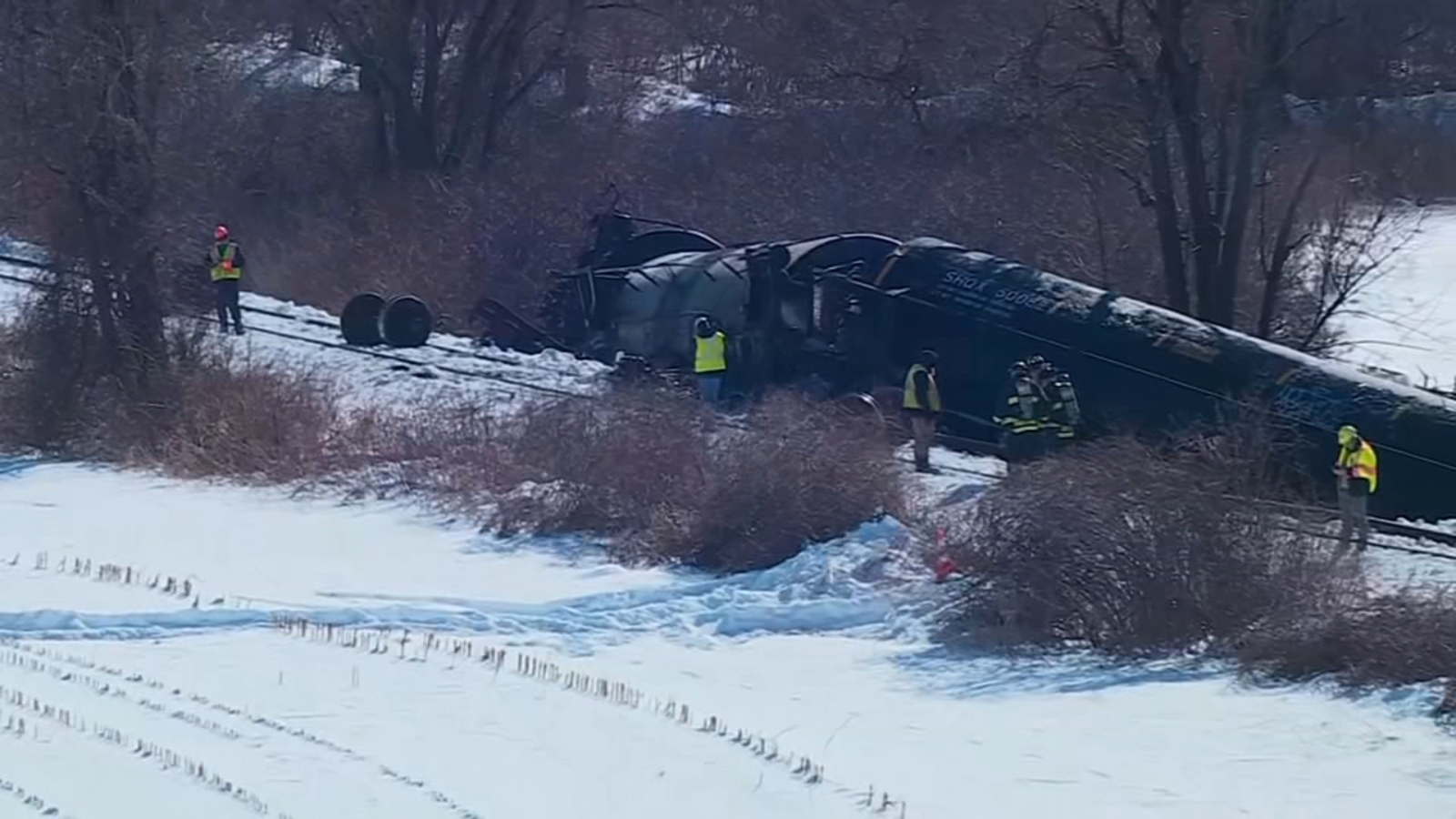
A Connecticut train derailment shook the quiet rural town of Mansfield on Thursday morning when a freight train carrying hazardous materials came off the tracks, sending multiple rail cars,including four carrying flammable liquid propane,plunging into the waters near Eagleville Lake. The incident, which occurred around 9 a.m., has prompted an ongoing emergency response and a shelter-in-place order for residents living within a half-mile radius of the crash site.
What Happened During the Connecticut Train Derailment
The freight train was traveling southbound from Palmer, Massachusetts, to Willimantic, Connecticut, when it derailed in a rural section of Mansfield,a town best known as the home of the University of Connecticut. According to Mansfield Fire Chief John Roache, a significant number of the train’s 41 rail cars detached from the tracks during the incident.
Of the affected cars, four were carrying liquid propane and ultimately ended up submerged in the water where Eagleville Lake meets the Willimantic River. Two additional cars, loaded with food-grade grease, came to rest on the riverbank. One of the grease cars sustained damage during the derailment and leaked approximately 2,000 gallons (7,500 liters) of animal fat into the surrounding area, though officials confirmed the leak was contained quickly and showed no evidence of reaching the water supply.
Remarkably, no injuries were reported as a result of the Connecticut train derailment, though the cause remains under active investigation by local and state authorities.
Emergency Response and Safety Measures
In the immediate aftermath of the crash, town officials issued a shelter-in-place order for residents within half a mile of the derailment site, urging them to remain indoors. While no formal evacuations were ordered, the caution stemmed from a particularly dangerous characteristic of the cargo: liquid propane is odorless in its raw state, meaning leaks would not be detectable by smell alone.
This precaution highlights the serious risks posed by freight train derailments involving hazardous materials, even when initial assessments suggest no immediate leaks. Emergency responders faced the additional challenge of frigid conditions in the remote location, complicating both the response and recovery operations.
State and local hazardous materials teams quickly mobilized, deploying hazmat booms in the water as a precautionary measure to contain any potential contamination. These floating barriers are designed to absorb or contain pollutants, providing an additional layer of protection for the surrounding ecosystem.
Environmental Impact and Ongoing Concerns
Mansfield Town Manager Ryan Aylesworth provided reassurance during an afternoon briefing, stating that there does not appear to be any serious environmental damage from the derailment. However, monitoring efforts continued throughout the day as teams assessed the situation.
The Willimantic River and Eagleville Lake represent important natural resources in eastern Connecticut, and any contamination would pose significant risks to local wildlife and water quality. The placement of hazmat booms suggests authorities are taking no chances, even as preliminary indications point to a manageable situation.
“Fortunately, it seems under control,” Aylesworth noted, though officials stressed that assessments would continue as the recovery process unfolds.
Community Impact in Mansfield
The rural nature of Mansfield presented unique challenges for both emergency response and community safety. The derailment prompted officials to close a nearby road and consider alternative bus routes for school dismissal, ensuring students could safely return home while avoiding the affected area.
For residents living within the shelter-in-place zone, the day involved considerable uncertainty. The combination of propane risks and frigid weather conditions created a stressful situation for families across multiple neighborhoods. Local authorities worked to keep residents informed through official channels, emphasizing the importance of remaining indoors until further notice.
The proximity to the University of Connecticut also raised concerns about potential impact on campus operations, though initial reports suggested the derailment occurred in a sufficiently remote area to avoid direct disruption to university activities.
Recovery Efforts and Timeline
Tom Ciuba, a spokesperson for New England Central Railroad,the company operating the train,announced that specialized equipment was expected to arrive Thursday evening to begin the delicate process of rerailing the affected cars. This operation requires heavy machinery, including cranes capable of lifting rail cars from water and uneven terrain.
Fire Chief Roache was candid about the timeline, noting that the recovery process could take days rather than hours. The combination of a remote location, difficult terrain, harsh winter conditions, and the hazardous nature of the cargo all contribute to a complex recovery operation.
“It’s not going to be a today operation,” Roache explained. “They’re going to have to get some cranes in there. It’s going to take some time.”
Recovery crews face the dual challenge of safely removing the propane tanks from the water while ensuring no additional damage occurs that could trigger a leak. The process will require careful coordination between railroad specialists, hazardous materials experts, and local emergency personnel.
Broader Context: Train Safety and Hazardous Materials
This Connecticut train derailment adds to a growing national conversation about the safety of freight rail transportation, particularly when hazardous materials are involved. Across the country, communities situated along rail lines have raised concerns about the potential risks posed by trains carrying flammable gases, chemicals, and other dangerous substances.
Recent years have seen increased scrutiny of rail safety protocols, aging infrastructure, and the protocols governing the transport of hazardous cargo through populated areas. While derailments remain relatively rare events, the potential consequences when they do occur can be severe,as evidenced by the immediate shelter-in-place order in this incident.
The propane tanks’ submersion in water presents particular concerns, as propane can become increasingly volatile under certain conditions. Emergency responders were right to err on the side of caution, given the difficulty of detecting leaks without specialized equipment.
Looking Ahead
As the recovery operation continues, investigators will work to determine the underlying cause of the Connecticut train derailment. Factors under examination may include track conditions, mechanical issues with the train, human error, weather-related causes, or a combination of elements. The investigation’s findings could have implications for rail safety practices throughout the region.
For the Mansfield community, the days ahead will involve patience as crews work to clear the derailment site, restore normal road access, and lift the shelter-in-place order. Local officials have committed to keeping residents updated as the situation evolves, particularly regarding any environmental monitoring results or changes to safety guidelines.
The incident serves as a stark reminder of the importance of robust rail safety infrastructure, comprehensive emergency response planning, and ongoing investment in the systems that transport essential,and sometimes hazardous,goods across our communities. While this story appears to have a fortunate outcome with no injuries and minimal environmental impact, it underscores the critical need for continued vigilance in the freight rail industry.
Residents seeking updates on the Connecticut train derailment are encouraged to monitor official town communications and follow guidance from local authorities as the recovery progresses. The collaborative response from fire, police, hazardous materials teams, and railroad officials demonstrates the multi-layered approach required to manage such incidents effectively, providing a template for how communities can respond when facing similar challenges in the future.