
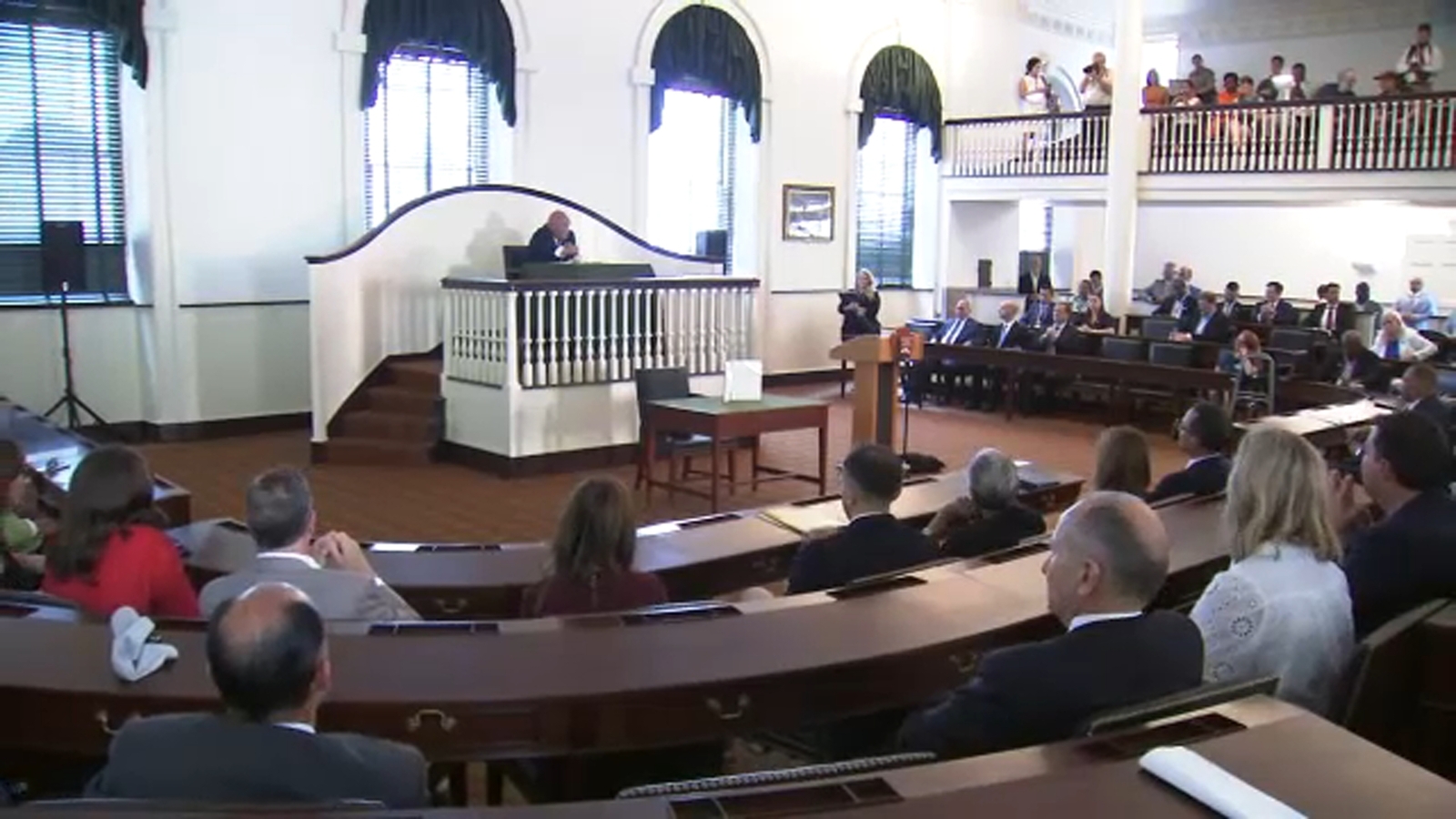
In a powerful display of unity and reverence for the nation’s founding principles, members of Congress gathered at Independence Hall in Philadelphia to mark America’s 250th birthday. This bipartisan event celebrated not just a milestone anniversary but the enduring spirit of independence that has defined the United States for two and a half centuries. The gathering brought together lawmakers from across the political spectrum to honor the moment in 1776 when the Second Continental Congress voted for American independence, setting the course for the nation we know today.
The Significance of the Gathering
The Philadelphia ceremony represented more than a simple commemoration. It was a deliberate reminder of the historical weight carried by Independence Hall, where the foundational documents of American democracy were debated, drafted, and ultimately adopted. Lawmakers traveled to this iconic location to stand on the same ground where America’s founding fathers made decisions that would reshape world history.
Rep. Brendan Boyle (D-Pa.), whose district encompasses Philadelphia, played a key role in organizing the event. His involvement underscored the importance of having representatives from the actual communities connected to these historic sites leading the celebration. The bipartisan nature of the gathering sent a unifying message during a time when political divisions often dominate the national conversation.
Honoring the Original Continental Congress
The ceremony specifically marked the day when the Second Continental Congress voted in favor of independence from Britain. This vote, taken in the same Independence Hall where lawmakers now gathered, represented a courageous act that carried tremendous personal risk for the delegates who cast their votes. At that time, signing such a document was considered an act of treason against the British Crown.
Two days after this pivotal vote, the Declaration of Independence was formally adopted, codifying the philosophical arguments for self-governance that would inspire democratic movements around the world. The connection between that historic moment and the modern celebration gave the gathering a profound sense of continuity and purpose.
Why America’s 250th Birthday Matters
Reaching a quarter-millennium is a remarkable achievement for any nation, but for the United States, this milestone carries particular significance. America was founded on revolutionary ideals that continue to shape global conversations about human rights, self-governance, and the relationship between citizens and their government.
The nation’s longevity speaks to the strength of its foundational principles and the adaptability of its constitutional framework. Few republics in history have endured for 250 years while maintaining their core democratic structures. This milestone invites reflection on both the accomplishments and the ongoing challenges of the American experiment in self-governance.
Philadelphia as the Birthplace of American Democracy
Philadelphia holds a unique position in American history as the birthplace of American democracy. Beyond Independence Hall, the city hosted the Constitutional Convention in 1787, where delegates drafted the framework for the federal government that still operates today. The city’s historic district contains numerous sites connected to the founding era, making it a natural focal point for milestone celebrations.
Walking through Philadelphia today, visitors can experience the streets, buildings, and gathering places where revolutionary ideas took root and flourished. This physical connection to the past gives celebrations like the 250th anniversary a tangible quality that purely symbolic observances cannot match.
Looking Back at 1776
To fully appreciate the significance of the Independence Hall gathering, it’s worth recalling the dramatic events of July 1776. The Second Continental Congress convened during a period of escalating tensions between the American colonies and British authorities. Following armed conflict at Lexington and Concord, and with the war already underway, the question of independence had moved from theoretical discussion to urgent necessity.
Richard Henry Lee of Virginia introduced the resolution calling for independence on June 7, 1776. After debate and deliberation, the vote in favor of independence came on July 2, 1776. The Declaration itself, primarily drafted by Thomas Jefferson with input from other committee members, was adopted on July 4, the date now recognized as Independence Day.
The Weight of the Decision
The delegates who gathered in Philadelphia in 1776 understood they were making decisions that would define not just their own futures but those of generations to come. They committed acts of high treason by the standards of British law, knowing that capture would mean execution. Yet they proceeded because they believed the cause of liberty justified the risk.
John Adams, in a letter to his wife Abigail, famously predicted that July 2, 1776, would be celebrated as the nation’s independence day, though he was off by two days regarding which date would gain official recognition. His words demonstrate that even the founders understood they were participating in history-altering events.
The Modern Congressional Gathering
The 250th birthday ceremony at Independence Hall brought contemporary lawmakers face to face with this extraordinary legacy. Standing in the same rooms where revolutionary debates unfolded, members of Congress had the opportunity to reflect on their own roles as stewards of American democracy.
The bipartisan nature of the gathering was particularly noteworthy. In an era when political polarization often makes cooperation difficult, the willingness of representatives from both parties to come together for a nonpartisan celebration demonstrated the unifying power of America’s founding ideals. This kind of ceremonial gathering serves as a reminder that beneath partisan disagreements lies a shared commitment to constitutional governance.
A Time for Reflection and Renewal
Milestone anniversaries like this one provide opportunities for national reflection. They invite citizens and leaders alike to consider the principles that have sustained the republic and to recommit to the work of perfecting the union. The 250th birthday of America is not merely a backward-looking celebration but also a forward-looking occasion to consider the nation’s trajectory.
Questions about the meaning of liberty, the responsibilities of citizenship, and the nature of representative government remain as relevant today as they were in 1776. The Congressional gathering acknowledged these enduring questions while celebrating the framework that has allowed them to be addressed through democratic means rather than violence.
Educational and Cultural Impact
Events like the Independence Hall ceremony serve important educational functions. They connect modern Americans to their history in ways that textbooks alone cannot achieve. For students watching or reading about the gathering, the visual of lawmakers standing where the founders once stood creates lasting impressions about the continuity of American democracy.
Historical commemorations also reinforce cultural memory. As generations pass who have no direct connection to the founding era, such ceremonies help maintain awareness of the sacrifices and principles that established the nation. The 250th birthday celebration contributes to this ongoing process of historical transmission.
National Identity and Shared Heritage
America’s 250th birthday provides an occasion to consider what it means to be American in the 21st century. The nation’s identity has evolved dramatically since 1776, encompassing vastly more people, territories, and perspectives than the original thirteen colonies could have imagined. Yet certain core elements remain recognizable across this transformation.
The commitment to self-governance, the protection of individual rights, and the ongoing experiment in democratic participation continue to define the American project. Celebrations that bring together diverse Americans around these shared values strengthen the bonds of national community even amid disagreement about specific policies and directions.
Looking Forward
As the nation moves beyond this historic milestone, the questions raised during the Independence Hall gathering will continue to shape political discourse. What does the next 250 years hold? How will the principles of 1776 adapt to future challenges? These are questions that present and future generations of Americans will need to address.
The Congressional gathering at Independence Hall served as both celebration and commitment. It honored those who came before while implicitly accepting responsibility for those who will come after. In this way, the ceremony embodied the very spirit of democratic continuity that has allowed America to reach this remarkable milestone.
Conclusion
The members of Congress who gathered at Independence Hall for America’s 250th birthday participated in something larger than a ceremonial observance. They connected with a tradition of democratic governance that stretches back to the nation’s founding while looking forward to whatever the future may hold. The bipartisan nature of the gathering, the historical significance of the location, and the weight of the anniversary combined to create a moment worthy of the milestone it commemorated.
As America continues its journey as a republic, such gatherings serve as touchstones, reminding citizens and leaders alike of the principles that bind the nation together. The Declaration adopted two days after that original vote in 1776 articulated ideals that have inspired people around the world. The Independence Hall ceremony honored that legacy while affirming the ongoing commitment to the democratic experiment that began in Philadelphia two and a half centuries ago.