
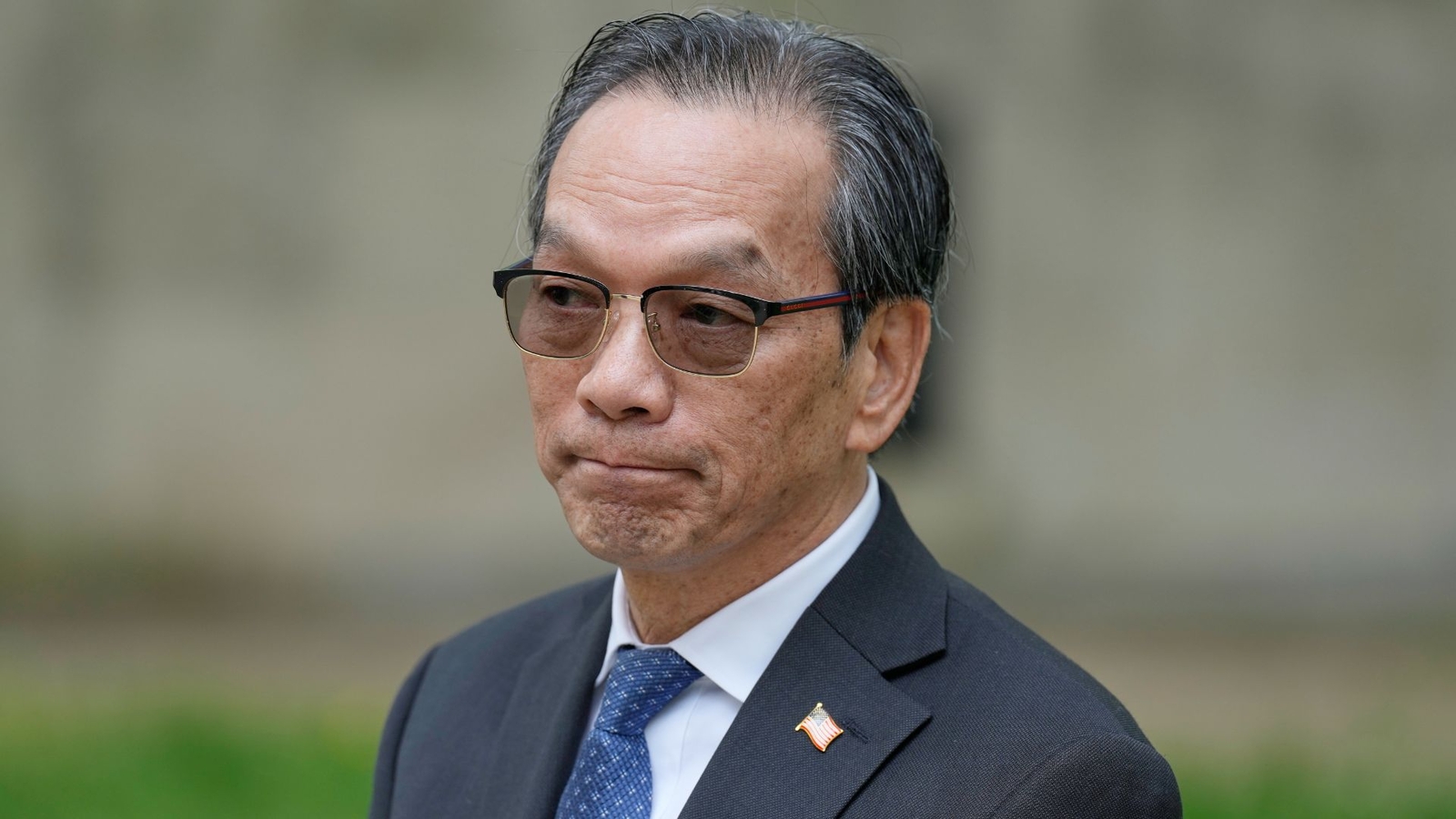
A federal jury has handed down a significant chinese spy outpost conviction, finding 64-year-old Lu Jianwang guilty of operating as an illegal foreign agent and obstructing justice on behalf of the People’s Republic of China. The weeklong trial in Brooklyn federal court concluded with a verdict that exposed what prosecutors described as a covert Chinese police station operating in the heart of Manhattan’s Chinatown neighborhood, raising serious concerns about Chinese transnational repression on U.S. soil.
Verdict and Charges
Lu, a U.S. citizen who also goes by the name Harry Lu, was convicted on two major counts but acquitted on a related conspiracy charge. The foreign agent conviction stems from his failure to register his work on behalf of the Chinese government with U.S. authorities. The obstruction charge relates to his deliberate deletion of WeChat messages that prosecutors say contained direct orders from Beijing. Combined, these convictions carry a potential sentence of up to 30 years in prison, though sentencing has not yet been scheduled.
U.S. Attorney Joseph Nocella Jr. released a strong statement following the verdict, emphasizing that a covert foreign police operation had been dismantled on American soil. His remarks underscored that the conviction sends a clear message about protecting national sovereignty and the rights of dissidents living within U.S. borders.
The Origins of the Secret Outpost
A Ceremony in Fujian Province
According to prosecutors, the Manhattan spy outpost was not a spontaneous creation. The investigation revealed that Lu traveled to his native Fujian province in 2022, where he attended a ceremony hosted by China’s Ministry of Public Security. During this event, Chinese officials publicly announced plans to establish approximately 30 secret police service stations across the globe. The Manhattan location would become one of these outposts, operating under the banner “Fuzhou Police Overseas Service Station, New York USA.”
Prosecutors argued convincingly that this NYC Chinatown spy station was part of a deliberate, coordinated strategy by the Chinese government. Assistant U.S. Attorney Antoinette Rangel told jurors in her closing argument that the operation was the Chinese government’s plan, with Lu serving as the on-the-ground facilitator who made it happen.
The Role of Co-Defendant Chen Jinping
Lu did not operate alone. His co-defendant, Chen Jinping, pleaded guilty in December 2024 to conspiracy to act as a foreign agent, further corroborating the prosecution’s narrative. Together, the two men established a covert presence designed to monitor, harass, and intimidate individuals deemed enemies of Chinese state interests.
Inside the Chinatown Location
The spy outpost occupied a deliberately ordinary space,a nondescript office building sandwiched between a hotel, a spa, and a coffee shop. This unremarkable exterior masked the operation’s true purpose. The location shared offices with the America ChangLe Association, a community organization that Lu and his brother Jimmy helped run. On tax filings, the association described itself as a “social gathering place for Fujianese people,” with ChangLe translating to “eternal joy.”
Jurors in the trial were shown photographs of a large banner displayed at the location bearing the name of the Fuzhou Police Overseas Service Station. The trial also featured testimony from Xu Jie, a Chinese dissident, activist, and YouTuber living in California, who prosecutors identified as one of the individuals targeted by the outpost.
The FBI Raid and the Evidence
The Federal Bureau of Investigation descended on the Chinatown outpost on October 3, 2022, following intelligence gathered from an organization that monitors Chinese transnational repression. The raid was swift and decisive. According to prosecutors, the very next day, Lu admitted to FBI agents that he had:
- Established the covert outpost
- Maintained regular contact with his Chinese handler through WeChat
- Deleted those incriminating messages in an apparent effort to cover his tracks
Investigators managed to recover some of the deleted communications through screenshots stored on Lu’s phone. Those recovered messages painted a damning picture, showing what prosecutors characterized as Lu operating in lockstep with directives from Beijing.
Defense Arguments and Counterclaims
A Community Center, Not a Spy Station
Lu’s defense team, led by attorney John Carman, painted a fundamentally different picture. They characterized the entire prosecution as an overreach that transformed mundane bureaucratic activities into an international espionage narrative. According to the defense, the location was simply a community center where members of the Chinese diaspora could renew their Chinese driver’s licenses remotely,a particularly valuable service during the COVID-19 pandemic when international travel was severely restricted.
Carman argued passionately outside the courthouse following the verdict, stating emphatically, “This is not espionage. This is not spying. This is not intelligence gathering. He wasn’t charged with any of that.” The defense attorney suggested that the real subtext of the case was simply that Lu “associated with a lot of Chinese people.”
The Ping-Pong Defense
In a memorable characterization, Carman noted that beyond driver’s license renewals, community members would gather at the location to play ping-pong and mahjong,activities hardly suggestive of international intrigue. He argued that Lu’s motives were pure, highlighting his 45 years of residence in the United States and his deep community ties. Lu remains free on bail while awaiting sentencing, and his legal team has signaled plans to appeal the conviction.
Broader Implications for National Security
This illegal foreign agent conviction represents more than just one man’s legal troubles,it signals a broader reckoning with how foreign governments operate covertly within American communities. The case exemplifies the growing concern over Chinese government surveillance efforts targeting dissidents, activists, and diaspora communities living abroad.
Legal experts note that even if Lu’s only connection to Chinese authorities had been through driver’s license renewals, that alone would still constitute a violation of foreign agent registration requirements. The law requires transparency about any work performed on behalf of a foreign government, regardless of how mundane the activities might appear on the surface.
The Pattern of Chinese Overseas Police Stations
The Manhattan outpost is not an isolated case. Reports have surfaced about similar Chinese government-linked service stations operating in cities around the world. Activist organizations that monitor Chinese transnational repression have documented dozens of these locations, painting a troubling picture of a coordinated international effort to extend the reach of Chinese state surveillance beyond its borders.
For pro-democracy dissidents living in the United States, this conviction offers a measure of validation and protection. Testimony from individuals like Xu Jie demonstrated that these outposts were not theoretical threats,they were actively being used to monitor and target those who dared to speak out against the Chinese communist government.
What Lies Ahead
With the jury’s verdict delivered, attention now turns to sentencing. Lu faces significant prison time:
- Up to 10 years for acting as an illegal foreign agent
- Up to 20 years for obstruction of justice
His legal representatives have announced their intention to appeal, promising to challenge what they characterize as an inflated prosecution of a well-meaning community leader. Meanwhile, the case stands as a watershed moment in the ongoing effort to counter foreign influence operations and protect the rights of dissidents living in the United States.
Conclusion
The chinese spy outpost conviction of Lu Jianwang represents a pivotal moment in the fight against foreign government operations on American soil. While defense attorneys promise appeals and frame the case as prosecutorial overreach, the jury’s verdict sends an unmistakable message: covert operations conducted on behalf of foreign governments will not be tolerated within U.S. borders. As the Chinese government continues to expand its surveillance capabilities across the diaspora, this landmark ruling reinforces that American communities deserve protection from transnational repression,and that those who facilitate such operations will face serious consequences under U.S. law.