
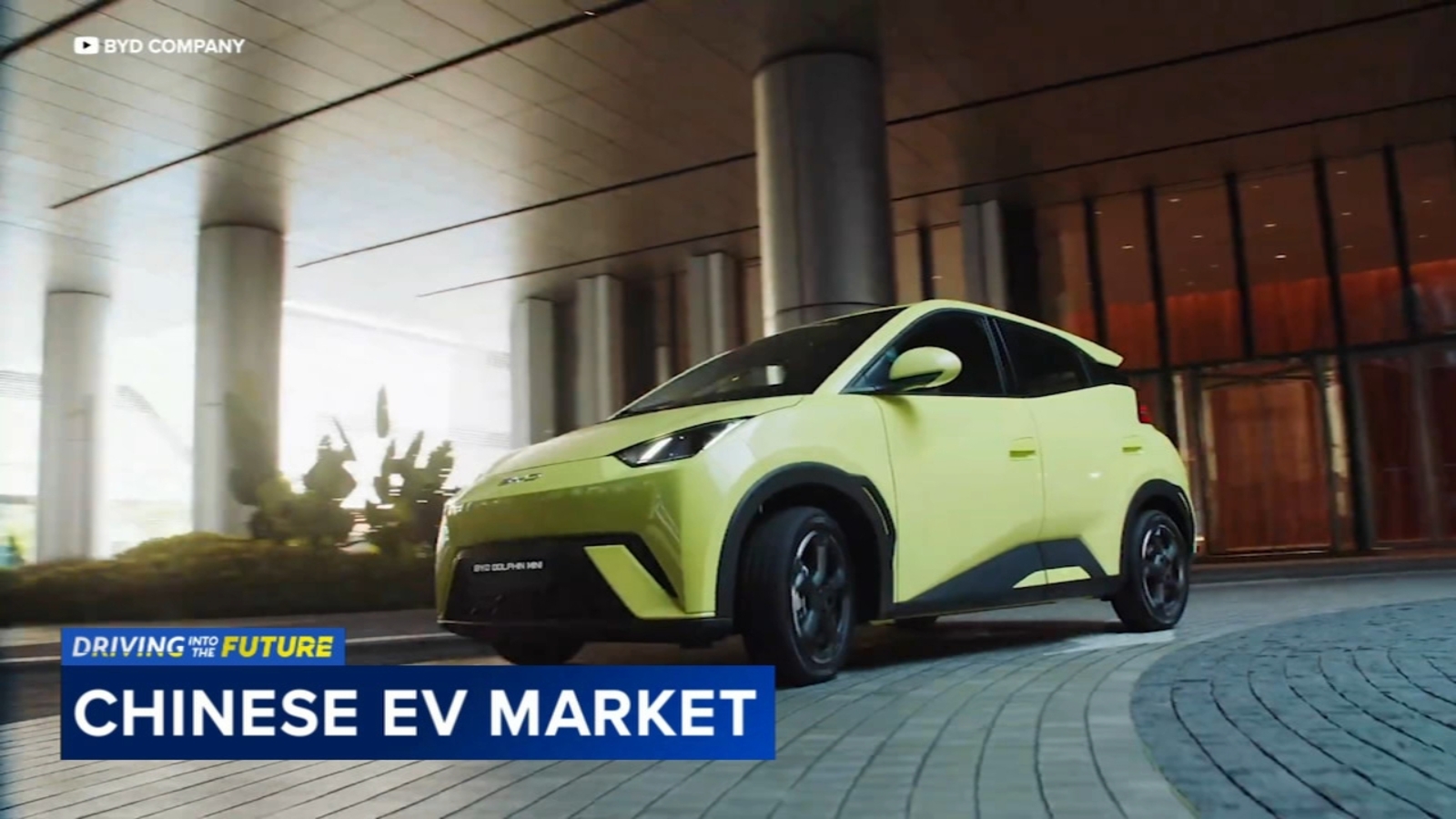
If you’ve been watching the electric vehicle space, you’ve likely heard that Chinese EV tariffs are keeping some of the world’s most affordable and technologically impressive electric cars out of American showrooms. The trade barriers,some exceeding 100%,are among the most aggressive in modern automotive history, and they exist for reasons tied to economics, national security, and industrial policy. Here’s the full story behind why drivers in the United States cannot buy many of the most popular EVs on the global market today.
The 700-Pound Gorilla in the Global EV Market
Most Americans assume Tesla sits atop the electric vehicle hierarchy. In reality, the world’s largest electric automaker is a Chinese company called BYD,a brand that has grown from a battery manufacturer into a global automotive powerhouse in less than two decades. Ford CEO Jim Farley made headlines recently when he described China’s EV industry as “the 700-pound gorilla globally,” warning that Chinese automakers could eventually render every American carmaker uncompetitive if given unfettered access to the U.S. market.
The names dominating this disruption,BYD, Li Auto, Geely, NIO, XPeng,are largely unfamiliar to American consumers. Yet these brands have already reshaped the competitive landscape across Europe, Latin America, and Southeast Asia. Their vehicles offer impressive range, sophisticated driver-assistance systems, and infotainment features that rival luxury models from Germany and Japan.
China’s Domestic EV Dominance
The scale of China’s home-market success is staggering. According to industry analysts at CarEdge.com, more than half of all new vehicles sold in China are now electric,a penetration figure no other country comes close to matching. That internal demand, combined with massive manufacturing capacity, has created a domestic oversupply. The result? Entire cargo ships full of unsold Chinese EVs have been redirected toward ports in Mexico, Brazil, and other Latin American markets where competition from established brands is weaker.
This global push is not accidental. It is the product of more than a decade of coordinated industrial policy.
The $230 Billion Subsidy Machine Behind Chinese EVs
One frequently cited estimate from a leading think tank suggests that the Chinese government spent approximately $230 billion on its EV industry between 2009 and 2023. That figure includes direct subsidies to manufacturers, tax breaks for consumers, investments in charging infrastructure, and incentives for battery production. Few industries in history have benefited from such sustained, state-backed financial support.
Those subsidies have enabled Chinese automakers to:
- Undercut global competitors on price. BYD’s compact Dolphin hatchback sells in Europe for around $23,000,roughly half the price of a comparable Tesla Model 3.
- Invest heavily in R&D. Chinese brands offer infotainment and driver-assistance technology that, according to industry reviewers, feels like it belongs in a luxury vehicle.
- Scale production rapidly. Chinese gigafactories have come online at a pace that legacy automakers struggle to match.
- Build vertically integrated supply chains. Many Chinese EV makers produce their own batteries, motors, and electronics, reducing dependence on outside suppliers.
The price gap is what really catches attention. As one analyst put it, Chinese EVs “come with essentially the infotainment and the driver assistance of a luxury car at half the price point.” For budget-conscious buyers in any market, that’s an irresistible proposition.
Why Chinese EV Tariffs Exist: Protecting American Industry
The United States responded to this rising competitive threat with a wall of tariffs. The current tariff structure on Chinese-made EVs exceeds 100%, effectively pricing these vehicles out of reach for American consumers and creating what amounts to a trade embargo on imported Chinese electric cars.
The Strategic Logic Behind the Tariffs
The U.S. government’s stated reasons for imposing these barriers fall into several categories:
- Industrial protection. American automakers are still scaling up their own EV production lines. Allowing cut-rate Chinese imports to flood the market now could cripple domestic manufacturers before they achieve competitive scale.
- National security concerns. Connected vehicles collect enormous amounts of data,location, driving patterns, even personal conversations inside the cabin. Lawmakers from both parties worry that allowing vehicles built in China onto American roads could expose sensitive information to foreign governments.
- Labor protection. The U.S. auto industry supports millions of jobs, both directly at assembly plants and throughout the supply chain. Cheap Chinese imports could displace that workforce.
- Retaliation for Chinese trade practices. The Biden administration framed the tariffs as a response to what it called “unfair” Chinese subsidies and trade practices that violate World Trade Organization norms.
While supporters argue these tariffs give domestic manufacturers time to catch up, critics counter that they ultimately hurt American consumers by eliminating cheaper, well-equipped alternatives.
The Cars Americans Are Missing Out On
Imagine walking into a dealership and finding a compact electric hatchback with 250 miles of range, a panoramic touchscreen, advanced adaptive cruise control, and a starting price under $20,000. That is essentially what buyers in Europe and Latin America can access through brands such as BYD, MG (owned by China’s SAIC), and Geely.
Popular models that remain locked out of the U.S. market include:
- BYD Dolphin – A subcompact EV priced around $23,000 in Europe.
- BYD Atto 3 (Yuan Plus) – A compact crossover with strong reviews globally.
- MG4 – An affordable electric hatchback that won European Car of the Year honors.
- NIO ET5 – A premium sedan with battery-swap capabilities.
- XPeng G6 – A tech-forward crossover with advanced autonomous driving features.
Each of these vehicles represents a category of car that American manufacturers simply do not currently offer at a comparable price point.
The Mexico Backdoor Question
Some industry observers have speculated whether Chinese automakers might route around U.S. tariffs by building factories in Mexico, then exporting vehicles to the United States under the United States-Mexico-Canada Agreement (USMCA). However, the current administration has signaled it would scrutinize such arrangements closely, and additional rules of origin requirements would likely apply. For now, this remains a theoretical path rather than an active one.
What This Means for American EV Buyers
For consumers in the United States, the practical effect of these trade barriers is a narrower selection of EVs than exists almost anywhere else in the developed world. Prices remain higher, innovation cycles move more slowly, and competitive pressure on domestic automakers is reduced.
However, there are some indirect benefits:
- Stronger domestic supply chains. Tariffs help fund and incentivize the buildout of American battery plants, particularly in the Southeast.
- Investment in U.S. innovation. Companies like Tesla, Rivian, and Lucid continue to receive investment that might otherwise be undercut by cheap imports.
- Job preservation. Tens of thousands of auto manufacturing jobs remain viable because of these protections.
The Road Ahead: Will Chinese EVs Ever Reach American Buyers?
The most likely path for Chinese automakers to enter the U.S. market involves building assembly plants on American soil. Several Chinese brands have already explored this option, and a few partnerships with Western companies have been announced. Manufacturing locally would sidestep the tariffs entirely and address some of the national security concerns about data and supply chains.
That transition will take years, not months. Until then, the combination of trade barriers and political sensitivity means major Chinese EV brands are not arriving in American dealerships anytime soon.
The tension between free trade and industrial protection is hardly new, but the EV era has put it in sharper focus. On one hand, American consumers could benefit enormously from access to vehicles that cost half as much as comparable domestic models. On the other, the long-term viability of the U.S. auto industry,and the millions of jobs it supports,may depend on giving domestic manufacturers room to compete on their own terms.
For now, the 100% tariffs remain in place, and the most disruptive force in global automotive history will continue to operate outside American borders. Whether that proves to be a temporary protection or a permanent strategic choice will shape the future of driving in the United States for decades to come.