
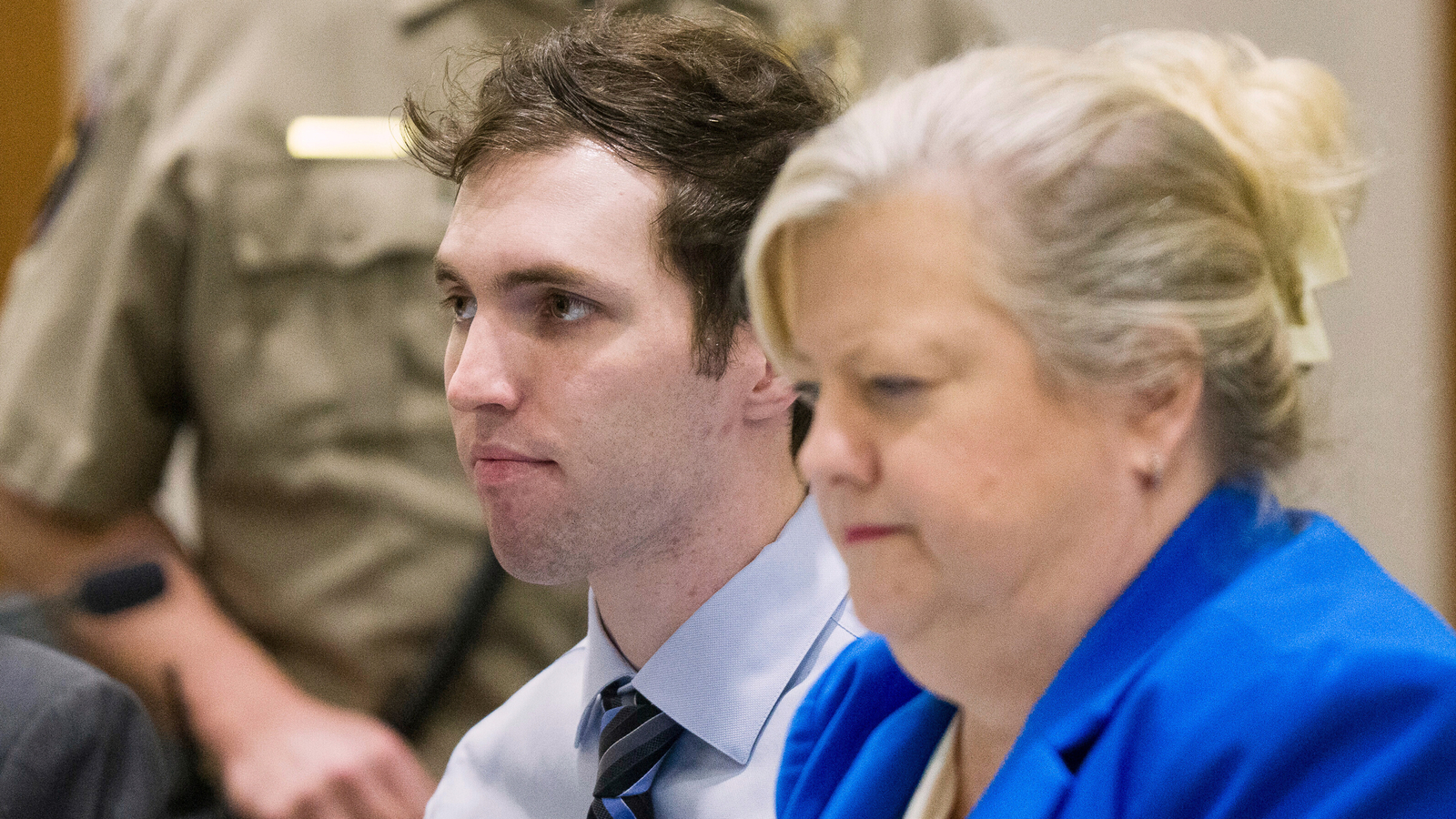
The Charlie Kirk murder trial officially moved forward this week after Utah District Judge Tony Graf ruled that prosecutors presented sufficient evidence to proceed with aggravated murder charges against Tyler Robinson, the 23-year-old accused of fatally shooting the conservative activist and Turning Point USA co-founder last September. The ruling means Robinson could face the death penalty if convicted, making this one of the most closely watched capital cases in recent Utah history.
Judge Sides With Prosecutors on Aggravating Factor
During a hearing at the Fourth Judicial District Courthouse in Provo, Judge Graf rejected the defense’s attempt to block the case from advancing to trial. Robinson’s attorneys had argued that prosecutors failed to demonstrate an aggravating factor required under Utah law , specifically, that Kirk’s shooting created a substantial risk of death to others nearby.
Prosecutors contended that Robinson fired from a rooftop more than 400 feet away, and that he knowingly created danger for the thousands of people attending the open-air event at Utah Valley University. Judge Graf agreed, writing that “these circumstances support a reasonable inference that defendant was aware that other individuals were positioned near Mr. Kirk when he fired.”
Had the judge sided with the defense, Robinson would have faced a lesser murder charge carrying a minimum of 15 years and a maximum of life in prison. Instead, the aggravated murder charge keeps the death penalty firmly on the table.
The Evidence: DNA, Discord Messages, and an Engraved Bullet
Prosecutors spent five days in July presenting what they described as “overwhelming” evidence against Robinson. The case rests on several key pillars:
- DNA evidence linking Robinson to the suspected murder weapon , a bolt-action rifle with one spent round , and to a tool allegedly used to engrave bullet cartridges.
- Discord messages and texts in which Robinson allegedly discussed his hatred of Kirk and referenced the shooting shortly after it occurred.
- A handwritten note allegedly left for Robinson’s romantic partner, which read in part: “I had the opportunity to take out Charlie Kirk, and I took it.”
- An engraved bullet inscription reading “Hey Facist! CATCH!” that prosecutors argue is an overt political reference.
- A recorded interview with Robinson’s reported romantic partner, Lance Twiggs, in which Robinson allegedly expressed regret and eventually confessed online with the post “it was me at UVU yesterday.”
Defense Strategy and Legal Arguments
Robinson’s legal team, led in part by attorney Staci Visser, focused their arguments on preventing the case from escalating to a capital trial. Visser told the court that prosecutors were trying to “shoehorn” the case into Utah’s aggravated murder statute by inflating the risk to bystanders.
“There is one shot. There is one bullet. There is one victim,” Visser argued. “There is zero evidence that there was any action taken towards other people.”
She emphasized that prior Utah case law requires prosecutors to demonstrate a high probability , not merely a possibility , that others could have been killed. Kirk, she noted, was seated on an elevated stage, not immediately next to other individuals.
The defense also challenged the reliability of the DNA testing and unsuccessfully fought the public release of Twiggs’s interview, warning that prosecutors would characterize it as a confession. Robinson has not yet entered a plea, and his attorneys have not presented alternative theories for Kirk’s death, choosing instead to attack the legal framework of the charges themselves.
Political Motivation as a Sentencing Enhancement
Beyond the aggravated murder charge, Robinson may also face sentencing enhancements if prosecutors can prove he targeted Kirk specifically because of his political beliefs. Prosecutors have argued that the engraved bullet found in the suspected murder weapon represents an ideological motive.
The text messages attributed to Robinson further support this theory, with one allegedly stating: “I had enough of his hatred. Some hate can’t be negotiated out.” Kirk, who co-founded Turning Point USA and was instrumental in galvanizing the conservative youth vote for President Donald Trump, was a polarizing figure whose events often drew large crowds and heated political debate.
Defense attorneys have countered that the evidence of political motivation is not strong enough to justify enhanced sentencing, setting up another potential battleground as the case moves forward.
Security and Emotional Toll at the Courthouse
The Tuesday hearing unfolded under heavy security at the Provo courthouse. Kirk’s parents, Robert and Kathryn Kirk, arrived arm in arm, with Erika Kirk seated beside them. The family briefly stepped out during a prosecutor’s argument that described the graphic details of the shooting.
A small group of local Turning Point USA supporters gathered outside with signs expressing their support for Erika Kirk but were instructed by security that they could not bring signs onto the court property. Robinson showed no visible reaction during the proceedings. His mother, Amber Robinson, watched from the gallery, while his father, Matt Robinson, listened with his head bowed throughout much of the hearing.
What Comes Next in the Charlie Kirk Murder Trial
With Judge Graf’s ruling, the case will now proceed toward a full trial where a jury will weigh the evidence. Several major questions remain unanswered:
- Will Robinson enter a guilty or not guilty plea, or pursue an alternative defense strategy?
- Can prosecutors successfully prove the political motivation enhancement?
- Will the defense attempt to negotiate a plea agreement that removes the death penalty from consideration?
- How will the jury pool be selected in a case of this magnitude and public profile?
Legal experts suggest that defense attorneys may now shift their strategy from procedural challenges to substantive trial defense, given that Judge Graf declined to reduce the charge. The defense’s repeated warnings about how prosecutors might characterize the Twiggs interview suggest they anticipate tough testimony once the trial begins.
A Case With National Implications
The Charlie Kirk murder trial is already shaping up to be one of the most politically sensitive capital cases in modern Utah history. The shooting at Utah Valley University last September drew national attention and renewed debate about political violence in America. Prosecutors’ decision to pursue the death penalty signals their intent to treat the killing as an act that endangered an entire community, not just a single individual.
As the case advances, observers will be watching closely to see how the court balances free speech, political expression, and the consequences of targeted violence. With the death penalty still in play and no plea entered, the upcoming trial promises to be a defining moment for Utah’s justice system and for the broader national conversation about political extremism.
Conclusion
The ruling by Judge Tony Graf marks a significant turning point in the Charlie Kirk murder trial, clearing the way for prosecutors to pursue the most severe penalty available under Utah law. For Tyler Robinson, the path forward now leads directly toward a trial where the evidence , DNA, digital messages, an engraved bullet, and a recorded interview , will be tested before a jury. For the Kirk family and the broader conservative movement, the proceedings offer a measure of accountability while reopening deep wounds. As this high-profile capital case unfolds, it will test the boundaries of Utah’s aggravated murder statute, the strength of forensic and digital evidence, and the nation’s ongoing struggle to confront politically motivated violence.