
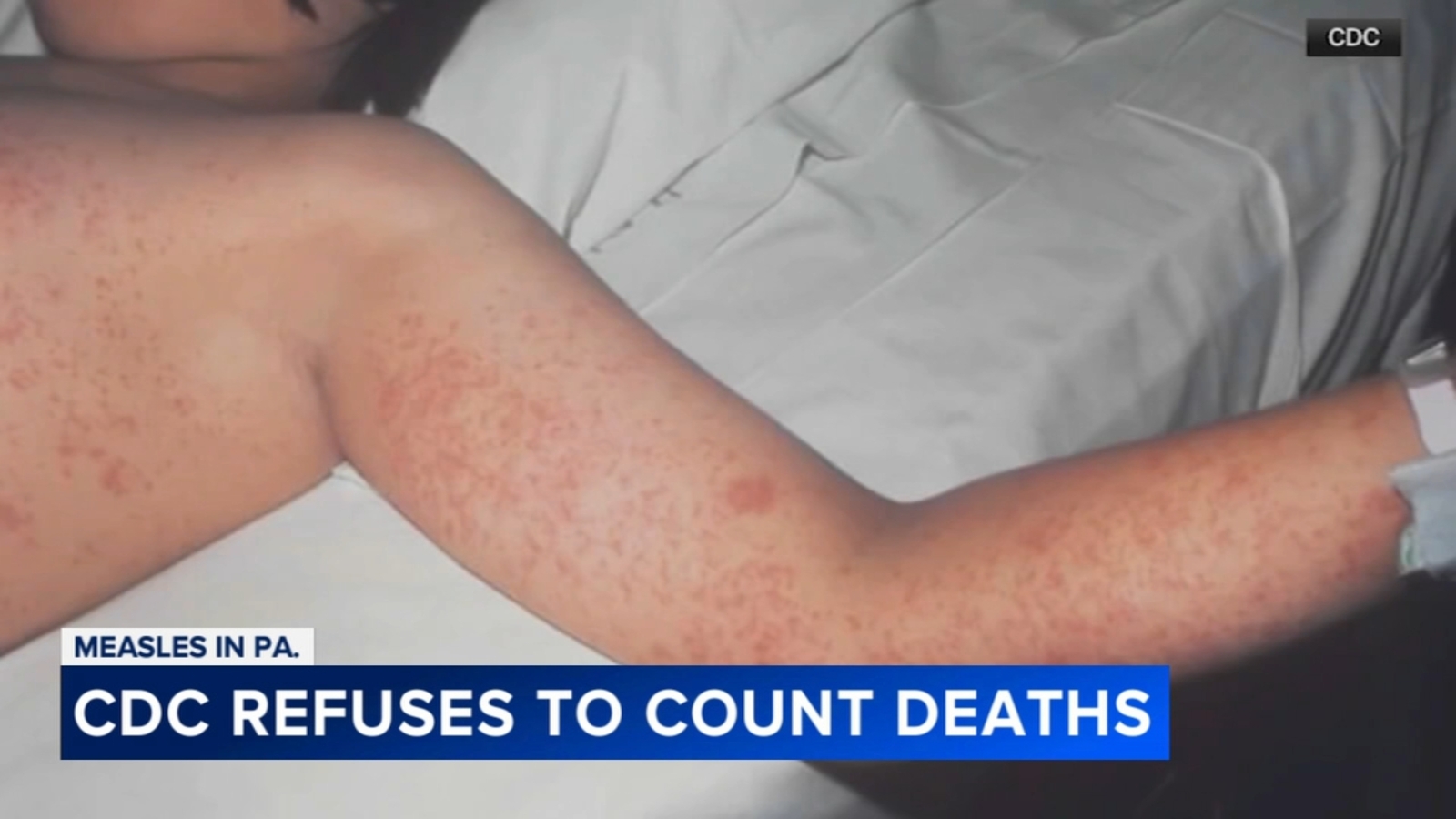
In a move that has sent shockwaves through the public health community, the US Centers for Disease Control and Prevention (CDC) has chosen to exclude two measles-associated deaths reported by Pennsylvania from its official measles death count for 2026. The decision, attributed to the agency’s newly appointed director, Dr. Erica Schwartz, marks an extraordinary break from standard protocol and has intensified an already heated dispute between federal health officials and state authorities.
The CDC’s Unprecedented Decision
According to two individuals familiar with the matter, Dr. Schwartz personally ordered the delay in incorporating the two Pennsylvania fatalities into the national tally. When the CDC finally released its weekly measles data update over the weekend, the 2026 death figure was replaced with an asterisk and a footnote. The footnote explained that the deaths would remain excluded while the CDC reviews additional information about the circumstances and causes of death.
The CDC’s statement noted that “available information does not establish whether measles caused or contributed to the deaths or whether the individuals died from other causes while infected with measles.” The agency pledged to revise the national count once further details emerge.
The Federal-State Dispute
The exclusion has deepened a public feud between Health and Human Services Secretary Robert F. Kennedy Jr. and Pennsylvania’s Democratic Governor, Josh Shapiro. Pennsylvania health officials have firmly maintained that they conducted thorough investigations before announcing the fatalities.
Neil Ruhland, press secretary for the Pennsylvania Department of Health, emphasized the rigor of the review process. “Every reported measles case is thoroughly reviewed to confirm it meets the Centers for Disease Control and Prevention’s case definition for a measles case,” Ruhland stated. “To date, DOH has provided all required epidemiological data to the CDC regarding the two measles-associated deaths in Pennsylvania.”
Background on the Pennsylvania Outbreak and Deaths
The controversy unfolds against the backdrop of an expanding measles outbreak in Pennsylvania, concentrated in Lancaster County. The first reported death involved an infant whose case has drawn particular attention. Lancaster County Coroner Dr. Stephen Diamantoni confirmed that his office is investigating the death of a newborn who suffered a ruptured spleen, with measles virus detected in the baby’s lung tissue.
Diamantoni suggested that the infant likely contracted the virus from its mother before birth. While measles and similar viral infections can cause spleen swelling and increased fragility, Diamantoni acknowledged he had not observed evidence of spleen enlargement. Other medical experts have noted, however, that determining pre-rupture spleen condition would be challenging.
A subsequent report revealed that Diamantoni’s office is also investigating another recent death involving a child who tested positive for measles. As investigations continue, the emotional weight of these cases has grown, particularly after an Amish couple from Lancaster County shared their heartbreaking account with The Atlantic. The mother, who experienced a severe measles infection while pregnant, went into labor shortly after receiving intravenous fluids at a clinic. The baby was born with a heartbeat but was not breathing and did not survive. The couple later learned about a voicemail from a man named Kennedy requesting to speak with them, though they had not returned the call.
Why This Decision Is Raising Alarm Among Public Health Experts
Former CDC leaders and infectious disease specialists have voiced strong concerns about the agency’s choice to override state determinations. Dr. Nirav Shah, who served as the CDC’s principal deputy director before resigning in February 2025, characterized the move as highly irregular.
“The idea that you would second-guess the determination of the state epidemiologist is pretty remarkable,” Shah explained. He noted that the standard approach to tracking deaths associated with infections has historically included individuals who tested positive for the pathogen and died within a typical window, usually around 10 days, without requiring definitive proof of causation.
“For the CDC, let alone the CDC director, to overrule that sort of determination and just put that vague language up on the website, it’s more than atypical. It is the definition of the politicization of public health.”
Dr. Deb Houry, the CDC’s former chief medical officer who resigned in protest over the firing of Schwartz’s predecessor, Dr. Susan Monarez, also weighed in. Houry pointed to a comparable case from the previous year in New Mexico, where a measles-associated death was added to the national total while still under investigation, simply because the individual had tested positive after death.
The Established Reporting Protocol
Houry clarified the standard collaborative process between the CDC and state health departments:
- States conduct individual case investigations
- States notify the CDC of confirmed or suspected cases
- The CDC compiles national-level data based on state reports
- This collaboration typically involves the Council of State and Territorial Epidemiologists
By departing from this framework, the current CDC leadership has effectively disrupted decades of established practice in measles data reporting.
Dr. Erica Schwartz’s First Major Test as CDC Director
Dr. Schwartz assumed the CDC directorship in mid-August and has been under close observation ever since. Despite her medical credentials and history of supporting vaccines and evidence-based science, her public statements since her nomination have raised questions about her willingness to assert independence from the Kennedy-led HHS.
During her confirmation hearing, multiple senators expressed concern that she might not push back against Kennedy, given his well-documented history of anti-vaccine advocacy. In her first agency-wide meeting, Schwartz reportedly told staff she would not hesitate to disagree with Kennedy when necessary but would keep those disagreements behind closed doors.
Expert Criticism of Her Early Leadership
Dr. Jeremy Faust, an assistant professor of emergency medicine at Harvard Medical School, was blunt in his assessment: Schwartz has failed her first major leadership test. “If she’s overseeing an agency that is only now just a mouthpiece for what her bosses think, then she is absolutely failing in her mandate,” Faust argued. He framed the choice facing the new director in stark terms: “Am I simply a communications attache to Secretary Kennedy, or do I have independence, and I speak for science, even when it goes against what my bosses think?”
The “Died With vs. Died From” Debate
The current controversy echoes a familiar but contentious rhetorical pattern. Last year, after a child with measles died in Texas, Children’s Health Defense, the organization Kennedy co-founded and previously led, claimed the child had died from bacterial pneumonia that could have been managed differently, rather than from measles itself. Notably, the CDC counted that death in its 2025 measles death tally without controversy.
Dr. Brian Castrucci, president and CEO of the de Beaumont Foundation, noted that the rhetoric surrounding the current Pennsylvania situation revives the “died from versus died with” playbook used during the COVID-19 pandemic, a distinction he called medically legitimate but one that was “repeatedly weaponized to confuse rather than clarify.” Castrucci emphasized that deaths often involve multiple contributing causes, and the presence of another factor does not eliminate the role of an infectious disease.
Dr. David Margolius, director of public health for Cleveland, expressed frustration at watching the CDC shift from a role of sharing information to becoming what he described as a “data editorializer.”
Implications for Public Health Trust and Data Transparency
The stakes extend well beyond a single data point. Trust in CDC data transparency underpins everything from local preparedness planning to national vaccination policy. When state-reported deaths are held back from national tallies pending federal review, the resulting uncertainty complicates outbreak response efforts and undermines the cooperative relationship between federal and state health authorities.
HHS press secretary Grace Davis Jamison defended the decision, stating: “CDC has a responsibility to ensure its reporting accurately and transparently reflects what is known and what remains unconfirmed. The two measles-associated deaths announced by Pennsylvania have not been confirmed based on the information currently available to CDC.” She framed the move as part of a commitment to “telling the American people the truth,” which she described as a foundational principle of the Trump Administration.
Conclusion
The decision to exclude two Pennsylvania measles deaths from the national measles death count represents far more than a technical data adjustment. It signals a fundamental shift in how the nation’s leading public health agency approaches disease surveillance, state-federal cooperation, and the boundaries between science and politics. As investigations in Lancaster County continue and the legal and ethical questions multiply, public health leaders across the country will be watching closely to see whether the CDC reasserts its traditional commitment to transparent, state-driven data reporting, or whether this becomes the new normal in an era of heightened political scrutiny of vaccine-related science.