
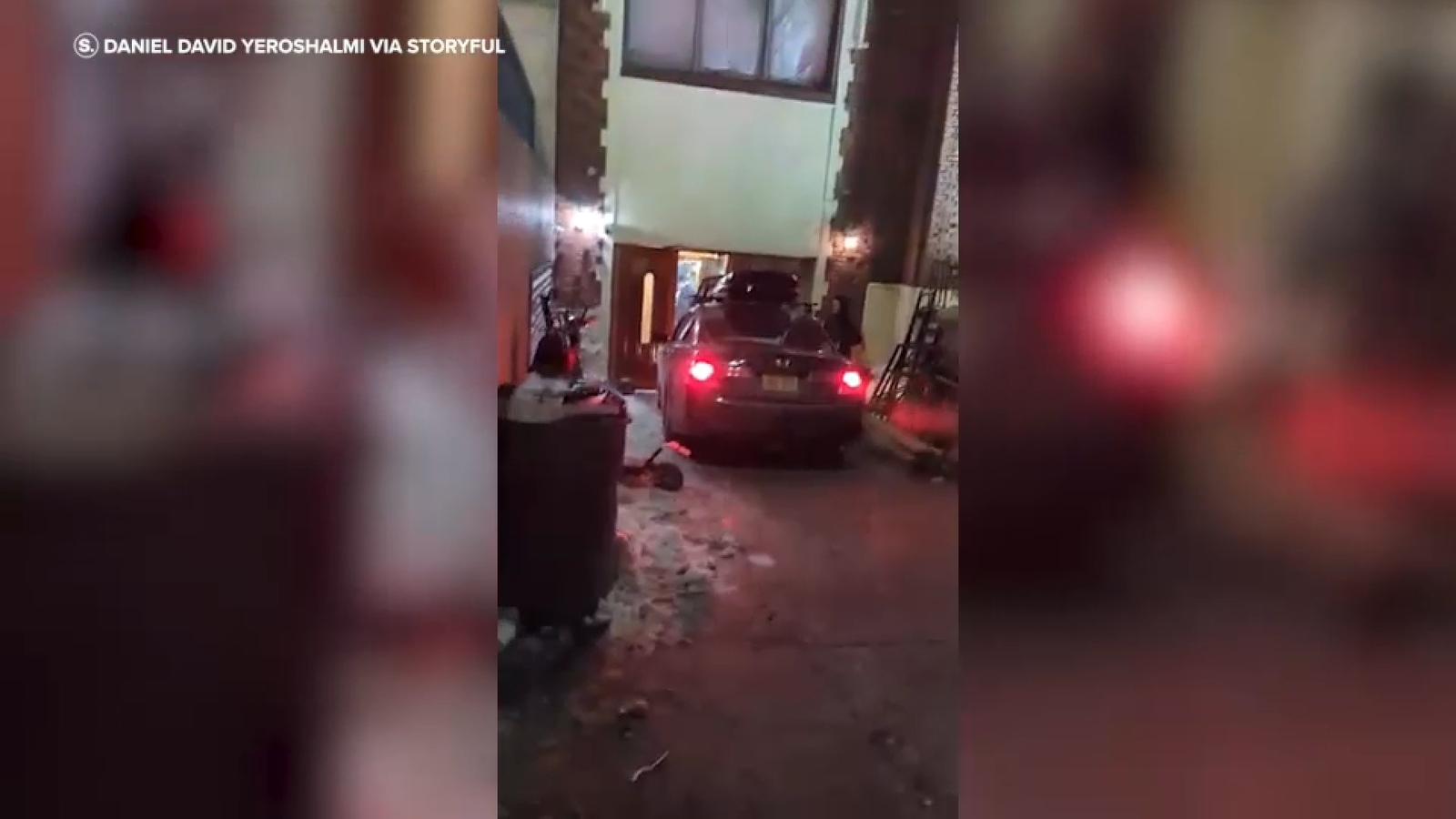
A shocking incident unfolded in Brooklyn on a winter evening when a car rams Chabad headquarters, causing visible damage and prompting an urgent investigation by the NYPD. The driver, whose actions are now being examined as a possible hate crime, repeatedly struck the basement-level doors of the world-famous Chabad Lubavitch complex at 770 Eastern Parkway while worshippers were gathered inside for evening prayers. Although no injuries were reported, the deliberate nature of the crash has sent ripples of concern throughout New York’s Jewish community and beyond.
This blog post explores the details of the incident, the historical significance of the site, the community’s reaction, and the broader implications for hate crime awareness and religious safety in urban America.
What Happened: A Detailed Breakdown of the Incident
On Wednesday night, a man drove his vehicle,registered with New Jersey license plates,into the driveway of the Chabad Lubavitch world headquarters. According to multiple reports, the car repeatedly rammed into the basement-level doors of one of the buildings in the complex. After the initial impact, the driver reversed and struck the doors several more times, causing significant structural damage to the entryway.
Video footage that circulated online shortly after the event captured the disturbing scene: a car moving forward and backward on what appeared to be an icy surface, repeatedly slamming into the building’s doors. After the vehicle came to a stop, the driver,reportedly wearing shorts despite the cold weather,emerged and shouted to bystanders, claiming the vehicle had “slipped.” He later told police he was simply trying to park.
New York City Police Commissioner Jessica Tisch addressed the media and confirmed that no bombs or other weapons were found inside the vehicle. She emphasized that while it was premature to draw conclusions about the driver’s motives, detectives were pursuing every angle, including the possibility that this was a deliberate act of antisemitic violence.
Police Response and Investigation
The NYPD moved quickly to secure the scene and take the driver into custody. Authorities have stated that the investigation remains in its early stages, and officials have not yet commented on the driver’s mental state. However, the fact that the incident is being treated as a possible hate crime speaks to the gravity with which law enforcement is approaching the case.
Brooklyn District Attorney Eric Gonzalez took to social media platform X to express his concerns. He called the crash “disturbing and unacceptable” and noted that “this could have been much worse.” Gonzalez confirmed that his office is collaborating closely with the NYPD to ensure accountability and community safety.
The Historical Significance of 770 Eastern Parkway
The Chabad Lubavitch headquarters in Crown Heights, Brooklyn, is far more than a building,it is a living symbol of Hasidic Jewish heritage and spiritual leadership. Commonly known simply as “770,” a reference to the Eastern Parkway address of the original building, the headquarters encompasses multiple adjacent structures and features a striking Gothic Revival facade.
Every year, thousands of visitors make pilgrimages to this deeply revered Hasidic Jewish site. Its architectural influence has inspired dozens of replicas across the globe, making 770 one of the most recognizable spiritual landmarks in the Jewish world.
A Meaningful Anniversary Marred
The timing of the crash added another layer of poignancy to the incident. The car rams Chabad headquarters on the very day that marked the 75th anniversary of Rabbi Menachem Mendel Schneerson assuming leadership of the Lubavitch movement. Although Schneerson passed away in 1994, he remains one of the most revered figures in Jewish religious history. His legacy is woven into the very fabric of the Chabad movement, and the anniversary would typically have been a time of celebration and reflection.
Community Leaders Respond
New York City Mayor Zohran Mamdani quickly issued a public statement, calling the crash “intentional” and expressing deep concern. “This is deeply alarming, especially given the deep meaning and the history of the institution to so many in New York and around the world,” the mayor said, underscoring the cultural and spiritual importance of the site to millions of Jewish people worldwide.
Chabad Lubavitch spokesperson Motti Seligson confirmed that some of the doors sustained damage during the crash but emphasized that the community’s resilience remains intact. The incident has, however, reignited conversations about safety and security at religious institutions across the city.
A Long History of Police Presence
For years, there has been a near-constant police presence around 770 Eastern Parkway, a reflection of both the site’s significance and its history as a target. This is not the first time the headquarters has been at the center of violence or controversy:
- 1991 Crown Heights Riots: The site was at the epicenter of violent riots that erupted after a child was killed by a car traveling in Rabbi Schneerson’s motorcade. The unrest resulted in attacks on Jewish residents by some Black community members and remains a painful chapter in New York City’s history.
- 2014 Stabbing Incident: A disturbed man entered the synagogue and stabbed a rabbinical student, wounding him, before being shot and killed by police officers on the scene.
These historical events underscore why the current NYC hate crime investigation surrounding this latest incident is being taken so seriously by both law enforcement and community leaders.
Why This Matters: The Broader Context
The incident comes at a time when Jewish communities across the United States and Europe have reported rising rates of antisemitic incidents. Attacks on synagogues, Jewish community centers, and religious sites have become alarmingly frequent, prompting calls for increased vigilance and stronger protective measures.
Recognizing Hate Crime Indicators
Law enforcement agencies typically consider several factors when classifying an incident as a hate crime, including:
- The target’s religious, ethnic, or cultural identity
- The nature and deliberateness of the attack
- Statements made by the perpetrator before, during, or after the incident
- Symbolic significance of the location or date
- Any historical pattern of similar incidents in the area
While authorities have not yet confirmed that this was indeed a hate crime, the location, timing, and apparent deliberateness of the act have all raised red flags that warrant thorough investigation.
The Role of Community in Healing
Beyond the legal investigation, the emotional and psychological impact on the Crown Heights community cannot be understated. For many congregants and visitors, 770 represents a sanctuary,a place of prayer, learning, and connection. When such a sacred space is violated, the sense of vulnerability can extend throughout an entire community.
Local leaders have been working to reassure residents that the site remains safe and that increased security measures will be implemented as needed. Community vigils and solidarity events are often organized in the wake of such incidents, serving as both a show of strength and a means of collective comfort.
Looking Ahead: Security, Justice, and Awareness
As the investigation continues, several key questions remain unanswered: What was the driver’s true intent? Was the act premeditated or impulsive? Will evidence support the hate crime designation? These questions will shape not only the legal outcome but also the broader policy discussions around protecting religious institutions.
For now, the Crown Heights neighborhood and the global Chabad community are left to process the unsettling reality that the car rams Chabad headquarters in an act that could have resulted in tragedy. The absence of injuries is something for which many are breathing a collective sigh of relief, but the scars,both physical and emotional,will take time to heal.
How the Public Can Support
Community members and allies who wish to support the affected community can take several meaningful steps:
- Stay informed through verified news sources as the investigation progresses
- Participate in community solidarity events organized by local Jewish organizations
- Report any suspicious activity near religious sites to local law enforcement
- Educate themselves and others about the history and contributions of Hasidic Jewish communities
- Support organizations that work to combat antisemitism and promote interfaith understanding
Conclusion
The incident in which a car rams Chabad headquarters at 770 Eastern Parkway serves as a sobering reminder of the vulnerabilities that religious communities continue to face. While the quick response of law enforcement and the absence of physical injuries are causes for measured relief, the event has reopened urgent conversations about hate crime prevention, religious site security, and community resilience. As the NYPD and Brooklyn District Attorney’s office work to uncover the truth behind the driver’s actions, the world watches closely,reminded once again that sacred spaces must be protected, and that justice must be pursued with diligence and resolve. The Chabad Lubavitch community, steeped in a 75-year legacy of faith and leadership, will undoubtedly emerge from this challenging moment with renewed determination to safeguard its people and its heritage.