
The California Coastal Commission, a powerful state agency that has shaped development along California’s iconic 840 miles of coastline for more than five decades, now finds itself squarely in the crosshairs of the federal government. In a move that has alarmed environmentalists, state officials, and coastal residents alike, the Trump administration has launched a sweeping federal review of California’s coastal management program, raising the specter of a fundamental shift in how the Golden State’s shoreline is governed.
This latest development represents more than just bureaucratic maneuvering. It signals an intensifying confrontation between state-level environmental priorities and federal energy policy objectives, one that could ripple far beyond California’s borders and reshape the balance of authority over coastal resources across the nation.
Why the Federal Review Matters
Commerce Secretary Howard Lutnick announced the unexpected review in May, framing it as a necessary correction to what he characterized as “obstructionist policies” blocking critical national infrastructure. The review will examine how California has handled federal priorities spanning spaceport operations, offshore oil production, pipeline maintenance, and desalination projects.
At stake is something profound: the California Coastal Commission’s authority to weigh in on projects involving federal agencies that affect the state’s rugged bluffs, pristine beaches, and world-renowned surfing destinations. More than 30 states operate similar coastal management programs, all subject to periodic federal evaluation, but no state has ever been stripped of its review authority. California, many fear, could become the first.
“This isn’t about performance. This is about power,” observed Maureen Ellenberger, a Santa Barbara resident, during an hours-long public hearing in Santa Monica in August. Her comment captured the sentiment of countless Californians who packed the hearing to defend the commission’s independence.
A Brief History of California’s Coastal Guardian
Established in 1972 in the wake of the catastrophic 1969 Santa Barbara oil spill that helped ignite the modern environmental movement, the California Coastal Commission was designed to be a powerful and independent voice for coastal protection. The commission has wielded significant influence over development decisions, often making headlines for its involvement in high-profile disputes.
Among its most notable battles:
- Initially rejecting, then approving, a U2 guitarist’s controversial plan for clifftop mansions, before courts ultimately struck down the building proposal
- Voting against a proposed desalination plant in Huntington Beach
- Clashing with elected officials from both major political parties over permitting decisions
The commission’s authority extends beyond state-controlled activities. Under the federal Coastal Zone Management Act of 1972, it can review and influence federal projects that affect California’s coast, making it a critical checkpoint for energy companies, military operations, and commercial development alike.
The Trump Administration’s Energy Agenda
The federal review of the California Coastal Commission is part of a broader push by the Trump administration to expand fossil fuel production and reverse state-level climate initiatives. This effort includes several major actions:
Offshore Oil Leases Resumed
Federal officials have announced plans for new offshore oil leases in California waters, marking a dramatic reversal after decades of inactivity. There has been no new oil leasing in federal waters off California since the mid-1980s, and the state itself barred new offshore oil leases after the devastating 1969 spill that released between 3.5 million and 4.2 million gallons of crude into the Santa Barbara Channel.
Old Pipeline Restarted
Trump officials also helped Houston-based Sable Offshore Corp. jump-start an old pipeline system that had been dormant since 2015, when its rupture caused one of California’s worst oil spills, blackening 150 miles of beaches from Santa Barbara to Los Angeles and devastating habitat for endangered whales and sea turtles.
Fracking Authorization Advances
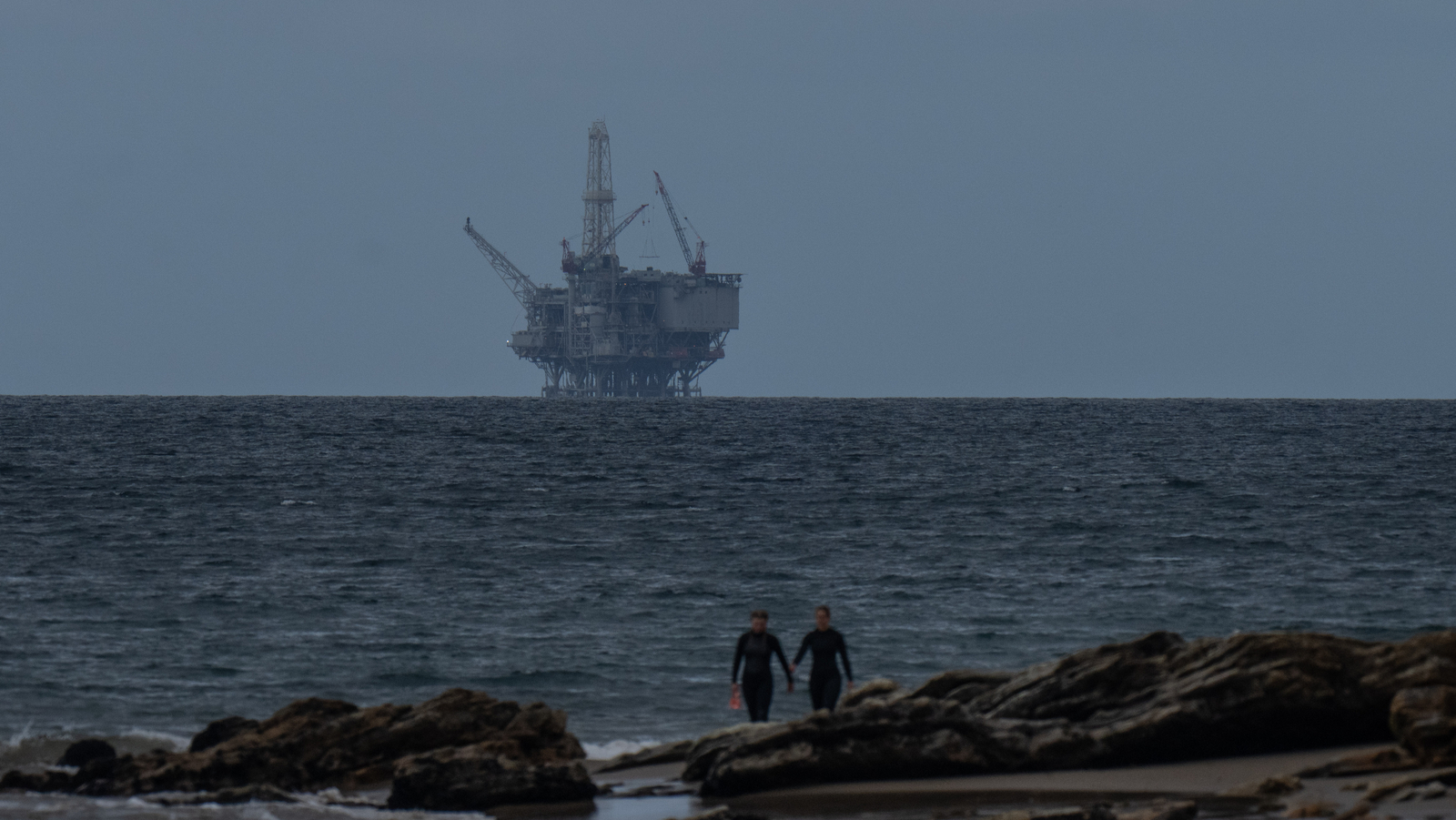
Most recently, federal authorities took a step toward authorizing fracking on a 45-year-old platform located nine miles off Ventura County. The proposed operation by DCOR LLC would more than triple daily oil output from 1,100 barrels to 4,000 barrels across 16 wells, a plan the coastal commission unanimously opposed following a lengthy public hearing.
“This is just simply one of those cases where the juice isn’t worth the squeeze,” Commissioner Ray Jackson remarked during the hearing. “It creates far too many opportunities for something to go wrong. When something does go wrong it is our ocean, beaches, wildlife, and coastal economy that pay the price.”
The SpaceX Connection
One of the more unexpected flashpoints involves SpaceX and its Falcon 9 rocket launches from Vandenberg Space Force Base. Lutnick announced the federal review while denouncing the commission’s opposition to an expanded launch schedule, with commissioners citing concerns about potential harm to sensitive species and reduced public access to coastal areas.
The commission’s stance on spaceport infrastructure illustrates the friction that can arise when state environmental priorities meet federal commercial and military interests, a tension that the ongoing review may intensify.
California’s Climate Push Creates Federal Friction
The fight over the California Coastal Commission cannot be separated from the state’s broader transformation of its energy economy. According to the California Energy Commission, nearly half of the state’s electricity in 2024 came from renewable resources, including solar and wind power.
This clean energy success has made California a target. Last week, state officials filed suit against the federal government over its buyback of an offshore wind lease, an action critics argue was designed to discourage wind energy expansion in favor of fossil fuels. The state’s efforts to phase out gas-powered vehicles have similarly drawn opposition from Washington.
“It’s just part of that overall belief that they have, that they’re going to get rid of renewables and go back to good old-fashioned fossil fuels, and what better place to start than California?” explained Deborah A. Sivas, a professor of environmental law at Stanford Law School. “We’re the feds, and we’re going to tell the state what to do.”
Bipartisan History of Conflict
The coastal commission is no stranger to controversy, having clashed with administrations of both political stripes. Democratic Gov. Gavin Newsom rushed to defend the commission this year, yet in 2025 he suspended its permitting requirements for home rebuilding following the devastating Los Angeles area wildfires, demonstrating that even allies can become adversaries under pressure.
Trump’s personal battles with the commission predate his presidency, including a prolonged dispute over a 70-foot flagpole at his golf club in Rancho Palos Verdes. The commission ultimately allowed the structure after a lengthy legal fight, but the episode foreshadowed the larger confrontations to come.
What’s Next for Coastal Authority
The National Oceanic and Atmospheric Administration is currently conducting the federal review, though no timeline for completion has been announced. The uncertainty has put the commission, its staff, and the communities that rely on its protections in a state of anxious limbo.
Energy companies like DCOR are evaluating whether to appeal adverse decisions directly to the commerce secretary, potentially bypassing the commission entirely. Such appeals would represent an end-run around state authority and could establish precedents that reshape how coastal projects are approved nationwide.
The Stakes for California and Beyond
The outcome of this confrontation will extend well beyond California’s borders. Because more than 30 states operate federally approved coastal management programs, any weakening of the California Coastal Commission’s authority could embolden similar challenges elsewhere. States from Florida to Washington may find their own coastal protections subject to federal override if California’s review produces dramatic changes.
For now, the commission continues to operate as it always has, reviewing projects, holding public hearings, and defending its vision of a coast that balances development with environmental protection. But the shadow of federal intervention looms larger than at any time since the commission’s founding more than half a century ago.
Conclusion: A Defining Moment for Coastal Governance
The battle over the California Coastal Commission represents a defining moment in American environmental policy, one that pits state sovereignty and ecological preservation against federal energy ambitions and industrial expansion. Whether the commission emerges from this review with its authority intact or diminished, the consequences will shape how America manages its most precious coastal resources for decades to come. As Californians packed public hearings and state officials filed lawsuits, they made clear that the fight over the coastline is fundamentally a fight over who gets to decide the future of one of the nation’s most treasured landscapes, and the answer to that question remains very much unsettled.