
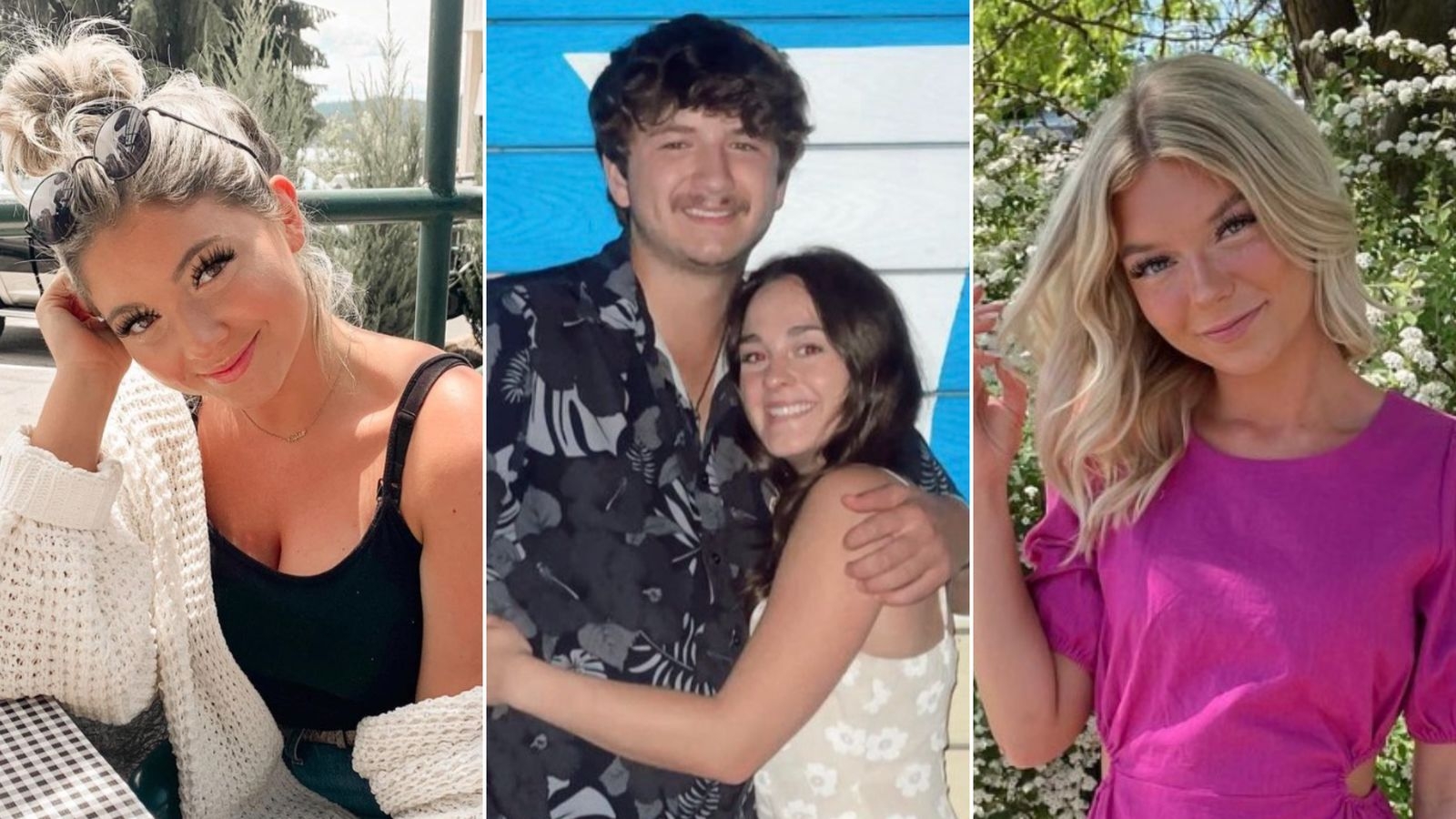
The Bryan Kohberger case continues to capture national attention as a judge recently unsealed transcripts from a closed-door hearing, revealing new details about how investigators identified the suspect in the brutal 2022 Idaho college murders. The unsealed documents shed light on the controversial investigative genetic genealogy (IGG) technique that ultimately led authorities to Kohberger, as well as defense allegations that law enforcement may have used unauthorized databases during their investigation.
More than two years after four University of Idaho students were stabbed to death in an off-campus home in Moscow, Idaho, the legal proceedings against the 30-year-old suspect are intensifying. With a trial expected to begin this summer and prosecutors pursuing the death penalty, every new revelation adds another layer to this complex and haunting criminal case.
The Unsealed Hearing: What We Learned
A judge unsealed the transcript of a hearing that was originally closed to the public, giving the public its first look at testimony surrounding the investigation. The hearing focused on defense attorney Anne Taylor’s attempt to suppress evidence obtained through investigative genetic genealogy,a relatively new forensic technique that combines DNA analysis with traditional genealogical research.
The defense argued that investigators acted inappropriately when using this technique to isolate a suspect. However, the judge ultimately sided with the prosecution, allowing the DNA evidence to remain admissible in court.
How Investigative Genetic Genealogy Works
Investigative genetic genealogy allows authorities to take an unknown suspect’s DNA profile and upload it to public genealogy databases. By analyzing family connections within these databases, investigators can build family trees and identify potential suspects based on their distant relatives who have voluntarily submitted their DNA.
This technique has revolutionized criminal investigations, helping to solve cold cases that remained mysteries for decades. However, it has also raised significant privacy concerns and questions about the boundaries of law enforcement access to genetic information.
The Detective’s Testimony: Kohberger’s Name Emerged Late
Perhaps one of the most striking revelations from the unsealed transcript came from Moscow Police Detective Cpl. Brett Payne, who served as a lead detective in the case. Payne testified that he didn’t hear Bryan Kohberger’s name mentioned until December 19, 2022,more than a month after the November 13, 2022 killings.
“That was a result of investigative genetic genealogy that was being undertaken by the FBI. We had a phone call that evening, and we were told Bryan Kohberger’s name,” Payne testified.
This timeline is significant because it demonstrates how the genetic genealogy technique was central to identifying the suspect, rather than traditional investigative methods alone.
The Probable Cause Affidavit Omission
During cross-examination, Taylor pressed the detective on why the investigative genetic genealogy was not mentioned in the probable cause affidavit for Kohberger’s arrest. Payne acknowledged this was a deliberate decision.
“That decision was a collaborative decision,” the detective responded. “We made that decision in an effort to independently verify the information that was provided to us as a tip from the FBI, in much the same way we would any other tip in law enforcement.”
When Taylor followed up, asking, “As a group effort, you decided to intentionally leave that out of your affidavit?” Payne simply answered, “Yes, ma’am.”
DNA Evidence: The Knife Sheath Connection
The unsealed transcript also provided details about the critical DNA evidence in the case. Rylene Nowlin, an Idaho State Police forensic laboratory manager, testified that DNA testing on parts of a knife sheath detected only a single source.
The lab tested samples from the knife sheath for “touch DNA”,genetic material that can come from skin cells shed when items are touched. According to Nowlin, an analyst swabbed “the entire leather portion of the strap, both top and bottom, and then the underside of the button.” She notably did not swab the top of the button because “that was determined to be the most likely place for fingerprints to be found.”
The Mysterious “Unknown Male B”
One of the most intriguing developments revealed in the transcript involves a blood spot found on a handrail between the second and first floors of the victims’ home. Lab testing linked this blood to someone designated as “Unknown Male B.”
The defense questioned why authorities didn’t immediately pursue identifying Unknown Male B. Payne’s response raised more questions than it answered: “At that point in time, we had already received Mr. Kohberger’s name.”
The detective further explained that entering another DNA profile into CODIS (the nationwide Combined DNA Index System) would have removed the previous profile obtained from the knife sheath. The investigation prioritized the knife sheath DNA, leaving the identity of Unknown Male B unaddressed at the time. It remains unclear from the transcript whether authorities pursued this lead later.
The Path to Identification: From Idaho to Texas
The unsealed details revealed the unusual journey investigators took with the DNA evidence. Idaho State Police had a contract with Houston-based Othram laboratory, which specializes in DNA sequencing combined with genealogy mapping.
Matthew Gamette, the Idaho State Police Laboratory System Director, testified about personally accompanying the DNA sample from Boise down to Houston.
“I accompanied the officer from Boise down to Houston and down to the Othram laboratory,” Gamette said. “I didn’t have possession of the sample, but I was with the investigator that did.”
After the delivery, Gamette remained in contact with Othram about the analysis they were requesting, including specific authorizations for searching certain databases,particularly FamilyTreeDNA, which was one of the few genealogy platforms that permitted law enforcement searches.
Defense Claims of Unauthorized Database Access
Perhaps the most explosive claim from the hearing came from genetic genealogist Leah Larkin, who raised serious questions about how quickly investigators identified Kohberger after Othram discontinued its work.
Othram stopped its work on December 10, 2022, but the FBI took over and reportedly made an identification by December 19, 2022,just nine days later. Larkin found this timeline suspicious.
“That timeline is significant because Othram’s matches were, as in their own words in their report, those matches were low,” Larkin testified. She noted that Othram had recommended testing four brothers to get more information, a process that would have taken considerable time.
“So going from low matches to an ID or at least a tip, whatever they were calling it, within nine days, that right there told me they had gone into a database they were not supposed to be in,” Larkin asserted.
The Genealogy Database Landscape
Understanding the database controversy requires knowing which genealogy companies permit law enforcement searches. According to Larkin’s testimony:
- FamilyTreeDNA and GEDMatch PRO are the only two databases of significant size that allow forensic investigative genetic genealogy searching
- Ancestry, 23andMe, and MyHeritage all explicitly forbid law enforcement searches
Despite these prohibitions, Larkin testified that the FBI eventually “admitted they had uploaded to MyHeritage”,a database that is supposed to be off-limits to law enforcement. She also referenced seeing “screenshots from GEDMatch” in email communications, though standard GEDMatch (as opposed to GEDMatch PRO) does not allow searches for criminal investigations.
CNN reached out to the FBI for a response to these accusations, but prosecutors did not directly address the claim during the hearing.
What’s Next for the Bryan Kohberger Case
Kohberger’s murder trial is expected to begin in August and is anticipated to last several months. Prosecutors have made clear they will seek the death penalty if Kohberger is convicted of the murders of Madison Mogen, Kaylee Goncalves, Xana Kernodle, and Ethan Chapin.
A wide-ranging gag order remains in effect, prohibiting prosecutors, defense lawyers, and attorneys for victims’ families and witnesses from making public statements beyond what is already in the public record.
The Families Wait for Justice
While the legal proceedings continue, the families of the four victims remain in a painful state of limbo. The Goncalves family expressed relief following the judge’s decision not to suppress the genetic genealogy evidence.
“We are thankful to the Court for a timely decision and appreciate the work prosecution has put in thus far,” the family posted on Facebook. “In the big picture of life, justice is just moments away.”
Broader Implications for Genetic Privacy and Criminal Justice
The Bryan Kohberger case has implications that extend far beyond the tragedy in Moscow, Idaho. The defense’s allegations about unauthorized database usage highlight the ongoing tension between cutting-edge forensic techniques and individual privacy rights.
As investigative genetic genealogy becomes more common in criminal cases, courts and lawmakers will need to grapple with questions about:
- The ethical boundaries of law enforcement access to genetic databases
- Transparency in how suspects are identified through family connections
- The rights of individuals who never consented to having their DNA used in criminal investigations
- Standards for admitting IGG evidence in court proceedings
Regardless of the ultimate outcome, this case has already shaped the conversation around genetic privacy and law enforcement’s investigative tools.
Conclusion
The unsealed transcript from the Bryan Kohberger hearing has provided the public with unprecedented insight into one of the most high-profile murder cases in recent memory. From the late discovery of Kohberger’s name through genetic genealogy to the unresolved mystery of “Unknown Male B” and serious allegations of unauthorized database access, the details paint a complex picture of modern criminal investigation.
As the August trial approaches, the families of the four slain University of Idaho students continue their long wait for closure. The Bryan Kohberger case stands as both a testament to the evolving power of forensic science and a cautionary tale about the boundaries that must be established as these technologies become more sophisticated. Whatever the final verdict, the proceedings will undoubtedly influence how genetic evidence is gathered, presented, and challenged in courts across the country for years to come.