
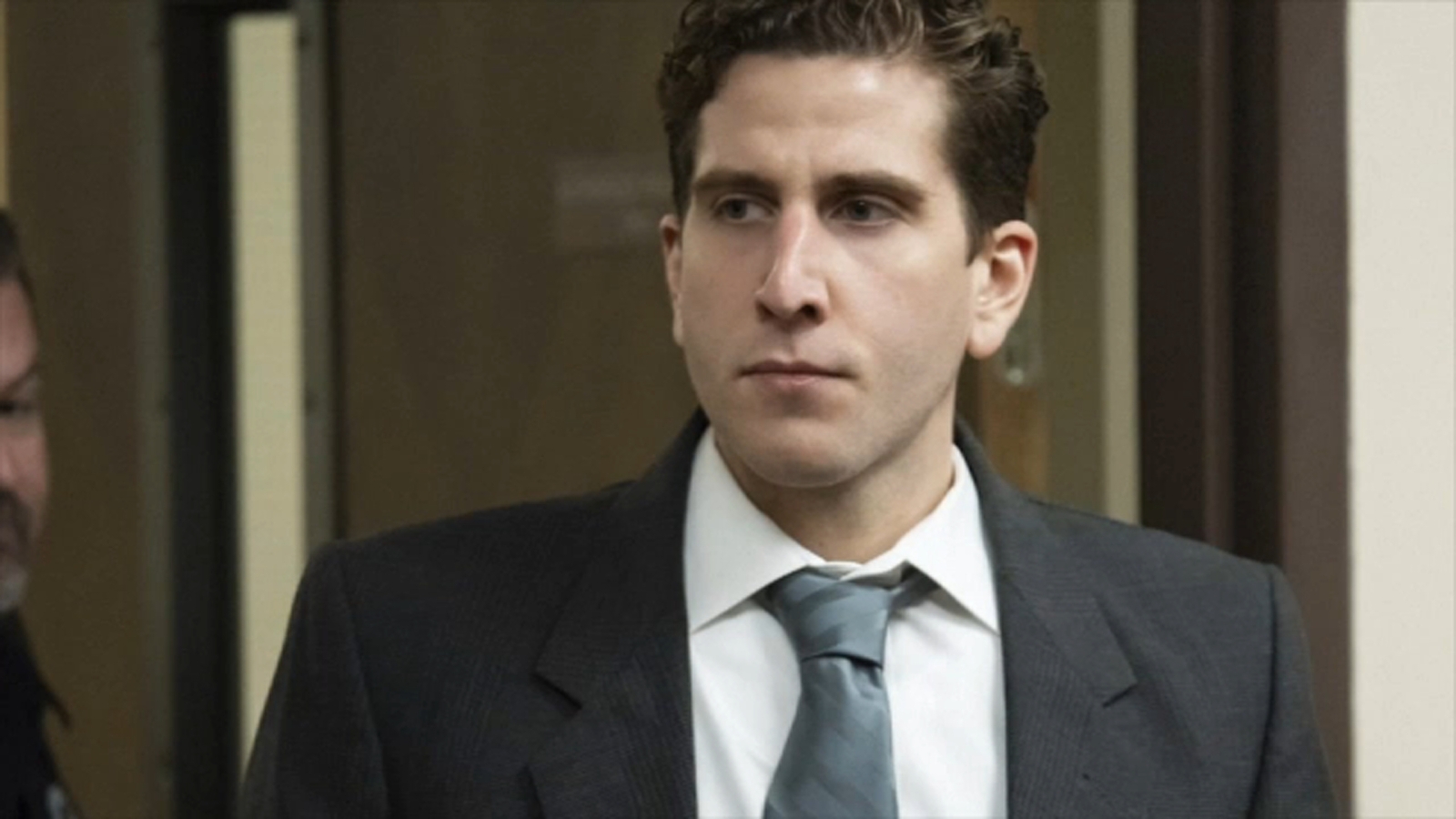
As the August trial date draws near in the Bryan Kohberger alibi case, a fierce legal showdown has erupted over what evidence the defense can present to the jury. Prosecutors in the Idaho college murders case have filed a new motion seeking to dramatically restrict the alibi defense, arguing that Kohberger’s legal team has had nearly two years to produce supporting evidence and has failed to do so. This latest filing sets the stage for a pivotal pretrial hearing that could reshape the entire defense strategy.
Background: The Idaho College Murders Case
Bryan Kohberger, a former Washington State University graduate student studying criminology, stands accused of the brutal November 2022 stabbing deaths of four University of Idaho students,Kaylee Goncalves, Madison Mogen, Xana Kernodle, and Ethan Chapin. The victims were found at an off-campus residence in Moscow, Idaho, in a case that captured national attention for its shocking violence and the lengthy investigation that preceded an arrest.
Kohberger was taken into custody on December 30, 2022, at his family home in Pennsylvania. He was formally charged with four counts of murder, and a not-guilty plea was entered on his behalf in May 2023. Now 29 years old, Kohberger has consistently maintained his innocence through his attorneys, and his legal team has signaled from early in the proceedings that an alibi defense would play a central role in his trial.
The Alibi Defense: What Kohberger’s Team Is Arguing
According to court filings and statements from his attorneys, Kohberger’s alibi centers on a simple claim: he was driving alone, stargazing, on the night the four students were killed. His defense team has characterized him as someone with a documented fascination with the cosmos, a hobby they argue placed him far from the crime scene during the crucial overnight hours when the murders occurred.
This Bryan Kohberger alibi, however, has been notably thin on corroborating details. The defense has not specified a particular route, location, or timeframe for the alleged drive. Nor have they produced any witnesses who can independently verify that Kohberger was on the road that evening. For prosecutors, this lack of specificity is precisely the problem.
The Prosecution’s Argument to Limit Alibi Evidence
In their recent motion, the state made a pointed request: if Kohberger’s defense team intends to argue an alibi, the judge should bar them from presenting any evidence beyond Kohberger’s own testimony. Prosecutors contend that the defense has had approximately 20 months to disclose the substance of the alibi and to provide the materials required to support it, yet they have not done so.
As ABC News legal contributor Brian Buckmire explained, the core of the prosecution’s position is straightforward. The defense is essentially claiming that Bryan Kohberger was out driving in no specific area or place, and they have presented no witness to confirm that account. If the defense wants to raise an alibi argument at trial, the prosecution insists it should be limited to whatever Kohberger himself says from the witness stand,no corroborating witnesses, no phone records, no expert testimony.
This represents a significant tactical move. By narrowing the evidentiary channel, prosecutors would essentially force Kohberger to either testify about his own whereabouts on the night of the murders or abandon the alibi entirely. Either outcome could work in the state’s favor at trial.
Idaho College Murders: Why This Battle Matters
The alibi dispute is one of the most consequential pretrial issues in the Idaho college murders case. Defense attorneys typically build alibis around independently verifiable facts,cell phone location data, surveillance footage, credit card receipts, eyewitness accounts. Without those elements, an alibi often depends entirely on the defendant’s credibility, which puts the defense in a vulnerable position.
If the court grants the prosecution’s motion, Kohberger’s team will face a difficult choice: put their client on the stand to explain his whereabouts that night, or pivot to a different defense theory altogether. Each option carries significant risk. A defendant who testifies opens themselves up to cross-examination, while abandoning an alibi can leave the jury wondering what the defendant was hiding.
The ruling on this motion could also affect jury perception well before deliberations begin. Legal observers have noted that how a judge handles pretrial evidentiary disputes often signals to jurors which arguments deserve weight and which do not.
The Psychiatric Evaluation Dispute
The prosecution’s filing wasn’t limited to the alibi question. In a separate but related request, prosecutors are also asking the court to bar Kohberger’s defense team from introducing any psychiatric evaluations into evidence. This request came after summaries surfaced showing the defense had filed a motion to strike the death penalty based on autism spectrum disorder.
It remains unclear whether Kohberger has actually been diagnosed with autism spectrum disorder or whether his attorneys are simply seeking a diagnosis as part of their strategy. CNN reported that the full court documents were not publicly available online at the time of the initial reporting, leaving many questions unanswered.
The intersection of the autism motion and the alibi evidence dispute is notable. Defense teams sometimes use psychiatric evidence to support alternative theories of the case, and if the prosecution succeeds in blocking such evaluations, it could remove another potential avenue for Kohberger’s attorneys to explain or contextualize his behavior on the night of the murders.
The “Alternative Suspects” Question
In yet another component of the prosecution’s omnibus motion, the state is asking the judge to prevent the defense from referencing any “alternative” culprits unless the defense can produce specific evidence connecting those individuals to the homicides. This is a common evidentiary gate in criminal trials,judges typically prohibit defendants from pointing fingers at other suspects without substantial proof.
For Kohberger’s defense team, this restriction could prove limiting if they had planned to suggest that someone else committed the murders. Without the ability to introduce alternative theories supported by credible evidence, the defense would be forced to focus more narrowly on their client’s claimed innocence rather than on redirecting suspicion elsewhere.
What’s Next for the Bryan Kohberger Trial
With the August trial date approaching, the court will need to rule on the prosecution’s motion in the coming weeks. That ruling will shape the contours of the defense strategy and likely determine whether Kohberger himself takes the stand. Legal analysts will be watching closely to see how the judge balances the defendant’s right to present a defense against the prosecution’s interest in preventing speculative or unsupported theories from reaching the courtroom.
The Bryan Kohberger alibi dispute is just one of many pretrial battles in this high-profile case, but it may be among the most consequential. The outcome will influence not only what evidence the jury hears but also how the defense positions its most important arguments in a case that has drawn sustained public interest since the four students were killed.
As new details continue to emerge from sealed filings and court transcripts, the legal community and the public alike will be paying close attention. The Idaho college murders case has already produced numerous unexpected turns, and the fight over the Bryan Kohberger alibi promises to be one of the defining legal skirmishes before the case ever reaches a jury.
Conclusion
The latest motion from prosecutors represents a calculated attempt to narrow the defense’s room to maneuver as trial preparation intensifies. By pushing to limit the Bryan Kohberger alibi to his own testimony, barring psychiatric evaluations, and restricting references to alternative suspects, the state is working to keep the focus squarely on the evidence it has already gathered. For Kohberger’s defense team, the coming weeks will be critical as they decide how to adapt their strategy in response to these challenges and prepare for what is shaping up to be one of the most closely watched criminal trials in recent memory.