
The boulder firebombing sentencing of Mohamed Sabry Soliman has brought a measure of closure to a community still reeling from one of the most shocking acts of political violence in Colorado’s recent history. In a Boulder courtroom, Soliman was sentenced to life in prison without the possibility of parole after pleading guilty to charges stemming from a 2025 firebombing attack on a peaceful demonstration that killed one woman and injured a dozen others. The case has since drawn national attention, raising difficult questions about hate crime law, immigration enforcement, and the boundaries between political opposition and violent extremism.
Background of the Boulder Firebombing Attack
On a quiet Sunday afternoon last June, residents and activists gathered at the Pearl Street pedestrian mall in downtown Boulder, Colorado, for a weekly demonstration calling for the release of Israeli hostages held in Gaza. The crowd of approximately twenty people represented a mix of ages and backgrounds, united by a single cause. The city of Boulder, home to the University of Colorado and roughly 100,000 residents northwest of Denver, had no reason to expect that this gathering would end in tragedy.
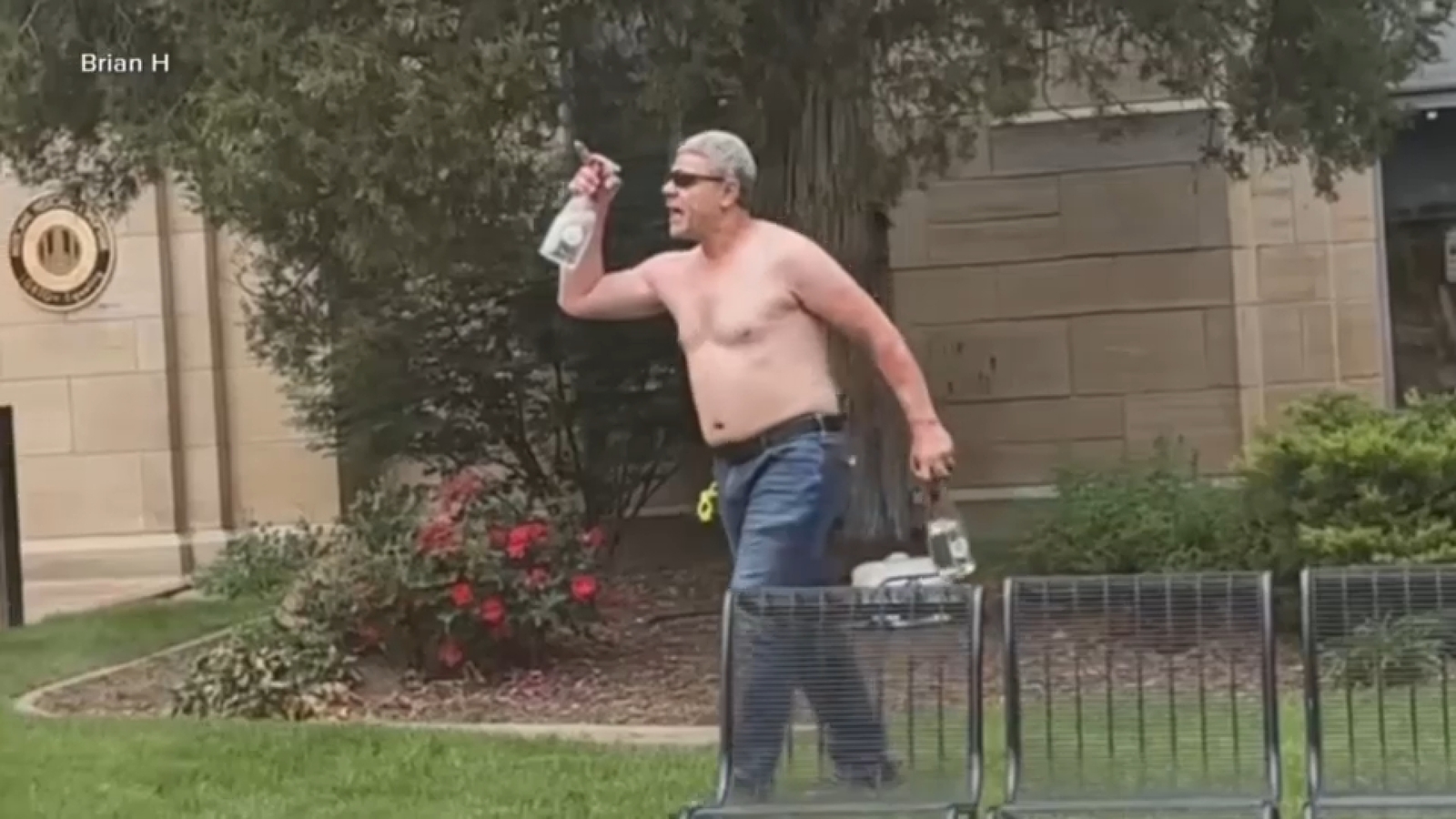
According to investigators, Mohamed Sabry Soliman,an Egyptian national living in the United States illegally,approached the demonstrators and hurled two Molotov cocktails into the group while shouting “Free Palestine!” He had allegedly prepared more than two dozen incendiary devices for the attack and told authorities afterward that he intended to kill every person at the demonstration. Investigators say the assault was the culmination of a year-long planning effort, motivated by what Soliman described in interviews as a desire “to kill all Zionist people.”
The Human Toll: Karen Diamond and Twelve Others
The firebombing attack left an indelible scar on the Boulder community. The most devastating loss was Karen Diamond, an 82-year-old woman who suffered critical injuries during the assault. Diamond survived for more than three weeks in the hospital, enduring what her sons later described as “indescribable pain” and “a fate worse than death.” Her death prompted her children, Andrew and Ethan Diamond, to deliver a heart-wrenching victim impact statement during the sentencing hearing.
“He should not be allowed to see his family again, since he is responsible for our mother never seeing her family again,” Diamond’s sons told the court through a prosecutor. Their words captured the incomprehensible grief of losing a loved one to an act of seemingly random political violence.
Beyond the fatality, thirteen people were physically injured in the attack. An additional sixteen individuals were classified as victims because they were close enough to have been harmed, bringing the total number of identified victims to twenty-nine. Even a dog sustained injuries, leading prosecutors to file an animal cruelty charge against Soliman. A physician who witnessed the attack and attempted to help Diamond later described in court the agonizing experience of recognizing that his patient would not survive,a statement that laid bare the helplessness so many bystanders felt in the chaos that day.
Community Leaders Respond
Boulder Mayor Pro Tem Tara Winer revealed that some of her closest friends were among those affected by the attack. In a statement, Winer called the assault “horrific” and noted that “their lives were changed forever.” Her remarks reflected the deep personal connections that made this attack so uniquely painful for the Boulder community, where the tight-knit nature of civic life meant few residents remained untouched by the tragedy.
Soliman’s Court Statements and Apology
Throughout the sentencing hearing, Soliman stood with his head bowed, looking down at the desk before him. When he finally spoke, he did so through an interpreter for nearly half an hour, delivering a lengthy statement that included expressions of remorse and condolences to the victims. “There are no words that can express my sadness for her passing,” Soliman said of Diamond’s death.
However, Soliman’s apology was accompanied by a chilling and unexpected request. He urged federal prosecutors pursuing hate crime charges against him to seek the death penalty, stating that he was not asking for leniency. In a statement that echoed through the courtroom, Soliman claimed that his actions were not rooted in his religious faith. “If I went back, I would not have done this as this is not according to the teaching of Islam,” he said. “What I did came out of myself and only myself.”
This dual presentation,expressing sorrow while simultaneously inviting the most severe punishment available,left many observers searching for meaning. Some viewed it as an attempt at spiritual reconciliation, while others questioned whether Soliman truly grasped the magnitude of suffering he had caused.
Federal Hate Crime Charges and the Death Penalty Question
While the boulder firebombing sentencing addressed state-level convictions, a parallel federal case continues to move through the courts. Soliman has pleaded not guilty to federal hate crime charges alleging that he targeted the victims because of their perceived or actual connection to Israel. Federal prosecutors are now weighing whether to seek capital punishment in that case, a decision that could carry significant implications for both the legal proceedings and the broader national conversation about politically motivated violence.
Soliman’s federal defense team has portrayed the attack as an aberration from their client’s prior conduct, describing it as “profoundly inconsistent” with his character. They have emphasized that the assault “came as a total shock to his family,” pointing to a life that, until that summer afternoon, appeared unremarkable to those around him.
A Profile of the Accused
At the time of the attack, Soliman was living in a modest two-bedroom apartment in Colorado Springs with his family, approximately 97 miles from Boulder. He had arrived in the United States from Kuwait in 2022 with his wife and their five children, taking on a series of low-paying jobs to make ends meet. The couple divorced in April of the following year. Despite these personal challenges, investigators allege that Soliman spent at least a year methodically planning an act of violence motivated by ideological hatred, stockpiling Molotov cocktails and selecting his target with care.
After his arrest, Soliman reportedly told police he became frightened during the attack because he had never harmed anyone before. The statement has done little to reassure victims or community members that the threat has passed.
The Legal Debate: Hate Crimes, Zionism, and Political Belief
One of the most legally complex aspects of the boulder firebombing sentencing involves the question of whether Soliman’s stated motivation,opposition to Zionism, the political movement supporting a Jewish state in Israel,qualifies as a hate crime under federal law. Soliman’s federal defense attorneys have argued that an attack motivated by political views does not meet the legal definition of a hate crime, even when those views are deeply objectionable to many.
This argument has thrust the case into a broader national debate about the boundaries between protected political speech and prosecutable bias-based violence. Federal prosecutors counter that the victims were specifically targeted because of their connection to Israel, a characteristic that they argue falls under the protection of federal hate crime statutes. The outcome of this legal battle could set important precedents for how courts handle ideologically motivated attacks in the future.
Immigration Aftermath: The Family’s Deportation Battle
The legal saga has extended beyond Soliman himself to encompass his family. His wife, Hayam El Gamal, and their five children spent ten months in immigration detention following the attack. An immigration appeals court ultimately dismissed their case to remain in the United States and issued a deportation order, but U.S. District Judge Fred Biery in San Antonio intervened, ordering the family’s release on the condition that El Gamal and her oldest child, who is 18, wear electronic monitoring devices.
Soliman’s attorneys have sought to block the family’s deportation until a judge determines whether their testimony or presence might be required for proceedings in his federal case. The situation has raised difficult humanitarian questions about how the U.S. immigration system should treat the families of individuals accused of serious crimes, particularly when children are involved.
Moving Forward: Justice, Healing, and Vigilance
The boulder firebombing sentencing represents only the beginning of a long legal and emotional journey for everyone touched by the tragedy. While the life sentence without parole brings a degree of accountability, the victims and their families continue to grapple with permanent loss. The Diamond family will never see their mother again, and the dozen other survivors carry both physical and psychological wounds that may never fully heal.
For the broader Boulder community, the attack served as a stark reminder that political violence can strike anywhere, even in cities known for their tranquility and progressive values. The weekly demonstration at Pearl Street Mall resumed in the weeks following the attack, but with heightened security and a community forever changed by the events of that summer afternoon.
Conclusion
The case of Mohamed Sabry Soliman stands as a sobering testament to the consequences of allowing ideological hatred to escalate into violence. From the boulder firebombing sentencing that concluded his state-level prosecution to the ongoing federal proceedings that may yet bring additional punishment, the legal system has worked to deliver accountability for an act that shocked a community and a nation. Yet beyond the courtrooms and the headlines, the real story lies in the lives forever altered by an afternoon of senseless brutality,from the Diamond family mourning an irreplaceable matriarch, to the survivors learning to live with trauma, to a community determined to honor the memory of those harmed by refusing to let fear dictate its future.