
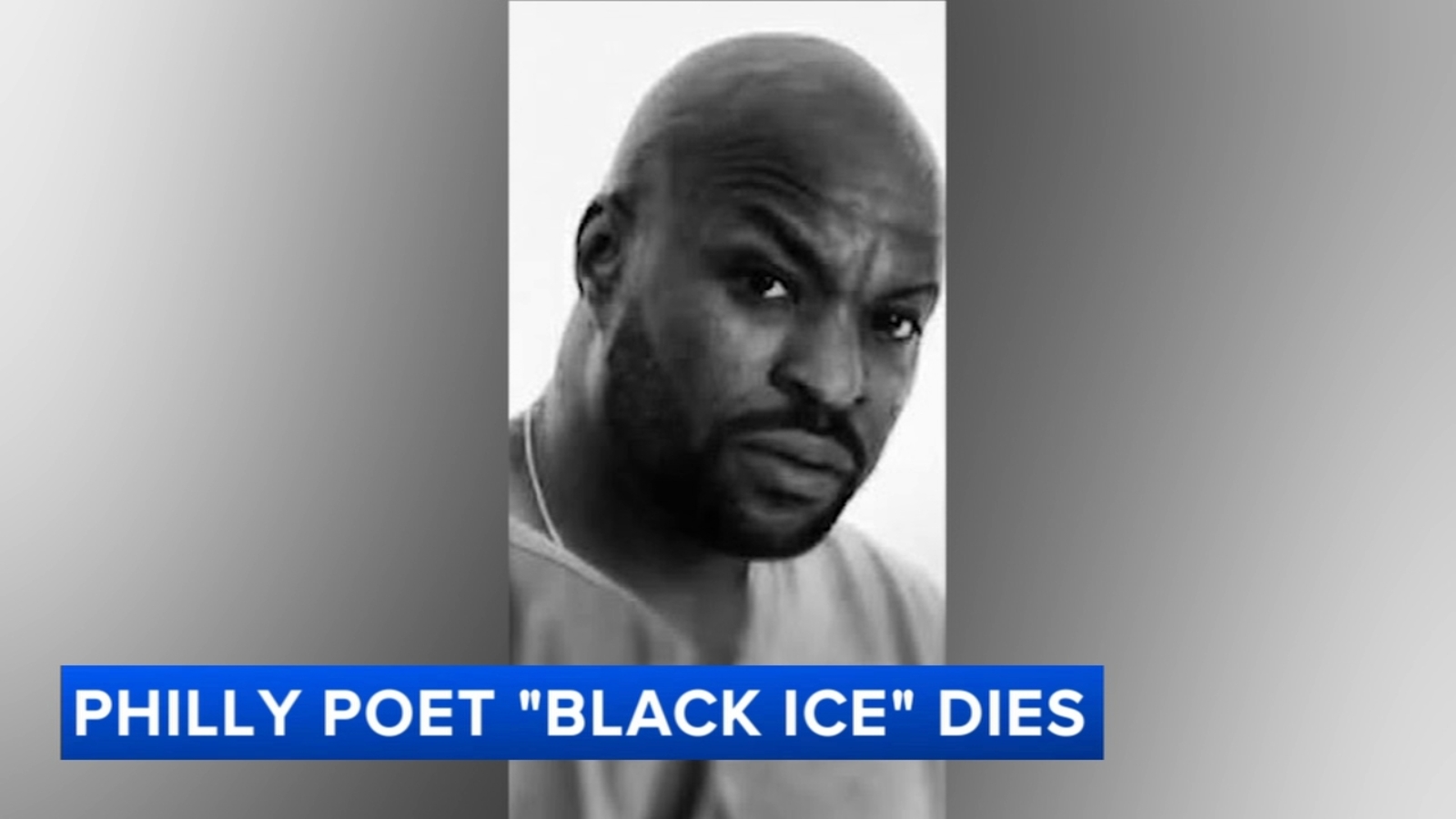
The hip-hop and spoken-word community is mourning the loss of one of its most distinctive voices. Lamar Manson, widely celebrated as the black ice poet, passed away at the age of 54, surrounded by family and loved ones. Known for his commanding stage presence, razor-sharp lyricism, and an unmatched ability to blend street poetry with theatrical performance, Black Ice leaves behind a legacy that helped redefine what it means to be a poet in the modern era. His death marks the end of a remarkable chapter in American literary and artistic history, one that bridged the worlds of hip-hop culture, theater, television, and beyond.
As the first spoken-word artist ever signed to Def Jam Records, Black Ice shattered conventional expectations about where poetry could live and who could deliver it. His groundbreaking journey from Philadelphia’s vibrant open-mic scene to national television and the bright lights of Broadway remains one of the most inspiring trajectories in contemporary performance art.
The Rise of a Spoken Word Pioneer
Philadelphia Roots and Early Influences
Lamar Manson was born and raised in Philadelphia, a city that has long served as a fertile incubator for poetic talent. From an early age, he gravitated toward language, rhythm, and storytelling, eventually adopting the moniker that would define his career. The black ice poet identity wasn’t merely a stage name,it represented a philosophy of cutting through barriers with crystalline clarity and undeniable force. Philadelphia’s rich tradition of spoken word, with its deep ties to both African American literary movements and the city’s legendary hip-hop scene, provided the perfect backdrop for Manson’s evolution as an artist.
During his formative years, Black Ice honed his abilities in the city’s numerous poetry venues, open-mic nights, and community spaces. These early performances allowed him to develop the distinctive vocal delivery and theatrical flair that would later captivate audiences on much bigger stages. His work consistently explored themes of urban life, identity, social justice, and the African American experience, drawing from his own life while speaking to universal struggles and triumphs.
Breaking Barriers at Def Jam Records
In a move that sent shockwaves through both the music and literary worlds, Black Ice became the first spoken-word poet signed to Def Jam Records,the legendary label co-founded by Russell Simmons and Rick Rubin that had already launched icons like LL Cool J, Public Enemy, and the Beastie Boys. This historic signing validated spoken-word poetry as a legitimate commercial art form and opened doors for countless artists who followed in his footsteps.
As the pioneering black ice poet at Def Jam, Manson proved that poetry could compete on the same platform as the biggest names in hip-hop. His recordings demonstrated that the rhythmic and narrative power of verse could stand alongside traditional rap, even as they maintained their own distinct identity. This crossover success laid important groundwork for the spoken-word explosion that would follow in subsequent decades.
A Star of Def Poetry Jam
Television Success and Cultural Reach
Black Ice’s most visible platform came through his celebrated appearances on HBO’s “Def Poetry Jam,” the groundbreaking television series produced by Russell Simmons and Stan Lathan. The show, which ran for multiple seasons, brought spoken-word performance to mainstream audiences in ways that had never been possible before. As one of the show’s standout performers, the black ice poet delivered electrifying performances that showcased both his technical skill and emotional depth.
His television work earned him critical acclaim and a devoted national following. Viewers who might never have set foot in a poetry venue found themselves captivated by his commanding presence and the raw power of his words. Through the small screen, Black Ice introduced millions of Americans to the vitality of contemporary spoken-word poetry, helping to fuel a renaissance of verse that continues today.
From Screen to Stage: Broadway Glory
The transition from television to theater was a natural progression for an artist of Manson’s caliber. He became a featured performer in the Broadway production of “Def Poetry Jam,” which transferred the show’s success from HBO to the Great White Way. Performing in the same Broadway theaters that had hosted generations of theatrical legends, the black ice poet brought his unique brand of urban verse to entirely new audiences.
His Broadway work earned him recognition from some of the most prestigious awarding bodies in entertainment. The combination of his television and stage accomplishments resulted in honors that few artists in any genre ever achieve,an extraordinary testament to his singular talent and the growing acceptance of spoken-word as a legitimate theatrical art form.
Awards and Recognition
Black Ice’s trophy case told the story of an artist who had conquered virtually every major venue in American entertainment. He was a recipient of the prestigious Tony Award, the gold standard for theatrical excellence. He also earned a Peabody Award, one of broadcasting’s highest honors, recognizing his contributions to television programming that served the public interest. Additionally, his work was celebrated with an Emmy Award, further cementing his status as a multifaceted entertainer whose talents transcended any single medium.
The combination of these three awards,Tony, Peabody, and Emmy,placed Black Ice in an elite category of artists who had achieved recognition across the full spectrum of performance platforms. For a spoken-word poet from Philadelphia, this trifecta represented not just personal triumph but also a victory for the entire genre, demonstrating that poetry could command the same respect as any other form of artistic expression.
Legacy and Cultural Impact
The cultural footprint of the black ice poet extends far beyond his own performances. By being the first poet signed to Def Jam Records, he created a template that other literary artists would follow. He demonstrated that the boundaries between hip-hop, spoken word, theater, and television were far more permeable than the industry had previously acknowledged. His success proved that audiences would embrace poetry when it was presented with the same production values and promotional muscle typically reserved for musical acts.
His influence can be seen in the thriving spoken-word scene that exists today, with countless performers building upon the foundation he helped establish. Poetry slams, open-mic events, and verse-focused performances have all benefited from the legitimacy that artists like Black Ice brought to the form. Younger generations of poets who may never have heard him perform still benefit from the infrastructure he helped create.
Final Farewell
Lamar Manson’s passing at the relatively young age of 54 has prompted an outpouring of tributes from across the entertainment and literary worlds. Friends, colleagues, and fans have shared memories of his generosity, his mentorship of younger artists, and the sheer force of his live performances. Many have recalled specific lines and moments that stuck with them for years,a testament to the lasting power of his words.
He died surrounded by loved ones, a small consolation for those mourning his loss but a reminder that even the most powerful voices need the comfort of family and community. As news of his death spread through Philadelphia and beyond, the magnitude of his contributions became clearer with each shared memory and archived performance.
Conclusion
The world has lost a true original in Lamar “Black Ice” Manson, an artist who refused to accept the limitations others placed on poetry and performance. From Philadelphia’s poetry cafés to the stages of Broadway, from independent recordings to his historic Def Jam signing, from HBO’s groundbreaking series to award ceremonies celebrating the highest achievements in entertainment, the black ice poet charted a course that inspired countless others to follow. His Tony, Peabody, and Emmy Awards stand as permanent reminders of what is possible when talent meets opportunity and relentless dedication. While his voice has now fallen silent, the words he delivered and the doors he opened will continue to resonate for generations to come. Philadelphia has lost one of its own, and the entire world of spoken-word poetry has lost a legend whose impact cannot be overstated.