
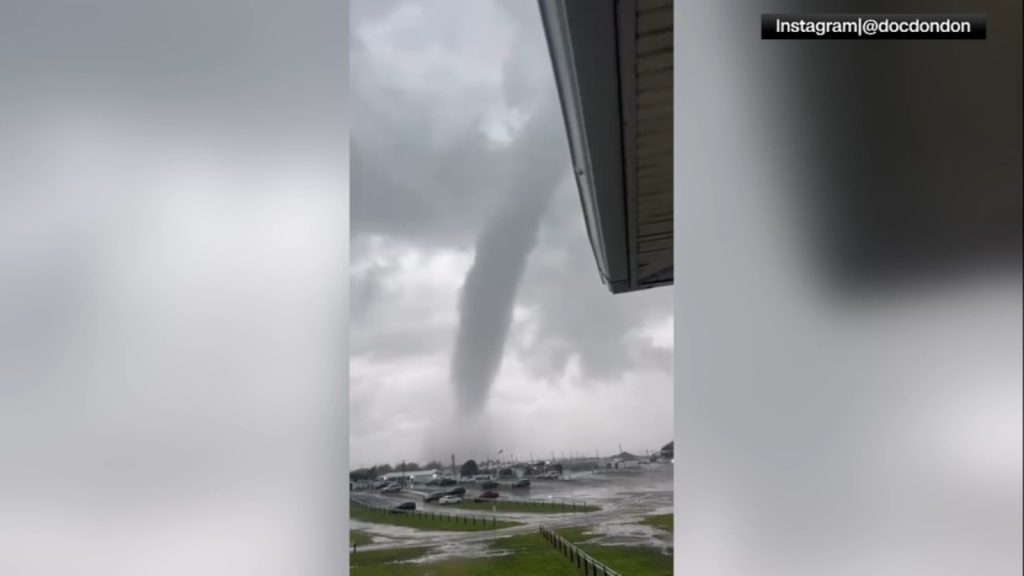
The Atlantic Beach tornado that touched down along Long Island’s South Shore on Thursday evening has been officially confirmed by the National Weather Service, leaving behind a dramatic trail of destruction that flattened more than thirty cabanas at a beloved Nassau County beach club. The powerful storm swept through the coastal community between 6:30 and 7 p.m., transforming a peaceful summer evening into a terrifying ordeal for over one hundred guests gathered at the Sun and Surf Beach Club. As investigators continue to assess the full scope of the damage, residents and local officials are working together to recover from one of the most unexpected severe weather events to hit the area in recent memory.
How the Atlantic Beach Tornado Formed
Meteorologists determined that the destructive event began as a waterspout spinning offshore before intensifying and crossing onto land as a true Long Island tornado. According to the National Weather Service, radar data, eyewitness video, and field damage assessments all pointed to the same conclusion: a rotating column of wind and water moved ashore along the far western edge of Atlantic Beach, traveling roughly parallel to the southeastern shoreline of the Rockaways near the mouth of East Rockaway Inlet.
Striking footage captured at the time showed the swirling vortex approaching the coastline, providing forecasters with critical visual evidence that helped confirm what residents already suspected. The NWS also identified a second circulation on radar approximately one mile farther east, near the Atlantic Beach and Five Towns area, though no associated Nassau County storm damage had been reported as of Friday morning. Investigators are still examining whether a second waterspout may have briefly made landfall.
Part of a Broader Severe Weather Pattern
The Atlantic Beach tornado was not an isolated event. It formed within a larger storm system that battered the entire Northeast on Thursday evening. The same weather pattern produced a confirmed tornado in Dover, Delaware, where crews spent Friday morning clearing debris, and a funnel cloud sighting in Egg Harbor Township, New Jersey. The widespread nature of this severe weather Northeast event highlighted just how unstable atmospheric conditions had stretched across multiple states simultaneously.
Destruction at the Sun and Surf Beach Club
The most significant damage from the Atlantic Beach tornado occurred at the Sun and Surf Beach Club, a Nassau County institution that has served as a gathering place for generations. When the twister struck, more than one hundred guests were inside the property. More than thirty occupied cabanas were damaged or completely destroyed as violent winds tore through the grounds, scattering furniture, umbrellas, and structural debris in every direction.
Eyewitnesses described a scene of pure chaos as the storm moved through. Board member Richard Accarino, who was inside the club during the tornado, said the experience was nothing short of harrowing.
“The noise was frightening. You could hear the wind, it was extremely violent,” Accarino recounted, describing how the entire building began to shift and tremble as windows were pounded and outdoor furniture flew through the air.
Patrons and staff scrambled toward interior rooms, desperate to put as many walls as possible between themselves and the shattered glass of the cabanas destroyed beach wreckage. Club management had little warning before the storm arrived, leaving everyone inside to rely on instinct and quick thinking to find shelter.
Silver Point Beach Club Also Affected
Just down the shoreline, the Silver Point beach club also sustained damage during the same tornado event. Nassau County Executive Bruce Blakeman confirmed Thursday night that both clubs were being assessed for structural harm, which prompted the declaration of a local state of emergency and the activation of the county’s Emergency Operations Center.
Emergency Response and the Aftermath
The Inwood Fire Department received a call reporting severe wind damage at the Sun and Surf Beach Club around 7:15 p.m., roughly forty-five minutes after the waterspout first came ashore. First responders immediately launched a search of the damaged cabanas to ensure that no guests or staff members had been trapped beneath the wreckage. Miraculously, only one minor injury was reported , a head injury that did not require hospitalization.
Despite the scale of the destruction, no civilians or emergency personnel suffered serious harm. That outcome stands as a small mercy given the intensity of the winds and the number of people who were exposed to the elements when the tornado hit.
- Time of touchdown: Between 6:30 and 7 p.m. Thursday
- Location: Far western end of Atlantic Beach, Nassau County
- Structures damaged: More than thirty cabanas at Sun and Surf Beach Club
- People on-site during the storm: More than one hundred guests
- Reported injuries: One minor head injury
Power Outages and Widespread Flooding
Beyond the immediate corridor of tornado damage, the storm system inflicted broader chaos across Long Island’s South Shore. Approximately two thousand customers on Long Island remained without electricity early Friday morning as utility crews worked to restore service. Flooding was reported in several low-lying communities, and some motorists found themselves stranded in vehicles surrounded by rising water before being rescued by emergency crews.
The combination of flooding, high winds, and downed power lines created hazardous conditions that persisted well into the following day, complicating the work of damage assessment teams and keeping first responders busy through the night.
Ongoing Investigation by the National Weather Service
Forecasters with the National Weather Service have made clear that their NWS tornado confirmation work is far from finished. The agency is continuing to review incoming damage reports in coordination with local emergency management officials and expects to release additional information regarding the confirmed Atlantic Beach tornado and any other damage paths discovered across the region.
Investigators will likely assign a rating on the Enhanced Fujita Scale to determine the tornado’s wind speed and intensity once all evidence has been gathered. That classification will provide crucial context for residents, insurers, and municipal planners looking to understand both the power of the storm and how to better prepare for similar events in the future.
What Residents Should Know
Local authorities urged residents in storm-affected areas to remain cautious as cleanup operations got underway. Downed power lines, unstable structures, and standing water all posed ongoing risks even after the skies cleared. Officials also encouraged anyone with photos, video, or firsthand observations of the tornado to share their information with the National Weather Service, as those details help meteorologists refine their understanding of the storm’s behavior.
Safety Recommendations for Coastal Communities
- Monitor local weather alerts and NWS warnings, especially during summer severe weather seasons
- Identify the nearest interior room or designated shelter area in any beachside building you visit
- Stay away from windows and exterior walls when severe weather approaches
- Never attempt to drive through flooded roadways , turn around and find an alternate route
- Report downed power lines and structural damage to local emergency services immediately
Looking Ahead for Atlantic Beach
For the tight-knit community of Atlantic Beach, the days ahead will center on rebuilding and recovery. The Sun and Surf Beach Club has not yet announced a reopening timeline, and the full scope of the structural damage will take time to fully evaluate. Neighbors, local businesses, and county officials are coordinating to support those affected and restore the popular gathering spot that has served the South Shore community for generations.
A Reminder of Coastal Vulnerability
The confirmed Atlantic Beach tornado serves as a powerful reminder that even coastal communities far from the traditional boundaries of “Tornado Alley” remain vulnerable to sudden, violent weather. Waterspouts and tornadoes that form over open water can intensify rapidly and cross onto land with little warning, making situational awareness and preparedness essential for anyone living along the shoreline. As investigators continue to piece together the details of Thursday’s storm, residents are left to grapple with the immediate aftermath while holding onto the knowledge that, by sheer fortune, no one lost their life when the tornado roared ashore.
While the cleanup will take weeks and the memories of that frightening evening will linger far longer, the resilience of this Long Island community has already begun to shine through. From the quick-thinking staff at the Sun and Surf Beach Club to the first responders who searched the wreckage through the night, the story of this storm is ultimately one of survival , and a wake-up call for everyone along the coast to take severe weather seriously, no matter the season.