
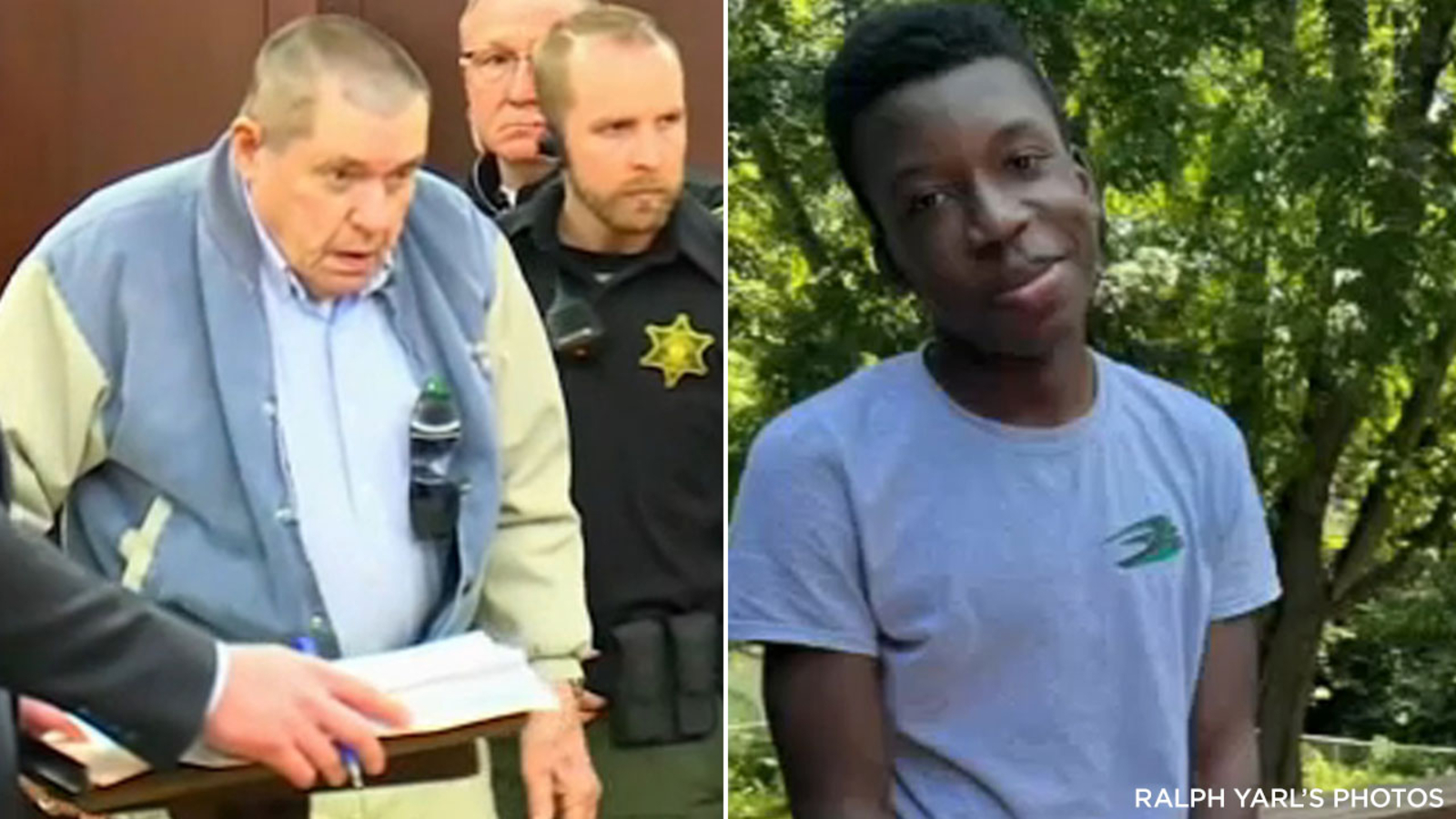
The case surrounding the Andrew Lester death has come to an unexpected and deeply controversial conclusion. Lester, an 86-year-old Kansas City man, passed away while awaiting sentencing after pleading guilty to second-degree assault for the shooting of Ralph Yarl, a Black teenager who mistakenly arrived at the wrong address. The announcement, made on a Wednesday by Clay County Prosecuting Attorney Zachary Thompson, has left many questions about justice, accountability, and the trauma inflicted on a young survivor who must now carry the weight of this tragedy for the rest of his life.
Clay County Prosecuting Attorney Zachary Thompson expressed condolences to Lester’s family while noting the conclusion of legal proceedings. Thompson acknowledged that Lester had accepted responsibility through his guilty plea, but the manner in which this case unfolded has drawn sharp criticism from the Yarl family, civil rights advocates, and community members who followed the case closely.
The Shooting That Started Everything
To understand the gravity of the Andrew Lester death and its implications, it is essential to revisit the events of April 13, 2023. Ralph Yarl, then just 16 years old, set out on what should have been an ordinary errand: picking up his twin brothers from a play date. However, Yarl mistakenly went to the wrong address in Kansas City, an error that would change his life forever.
When Yarl rang the doorbell, Lester, who is white, opened the door and shot the teenager in the head and right arm. According to a probable cause statement, Lester claimed he believed someone was attempting to break into his home. The shooting left Yarl with a traumatic brain injury and deep emotional scars that continue to affect him today.
In a powerful interview with “Good Morning America” co-anchor Robin Roberts in July 2023, Yarl recounted the terrifying moment in his own words. He described bracing for impact, turning his head, and then collapsing onto shattered glass before running away screaming for help. His haunting account became a rallying cry for those demanding accountability and racial justice.
Initial Charges and Legal Maneuvering
Following the shooting, Lester faced serious legal consequences. He was initially charged with one count of felony assault in the first degree and one count of armed criminal action, both serious felonies. Lester entered a not guilty plea in 2023 and was released on a $200,000 bond, a decision that sparked outrage among community members who believed he should remain in custody.
Lester’s attorney, Steve Salmon, pursued a strategy that emphasized his client’s declining health. The defense argued that Lester, a retired air mechanic, suffered from heart problems, memory issues, a broken hip, and had lost more than 50 pounds. These arguments led to the postponement of the initial trial date from October 7, 2024, to February 18, 2025.
In November, after reviewing the results of a mental examination, a judge ultimately ruled that Lester was fit to stand trial. This ruling cleared the way for the case to proceed, but the prolonged delays had already taken a toll on the Yarl family, who waited nearly two years for any form of accountability.
The Last-Minute Guilty Plea
Just days before his trial was set to begin, Lester made a dramatic legal pivot. On a Friday, he pleaded guilty to second-degree assault, a Class D felony, abandoning the defense he had mounted for nearly two years. The timing of this plea was significant, as it came only after extensive legal delays and on the eve of a public trial.
Second-degree assault in Missouri carries a maximum sentence of up to seven years in prison. Thompson addressed the media following the plea hearing, but the deal left many feeling that the justice system had failed Ralph Yarl. The original charges of first-degree assault and armed criminal action carried significantly harsher penalties.
Ralph Yarl’s mother, Cleo Nagbe, did not hold back her frustration when speaking with ABC News Live Prime’s Linsey Davis. She expressed that the family had long known Lester was guilty but felt forced to wait nearly two years for him to accept a lesser charge. Her emotional statement captured the exhaustion and disappointment felt by the family throughout this ordeal.
The Announcement of Andrew Lester Death
With the sentencing hearing scheduled for March 7, Lester passed away before he could face the consequences of his actions in a courtroom. The Andrew Lester death means that he will never be formally sentenced for the crime he committed, leaving the Yarl family without the closure they sought through the criminal justice system.
Thompson released a statement acknowledging the passing, expressing condolences to Lester’s family while recognizing the tragic nature of the entire incident. The legal proceedings have now concluded, but the questions raised by this case linger far beyond any courtroom.
The circumstances surrounding the Andrew Lester death have intensified debates about racial bias, self-defense laws, and the treatment of Black victims in the American justice system. Yarl was an unarmed teenager who made a simple mistake of going to the wrong house, and yet he was shot and nearly killed for it.
Yarl Family’s Heartfelt Response
Following the announcement of Lester’s passing, the Yarl family released a powerful and emotional statement through ABC News. The statement captured the complex feelings they experienced, ranging from sorrow to frustration to a deep, unresolved sense that justice had been denied.
The family emphasized that they had pushed for a speedy trial specifically so the public could witness how the justice system responds to the shooting of an unarmed, innocent child targeted because of his race. They noted that Lester never apologized for his actions and instead used every available legal maneuver to delay accountability for nearly two years.
Their statement also pointed out a painful reality: another Black child harmed by racial prejudice would never see his shooter face the full weight of the justice system. While Lester finally admitted guilt, it came only at the very last moment, after years of stalling and delay. The family acknowledged that some might view Lester’s passing as a form of consequence, but they stressed that true justice was never truly served.
Ralph Yarl himself had spoken about wanting to return to a normal life. In interviews, the young survivor expressed that he did not want to be defined by the tragedy, stating simply that he was just a kid who wanted to keep doing the things that made him happy. Yet, as his family noted, he now faces a lifetime of carrying the trauma of that night, while the man responsible escaped sentencing entirely.
Broader Implications and Lasting Impact
The Andrew Lester death case sits at the intersection of several critical national conversations. It raises urgent questions about how the justice system handles cases involving white shooters and Black victims, the misuse of self-defense claims, and the rights of defendants to delay trials through legal technicalities regardless of their health or age.
Civil rights advocates have pointed to the Yarl shooting as part of a broader pattern that includes other high-profile incidents involving Black individuals shot after minor misunderstandings. These cases have collectively fueled calls for legal reform, particularly regarding stand-your-ground laws and the burden of proof in self-defense claims.
The Yarl family’s commitment to advocacy has not wavered despite the outcome. Their statement made clear that Ralph’s story is far from over, and their fight for a world where no child fears for their life because of their race continues. The family pledged to honor Ralph’s resilience by pushing for systemic change so that other families do not have to endure similar tragedies.
Conclusion
The Andrew Lester death marks the end of a legal chapter but the continuation of a much larger conversation. While Lester did ultimately plead guilty to second-degree assault, the timing and circumstances of that plea, combined with his passing before sentencing, have left many feeling that the outcome fell far short of justice. Ralph Yarl, now a young man navigating life after a traumatic brain injury, must carry the physical and emotional scars of that night indefinitely. The case stands as a sobering reminder of how race, geography, and circumstance can dramatically shape the outcomes of violent encounters in America, and it underscores the urgent need for continued advocacy, legal reform, and a collective commitment to ensuring that every child can simply ring a doorbell without fearing for their life.