
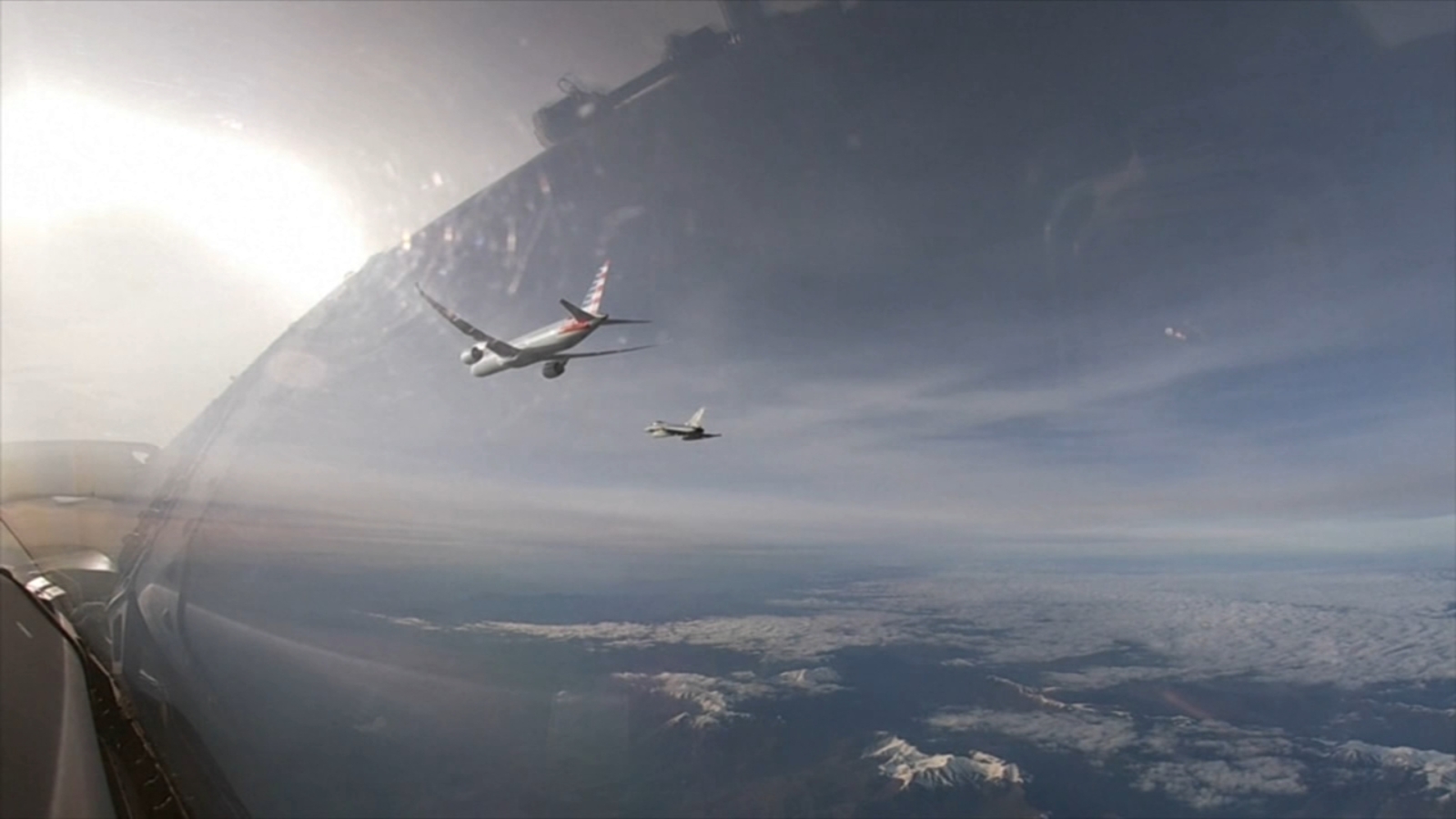
An American Airlines flight diversion security incident unfolded dramatically on Sunday, February 23, 2025, when Flight 292, en route from New York to New Delhi, was rerouted to Rome over what the airline described as a “possible security issue.” The event, which drew international attention, highlights the complex layers of modern aviation security and the rapid-response protocols that activate when threats , credible or otherwise , emerge during transcontinental flights.
The Boeing aircraft departed from John F. Kennedy International Airport bound for Indira Gandhi International Airport but never completed its planned route. Instead, it touched down at Leonardo da Vinci Rome Fiumicino Airport under extraordinary circumstances, escorted by Italian Air Force fighter jets through European airspace. This American Airlines flight diversion security response demonstrates how seriously international authorities treat even unverified threats in today’s heightened aviation environment.
What Happened Aboard American Airlines Flight 292
American Airlines Flight 292 departed from JFK on its scheduled journey to New Delhi, India, carrying 199 passengers and 15 crew members. The long-haul international route represents one of the longest commercial flights operated by American Airlines, traversing thousands of miles across the Atlantic, over European airspace, and into South Asia.
At some stage during the flight, the airline received information that triggered an immediate reassessment of the aircraft’s security status. According to a senior official briefed on the matter who spoke with ABC News, a bomb threat had been received via email. While the threat was subsequently deemed to be unfounded, the protocols surrounding any such communication demand thorough investigation , never assumption.
The Decision to Divert
When a potential security concern arises mid-flight, airlines and international aviation authorities must weigh several critical factors:
- Distance to the nearest suitable airport for landing and passenger processing
- Available security infrastructure at potential diversion airports
- Coordination with international authorities across multiple jurisdictions
- Fuel reserves and aircraft mechanical status
- Passenger and crew safety considerations
For Flight 292, Rome emerged as the optimal diversion point. The Italian capital’s Fiumicino Airport is one of Europe’s largest and best-equipped international hubs, capable of handling wide-body aircraft and providing comprehensive security screening facilities. The geographic position over European airspace also made it a practical choice given the aircraft’s trajectory.
The Italian Air Force Escort
One of the most visually striking aspects of this flight diversion security event was the deployment of Italian Air Force fighter jets to escort the American Airlines aircraft to Fiumicino Airport. Such military escorts, while uncommon, are not unprecedented when commercial flights face potential threats over sovereign airspace.
The decision to scramble military aircraft reflects the seriousness with which NATO member nations treat potential threats to civil aviation. Italian authorities authorized the rapid deployment, ensuring it had visual contact with the airliner throughout its descent and approach into Roman airspace. Photos from the scene showed the American Airlines jet flying over Rome under watchful military supervision on the afternoon of February 23, 2025.
This level of response underscores how a single anonymous email can mobilize significant national resources and disrupt international travel plans for hundreds of people. The Italian Air Force escort served both as a visible security measure and as a precaution should any emergency response become necessary during landing.
Indian Authorities’ Role in the Diversion
According to sources briefed on the incident, Indian authorities insisted that the aircraft be thoroughly checked prior to landing in New Delhi. This demand likely came through diplomatic and security channels, with Indian aviation and intelligence officials communicating their requirements to both American Airlines and Italian airport authorities.
Indira Gandhi International Airport in New Delhi serves as India’s primary international gateway, and security protocols for inbound international flights are exceptionally stringent. Given ongoing global security concerns, Indian authorities were not willing to accept any unverified aircraft without comprehensive inspection , a stance that ultimately shaped the response to this entire incident.
This international coordination highlights a critical aspect of modern aviation security: no single nation operates in isolation when responding to potential threats. The chain of communication involved American Airlines, U.S. authorities, Italian military and airport officials, and Indian security agencies , all working together to ensure the safe resolution of a potentially dangerous situation.
Passenger Processing at Fiumicino Airport
Upon landing safely at Leonardo da Vinci Rome Fiumicino Airport, the 199 passengers and 15 crew members faced a lengthy disruption to their travel plans. Airport authorities arranged for passengers to be bussed to the terminal for comprehensive security screening, while the aircraft itself was scheduled for a detailed inspection.
This process typically involves several stages of security review:
- Initial passenger interview with security officials to gather information about any unusual activity during the flight
- Personal baggage screening beyond normal airport security protocols
- Aircraft physical inspection by bomb disposal and security specialists
- Cargo and luggage hold examination to identify any potential concealed threats
- Documentation review and coordination with origin country authorities
For travelers on this particular flight, the diversion meant an unexpected extended stay in Italy, far from their intended destination. American Airlines acknowledged the inconvenience, stating, “Safety and security are our top priorities and we thank our customers for their understanding.”
Broader Implications for Aviation Security
This American Airlines flight diversion security incident raises important questions about how airlines and governments respond to anonymous threats in an era of email-based terrorism and social media-driven disruption. The fact that a single unverified email could ground an international flight, deploy military aircraft, and strand nearly 200 passengers illustrates both the strengths and vulnerabilities of contemporary aviation security systems.
The Challenge of Unfounded Threats
Aviation security experts have long grappled with the dilemma posed by unfounded or hoax threats. While every credible-seeming communication must be investigated thoroughly , as it should , the resources required to respond to false alarms are substantial. Military escorts, emergency landings, passenger screening operations, and aircraft inspections represent significant financial costs and operational disruptions.
Nevertheless, the aviation industry operates under the principle that any threat must be treated as potentially credible until proven otherwise. The catastrophic consequences of dismissing a genuine threat far outweigh the costs of responding to a hoax. This conservative approach, while sometimes inconvenient, has demonstrably saved lives throughout the history of commercial aviation.
International Coordination and Communication
Perhaps the most remarkable aspect of this incident was the seamless coordination between multiple nations and security agencies. Within hours, information flowed between:
- American Airlines corporate security and operations teams
- U.S. intelligence and aviation authorities
- Italian Air Force command structures
- Fiumicino Airport security and operations personnel
- Indian diplomatic and intelligence services
This level of international cooperation reflects decades of post-Cold War security partnerships and post-9/11 counterterrorism cooperation. Without such coordination, the safe resolution of incidents like the Flight 292 diversion would be far more difficult to achieve.
What Travelers Should Know
For frequent flyers and occasional travelers alike, incidents like this serve as reminders that flight diversions for security reasons remain a real possibility on any international journey. Travelers can take comfort in knowing that the aviation industry maintains robust protocols for such events, but they should also be prepared for the possibility of unexpected disruptions.
When booking international flights, particularly those crossing multiple jurisdictions, travelers should consider:
- Maintaining flexible travel insurance that covers trip interruptions
- Keeping essential items in carry-on luggage in case checked bags become inaccessible
- Staying informed through official airline communications during any incident
- Cooperating fully with security personnel during screening processes
Conclusion
The diversion of American Airlines Flight 292 to Rome on February 23, 2025, stands as a testament to the vigilance and sophistication of modern aviation security systems. While the bomb threat that triggered the response was ultimately deemed unfounded, the response it generated , including Italian Air Force fighter escorts, comprehensive passenger screening, and multi-national coordination , demonstrated how seriously the international community takes potential threats to civil aviation.
For the 199 passengers and 15 crew members aboard that flight, what began as a routine journey from New York to New Delhi became an unexpected chapter in their lives, one involving military escorts, emergency landings, and extended stays in Rome. Their experience serves as a powerful reminder that behind every flight diversion security decision lies a complex web of international cooperation, rapid-response protocols, and an unwavering commitment to passenger safety.
As global travel continues to rebound and international routes multiply, incidents like this American Airlines flight diversion security event will likely recur from time to time. Each one reinforces the same essential message: in aviation, safety must always take precedence over schedule, convenience, or cost. The system worked as designed , protecting lives, responding to threats, and ultimately bringing everyone home safely, even if not to their originally intended destination.