
Across the country, ai in policing has moved from science fiction to everyday reality. Departments large and small are integrating artificial intelligence tools into their operations, from real-time crime centers to drones and automated reporting systems. While supporters celebrate the efficiency and analytical power these tools bring, civil liberties advocates urge caution, transparency, and strong oversight to prevent the technology from outpacing the policies designed to govern it.
One of the clearest examples of this technological shift can be found inside the Camden County Police Department’s Real Time Crime Center, which serves as the operational brain for daily law enforcement work in the region. Here, cameras, databases, and machine learning algorithms work together to flag suspicious vehicles, identify patterns, and deploy officers with greater precision than ever before. As departments continue to experiment and expand, the conversation around ai in policing has become one of the most important debates in modern criminal justice.
How Automated License Plate Readers Work
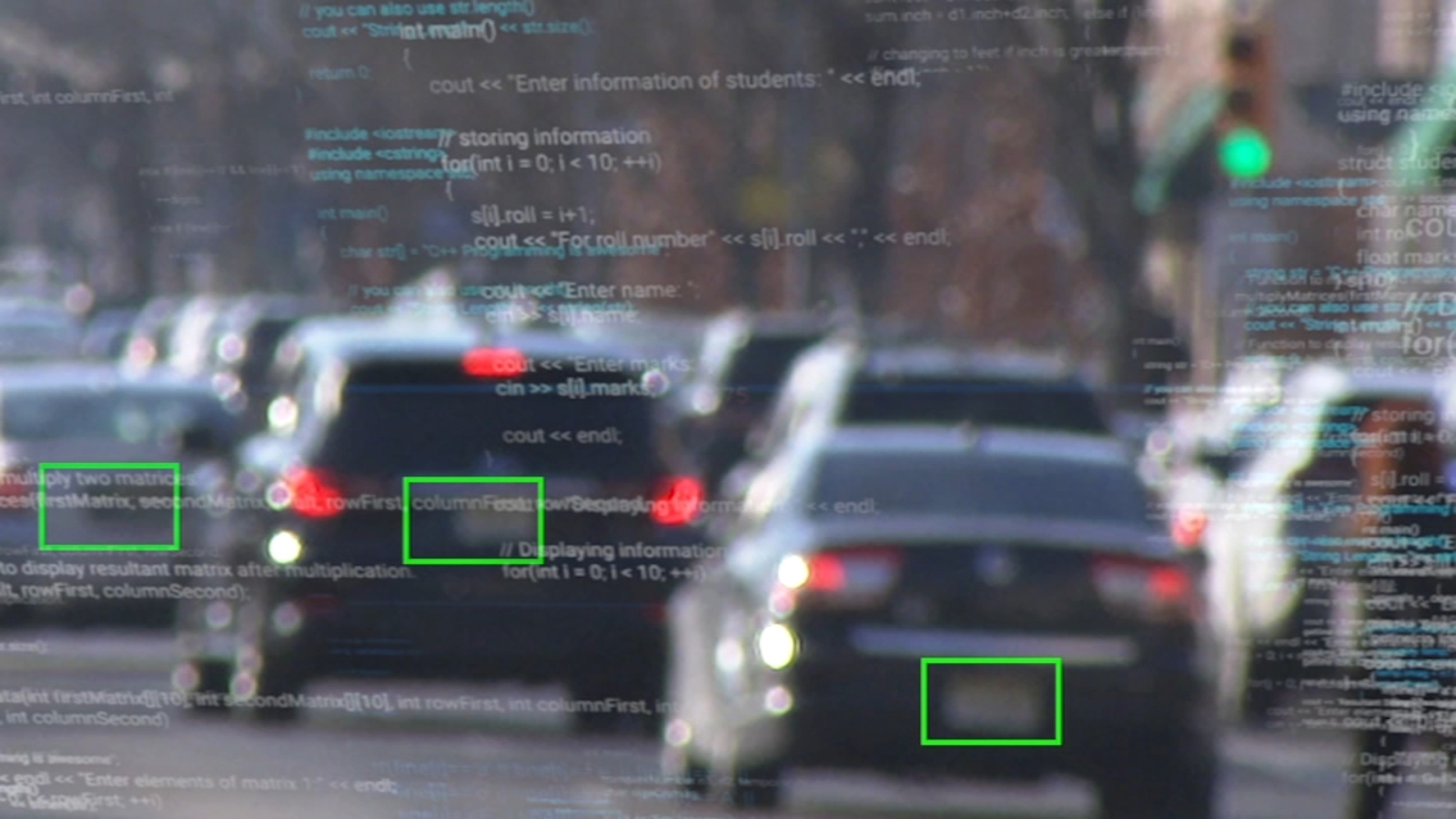
Among the most widely deployed ai in policing tools are automated license plate readers, commonly known as LPRs. These systems use high-speed cameras mounted on patrol cars, street poles, and traffic infrastructure to capture images of passing vehicles. The artificial intelligence software then cross-references those plates against hot lists of stolen vehicles, wanted suspects, and vehicles connected to ongoing investigations, all within seconds.
Police leaders describe the technology as a way to instantly surface critical intelligence from an otherwise overwhelming stream of data. Rather than officers manually checking individual plates, the system flags hits in real time, allowing dispatchers and patrol units to act immediately. Departments also use LPR networks to track patterns such as illegal dumping, where repeat offenders can be identified, monitored, and apprehended shortly after committing the offense.
The efficiency gains are substantial. What once required hours of manual review or stakeouts can now be accomplished with automated alerts, freeing officers to focus on response and investigation rather than data sorting.
Emerging Tools Reshaping the Field
License plate readers are only the beginning. According to law enforcement experts and technology analysts, several emerging ai in policing applications are rapidly gaining traction across the country:
- Facial recognition software deployed in public spaces, capable of matching live or recorded images against databases of known offenders or persons of interest.
- Drones acting as First Responders, arriving at scenes ahead of officers to provide aerial footage, assess threats, and guide ground units.
- Robotics for forced entries and high-risk operations, reducing officer exposure to dangerous situations during barricades or tactical responses.
- AI-assisted report writing, where language models help officers draft incident reports and case summaries in a fraction of the usual time.
Each of these innovations promises faster, safer, and more informed policing. But each also raises critical questions about privacy, accuracy, and the appropriate boundaries of machine-driven decision-making.
The Promise: Speed, Precision, and Officer Safety
Supporters of artificial intelligence in law enforcement argue that the technology offers transformational benefits. By automating time-consuming tasks and analyzing vast datasets, AI allows departments to deploy their limited personnel more strategically. Officers spend less time on paperwork and more time in their communities. Investigations close faster. Patterns that would have taken human analysts weeks to identify can be detected in minutes.
Dr. Steve Morreale, a former DEA agent and police officer turned professor and author of “Leading Police with AI,” has been one of the most vocal advocates for thoughtful adoption. He emphasizes that AI is not a replacement for human judgment but a force multiplier that, when used correctly, can save lives and solve cases more efficiently.
“The technology is here, and it’s only going to get more capable,” he has noted in interviews. “The question is whether we deploy it responsibly, with the right training, transparency, and oversight.”
For departments operating in high-crime areas or with limited staffing, the appeal is obvious. AI tools promise to extend the reach of every officer and bring a level of analytical precision that human cognition alone cannot match.
The Concerns: Bias, Hallucination, and Accountability
Despite the enthusiasm, critics warn that ai in policing carries real risks that have not yet been fully addressed. Among the most pressing concerns:
- Algorithmic bias. AI systems learn from historical data, which can include biased policing patterns. Without careful auditing, these tools can perpetuate and even amplify existing inequalities.
- AI hallucination. Large language models and other generative AI tools sometimes fabricate facts or details. When used to draft police reports, even small inaccuracies can have serious legal consequences for defendants and victims alike.
- Lack of transparency. Many departments have been reluctant to disclose which AI tools they use, how the systems make decisions, or what data they are trained on. This opacity makes meaningful oversight nearly impossible.
- Civil liberties implications. Continuous surveillance through cameras, facial recognition, and license plate readers raises significant questions about the right to privacy and the presumption of innocence.
Advocacy groups like The Policing Project have called for clear guardrails before deployment rather than after. As one policy expert noted, “Too often we see this kind of deploy first, find safeguards later mentality. That has to change if we want the public to trust these tools.”
The Cost Barrier
Beyond the ethical and legal questions, there is a practical challenge: many of these technologies remain expensive. Building a real-time crime center, equipping patrol cars with LPRs, deploying drone fleets, and integrating facial recognition systems require significant upfront investment and ongoing maintenance. Smaller municipalities and rural departments often cannot afford the infrastructure, creating a potential divide between well-funded urban agencies and under-resourced communities.
However, as adoption grows and the technology matures, proponents expect costs to fall. Cloud-based services, more affordable hardware, and competitive vendor markets are gradually making advanced tools accessible to a wider range of departments.
Building Guardrails for Responsible AI Use
Nearly everyone involved in this conversation, from police chiefs to civil liberties attorneys, agrees on one thing: ai in policing requires strong guardrails. These include:
- Transparent policies about which AI tools are in use, what data they collect, and how that data is stored and shared.
- Independent auditing of algorithms to detect bias, errors, and unintended consequences.
- Human oversight at every critical decision point, ensuring that machines assist rather than replace officer judgment.
- Clear legal standards defining when and how AI-generated evidence can be used in court.
- Ongoing training for officers to understand both the capabilities and the limitations of the tools they use.
Experts recommend a pilot-first approach, where departments test new tools in controlled environments, measure outcomes, refine their policies, and expand only after careful evaluation. Trial and error is part of the learning curve, but it must be balanced against the rights and safety of the communities being policed.
The Road Ahead
The trajectory is clear: artificial intelligence will play an increasingly central role in law enforcement over the coming decade. The technology is too powerful, too efficient, and too attractive to ignore. The challenge for policymakers, police leaders, and the public is to shape that adoption in a way that maximizes benefits while minimizing harm.
When deployed with transparency, accountability, and respect for civil liberties, AI tools can help solve crimes faster, keep officers safer, and free up resources for community engagement. When deployed without those safeguards, they risk eroding public trust and entrenching the very biases the criminal justice system has worked to overcome.
The departments that get this right will be the ones that treat ai in policing not as a magic solution but as a powerful tool, one that requires constant calibration, honest conversation, and an unwavering commitment to justice. The future of law enforcement is being written right now, and the choices made today will determine whether that future is safer, fairer, and more effective for everyone.