
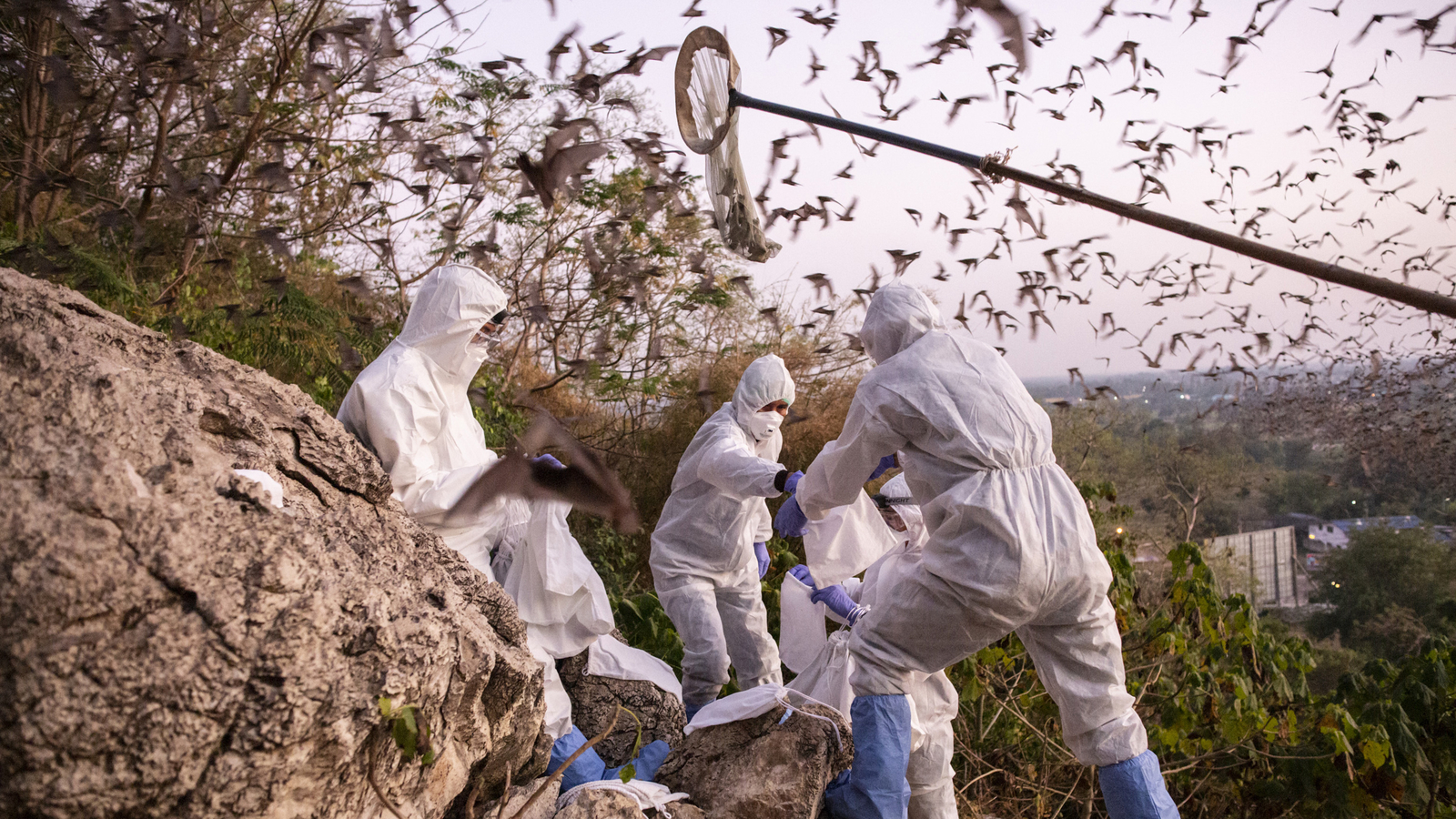
Researchers have identified a new bat coronavirus that demonstrates a theoretical ability to infect human cells, prompting both scientific interest and public curiosity. However, leading health authorities, including the U.S. Centers for Disease Control and Prevention (CDC), have stepped forward to reassure the public that this discovery does not currently represent a public health threat. The finding, while scientifically significant, has been carefully contextualized by experts who emphasize that laboratory results do not automatically translate into real-world danger.
The Discovery: HKU5-CoV-2
A team of Chinese researchers, including scientists from the renowned Wuhan Institute of Virology and Guangzhou Medical University, published their findings in the prestigious journal Cell. Their paper introduced the world to HKU5-CoV-2, a novel coronavirus identified in bat populations. This newly characterized pathogen belongs to the merbecovirus subgenus, placing it in the same family as Middle East Respiratory Syndrome Coronavirus (MERS-CoV), a virus known to cause serious illness in humans.
The discovery adds another chapter to the growing body of research examining how viruses circulating in animal reservoirs might eventually cross over into human populations,a phenomenon scientists refer to as spillover. Bats, in particular, are recognized as natural hosts for an extraordinary diversity of coronaviruses, making them a focal point for pandemic preparedness research and infectious disease surveillance efforts worldwide.
The CDC’s Reassuring Statement
In response to publication of the study, the CDC issued a measured statement aimed at preventing unnecessary alarm. The federal health agency emphasized that the discovery does not currently warrant concern among the general population.
“CDC is aware of a publication about a new bat coronavirus, but there is no reason to believe it currently poses a concern to public health,” the agency stated. Importantly, the CDC clarified a critical point: the laboratory findings demonstrate that the bat virus can use a human protein to enter cells under controlled conditions, but no human infections have been documented.
This distinction between laboratory capability and real-world transmission is essential. A virus showing potential to bind to human receptors in a test tube is fundamentally different from a virus actively circulating among people and causing illness.
How the Virus Interacts with Human Cells
The most scientifically intriguing aspect of HKU5-CoV-2 lies in its method of potential cell entry. Researchers discovered that, like SARS-CoV-2 (the virus responsible for COVID-19), this new bat coronavirus can utilize the ACE2 receptor to gain access to human cells. The ACE2 protein sits on the surface of various cell types throughout the body, particularly in respiratory and intestinal tissues.
During laboratory experiments, the spike protein of HKU5-CoV-2 successfully infected human cells engineered to express high levels of the ACE2 receptor. Tests were conducted both in cell cultures and in miniature models designed to simulate human airways and intestinal tissue.
However, researchers noted an important caveat: the new virus did not enter human cells as efficiently as SARS-CoV-2. In the published paper, the team explicitly cautioned that “the risk of emergence in human populations should not be exaggerated.” This measured tone reflects the scientific community’s commitment to responsible communication during an era when pandemic awareness remains heightened.
Limitations of Current Research
Several crucial questions remain unanswered by the initial study. None of the animal experiments conducted examined the virus’s capacity to cause actual disease, nor did researchers evaluate its transmissibility between hosts. These gaps are significant because:
- Cell entry capability does not equal infection: A virus must replicate efficiently, evade immune responses, and cause damage to produce illness.
- Transmissibility remains unknown: Even if the virus could theoretically infect humans, its ability to spread person-to-person has not been assessed.
- Disease severity is undetermined: No evidence currently suggests HKU5-CoV-2 would cause anything resembling COVID-19 or MERS in humans.
Without studies addressing these fundamental questions, the scientific community cannot make definitive statements about the real-world implications of the discovery.
Potential Treatment Pathways
One encouraging aspect of the research involves potential therapeutic interventions. The study’s authors suggested that if HKU5-CoV-2 were ever to infect humans, existing medical countermeasures might prove effective. Specifically, antiviral drugs already developed for related coronaviruses could potentially be deployed, and monoclonal antibodies,laboratory-engineered proteins designed to mimic the body’s natural immune defenses,might offer additional protection.
This aspect of virology research provides reassurance that the scientific community is not starting from scratch when confronted with novel coronavirus threats. Decades of investment in pandemic surveillance and countermeasure development have created a foundation of knowledge that extends across related viral families.
The Broader Coronavirus Landscape
Understanding HKU5-CoV-2 requires placing it within the wider context of coronaviruses circulating in nature. Scientists estimate that hundreds of coronaviruses exist in various animal reservoirs, though only a small fraction possess the biological machinery necessary to infect humans. Those that do can cause a spectrum of illnesses, ranging from mild upper respiratory infections resembling the common cold to life-threatening conditions including pneumonia and bronchitis.
The coronavirus family includes several notable members that have shaped modern medical history:
- Common cold coronaviruses: Several strains cause routine, mild illnesses affecting millions annually.
- MERS-CoV: Identified in 2012, this virus causes severe respiratory illness with a high fatality rate.
- SARS-CoV: The 2003 outbreak demonstrated how a novel coronavirus could trigger global health emergencies.
- SARS-CoV-2: The virus responsible for the COVID-19 pandemic, which reshaped daily life beginning in 2019.
Researchers have consistently noted that bats serve as the primary reservoir for the greatest genetic diversity of coronaviruses among all animal groups. This biological reality underscores why bat populations remain a critical focus for zoonotic disease research and emerging pathogen monitoring initiatives.
Why Continued Surveillance Matters
Even though HKU5-CoV-2 does not currently pose a threat, discoveries like this one highlight the value of proactive scientific investigation. By identifying and characterizing novel viruses before they encounter opportunities for widespread transmission, researchers can:
- Build diagnostic capabilities that would allow rapid detection if a virus began spreading.
- Develop countermeasures in advance, including vaccines and therapeutics tailored to specific viral families.
- Inform public health policy with evidence-based risk assessments rather than reactive measures.
- Strengthen global health security through international collaboration and data sharing.
The collaboration between institutions in China and the international scientific community reflects the kind of cooperative approach necessary to address emerging pathogens before they become crises.
Conclusion: Context and Calm in the Face of New Discoveries
The identification of HKU5-CoV-2 represents meaningful progress in scientific understanding of bat coronavirus diversity, but it should not generate undue alarm. The CDC’s clear messaging,emphasizing that there is no current public health concern and no documented human infections,provides essential context that prevents sensationalist interpretations from taking hold.
What this discovery does accomplish is reinforcing several important truths: nature harbors countless viruses with theoretical pandemic potential, most never make the jump to humans, and when they do, modern science is better prepared than ever to respond. Continued investment in virus research, transparent communication from health agencies, and thoughtful public engagement remain our best tools for navigating the inevitable stream of new discoveries that virology will continue to produce.
For now, the new bat coronavirus serves as a reminder of why vigilance and scientific inquiry matter,not as a source of immediate worry, but as evidence of ongoing efforts to protect global health through knowledge rather than fear.